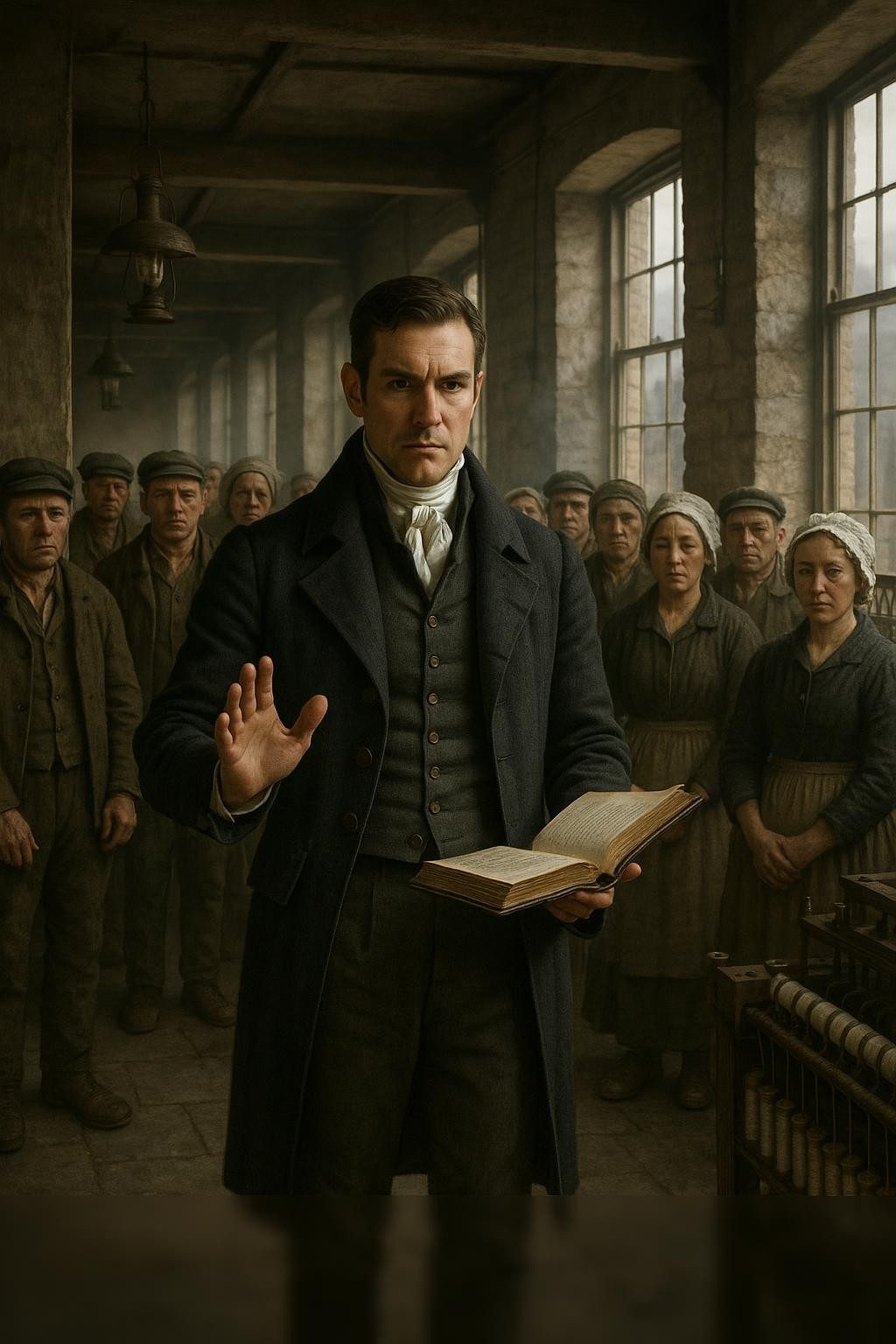
The air was thick with the acrid scent of sweat and stale dust as the thin strap bit into young Robert Blincoe's back. Each stroke was a deliberate reminder of his station, delivered by the very overseer whose gaze he desperately tried to elude while working in the relentless din of the cotton mill. Robert, just a child, was well beneath the spinning looms, amidst gears and fibres, enduring what would become the crucible of his early years. How had it come to this for one so young and defenseless?
From Workhouse to Factory
Robert Blincoe's tale begins much like those of many other unfortunate souls born into the harsh folds of late 18th-century England. As a pauper child, Blincoe’s fate was sealed when the parish authorities cast him from the local workhouse, deemed a burden too great to bear. Too young to advocate for himself, at the tender age of seven, he was consigned to the twisted mercy of the burgeoning industrial age.
He was sold into the perilous life of the cotton mill, a daunting behemoth of machinery and deprivation. These factories, hubs of industrial progress, rose like great furnaces of human endurance, ushering in an era where children's hands became the cogs of production. Blincoe's existence amidst this mechanical chaos became an emblem of silent suffering, as he was forced to toil tirelessly alongside countless others who mirrored his plight, often in rags and with scant food to sustain their weary bodies. Yet, embedded in this tale of hardship is an undeniable fact: Robert Blincoe endured.
A Voice from the Darkness
For three decades, Blincoe's story remained entombed within the oppressive atmosphere of factory life. But the tide of change was turning, and murmurs of reform began to ripple through society. Driven by burgeoning industrial consciousness, one man stepped forward to chronicle Robert’s experiences. It was a time when the voices of children, muffled by the clamor of looms, were beginning to find resonance beyond the confines of the mills.
Read next: The Day a Mill Owner Freed His Workers From the Clock
This man, John Brown, recognized the profound importance of Blincoe’s tale as more than just a personal account. It was a grim portrait of the industrial machine that swallowed lives whole. Brown’s written rendition of Blincoe’s life illuminated the shadowed corners of Britain's industrial landscape, where countless children labored unacknowledged. The publication of Blincoe's narrative became a catalyst for awakening, a voice crying out from a realm many preferred to overlook.
When Parliament Listened
The reverberations of Blincoe’s story eventually echoed through the hallowed halls of Parliament. Prior to this, discussions of labor reform often lacked the human face needed to stir true empathy and understanding. Yet here was a firsthand account that could not be ignored. Blincoe, the collier's son, stood at the center of a compelling argument that demanded attention — illustrating the urgency of reform in the notoriously exploitative mills of Britain.
Emerging reformers clutched at Blincoe’s story as a beacon of moral impetus to drive legislative change. This period saw the inception of child labor laws, where facts and narratives combined to challenge the very foundations of the newly industrialized economy. Although change was slow and often met with resistance, particularly from those with vested interests in maintaining the status quo, it marked the dawn of a new understanding that children were entitled to rights and protections, not merely tools of economic function.
The Unseen Threads of Change
Robert Blincoe's struggle was not in vain. His story served as a lighthouse for a nation grappling with the chaotic transformation of industry. While child labor would persist into later eras, Blincoe's narrative marked an essential shift in societal consciousness—an awakening to the harsh realities behind the veil of progress. His testament to resilience and the grim truth of mill work forced Britain to reckon with itself and laid groundwork for future generations to advocate for the powerless.
Why does this story matter, and why should we remember Robert Blincoe today? Because it reflects a universal truth: that the most enduring change often begins with the simple act of a single voice speaking out against injustice. As we reflect on the dawn of the Industrial Revolution, Blincoe's tale continues to illuminate an essential lesson—one where the humanity of progress must never be overshadowed by its pursuit.