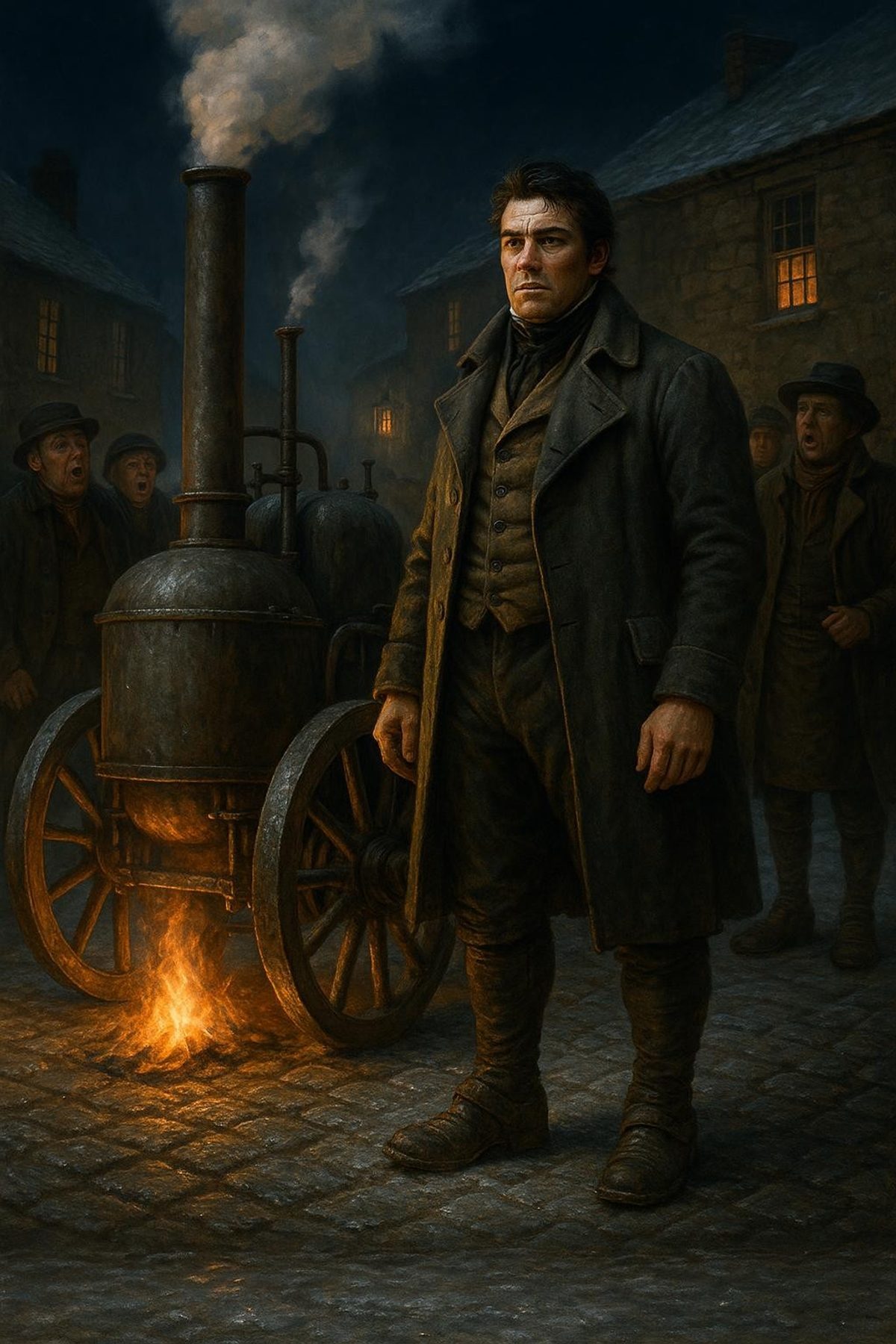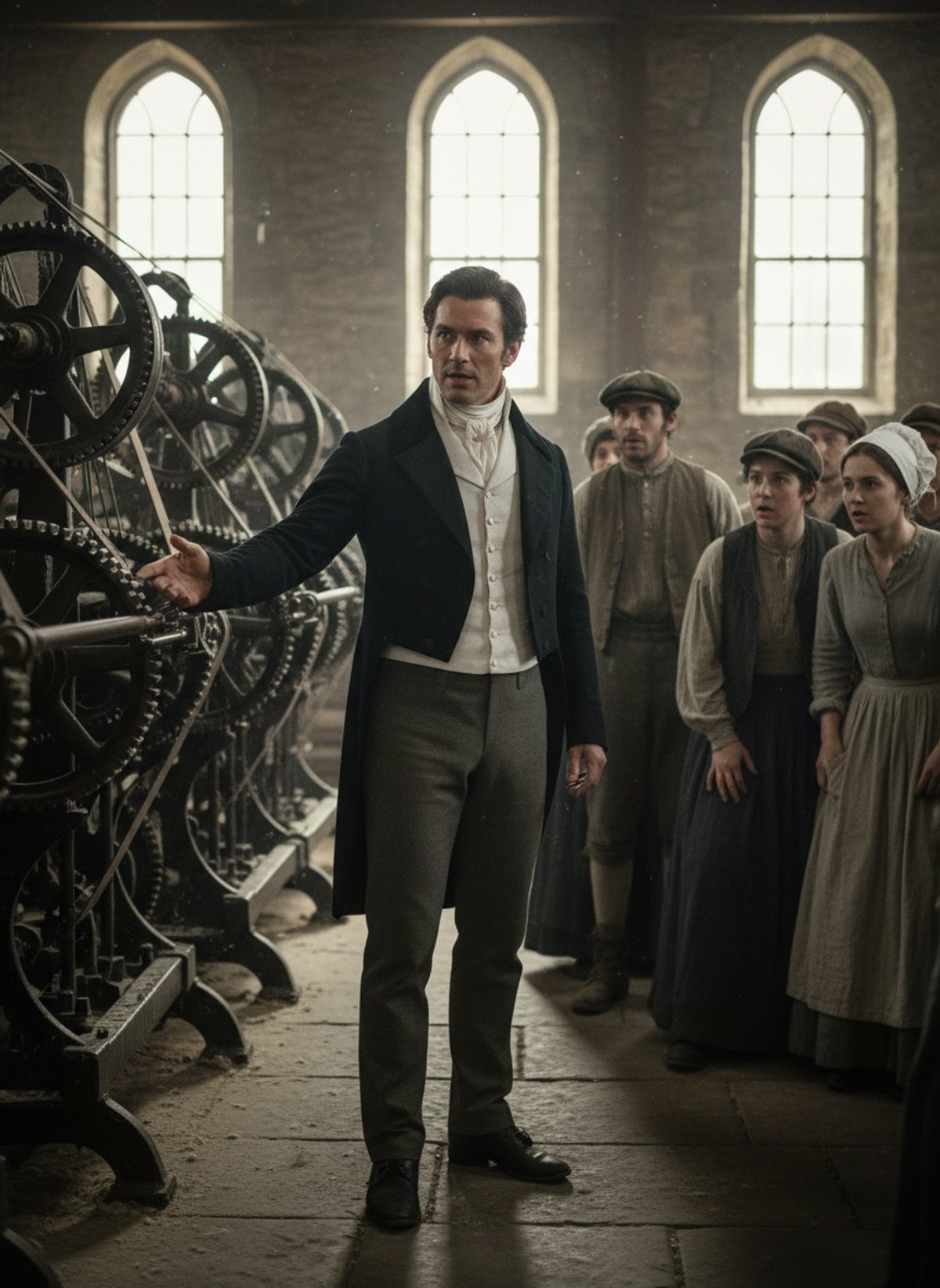
He was a child when they shackled him to the machine, but his spirit was unbreakable. Years later, the courage that saw him survive a hellish childhood would help him confront the custodians of Britain's conscience.
The Chains of Childhood
Born into the shadows of the Industrial Revolution, Robert Blincoe’s life began in deprivation, just another parish orphan of Manchester. In 1792, the year of his birth, the city was a cacophony of change, where the clang of machinery and the hum of labor replaced the pastoral silence of centuries past. Orphaned at the age of seven, Blincoe was swept into a world where children were commodities, their labor powering the looms and machines that fed the burgeoning appetite for cotton goods.
Soon, Blincoe found himself in Litton Mill, a place notorious for its harsh treatment of child workers. He was just ten when he was chained to the cotton machine. For fourteen-hour days under the unyielding gaze of overseers, his small hands toiled amidst the relentless roar of spinning frames. They were years defined by hunger and brutality, the very air thick with cotton dust and desperation. It was an existence where time seemed infinitely slow, yet childhood slipped away with every turn of the mill's wheels.
Blincoe's spirit, however, was resilient. Though his body bore the scars of beatings and the suffocation of the mill's unfairness, his mind remained alert and tenacious. Surviving the mills was, in itself, a miracle; many children lashed into labor alongside him would never see adulthood.
Read next: The Day a Mill Owner Kept Paying Wages He Could Not Afford
Voices of Change
By the time Robert Blincoe walked into Parliament as a grown man, a man who had once been just another ghostly face among the mill children, his survival seemed like something out of fiction. It was indeed the power of storytelling that transformed his suffering into a national reckoning. John Brown, a reform-minded journalist, found the courage to bring Blincoe's tale to the public in the early 1820s, under the title "Memoir of Robert Blincoe." This publication was one of the earliest exposés of mill conditions and catalyzed the movement to reform child labor laws.
The book struck a chord in the public consciousness. It lifted the veil on the factories that had remained hidden in plain sight; Blincoe’s vivid accounts of violence and neglect resonated with a society that was beginning to question the costs of its industrial dominance. The Memoir became pivotal in spurring discussions that would eventually lead to the Factory Acts, incremental reforms intended to protect child workers.
The Day the Walls Trembled
And so it was that on that pivotal day in 1831, against a backdrop of growing public unease about working conditions, Robert Blincoe stood before a parliamentary committee. The room was stark, filled with whispers of deliberation and the weight of past indifference. The committees were different from the oppressive silence of the mills but carried an air of authority just as daunting.
Blincoe recounted his ordeal with a clarity that stilled even the most cynical of lawmakers. He spoke of chains, not just of iron, but of poverty and helplessness that bound him and countless others. As he revealed the appalling details of his early years—describing the filth, the endless toil, the meager rations, and the savage overseers—an eerie stillness fell over the room. There was no need for grandiose rhetoric. His story, raw and blistering with truth, ignited something far more potent than political maneuvering.
No one spoke as he concluded, the enormity of what he shared echoing in their minds. His tears, unbidden and genuine, were shared by those who could now see the injustice their society had condoned. The power of his presence, more than words, underscored the urgent need for change.
Why It Matters Today
Blincoe's testimony did not lead to an immediate outpouring of reform—it was only a step in a long journey—but its impact was undeniable. For the first time, the humanity behind child labor statistics was made vibrantly clear. Yet, despite the creeping changes that followed, his story is more than a relic of industrial excess.
Today, Robert Blincoe's journey from the depths of a Derbyshire cotton mill to the hallowed halls of Parliament stands as a stark reminder of humanity's greatest challenges: the capacity for both oppression and endurance. His narrative is a whisper from the past that remains painfully relevant, urging us not to look away from injustice, wherever it may reside. As we unravel threads of Blincoe’s life, we also weave knowledge into the fabric of modern society—a call that echoes beyond the centuries to acknowledge the dignity of every child, irrespective of era or circumstance.