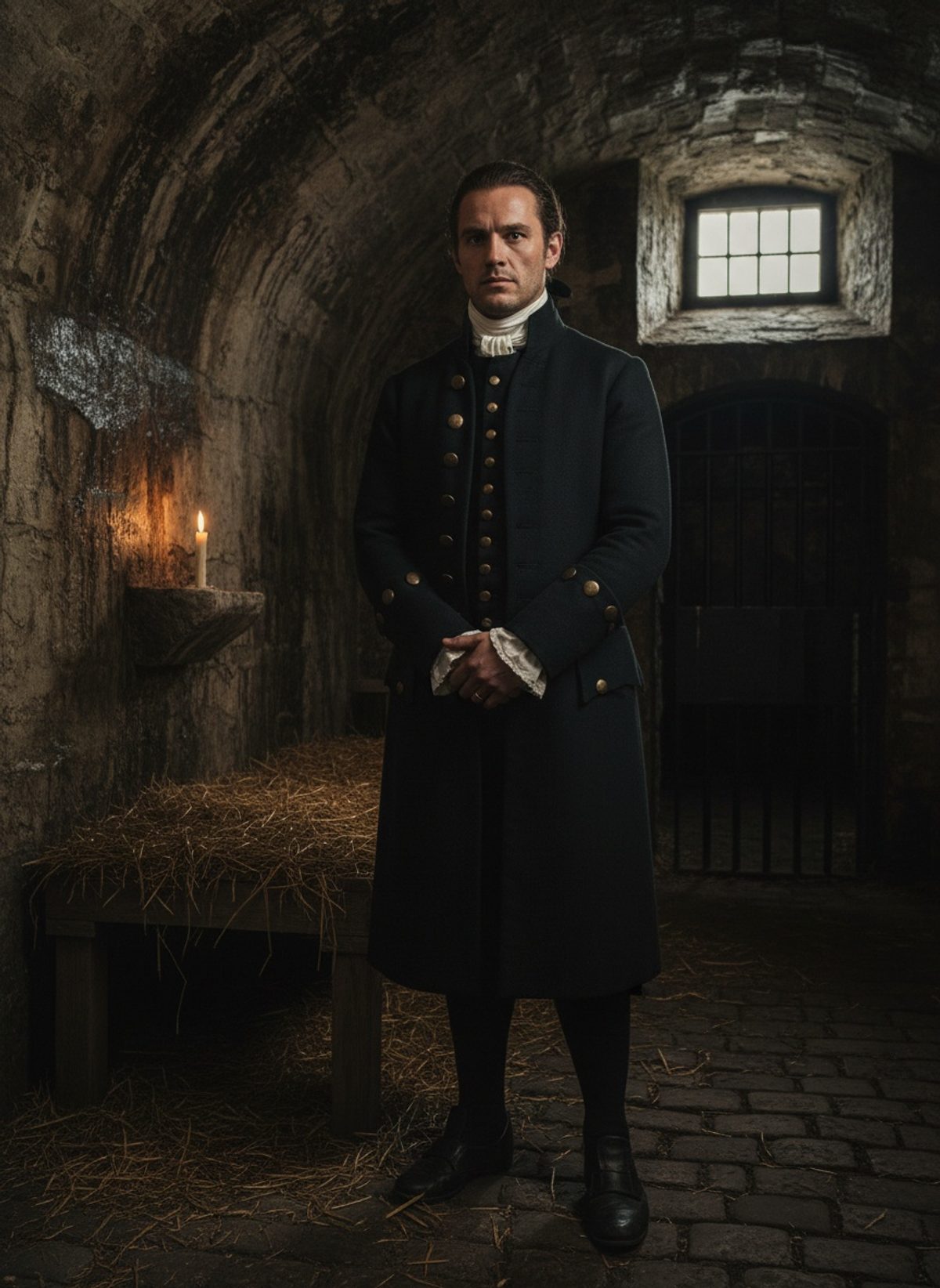
Forgive a man his forgery, and you forgive him his life. So thought William Dodd in the closing chapters of his tragic Georgian misadventure, but, alas, the king thought otherwise. For all the clamour and cries for clemency in 1777, Dodd lay condemned in Newgate, the notorious London prison that stood as much a monument to human folly as to architectural decay. The world around him might believe that wealth and influence could sway the gavel from one moment to the next, but Dodd would become a sobering testament to the contrary — except for one thing: the humanity bestowed in the darkest hours by an unlikely hero.
Newgate was a law unto its own. Thick stones absorbed the weight of the guilty and the not-so-guilty alike. Contained within its medieval walls were whispers of desperate bargains and unfulfilled dreams, overlaid by the omnipresent smell of fear. In 1777, the prison bulged not merely with the corporeal forms of its inhabitants but with the stories of lives misled or misunderstood. Yet among these crowded tales, none perhaps burned more brightly than that of the Rev. William Dodd. Gifted, eloquent, and now determined to escape the noose, his story unfolded with heart-wrenching clarity.
His crime: forgery — an act both contemptible and comprehensible in equal measure. He had taken the reckless step of forging a bond in the name of his patron, Lord Chesterfield, in a bid to settle his debts. To 18th-century English courts, however, forgery was not merely a breach of trust but an act of theft against the very fabric of society — a crime threatening the economic confidence upon which a rising empire was built. It was a capital offense, and so the gallows waited.
A man of some elegance and eloquence, Dodd had been well-acquainted with the refined circles of London’s elite. He had preached sermons that shone with extraordinary oratory, and his charitable projects had earned him both acquaintances and admirers. Yet none of these accolades shielded him now. Even when literary giant Samuel Johnson lent the master's weighty pen to a clemency plea, winding words that sought to stir the king’s grace, still the answer came icy and brief — no. Johnson’s plea, while eloquent, sank like a stone in the monarchy’s unyielding stream, another rhetorical device left unremarked in the vast archives of royal judgment.
Read next: The Day a Welsh Weaver's Son Freed a Parish Full of Slaves
But amidst the echoing desolation of Newgate’s corridors, an unassuming hero emerged where one might least expect — a Cornish surgeon by the name of John Blyth. In an era where custody condemned the soul as well as the flesh, the line between a doctor’s duty to heal and to comfort was razor thin, yet Blyth walked this perilous tightrope with commendable resolve. In those final days, when society had all but washed its hands of Dodd, Blyth stayed, offering care to a man deemed unworthy of his station and, perhaps, his humanity.
In truth, Blyth’s presence in Dodd’s cell was a silent act of revolt against a justice system that cared little for redemption, less for rehabilitation, and treated dignity as an expendable currency. Each dusty step Blyth took through Newgate’s labyrinth brought him face-to-face with mortality’s stark visage: the unimaginable brink where suffering meets resignation, and where the measures of grace could yet tilt finely against the black weight of inevitability.
The peculiarities of this partnership were many. Here sat Dodd, a master of words if not of actions, who had once stood before attentive congregations, crafting narratives with care and ardour. There stood Blyth, hands familiar with the pulse of humanity, now tasked with offering solace to the mind even as it was denied to the flesh. In conversation, they may have traded anecdotes both solemn and sweet — a shared reverence for human complexity, clinging like mist to their nights within those forbidding stone walls.
London’s Georgian tapestry, vibrant yet frayed, pulsed with an array of contrasting spectacles. One could easily stumble upon a grand soirée' glittering with revolutionary ideas, or a stuffy Parliament sermon belching the rhetoric of reform, yet within these overwhelming sounds, Dodd's story slipped largely unheard into history's fog. More than a tale of crime and punishment, his was a lesson painted in hues of humanity's unequalled urge to look beyond transgression to the individual beneath.
On June 27, 1777, Dodd's fate was sealed. The crowded throngs gathered, transfixed by the spectacle of justice sealed with the crude snap of a rope. Death by hanging was the law's final exclamation point upon the sentence handed down to one who had dared finger the hem of legitimacy. And so, as life departed Dodd, a chapter closed — forcibly, tragically, indelibly.
Yet in that condemned cell, Blyth’s vigil left a lingering legacy: a whisper in the ear of history subtly gentle and profoundly sincere. His presence challenged a system which had, until then, prided itself on the unrelenting nature of its justice. In watching a life end, Blyth ushered forth the perspective that justice without compassion is barren; authority without empathy, impotent. While the pages of textbooks rarely cite Dodd or his surgeon, the echoes of their final hours call out to a contemporary audience to reconsider the balance between law and grace, judgement and mercy.
In the untold corners of Britain's storied past, it is often the unsung heroes who haunt the margins — those who, by virtue of audacious kindness, choose to stay when all others depart. They choose not just the path of duty, but the road of humanity undiminished by the darkness that surrounds it. In the sodden dungeons of Newgate, Blyth stood vigil, lending dignity to a death sentence. In his unwavering presence, he suggested that perhaps, even at the precipice of despair, there is space for heroism that transcends the gallows and floods the finality with a light that dares to linger long after the shadows have cleared.