He owned only one pair of spectacles. They sat crooked on his nose, yet they never obscured his vision of duty.
The Crisis at Liverpool Docks
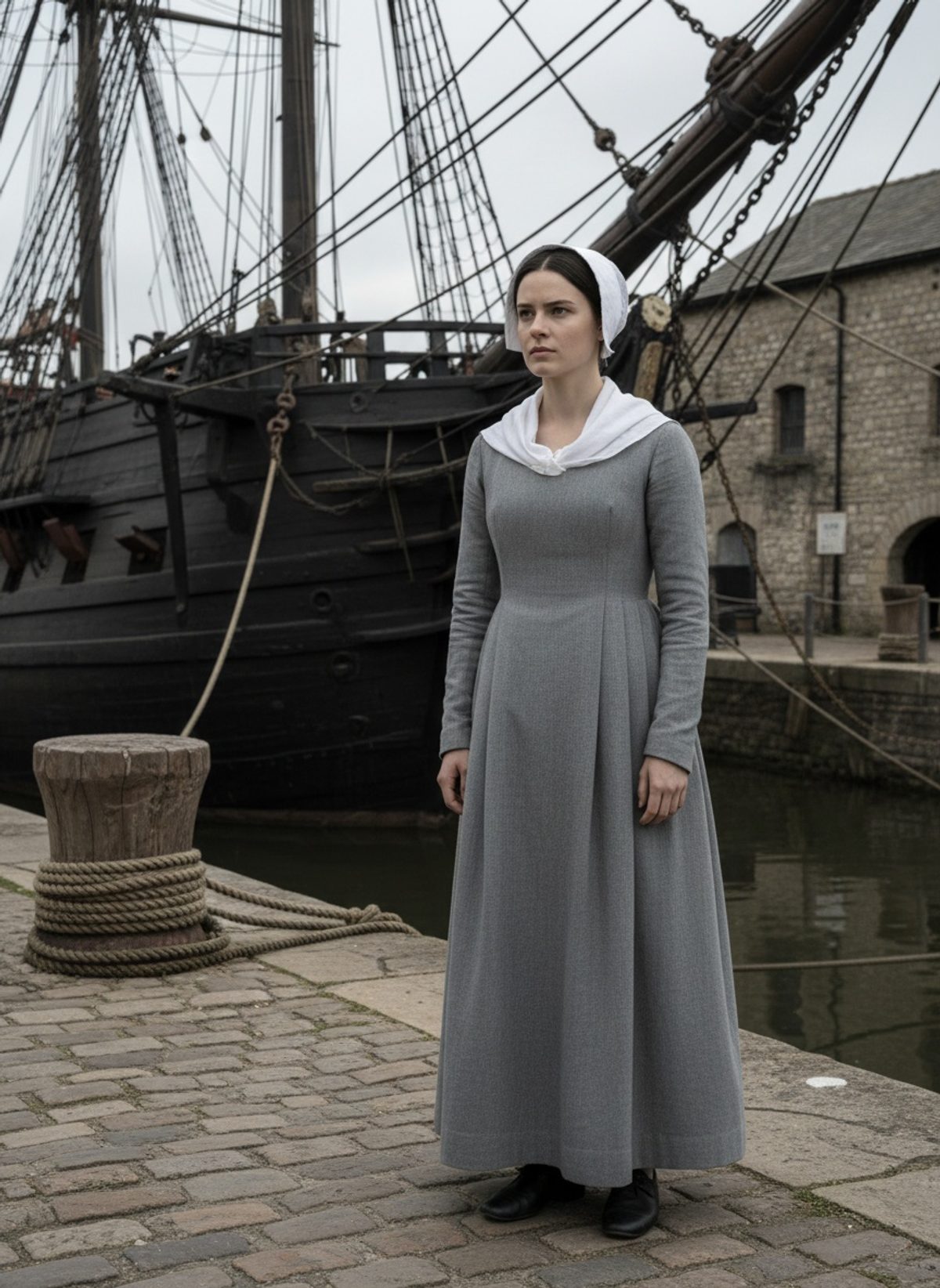
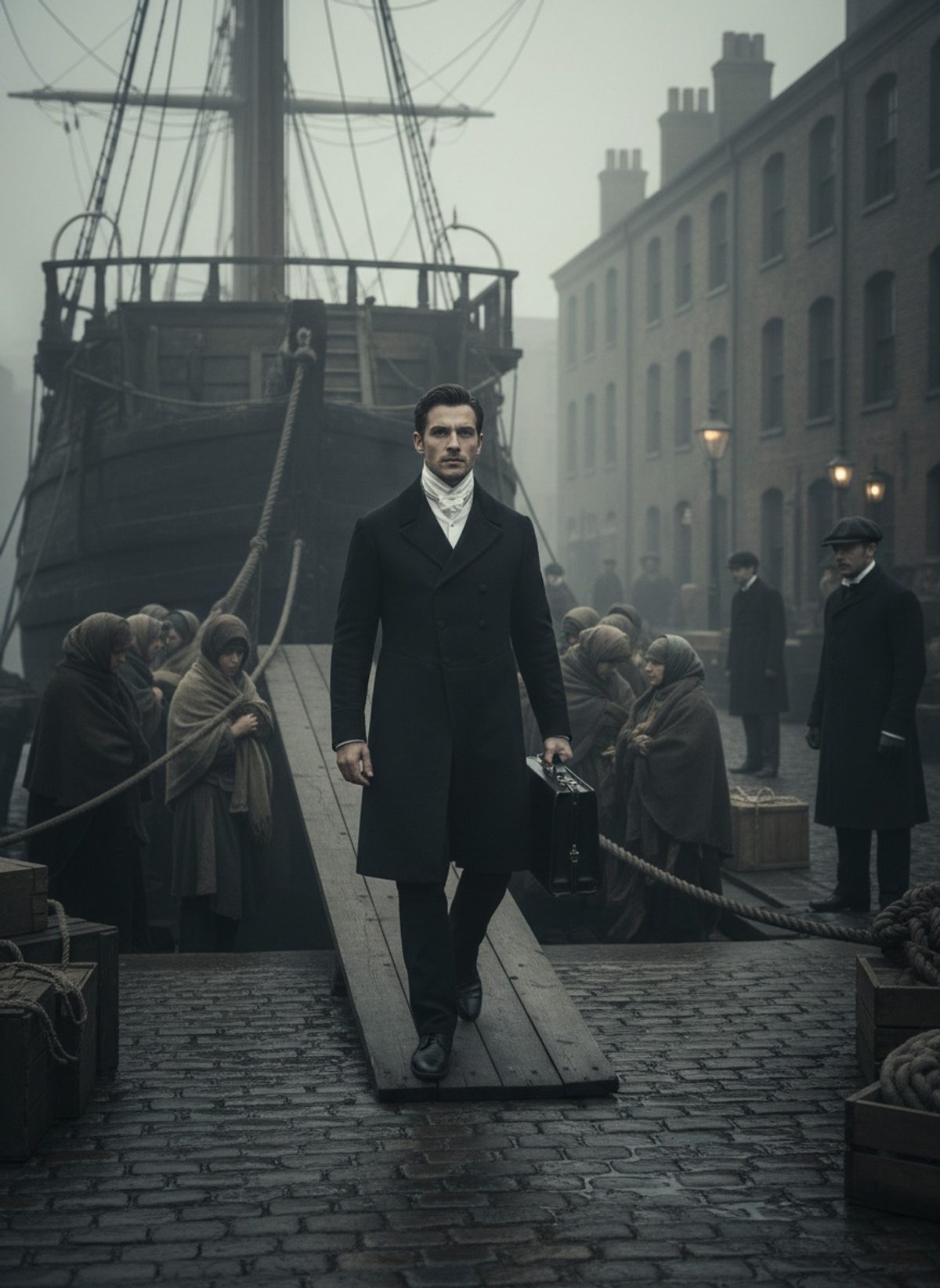
As the summer sun of 1847 poured its light over the bustling city of Liverpool, its docks were like a scene from a Dickensian novel, dense with the stench of human suffering. Famine ships, relics of desperation born from the Irish Potato Famine, creaked painfully against the quayside. These ghostly vessels carried the echoes of another world—a world of emaciated figures hammocked tightly like suspended shadows, afflicted with famine’s cruel twin, disease.
Liverpool was no stranger to immigrants, but this was different. The new arrivals were spectral, cloth-bound apparitions, with cheeks hollowed and eyes sunk into caverns of despair. Authorities and citizens alike struggled to comprehend the saturation of bodies overwhelming the docks. Typhus, dubbed the “famine fever,” did not discern friend from foe, rich from poor. The city teetered on the brink, inhaling the foetid breath of an epidemic.
A Solitary Step Forward
In a city where no doctor dared tread—the miasma of fear more tangible than the disease itself—stepped William Henry Duncan. A Welshman of quiet resolve, he abandoned the methods of his peers who skirted the infected air by gazing from safe distances. Duncan, armed with nothing more than his determination and a worn leather medical bag, was not fluent in indifference. His journey onto the fever ships was not backed by scientific guarantees—only a stubborn compassion impervious to peril.
Read next: The Day a Blind Pauper Boy Sang Before a Queen
Duncan did not step lightly. Each footfall upon those festering decks was a bold refutation of the medical board’s inaction. He moved among the suffering like a ghost, haunting the spaces other doctors fled from. Every patient he saw was not a mere statistic in an epidemic report but a person whose whispered stories of green Irish shores echoed of better days.
The Anxious Heartbeat of the Ward
Inside the confines of the so-called “fever ships,” a haunting stillness pervaded. The dim light filtering through cracked wooden boards illuminated scenes reminiscent of a living purgatory. Patients lay in contorted states of anguish. Their weak murmurs coalesced, forming a discordant symphony of pain. It was here that Duncan set to work, steadfast and solitary.
The doctor’s touch was gentle yet assured. He cleaned wounds with careful patience, murmuring small promises of comfort. Each life he saved was a victory stolen from fever’s clutch, but for Duncan, it was an act of dignity offered to the forgotten. For these acts of compassion, the city's wealth of gratitude was palpable.
Even as his own health waned, he did not cease. Disregarding the risks—unbeknownst if he contracted the disease that swirled malevolently in every crevice—he continued, as if aware his legacy was being etched with every day aboard.
The Unyielding Protector
In these days of relentless service, William Henry Duncan saw more than disease. He saw governmental failures and a population abandoned to fate. This understanding spurred him on. It was not enough to simply cure those aboard—what was needed was change. Duncan’s experiences aboard the fever ships enriched him with the authority only hardship can bestow. His voice, once relegated to dank corridors, grew in potency as he emerged as an advocate for public health reform.
For Duncan, the mission did not cease at the water’s edge. His calls for systematic improvements in sanitation, healthcare, and housing were clear-headed and impassioned. A voice in the wilderness, he strove for preventive measures that extended beyond curative norms.
The echoes of his service rang through the echelons of power, nudging reforms and policy shifts. Yet, these triumphs, incipient and incomplete, came without Duncan’s witness. Fate’s kindness did not extend to allow him that privilege.
The Legacy of Service
Sometimes, the story of a hero ends not in victory but in sacrifice. Duncan did succumb, not through defeat, but through the relentless pursuit of his duty. His body was finally claimed by the fever he had so tirelessly fought. Out of this Welsh doctor’s uncompromising compassion emerged the reality that change sometimes demands the highest of prices.
What William Henry Duncan left behind stretched beyond the treated and healed. His solitary vigil among the stricken cast a long shadow that illuminated the path for structural change in public health policy—a path that transformed one man’s selfless courage into a nation’s gradual enlightenment. In every public health act of today, where prevention triumphs over cure, his spirit lingers.
In remembering Duncan, we remind ourselves that the real valor lies in confronting what must be done, regardless of personal cost. It is a narrative not of grandeur but of dignity, encapsulating a simple truth: in times of crisis, some walk into the shadows to bring others light.