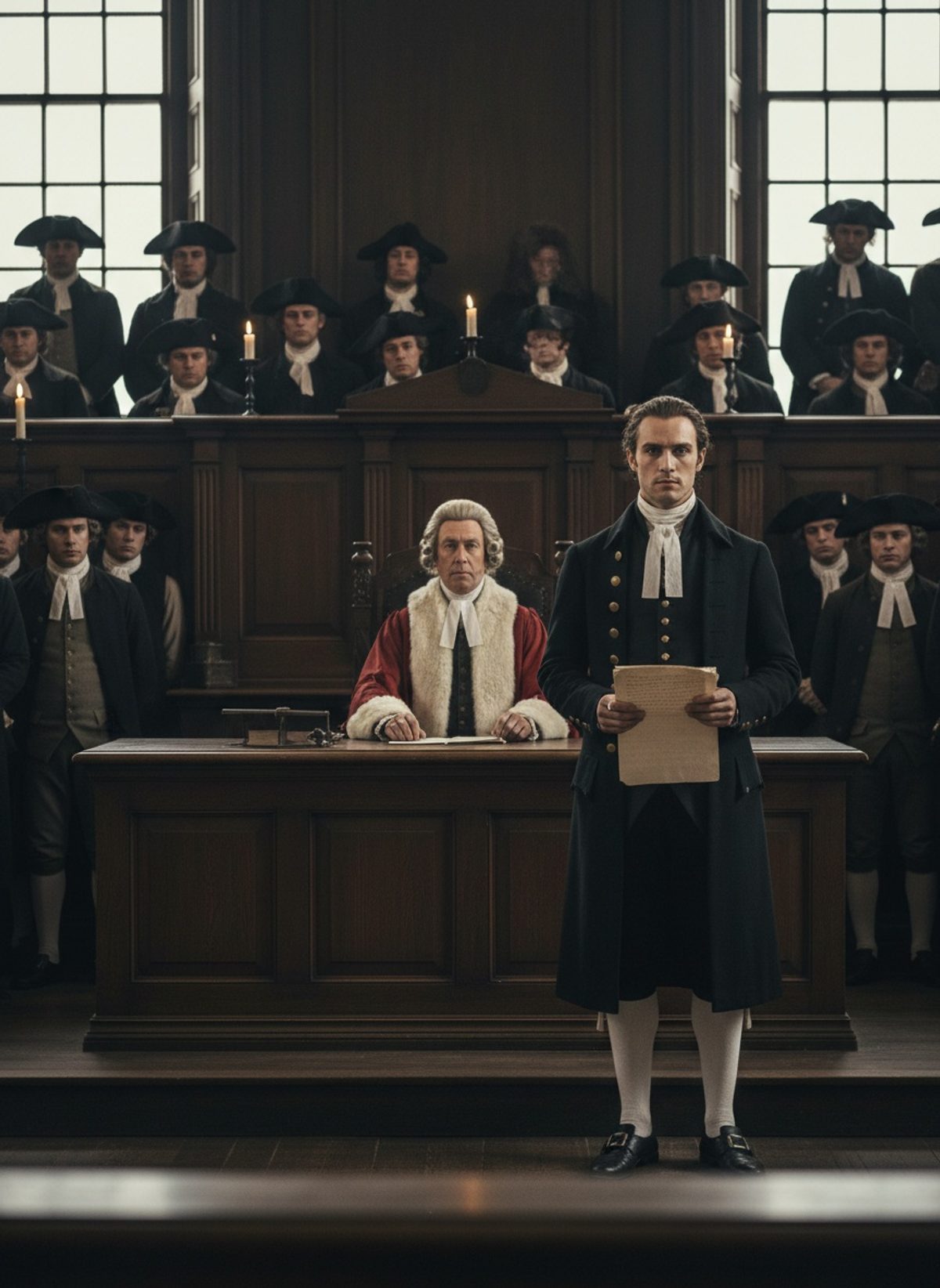
He was a weaver’s son from a humble Welsh village. He faced the British legal system with no legal training — but a heart ablaze for justice.
A Unlikely Champion Emerges
London, 1772. A bustling hub of commerce and culture, the city was evolving with the promise of progress, yet shadows lingered in the form of slavery. Among the crowd in the courtroom of the King’s Bench, a figure stood out not for his stature or attire but for the fervor in his eyes. Granville Sharp, the unlikely champion, was here not as a seasoned barrister, but as a man whose cause was justice. Born to a family that toiled in the modest craft of weaving, Sharp’s journey to this pivotal moment was anything but conventional. Having taught himself the intricacies of the law, he was driven by a singular mission: to challenge the very institution of slavery on English soil.
What most of the legal luminaries gathered that day in Westminster Hall might not have known was that Sharp had catalyzed his jurisprudential crusade years prior, driven by personal conscience and the scholarly resources of his elder brother. His quiet, relentless commitment eventually drew him into the lives of those deprived of liberty by a simple fault of circumstance or the color of their skin.
Breaching the Shackles of the Status Quo
The complexity of the British legal system worked more like a tangled web than an instrument of justice for those who found themselves ensnared within it. The proceedings in 1772 were historical, yet the echoes stretched far beyond the granite and oak of the courthouse. The parish in question, where twelve men and women lived under the bond of slavery, carried stories not often told — tales buried under the silence and stigma of their bondage.
Read next: The Day a Shoemaker's Son Walked Into Court for the Poorest
At the heart of the case was James Somerset, an African enslaved man whose fortune had placed him on British soil. In a moment that would become a pivotal junction, Somerset escaped his master, only to be recaptured. Yet, his plight had caught the eye of compassionate souls who reached out to Sharp, knowing of his burgeoning reputation as a defender of the disenfranchised. A letter was sent, pages filled with desperation. It implored action from someone who dared oppose the tide.
The courtroom drama unfolded with much fanfare and attention, as Lord Mansfield — the presiding judge — weighed not just evidence but the very principles of human liberty against entrenched economic interests. It was a decisive moment poised on the sharp edge of justice and profitability.
A Pen Stroke Echoes Across the Empire
Lord Mansfield, a figure of gravitas and renown, had been vested with the weight of a nation’s moral compass. With a wave of his pen, he brought down a judgement that would percolate through time — a judgement that acknowledged no man could be forcibly transported from the British Isles against their will. It was a decree that uprooted long-held assumptions and placed Great Britain on a slow, cautious course toward abolition.
For Sharp, it was more than a legal victory; it was a triumph of humanity. The echoes of this landmark ruling rippled through every corner of the realm, liberating the twelve enslaved individuals in that parish and setting a precedent that would bolster the abolitionist movement. The implications were profound and immediate: the moral fabric of British law had begun its journey towards a new consciousness where freedom was recognized as a universal right.
Sharp’s victory did not dismantle slavery with a single decision, nor did it topple centuries of injustice overnight. However, it sent a message, a clarion call to all corners of the British Empire that the principles of liberty and justice were not confined to race or status.
Why It Still Resonates: The Power of One Voice
The story of Granville Sharp and that fateful day in 1772 serves as a pertinent reminder that the courage and determination of a single individual can challenge entrenched systems. Sharp’s journey from a Welsh village to the heart of the British legal establishment exemplifies how knowledge, empathy, and relentless advocacy can effectuate profound change. His efforts highlight the extraordinary influence one person can wield when ignited by a sense of justice and a refusal to accept the status quo.
Despite numerous legal challenges that lay ahead in the fight against the institution of slavery, Sharp’s victory forged a legal and moral foundation that would later support more comprehensive abolitionist efforts. This unsung hero’s journey is a testament to the relentless pursuit of what is right, a rallying point for those who continue to push boundaries for equality and human rights across the world.
As the wheel of history turns, we are reminded that every informed choice we make carries with it the power to liberate, transform, and bring justice to those forgotten by history’s broad strokes. Granville Sharp’s triumph—a day when the spirit of a humble Welsh weaver’s son soared above oppression—resonates still, a beacon of hope that shines brightly in the annals of Britain Untold.