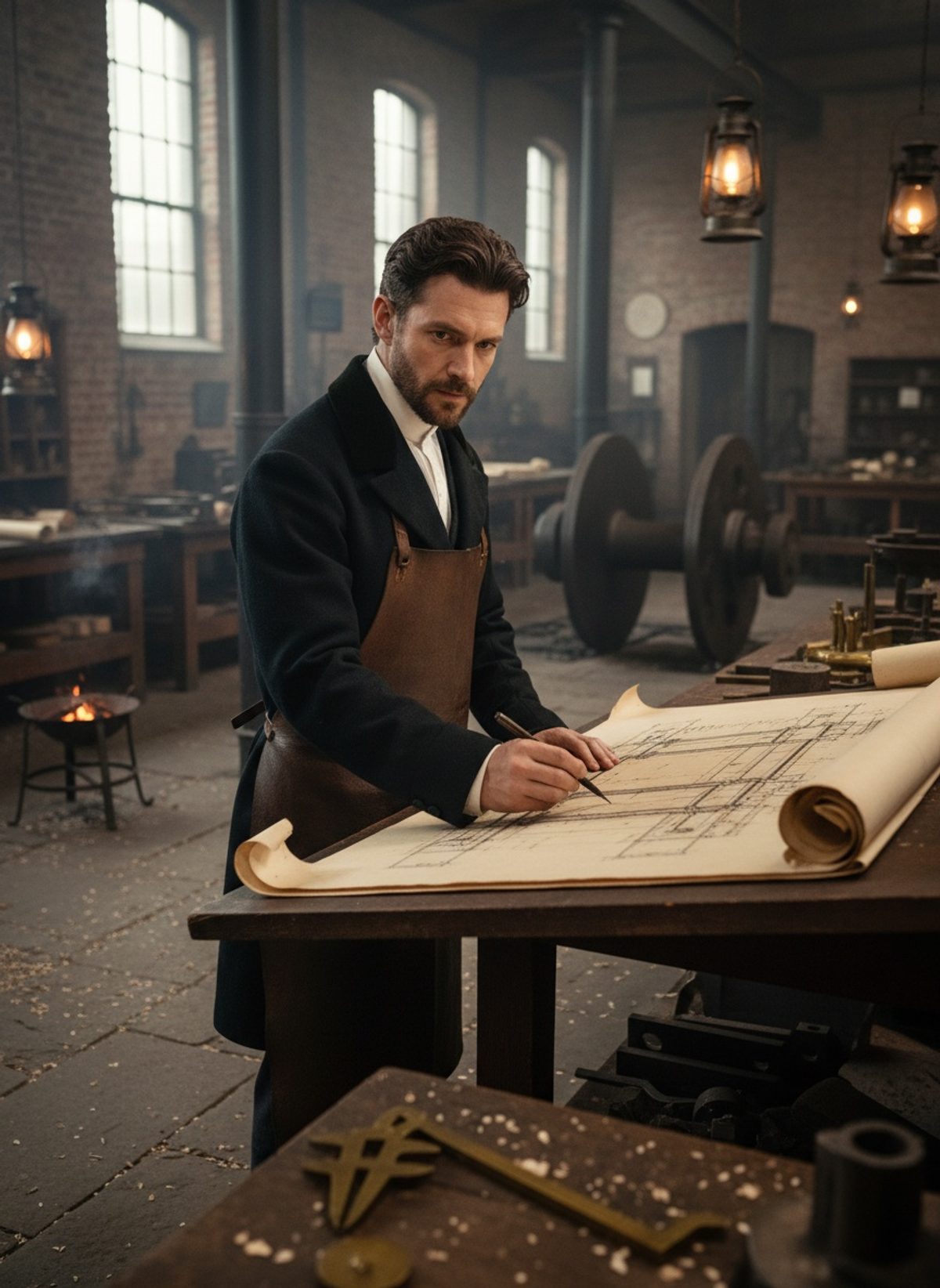
The morning light spilled over the rooftops of Glasgow on a brisk day in November 1828, illuminating the bustling streets teeming with the sights and smells of industry. Among the factories and workshops, one unassuming building would be the stage for an event that would transform not just a city or a nation, but the very backbone of the industrial world. Inside, a man stood with a singular vision: James Beaumont Neilson, a visionary whose innovative persistence would be obscured by a moment of fiery consequence.
The Fiery Birth of a Revolution
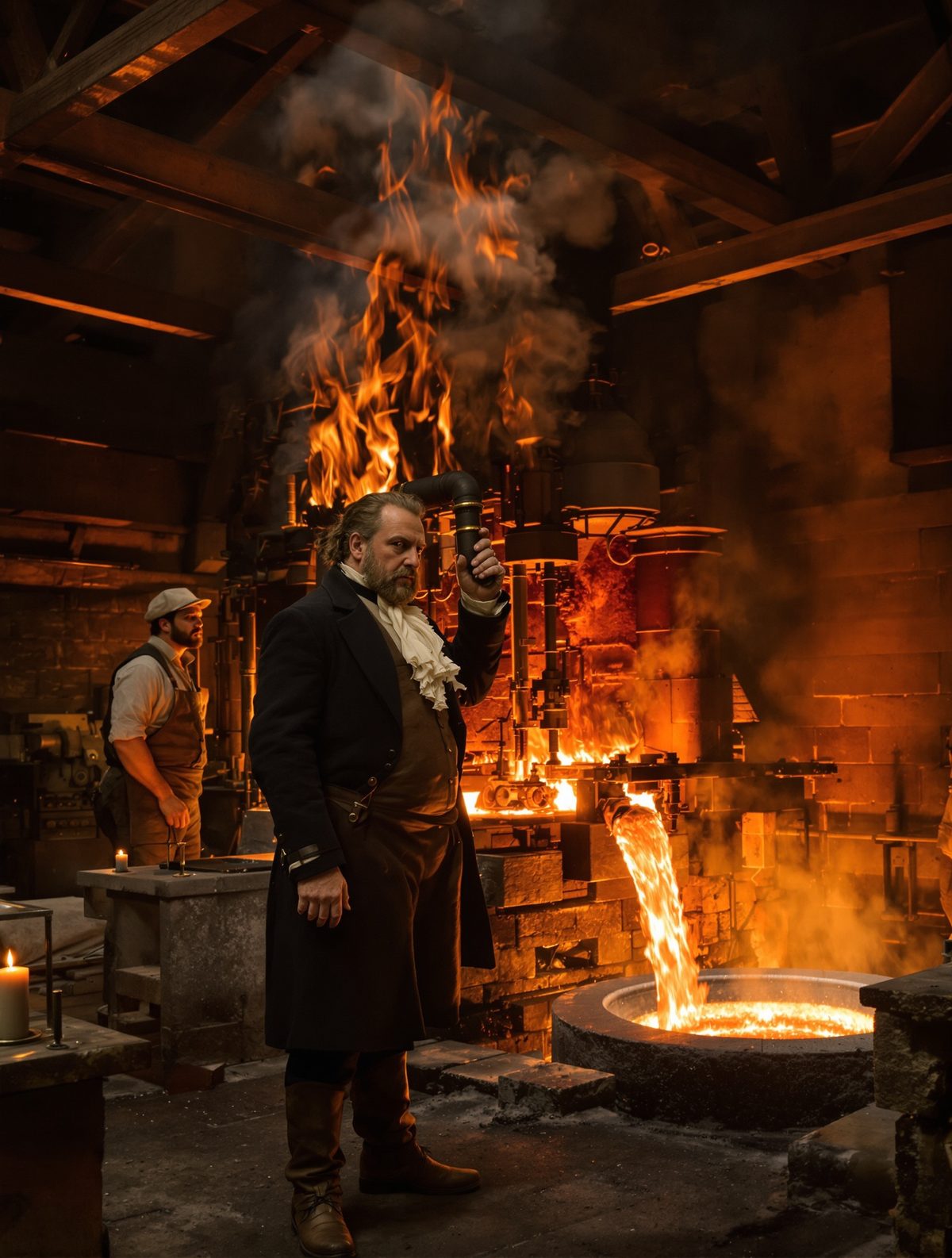
Neilson, a modest Scottish engineer, was on the brink of a breakthrough that had the potential to upend the entire iron industry. For many, November 1828 would be just another month of toiling and crafting in the industrial haze, yet for Neilson, these were the closing strides of a long, arduous journey to prove a simple yet revolutionary theory: that preheating the air entering a blast furnace could significantly improve its efficiency. What followed was a fiery endeavor that nearly turned his workshop into ashes — a catastrophic eruption that would have convinced any ordinary man to abandon ship.
The plan was driven by a simple observation: just as the human body works more efficiently warmed up, so too might air yield more combustive power if preheated. Neilson's workshop, under the shadow of scepticism, was set to test this idea. With the makeshift setup primed and the furnace ignited, the moment of truth arrived. Instead of the expected improvement, an explosive flash erupted, sending debris sprawling across the yard and singeing the eyebrows of all present. Yet amidst the smoking rubble, Neilson saw hope where others only saw folly.
A Lone Innovator in a Sea of Doubt
In the years following his explosive experiment, Neilson would toil tirelessly in the wake of disaster. Born to a humble family in 1792 and raised amidst the coal smoke of Scotland’s industrial heart, Neilson was no stranger to the challenging life of an ironmaster. With hands calloused by labor and a mind sharp for innovation, he pursued his path less by sheer genius and more through raw determination.
Read next: The Day a Miner's Son Gave the World Safe Light
While others scoffed, he refined his designs, seeking backing from the very experts who initially laughed at his wild notions. He toiled through ridicule and dismissed judgments at the hands of Scotland’s ironmasters, who were steadfast in their belief that ironmaking was an immutable craft. Yet slowly but surely, he began to show the fruits of his labor as fuel consumption decreased with each test iteration. He was breaking new ground in a hallowed craft, chipping away the decades-old constructs with each courageous step forward.
From Failure to Triumph — Perseverance Pays Off
By 1829, the Scottish iron industry faced a pivotal moment spurred by economic pressures and an increasing demand for iron. Neilson again tested his apparatus at the Clyde Iron Works, now endowed with improved safety measures and a deeper respect for the uncontrollable forces of combustion. This time, the controlled trial was a success. Neilson had achieved an astonishing feat: his "hot blast" method slashed fuel consumption by sixty percent.
Instead of the traditional 8 tons of coal per ton of iron, the new process required a mere 3 tons. The implications were monumental. Neilson's method reduced costs and revolutionized production, enabling ironmasters to produce more in a shorter time and drastically reducing overhead costs. His method was soon patent-pending and would become a staple in ironworks across Britain, Europe, and eventually the world.
An Unsung Hero of the Industrial Age
Despite his revolutionary contribution, Neilson remains a relatively unsung hero in the historical narrative of industrialization. His work precipitated Britain's massive expansion in iron production, igniting the vigorous spread of railways, bridges, and the countless machinations of a growing empire. Yet, in history's long corridor of innovation, Neilson stands somewhat in the shadows beside more celebrated names like James Watt and Robert Stephenson.
However, those aware of his impact recognized that Neilson's hot blast was not just an invention—it was the catalyst for a monumental shift that fundamentally bolstered the infrastructure of the industrial age. By optimizing production and reducing costs, Neilson's contribution allowed Britain to emerge at the forefront of global industry, bolstering economic power and fostering a domino effect that carried advancements across multiple sectors.
Lessons from the Furnace of Innovation
Why does the story of James Beaumont Neilson and the day he blew up his workshop matter today? It's a vivid reminder of the power of persistence, the courage to challenge conventions, and the impact of a single idea on a global scale. In a modern era characterized by rapid technological shifts and competitive innovation landscapes, Neilson’s narrative offers a resonant message: the most extraordinary changes often arise from the humblest of origins.
Neilson’s journey teaches us about resilience, the underappreciated perfection forged in the fires of trial and error, and the transformative force of seeing possibilities where others simply see ashes. As we forge ahead, seeking innovative solutions to meet contemporary challenges, might we be inspired by a Yorkshire ironmaster's quiet determination—a man who once dared to heat the air, defy conventional wisdom, and change the world.