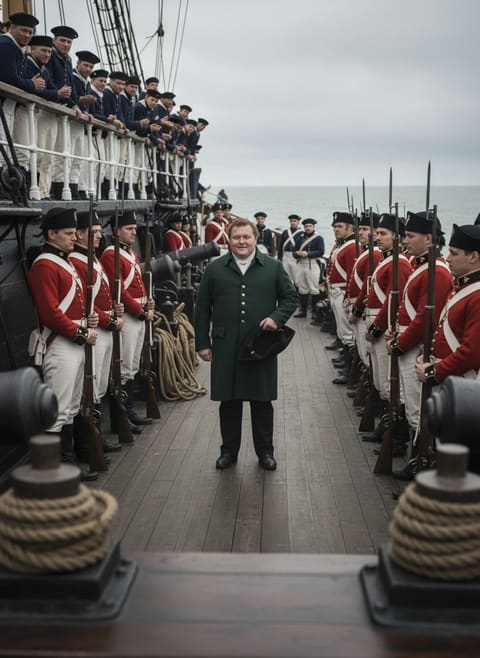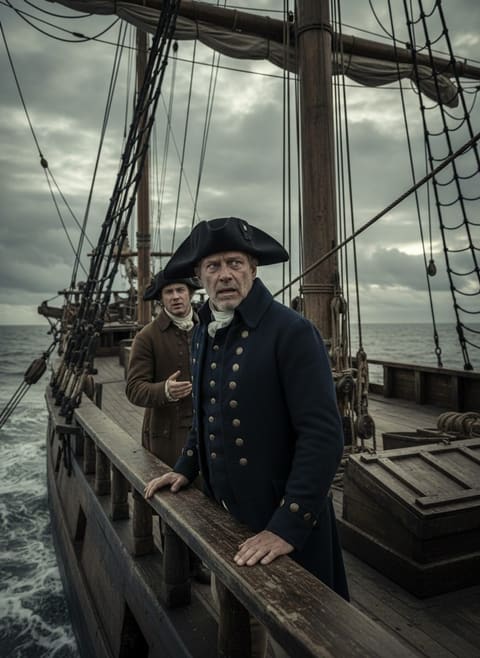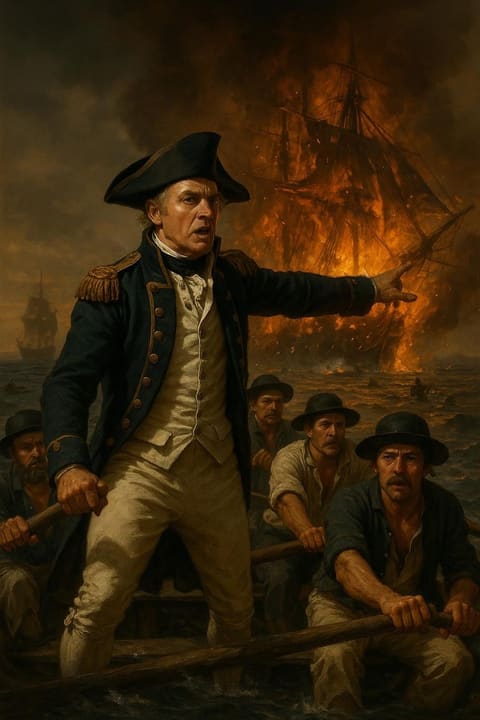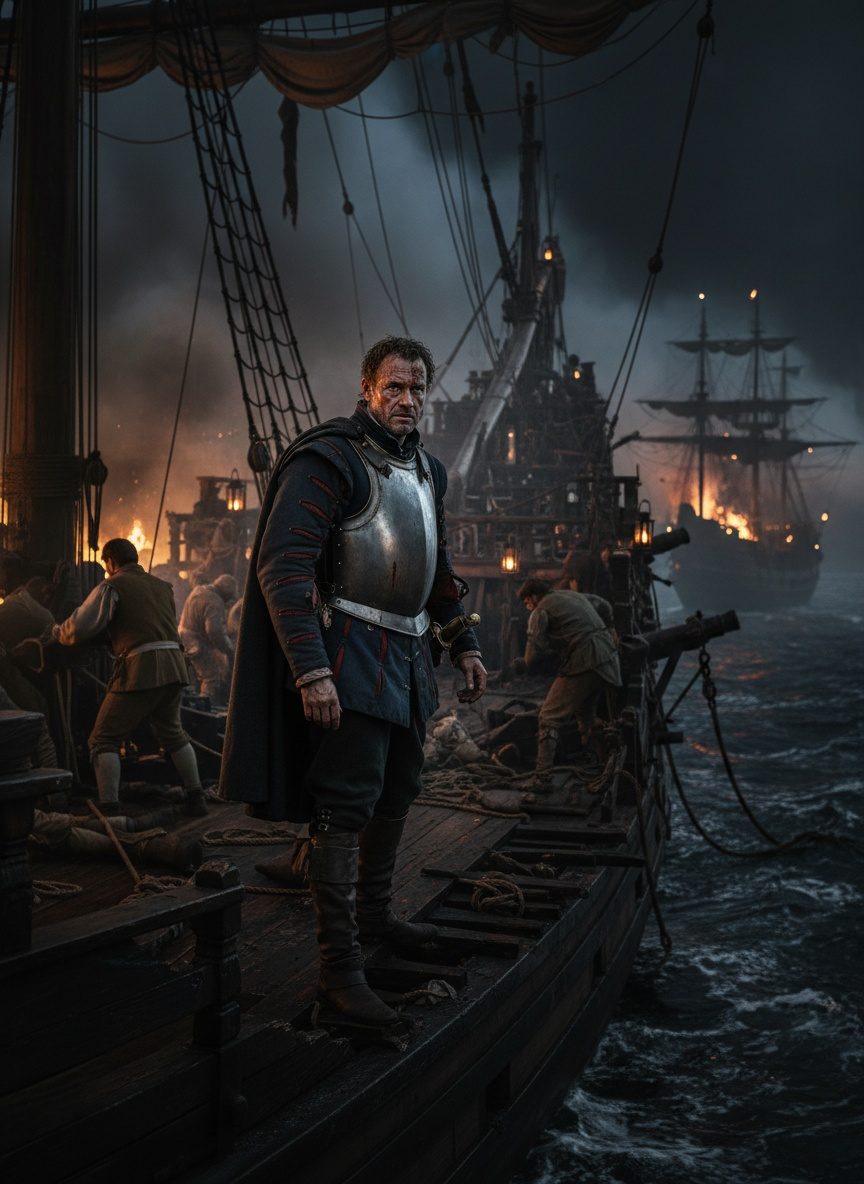
The air was thick with gunpowder as flames licked the edges of the deck. The deck of the Revenge heaved wildly, echoing the chaos that engulfed the ship. The cries of men and the roar of cannon fire blended into a symphony of war. Amidst the pandemonium, Sir Richard Grenville stood resolute, wounded but defiant, clutching the railing of his beleaguered vessel. His eyes, sharp as a hawk's, scanned the horizon. Fifteen Spanish galleons loomed menacingly, the sun glinting off their cannons ready to deliver their deadly payload. Grenville had a decision to make: retreat and save the lives of his men, or fight to his last breath. As dust and smoke coiled around him, time seemed to stand still, encapsulated by the grim determination that marked every man on board. His voice, though hoarse, carried the weight of history: "Continue the fight!"
The Battle of the Azores: A Glorious Resistance
In the late summer of 1591, Sir Richard Grenville led the Revenge, a stalwart English galleon, into one of history's most remarkable naval contests. The encounter took place off the coast of the Azores, where Grenville and his vessel found themselves isolated and outnumbered by a well-prepared Spanish fleet. Comprising fifteen grand galleons, each bristling with men and munitions, this armada sought to crush the Revenge and, by extension, the English spirit. Grenville's decision to engage rather than flee was not one borne of folly but rather a testament to the indomitable Tudor resolve.
The stakes were monumental. England's naval prowess had faced tests throughout the Tudor era, yet Grenville's defiance turned this encounter into a symbol of courage. With no hope of immediate respite or reinforcement, the Revenge charged into the midst of her adversaries, guns blazing and sails straining against the wind. The cannons roared, sending balls plunging into the Spanish ranks, while musketeers lined the decks, their shots darting through the dense smoke.
As the hours ticked by, the battle became a test of endurance as well as bravery. Grenville, undeterred by multiple wounds received in the fray, pressed on. Around him, men fought with valor, inspired by their captain's tenacity. They knew they were outnumbered, but their spirit remained unyielding. The English galleon withstood waves of attack, her sides battered and charred but her heart undaunted. Through the din of battle, the mantra ran silent and potent among the crew: if the Revenge must fall, she would fall as an emblem of resistance.
Read next: The Night the British Ate the President's Dinner
A Climactic Sacrifice and Its Aftermath
The night descended without reprieve, casting a shadow over a sea that had borne witness to one of the fiercest showdowns in naval history. With dawn's approach, the battered Revenge was still afloat, though by the narrowest margin. Continuous waves of Spanish assault had finally exacted their toll: the decks strewn with the fallen, the ship's hull pockmarked and leaking, sails shredded like so much tissue paper. Sir Richard Grenville, gravely wounded yet unbowed, considered his options. It was clear that further resistance would mean certain death for what remained of his crew.
However, before surrendering, Grenville ordered one final act of defiance. As he prepared to give the order to scuttle and sink his beloved ship by ramming it into the flagship of the Spanish fleet, he embodied the heart of the Elizabethan seafaring age. This last, desperate maneuver was more than an act of war; it was a declaration of honor and courage in the face of inevitable defeat. For fifteen hours of relentless combat, the crew of the Revenge had fulfilled their captain's battle cry: to fight an indomitable fight.
Read next: The Day a One-Eyed Admiral Sailed Into the Line of Fire
Ultimately, it was the ravages of attrition, not Spanish fire, that overcame Grenville. The Spanish captured the gallant English crew and transported Grenville aboard their flagship, where he succumbed to his injuries. Spanish officer notes later detailed his final hours — he died, though a captive, a hero to both sides for his relentless valor. Even as the Spaniards celebrated their hard-won victory, the reality of their "success" bore testament to the indomitable English resolve. As word of his stand spread, Grenville's story cemented itself in the annals of history, a luminous example of bravery and honor against insurmountable odds.
Why Richard Grenville's Stand Matters
Sir Richard Grenville's near-mythic defiance in the Battle of the Azores reverberates across the centuries not merely as a story of military gallantry but also as an enduring narrative of the human spirit. His determination, underlined by a profound sense of duty, transcended the maritime theaters of Tudor Britain, resonating in hearts and minds that value principle over pragmatism. His actions — and those of his valiant crew — underscored a tenet deeply ingrained in English maritime culture: valor overcomes numbers.
The fight of the Revenge was not simply a clash of sails and steel; it was a testament to the age-old human struggle against overwhelming odds. Grenville's choices and their implications transcend one era, speaking to any age that cherishes courage in the face of adversity. This story, therefore, remains an untold legend, a bright ember amidst the ashes of conflict, demonstrating that sometimes, in the maelstrom of battle, the ripples of courage can inspire generations yet unknown. England's naval heroics, as encapsulated in Grenville's stand, is a reminder of that timeless truth: that valorous deeds in the face of certain defeat echo beyond the confines of their day, lighting paths for those who come after.