The Mediterranean twilight was falling over Aboukir Bay, casting long shadows that seemed to stretch infinitely across the tranquil waters. Though the air carried a deceptive calm, it concealed a tension that crackled beneath the surface, a storm that awaited ignition. The bay, partially hemmed by the Egyptian coastline, was suffused with the salty tang of the sea, and the distinct smell of ships tightly anchored in anticipation of what the next hours might unleash. It was here, under this gathering gloom, that a decision of monumental consequence would unfold, where Admiral Horatio Nelson and the Royal Navy would forever alter the eastward ambitions of a certain French General, Napoleon Bonaparte.
The Quest for an Empire in the East
Napoleon's aspirations were grand and world-encompassing. He had earmarked Egypt as the jewel in his blueprint for an Eastern Empire — a project to sever Britain's critical lifeline to India and expand French influence across the fertile crescent. The sunlight of the Mediterranean had barely kissed the pyramids when his army arrived, and the French plan seemed unstoppable. But Napoleon's strategy hinged on command of the seas, and his hopes were fortified behind the broadsides of a formidable French fleet.
Yet, for all their grand aims, the French were hounded by an incessant worry. Nelson, a nemesis adept at naval warfare, had sought tirelessly for their fleet across the breadth and depths of the Mediterranean. They knew they were being hunted, yet the sense of invincibility perhaps clung too strongly to their minds, as a shadow lingers at dusk, as they dropped anchor in Aboukir Bay.
The Hunt Across the Blue Expanse
Nelson's hunt for the French was a tale of perseverance and intuition. With a fleet comprised of daring seamen, seasoned in the throes of battle, he combed the expanse of ocean expansively, stretching across waters from Malta to the Aegean. The pursuit was relentless, and his ships bore witness to the frustrations of sailing vast distances guided by the slimmest of intelligence and weather-beaten instincts.
Read next: The Day a British Captain Stood Between Slaves and the Sea
Word of Napoleon’s arrival in Egypt had reached Nelson, yet pinpointing the French fleet remained elusive until that fateful August of 1798. The winds seemed to guide Nelson toward Aboukir Bay, an inlet nestled towards Alexandria. Arriving with the momentum of determined winds, the British encountered a fleet at anchor, inadvertently inviting an engagement, as if destiny itself were guiding them into place.
The Hour of Reckoning
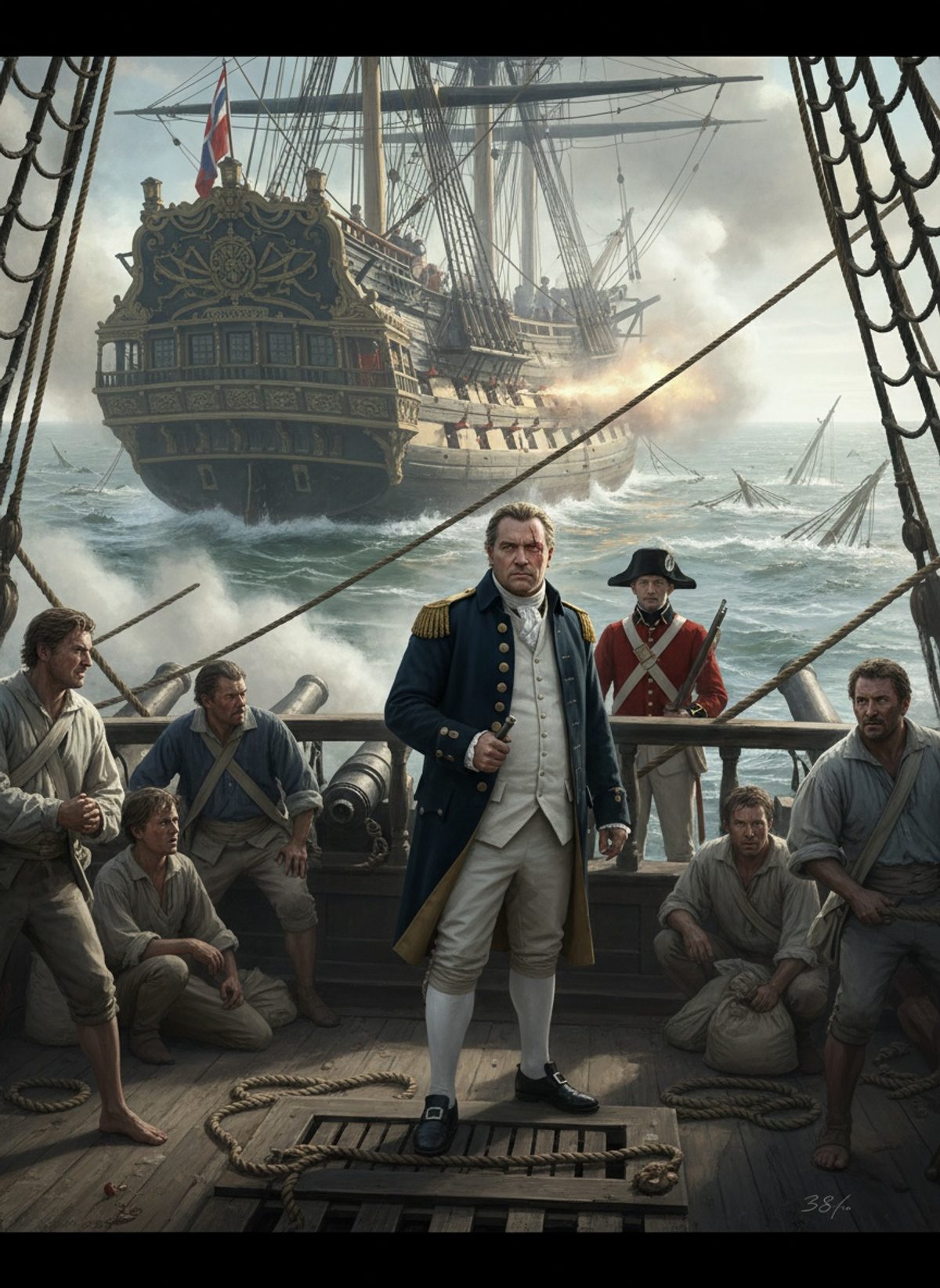
The battle commenced with a ferocity hitherto unseen under the Egyptian sky. As the light drained from the horizon and day yielded to night, the British fleet bore down upon the unwary yet well-positioned French line. Nelson's genius lay not just in his aggressive spirit, but in his ability to think beyond conventional strategies. Ignoring the risks of a dusk assault, where flashes of cannonade briefly lit the darkness, he ordered his fleet to sail between the anchored French ships and the shore—a manoeuvre unexpected and audacious.
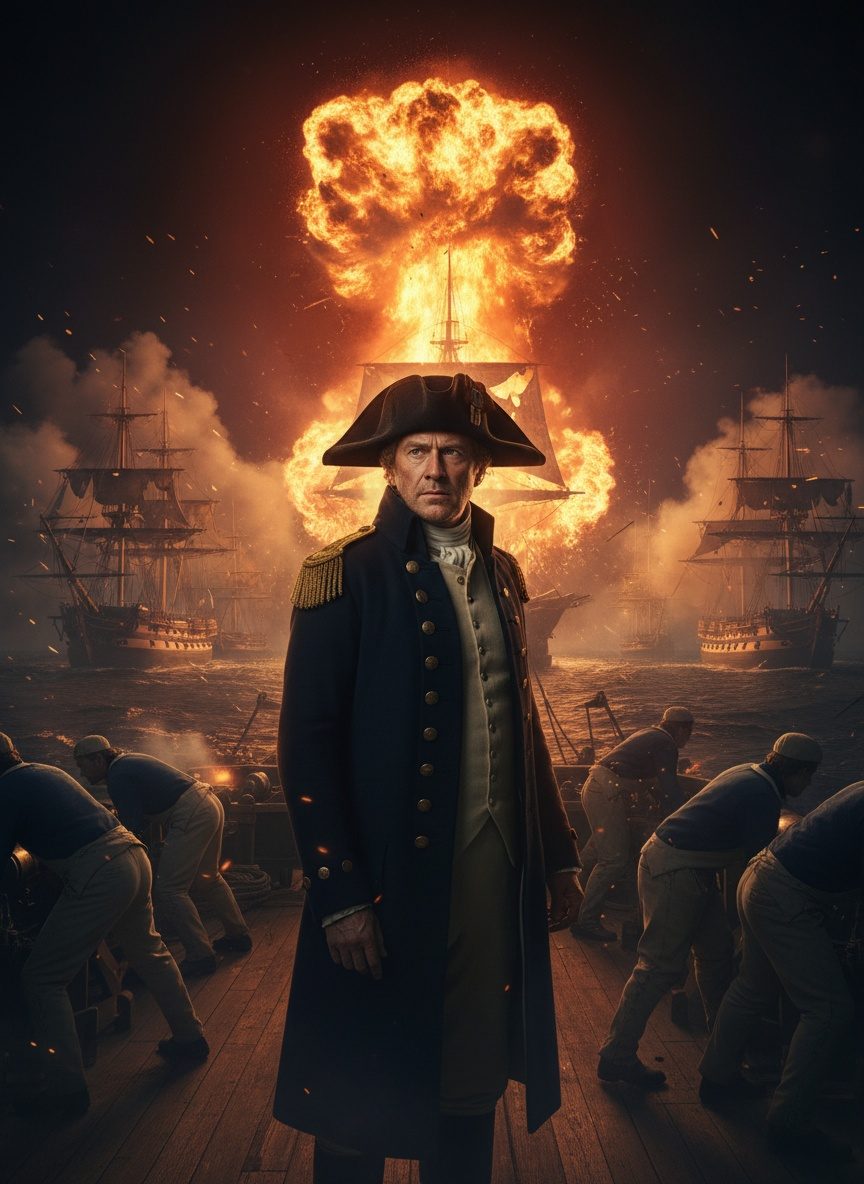
With this formation, Nelson's ships unleashed broadsides into the unprotected sterns of the French vessels. The sound was thunderous, reverberating across the bay, overshadowing the relentless waves and screaming winds. Amidst this cacophony, one resonant explosion would lead to a startling silence — the French flagship, L'Orient, succumbed to the relentless barrage, erupting in flames that illuminated the night sky. This inferno was so intense that it temporarily halted the engagement as combatants on both sides were momentarily awestruck by the deadly beauty of the explosion.
Aftermath in Flames
The dawn revealed the extent of the British triumph and the calamitous downfall of French naval power in the region. Smoke rose from the charred remains, embers still glowing on waters now heavy with the detritus of war, confounding Napoleon's vision of an Eastern Empire as surely as the scorching sands of Egypt blunted the ambitions of earlier conquerors. The ragged French fleet, now reduced to mere remnants of its former might, drifted aimlessly, their morale shattered, their purpose thwarted by the iron will and ingenuity of Nelson.
This victory at Aboukir Bay left echoes of British dominance ringing across the Mediterranean, curtailing Napoleon's ambitions to alter the world order through conquests that only seemed plausible in imperial dreams. The battle was not just a tactical masterstroke but a domino that set the stage for future encounters — the tipping point toward Trafalgar.
A Lesson Written in Echoes
In the retelling of this bold engagement, we find the confluence of human audacity, the fragile dance of strategy, and the perennial truth that even the grandest designs of empire rest upon the knife's edge of fortune and decision. Nelson’s triumph in Aboukir Bay resonates as more than a historical victory; it is a stark reminder of the cost of ambition unchecked by caution and the relentless pursuit of an audacious vision. These waters, once witness to chaos and devastation, still echo with lessons of strategic brilliance and the hopeful folly of youthful dreams drawn on ancient sand. In an era of grand movements and sweeping change, it was here, beneath the skies of Egypt, that a single night reframed the map of power in the Mediterranean.