The British victory was complete. Until, remarkably, it seemed like it almost wasn't.
The Long March to Washington: A Veteran Army's Relentless Advance
August 1814 found the British turning their attention from the distant fields of Europe to the fledgling nation across the Atlantic. British military forces, seasoned through relentless campaigns against Napoleon, now set their sights on America, aiming to strike a decisive blow during the War of 1812. These were no mere conscripts; they were battle-hardened veterans with years of warfare etched into their beings, willing to brave another grueling endeavor in the oppressive heat of a Maryland summer.
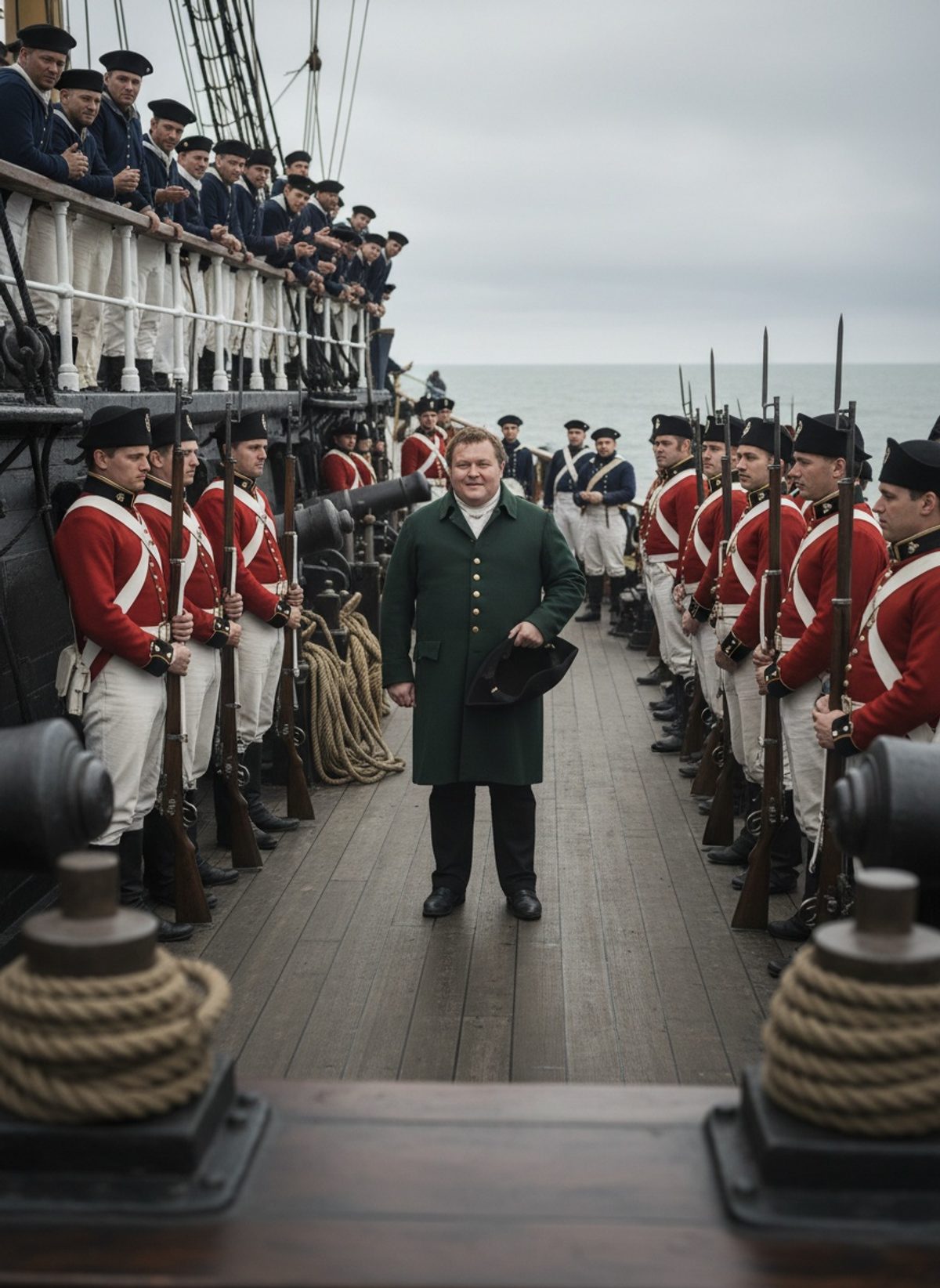
The landing in Benedict, a sleepy port town by the Patuxent River, marked the start of an audacious venture. Four thousand strong, imbued with confidence, the British forces began their fifty-mile trek toward Washington, D.C. Under the command of Major General Robert Ross, each step resonated a taunt to the inexperienced American defenders. Heat poured from above; it was an inferno, with temperatures soaring close to 100 degrees Fahrenheit. Yet the veterans pressed on, undeterred by the sweltering conditions that were wilting American resolve.
Along their way, the British troops found sustenance in unexpected bounty—ripe orchards and overgrown fields whispering of a half-abandoned countryside. The marching soldiers, ravenous and unyielding, took in what they could, relishing this unexpected gastronomy as they moved ever closer to their illustrious target. It wasn't just sustenance they absorbed from the land; there was defiance in each orchard pillaged, a reminder that an ocean of might had landed upon American shores.
Read next: The Day a British Captain Stood Between Slaves and the Sea
The force of their resolve bent all nature around it. Despite spies informing the Americans of the impending assault, it was the British who held the upper hand. In mere days, they arrived at Bladensburg, a scant six miles from the capital. There, amidst the acrid smoke and gunpowder haze, they faced a hastily assembled, woefully underprepared American force. What transpired was less a battle and more a rout. The American defense folded within thirty minutes, bowing to European experience and military precision. At the end of this short, fierce engagement stood an open pathway to Washington—a city now precariously balanced on the edge of calamity.
The Feast of Victory: Dining in the President's House
On the evening of August 24, 1814, as twilight painted swathes of deep indigo over the city, British forces marched triumphantly into Washington, D.C. The American capital, young and vulnerable, lay vulnerable before them, its cobblestone paths and stately structures eerily silent, save for the triumphant echoes of boots on its streets. Commanding his troops, Ross knew to seize not just the city, but the symbolic heart of the nation—President Madison's own abode. The President's House, destined to be rechristened the White House, stood as an emblem of the American experiment, now inviting the enemy under its roof.
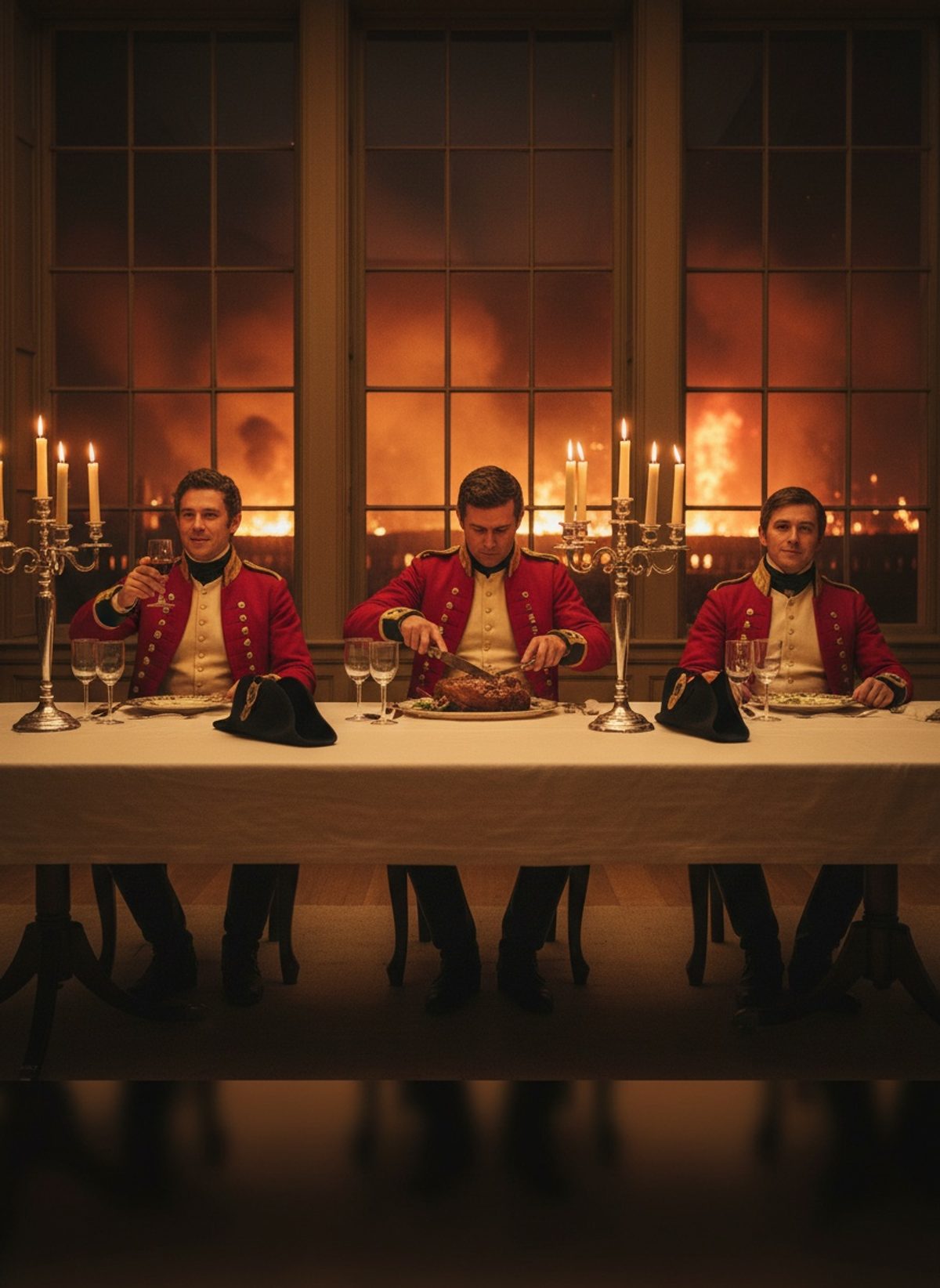
What they found there was something out of an improbable tale—a dinner table set for an expected guest list of dignitaries. The dishes cooled on the table, elegantly arranged, their state untouched by the absence faced by officials who fled as Washington braced for invasion. Undeterred by the oddity of the scene, the British soldiers reveled in the rich spread laid before them, a banquet prepared by unsuspecting servants. With grim amusement and celebratory fervor, they savored the President's meal, their mockery almost palpable in the hollow, uninvited dinner party.
Yet the grandiosity of this feast was but an overture to the impending act of destruction. Candle by candle, wick by wick, the British orchestration unfolded. Torches were set to the house’s carefully carved eaves, the flames licking higher as they consumed lath and plaster in their dance of retribution. To these battle-toughened veterans, the looming blaze symbolized a testament to their dominance—a flaming exclamation mark carved into the American narrative. This night, the House wore a crown of fire, its brilliance washing over the city—a pyre marking both triumph and profound loss.
Embers in the Ashes: The Meaning Behind the Flames
As daylight crested the horizon on August 25, the air in Washington was thick with the acrid scent of smoke and the lingering fear embedded in its populace. The President's House stood as a blackened shell, its walls charcoalized shadows against the morning sun. Other significant structures, including the Capitol and the Treasury, bore similar scars, forever changed by the blaze of British reprisal. The city—humbled, yet still standing—bore a solemnity, a testament to its fragile yet enduring spirit.
For the British, their sojourn in Washington was complete. They exited the gutted city as victors within days, retreating to their ships with the satisfaction of their mission accomplished. But the impact of their bold incursion stretched far beyond any immediate military advantage. It was not simply a matter of razing buildings; it was an assault on the American psyche. The war's chaos was made emphatically tangible, shaking the core of the young republic with a fiery lesson in vulnerability.
Though the destruction was substantial, it prompted a resounding comeback. The city's residents—a tapestry of public figures and ordinary citizens alike—recoiled from their initial shock, emboldened rather than broken. The burning of Washington ignited a spirit of resilience, fueling efforts to rebuild and re-imagine the capital. Within three years, the White House saw new walls rise from its foundations, an act embodying America’s unwavering determination to rise from its ashes stronger.
The specter of that night in 1814 remains a significant crevice in the annals of American history—a stark reminder of vulnerability as well as strength. The enduring image of a burning White House serves as a compelling invitation to reflect on the fragility of power and the cyclical nature of conflict. In remembering the flames that engulfed Washington, we find lessons in perseverance and the relentless march of history, always leaving room for redemption amidst devastation.