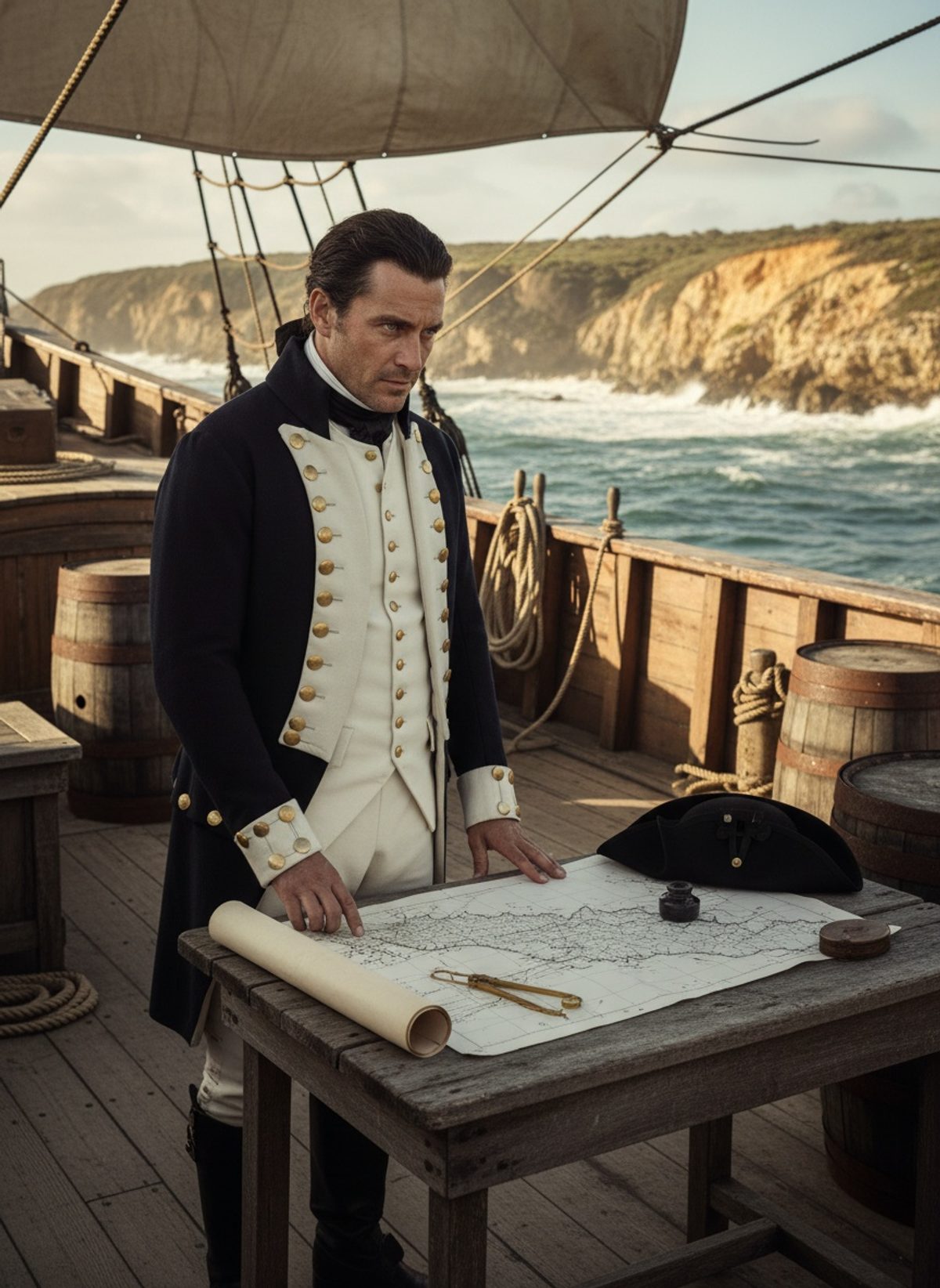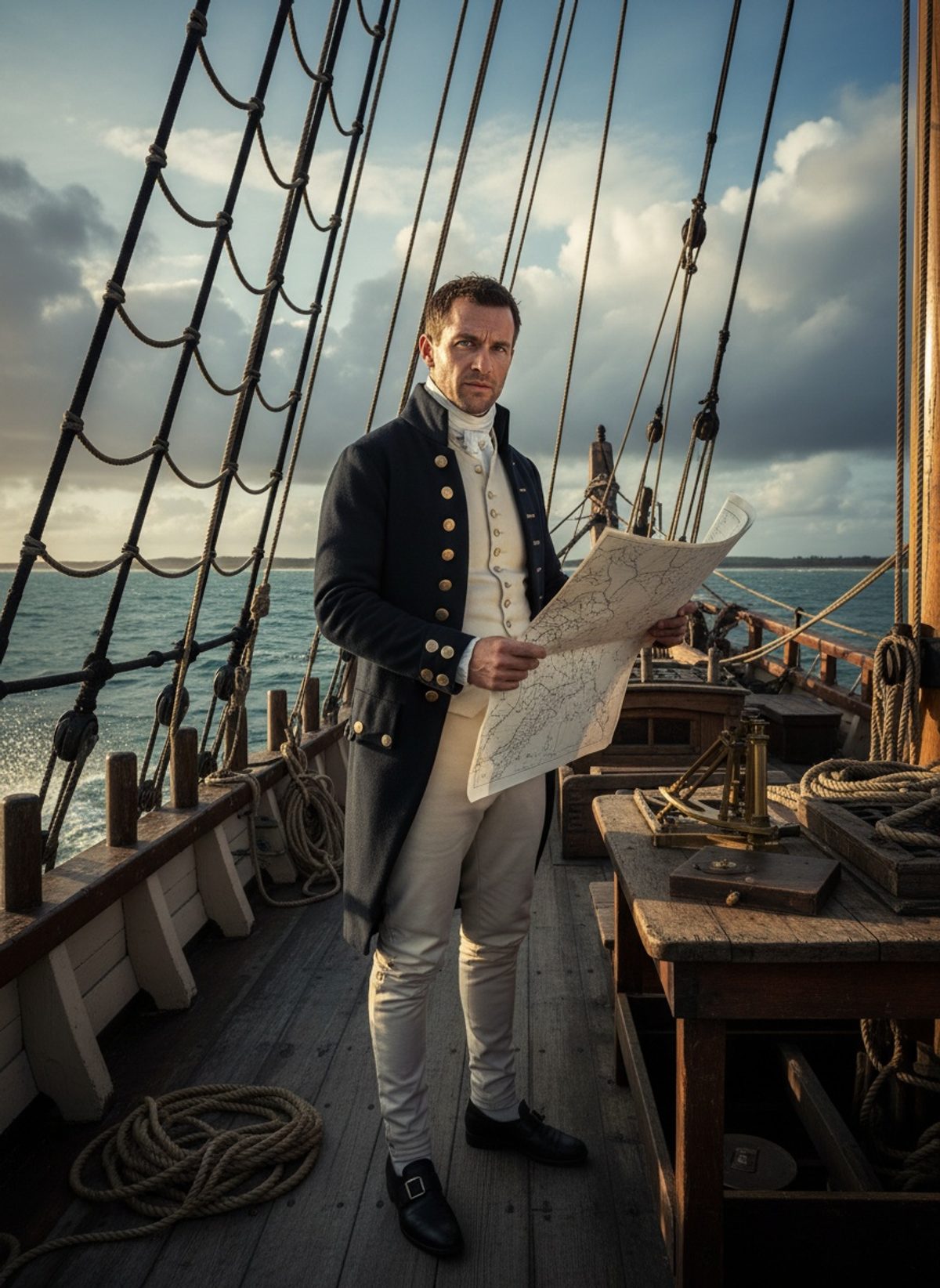
Matthew Flinders was an ordinary seaman. His maps were extraordinary.
In the annals of maritime exploration, Flinders is a name that echoes with the resolve and tenacity of a man against nature and his own frailties. By the turn of the 19th century, Flinders had already earned his stripes as a fierce navigator. Yet his most defining venture was not just an expedition across foreboding oceans; it was a battle against the very constraints of his own body and spirit. It all began in 1802, a year wedged between the quiet revolutions of industrialization and the cacophony of Napoleonic wars. While the great European powers sketched lines across foreign lands, Flinders set himself upon a singular mission—map the complete coastline of Australia, a continent vast and largely unknown to Europeans.
Unlike many exploration we read about in textbooks, this was not just about discovery; it was about precision, an obsession for creating a nautical masterpiece unlike any other. Flinders' endeavor was borne out of a collaboration with the British Admiralty, a plan meticulous in design but hazardous in execution. He had already circumnavigated parts of the continent with Lieutenant George Bass aboard the HMS Reliance, but now he must convince his superiors that a more exhaustive survey was essential. With a single ship, the HMS Investigator, barely seaworthy and a crew tested by the rigors of endless voyages, Flinders set sail into an ocean that promised little mercy.
The vessel crept along the southern coast of Australia, each stretch of land a puzzle. Flinders' personal trials mirrored his external battles; an obscure accident had rendered his right hand nearly useless, a testing blow for any navigator dependent on delicate cartographic skills. Yet, adversity lit a blazing determination within Flinders. With fateful irony, the injury turned his left hand—often dismissed in the realms of right-handed dominance—into his greatest tool. The lands he encountered were both beguiling and brutal, where indigenous tribes had roamed long before the notion of borders, and where frontier settlers now saw opportunity.
Read next: The Day a Scots Botanist Crawled Into a Volcano Alone
The doldrums of the sea are weary, its monotony only broken by the sudden bursts of danger. During one of such arduous stretches, one needs to imagine the salty grit in the air, the ceaseless lapping of waves against the creaking hull of the Investigator. Days and nights blurred into an endless cartography of unforgiving coastlines. Flinders meticulously marked these adversaries with precision, down to the smallest headland or bayhead made distinct with his now unyielding left hand.
Meanwhile, on deck, survival was its own art. The crew, beleaguered by scurvy and dwindling supplies, was a portrait of endurance. Many fell ill as their bodies began to break down; still, mutiny simmered beneath the surface—a hazard on some voyages when hope seems adrift. Yet Flinders, stern but understanding, managed to maintain focus and resolve among his men, their camaraderie forged like steel in the heat of shared hardship. It could be said that Flinders’ most critical skill was not his navigation, but his leadership in the bleakest of times.
If the lands they mapped were vast and unknown, then so were the challenges Flinders faced when returning to the European map of the world. The Investigator was a ship teetering on collapse, its body riddled with rot, echoing the deterioration of his crew. Knowing the potential demise of his endeavor was imminent, Flinders made the unthinkable decision to leave his ailing vessel for a smaller sloop, transferring not just crew and essential supplies, but sacks of crucial maps and charts that bore witness to their journey. Each day brought the specter of annihilation, yet Flinders clung defiantly to the task, choosing obscurity over glory for a cause larger than himself.
His return was bittersweet. Shipwrecked on the French-controlled Isle de France, now Mauritius, Flinders was detained under strained political circumstances. Trapped for years, he waited in a liminal space waiting while his charts languished alongside him. In time, his release came with the peace between England and France, but not without having faced the isolation and uncertainty an explorer knows all too well. Upon returning home, it was not accolades that awaited Flinders but a domestic struggle to see his hard-won maps published and recognized.
Though much of Flinders' story was eclipsed by posthumous recognition, his painstakingly detailed maps offered a new dimension to the world. Shores once schematic and abstract gained their form and true scale, and the term “Australia”—a nod to the earlier “Terra Australis”—found a place on the tongues of scholars and average Britons alike. The task that took him around a continent and separated him from home led others to bridges and opportunities, explorations of new lands that would shape nations.
That the world knows Australia today in its wholeness is thanks to a man who learned to navigate again with a left hand, enduring seasons of estrangement not from the Pacific but from certainties back home. The grit of Matthew Flinders endures as a quiet defiance against the easy tides of obscurity, his legacy entrenched as both mapmaker and visionary in the annals of history. His tale reminds us that behind each quaint line on an atlas is a story powerful enough to change our perception of the world, and those stories—like Flinders' hand-drawn coasts—should never be forgotten.