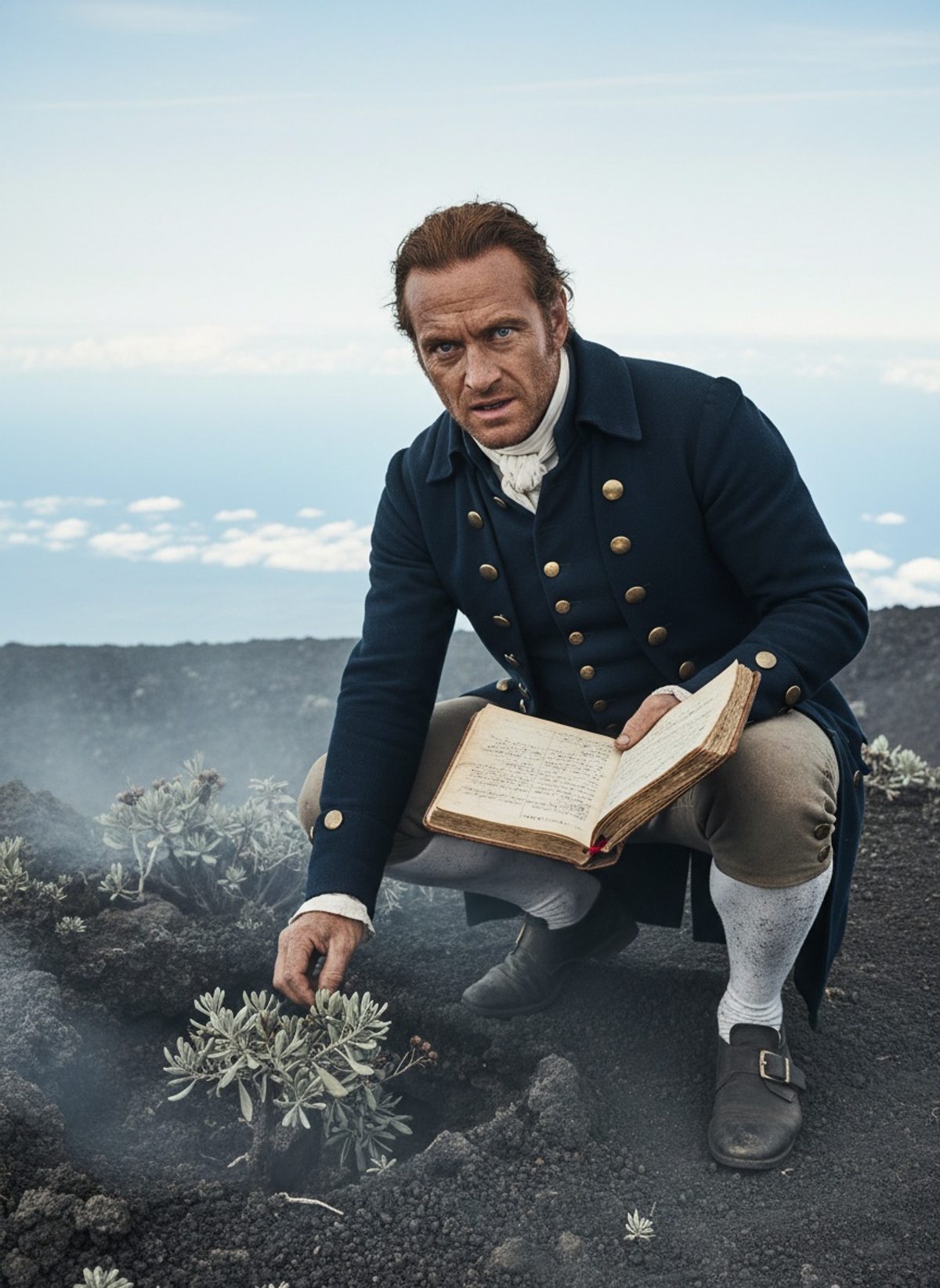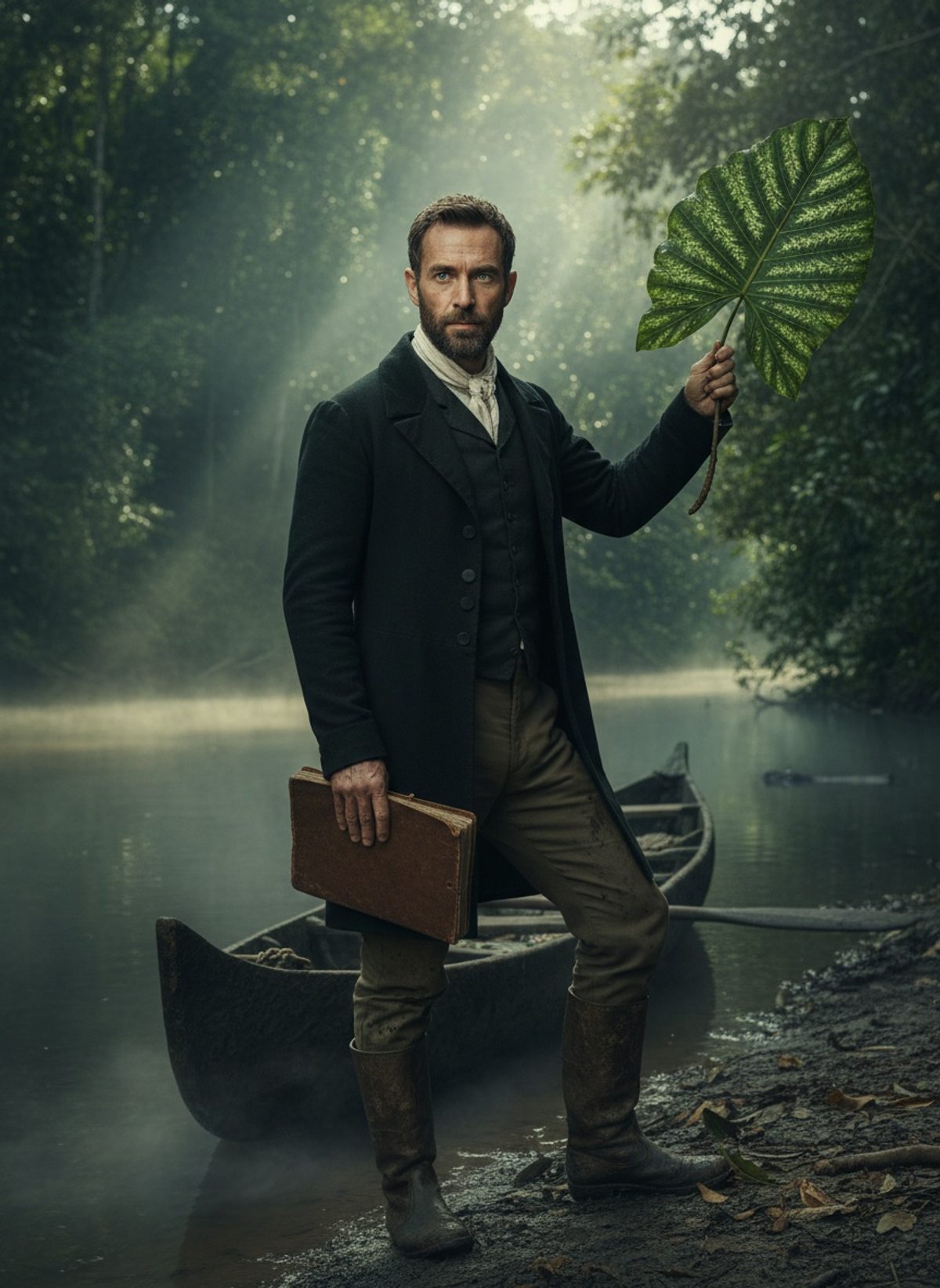
Thick, suffocating vines twisted around his ankles as Richard Spruce slashed through the undergrowth with his machete. The air was thick with moisture, every breath a struggle against the blanket of heat pressing down upon him. Above, the Amazon canopy provided sparse respite from the blazing sun, dappling his path with patches of shadow. It was in this untamed wilderness that the thin, asthmatic Yorkshireman moved with a peculiar confidence, alone but unfazed by the jungle’s daunting vastness.
Richard Spruce, a man cast from the quiet mold of an English schoolmaster’s son, found his destiny amongst the riotous greens of the Amazon. Arriving in Brazil in 1848, he had journeyed there with little more than an insatiable curiosity and a love for botanical wonders that bordered on obsession. Now, in the heart of a continent vast and unknown to Western eyes, he became a lone explorer his contemporaries scarcely knew about, armed with the knowledge that every plant had a tale to tell.
Though his entry into this verdant labyrinth was marked by solitude, Spruce was far from directionless. His aim was scientific, and his records would come to illuminate the botanical possibilities of a world much uncharted. Over the fifteen formidable years he spent navigating the maze of tributaries, Spruce catalogued no fewer than 30,000 plant species. This effort not only expanded human understanding of the Amazon's biodiversity but also laid critical foundations for modern botany.
Yet, it was not the mere act of cataloguing that would secure his legacy. It was his discovery and subsequent conservation of certain species that would eventually disrupt the tide of medicine. During his explorations, Spruce's observations led him to identify and preserve the seeds of the fever bark tree in Peru—trees that would become indispensable in the production of quinine, a vital treatment for malaria during a time when the disease ravaged populations globally.
Read next: The Day a Devon Captain Sailed Into the Fog and Found a Continent
As he waded through the Amazonian rivers, his boots caked in mud sticky with the sludge of countless seasonal floods, the ever-present chirping of insects formed an almost calming lullaby to accompany his work. Spruce carried his precious specimens and journals with a carefulness that belied the spine-chilling dangers surrounding him. Jaguars lurked invisible amongst the thickets, while venomous creatures made the very earth a treacherous map to traverse. His bad chest—a chronic condition—would rise in desperate, irate protests to the work, yet Richard's resolve remained granite-hard.
In a world driven by profit and imperial conquest, Spruce's mission was propelled by purescientific inquiry. Unlike many of his compatriots, who wrought change upon lands with colonial dominion as their vision, Spruce viewed the flora before him with the sacred reverence due something ineffable. Principally, his was a labor of love, often stretching him beyond his means, both financially and physically. His journal offers entries of utmost respect for indigenous tribes, whose trust he gained not by force, but through humility and genuine curiosity in their ways.
The fever bark extraction, an effort resultant out of necessity more than greed, caught Britain’s eye as the colonial powers scrambled for quinine during tumultuous times. This simple bark became the gold of medicine, the lifeline for soldiers and civilians on continents far-flung from jungles it called home. One must pause to reflect upon the journey of these seeds, cradled from rich South American soil into the very hands that would extend life, providing relief across sprawling empires.
After more than a decade in the deep emerald stretches of landscapes unfamiliar and teeming with dangers both beastly and unseen, Spruce finally returned to England. His health was worn, the asthma exacerbated by years of relentless humidity finally taking its toll. Yet he bore with him a wealth of knowledge and discoveries that would etch his name into the annals of botanical history. Back home, his once quiet voice began to narrate tales of instances that defied Western imagination, giving voice to the Amazon in more than just scientific texts but in the fuller, richer context of human experience.
In his later years, Spruce’s contributions to botany went largely uncelebrated outside specialized circles, overshadowed by the louder conquests of those who wielded the sword over the spade. Yet for those who know of his legacy, Richard Spruce remains a testament to humanity's voracious pursuit of knowledge—a gentle reminder that even the smallest seed, both real and metaphorical, can alter the course of history in ways monumental and unimagined.
In pondering the legend of Richard Spruce today, one might consider the power of quiet determination and the impact of exploration unmarred by conquest. His journey into the Amazon is a story not of glory or riches, but of discovery achieved through respect and tenacity. For as we continue to strive forward into new frontiers of science and exploration, the lesson of Spruce’s unassuming courage reminds us that the path to enlightenment often winds through the dense, difficult undergrowth of the unknown, where the greatest treasure is knowledge gained for the betterment of all.