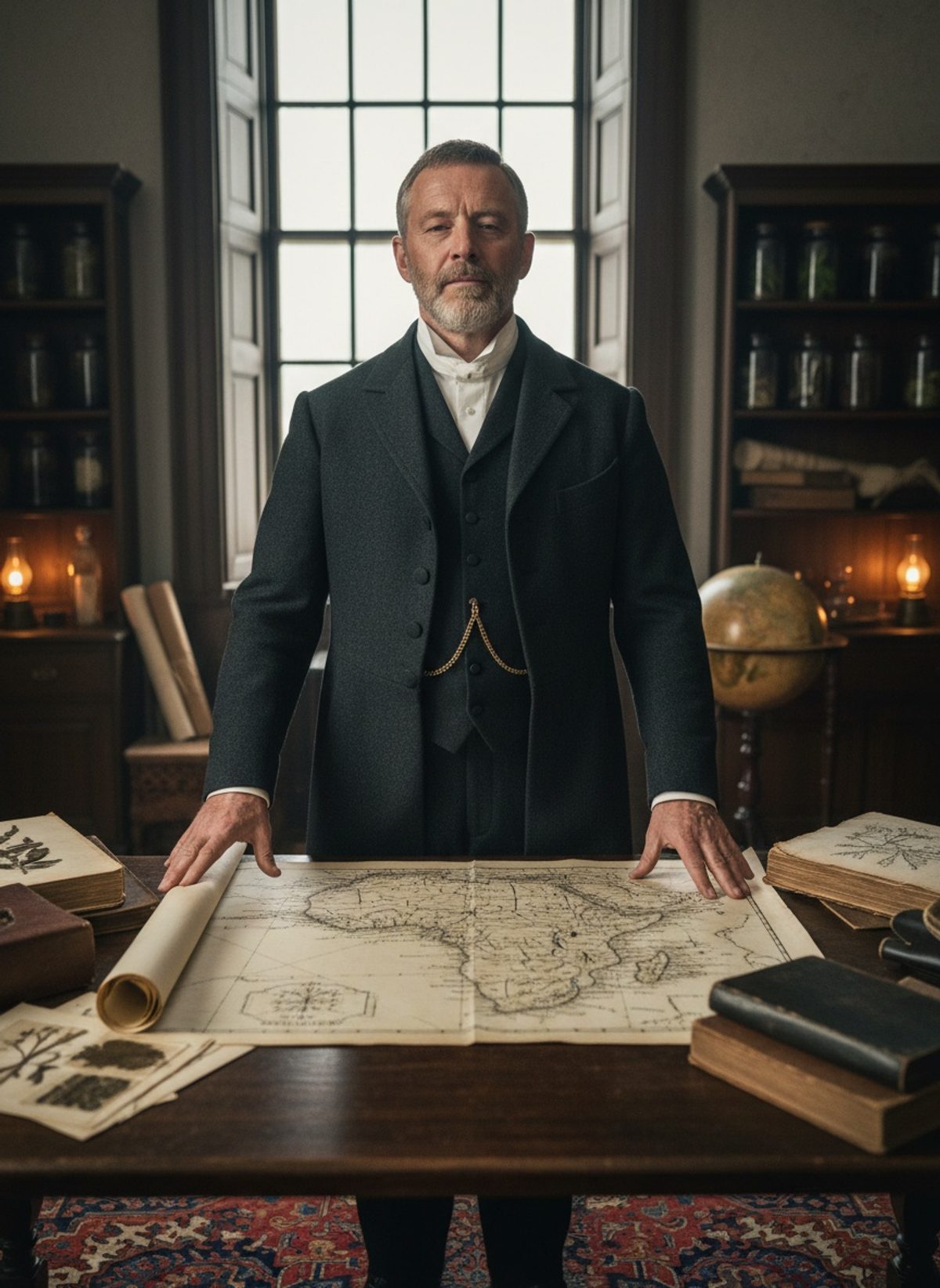
He had never set foot on African soil. Yet, from his study in England, James Rennell charted the intricate veins of a continent that lay thousands of miles away.
The Wounding Blade and An Imposed Stillness
In 1795, James Rennell's world constricted to the confines of a dim study in London. Once an ambitious surveyor mapping the raw expanses of Bengal under a blazing Indian sun, Rennell's career had come to a brutal halt. His life took a dramatic turn due to a fateful encounter with a Maratha's sword in India, a clash that left his shoulder severely wounded and permanently damaged his sight. This injury, a silent thief of his independence, forced him into an unplanned exile from physical exploration.
Confined and half-blind, many would have expected Rennell's exploratory contributions to cease. However, the same intelligence and tenacity that guided him on India's distant frontiers now turned inward, searching for meaning in shadows and scattered lines on rough paper.
Words as Compass and Chronicle
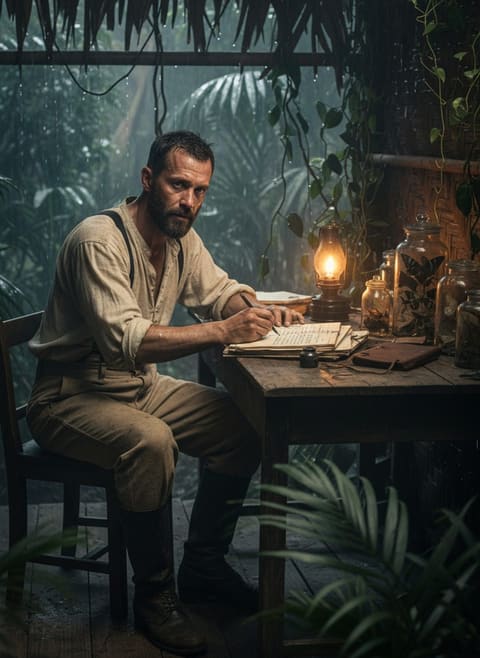
An oak writing desk in London, covered in scattered journals and sketchy logs, is where Rennell performed his cartographical magic. With his eyes failing him, he relied on others to read aloud the words of explorers who had tramped the African interior. These adventurers, often more concerned with survival than detailed observation, passed along accounts that were riddled with inconsistencies and gaps.
Read next: The Day a Devon Sailor Charted a Continent From the Sea
Rennell displayed an extraordinary ability to extract coherence from chaos. He cross-referenced the journals' fragmented narratives using his extensive prior experience mapping difficult and complex terrains. Each description, however rough, was transformed into the lines and curves of rivers, the outlines of lakes, and the bends of a continent under the ever-imaginary sweep of his inked quill.
Through the imperfect memories of others, he envisioned Africa's heart. Muddled memories of river courses turned into a map that would shape Europe's understanding of Africa for years ahead. Each line traced on the map was a conjecture made solid, a gossamer of hearsay rendered legible.
An Orchestra of Unknowns
As Rennell connected explorers' disparate tales, he essentially directed an unseen orchestra—each instrument a scrappy record from someone who had trudged along muddy banks and whispered through lush canopies. Their collective refrain was harmonized into a geography that before had resembled more myth than map.
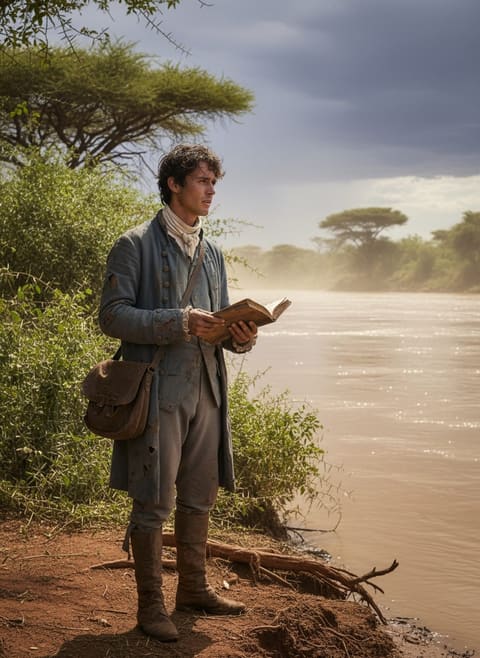
The Zambezi, Niger, and Nile were names known but routes unclear. James Rennell's luminaries were men like Mungo Park, whose explorations of the Niger were groundbreaking, albeit chaotic. Rennell grasped Park's imperfect compass bearings and enriched them with the weight of his judgement, casting these rivers as prominent geographical features on his map. The resultant illustrations were endlessly more than simply cartographical—they were the world as imagined through exhaustive intellectual dedication.
Read next: The Day a Devon Captain Sailed Into the Ends of the Earth
African rivers, which had been mysteries shrouded in speculation and myth, now wound their way across parchment—tangible yet still imbued with legendary allure. Rennell's ability to stitch together uncharted courses ignited long-held aspirations of further European exploration and exploitation. These maps shifted Africa from an unknowable void to a continent way more real in the collective consciousness of an age hungry for discovery.
The Touch of the Irony
James Rennell's life stands as an ironic paradox in the annals of exploration. Here was a man whose real exploration ceased disastrously on a battlefield far from home, yet his greatest exploratory triumph was forged amid the familiarity of his own domestic shadows. Deprived of his own sight, he became the eye through which the contemporary world saw the unseen heart of Africa.
Today, amid an era that treasures empirical truth and first-hand account, Rennell's work serves as a powerful reminder: sometimes, the grand landscapes in our minds, spun into reality through narratives and imagination, can shape the world—or spark the quests of others to complete the final steps.