A beach is no place for bagpipes. On 6 June 1944, one man thought otherwise and proved everyone wrong.
The Piper's Battle Dress
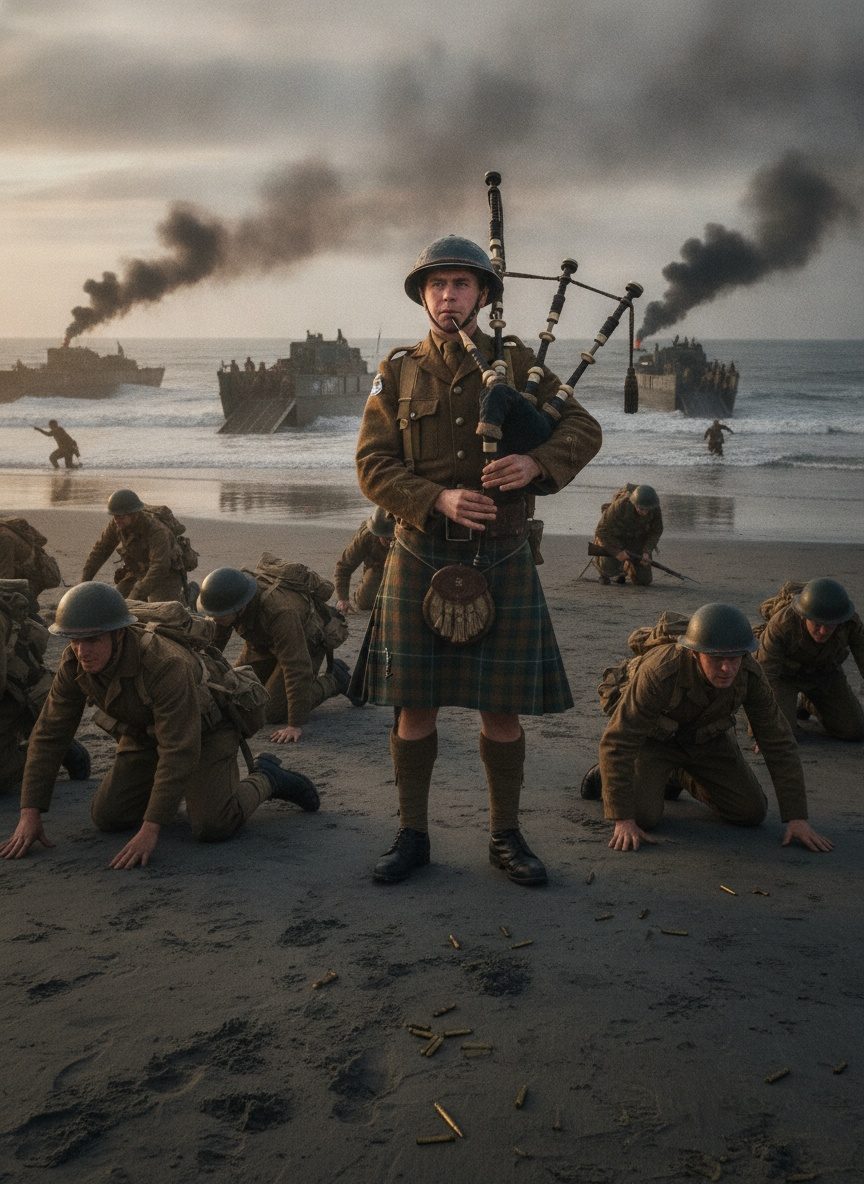
At first glance, Bill Millin must have seemed an eccentric figure in an otherwise deadly and regimented theater. There he stood, a Scotsman barely out of his teens, wearing his father's kilt and clutching a set of bagpipes. The scene was Sword Beach, one of the key landing sites on the pivotal D-Day invasion of Normandy. While around him men burdened with weapons and gear dashed for cover among the chaos of bullets and shells, Millin remained conspicuously upright, his instrument tucked under one arm, his hands ready to bring life to its drones and chanter.
Millin's attire could have seemed an anachronism, a silent statement of history on a day meant for future-shaping deeds. Yet, it was a deliberate choice, one made with a particular destiny in mind. Millin carried the weight of his family's traditions and the history of his homeland. It wasn't just a nod to ancestry; it was an act of defiance, a symbol of cultural pride playing out on the canvases of war.
The Madness of Music Amid Mayhem
As men fell in the surf tinged with sacrifice and bravery, Millin filled the air with an incongruous yet powerful sound — the haunting melody of the bagpipes. Major General Lord Lovat, his commanding officer, had given him a most unusual order: to play. The order was unconventional, almost mad, some might think. Play while the air shrieked with shells and the sands were stained by war?
Read next: The Day a British Padre Carried the Dying From No Man's Land
This task was more than just an exercise of German incredulity. An unarmed man, parading across the beach while others cowered low, could hardly be seen as a threat. To snipers and soldiers alike, Millin appeared almost mythical: a bard emboldened by his own song. This aura of invulnerability was his shield; to shoot him would seem akin to shooting the wind.
The impact was undeniable. As Millin strolled with surreal serenity amid the storm of conflict, the Germans, it was said, refrained from pulling their triggers. They held their fire, captive to the idea that no sane soldier would dare to do what Millin did.
The Harmony Within Disarray
Amidst the fiery throes of battle, the sound of Millin's bagpipes was a contradiction. Yet there was a strange harmony to it all. His presence and music lent an unwritten rhythm to the clamor of war. The songs he played were anthems of morale and resilience, familiar tunes offering comfort and courage to his comrades in arms. His notes were a lifeline to something beyond the chaos — a moment of human normality in an otherwise inhumane scenario.
The salty winds of Sword Beach carried his melodies far beyond the battlefield. They became an unlikely rallying cry that underscored the acts of valor playing out along the Normandy sands. Emboldened by the music, soldiers pressed forward under a different kind of fire — one that lifted them even as the day bore the cruel wail of conflict.
A Legacy Carried On the Wind
Bill Millin's contribution was subtle yet profound. He did not engage with bullets or bombs, nor did he aim to conquer physical ground. Instead, he captured hearts and minds with the simple act of not surrendering to fear. His was a victory of spirit, a triumph over the intangible battlefield of morale.
In the story of D-Day, amidst tales of strategic genius and tactical might, Millin’s is the tale of one man who chose a different instrument of war. His bagpipes became a motif of the day, echoing through history as a symbol of undaunted bravery and the surprising strength found in culture and identity.
The Sound That Speaks Across Time
Today, as we look back on the audacious acts of courage that unfolded on that fateful June day, Millin's soulful serenades offer a poignant reminder of the many ways bravery can manifest. His music was a reminder that the spirit of defiance can resonate beyond the battlefield, touching hearts and offering hope years after the last note has faded. This imprints a timeless reverberation, a reminder of the unyielding power of the human spirit.
Bagpipes on Sword Beach? It was an act that outlasted the day’s gunfire and grenades. It lived on in history as a testament to an indomitable courage, challenging us all to find our own melodies to play — even when surrounded by the cacophony of life's fiercest battles.