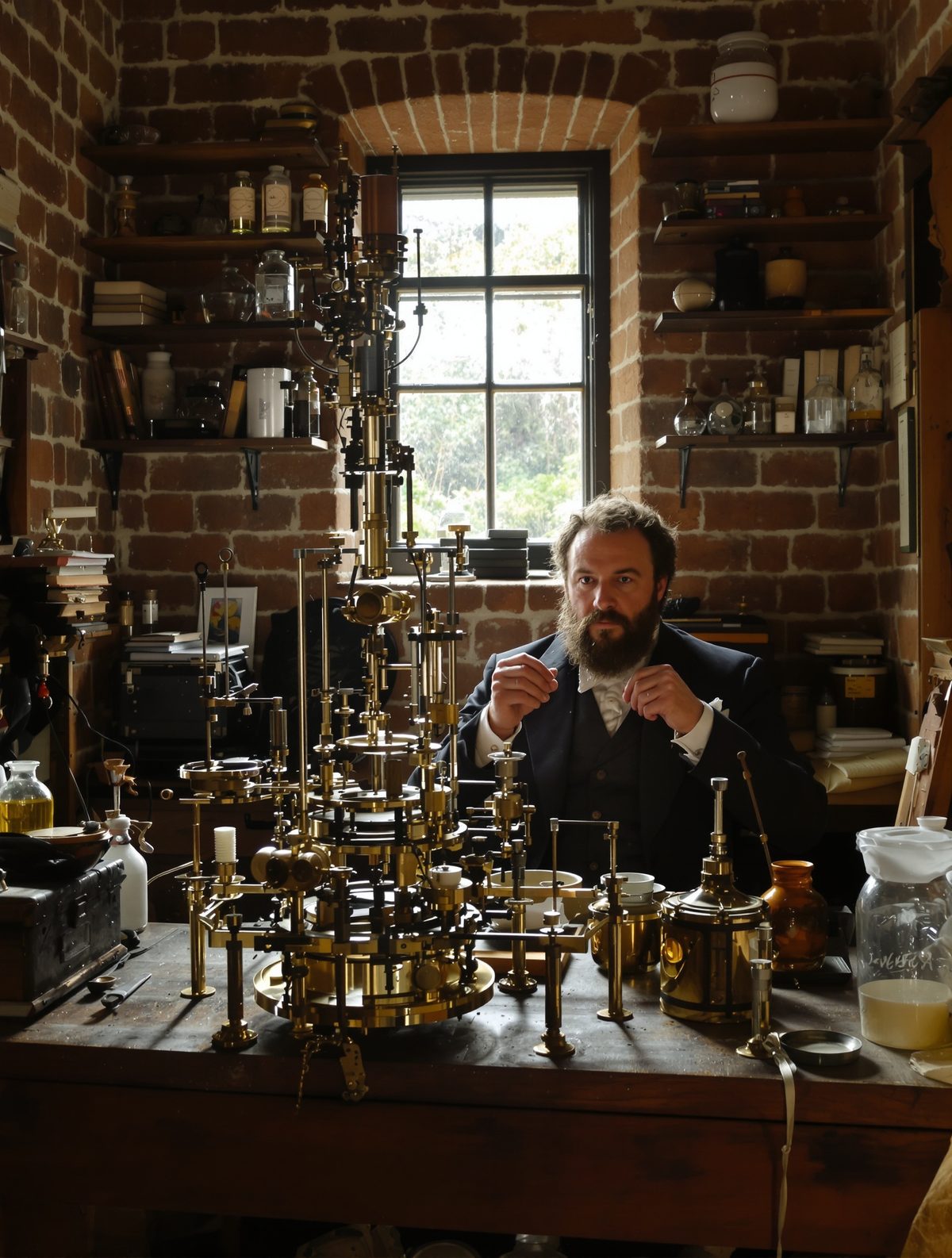
Imagine a young boy, crouched over a flickering candle in a dimly lit room. It's the late 19th century in Lancashire, and this is where John Milne, the son of a postman with empty pockets but boundless imagination, taught himself the mysteries of the natural world. Little did anyone know, this self-taught genius would go on to map the ocean floor and revolutionize our understanding of the Earth.
The Birth of a Curious Mind
Born on December 30, 1850, in Liverpool, John Milne's early life was a textbook example of Victorian grit. His father worked tirelessly as a postman, delivering letters through the foggy streets while John absorbed the world around him with a voracious appetite for knowledge. Though he left school at the tender age of 14 to work in a factory, John Milne was hardly bound for obscurity.
In the quiet moments away from the clattering machines, he devoured books on the wonders of science. By candlelight, he scoured pages of old texts, cultivating a deep understanding that would soon outstrip the confines of his factory work. His keen intellect and determination to rise above his circumstances hinted at the extraordinary life he would lead.
Japan: The Land of Earthquakes
By the late 1870s, John was on the move again. His destination? The seismically active landscapes of Japan, a nation iconic for its earthquakes. In 1875, he accepted a teaching post at the Imperial College of Engineering in Tokyo. Japan, with its rolling quakes, was the perfect natural laboratory for John’s relentless inquisitiveness.
Read next: The Day a Blind Pauper Boy Sang Before a Queen
It was here, amidst the cherry blossoms and the rumbling earth, that Milne invented the modern seismograph. Previous instruments were crude, but Milne’s would capture the subtleties of seismic activity with unprecedented accuracy. His invention not only depicted seismic waves but also showed their direction and magnitude, paving the path for modern seismology.
But life in Japan was far from just academic lectures and sketches in notebooks. John experienced firsthand the wrath of nature: surviving volcanic eruptions and navigating through the debris of avalanches. Rather than deterring him, these brushes with nature's power only cemented his commitment to understanding and documenting seismic events.
Global Visions from a Garden Shed
After more than two decades in Japan, a period that enriched his scientific endeavors immeasurably, John returned to England in 1895. He settled on the Isle of Wight, and in a modest garden shed, he established a truly ambitious vision: a global network of earthquake stations.
Despite his humble surroundings, John built the world's first international earthquake monitoring network, funding it from his own pocket. By wiring back data recorded from these various stations, he could begin mapping seismic activity across the Earth like never before. With enthusiasm and ingenuity, he connected collaborators across continents, transcending the isolation of his rural English abode.
A little-known fact is that his wife, Tone, was heavily involved in this operation. Together, from this unassuming shed, the Milnes marshaled a revolution in seismology.
Overcoming Obstacles, One Tremor at a Time
Milne's contributions to science were not without challenges. The early seismology community was small, and Milne often had to advocate fiercely for the importance of his work. With little institutional support, funding was a perpetual obstacle. Yet despite these hurdles, his seismic stations began populating key locations, from China to America, making this 'lone scientist in a shed' an indispensable figure in the field.
Danger also lurked in his pursuits. On one ill-fated expedition to record tremors deep in a mineshaft, Milne narrowly escaped injury during a cave-in. But these perils never dampened his resolve, and his network gradually encircled the globe like a giant watchtower standing sentinel over the Earth’s dynamic crust.
The Legacy of an Underestimated Visionary
It's a strange irony that today, while Milne’s seismographs have long since evolved into digital marvels of engineering, the spirit of his pioneering work remains as essential as ever. His global network laid the foundation for what would eventually become modern geological surveying and prediction methods, saving countless lives by understanding the ever-restless Earth. The protocols born in his days of yore can now forewarn cities, facilitating evacuations and preparations that mitigate disaster.
In an era where opportunity often moved selectively, John Milne’s story shines as a beacon of the relentless pursuit of knowledge against the odds. He reminds us that scientific brilliance is not confined to the hallowed halls of universities but can emerge from the determined heart of any individual, regardless of their origins.
As we face a rapidly changing planet today, with its own set of challenges and unpredictable future, Milne's life stands as a lesson on the importance of tireless curiosity and collaboration without boundaries. The day this postman's son crafted history from a garden shed, he left the world a map not just of seas and lands, but of possibilities unimagined and now explored.