The fires of the Viking invasions once threatened to consume the heart of Anglo-Saxon England. Yet from these ashes emerged a formidable ruler whose tenacity would challenge the course of history. This is the tale of Æthelflæd, the indomitable Lady of the Mercians, and the day she rebuilt England from its ruins.
The Warrior’s Legacy
In the year 918 AD, as the first whispers of dawn crept over the horizon, Æthelflæd lay dying. Her deeds, however, had already carved her an enduring place in the annals of history. Born around 870 AD, Æthelflæd was the eldest daughter of Alfred the Great, the renowned King of Wessex, celebrated for his victories over the Norse invaders. From her father, Æthelflæd likely inherited her indomitable spirit and strategic mind. Marrying Æthelred, Lord of Mercia, she became not merely a consort but a co-ruler, a notion revolutionary for her time.
Æthelred's frailty in his later years saw Æthelflæd stepping into a commanding role, steering the Mercian state with a judicious blend of diplomacy and military cunning. But the task ahead of her was daunting. The Viking incursions had split the land into fractured territories and fear stalked the livelihoods of her people.
Fortress of Solitude
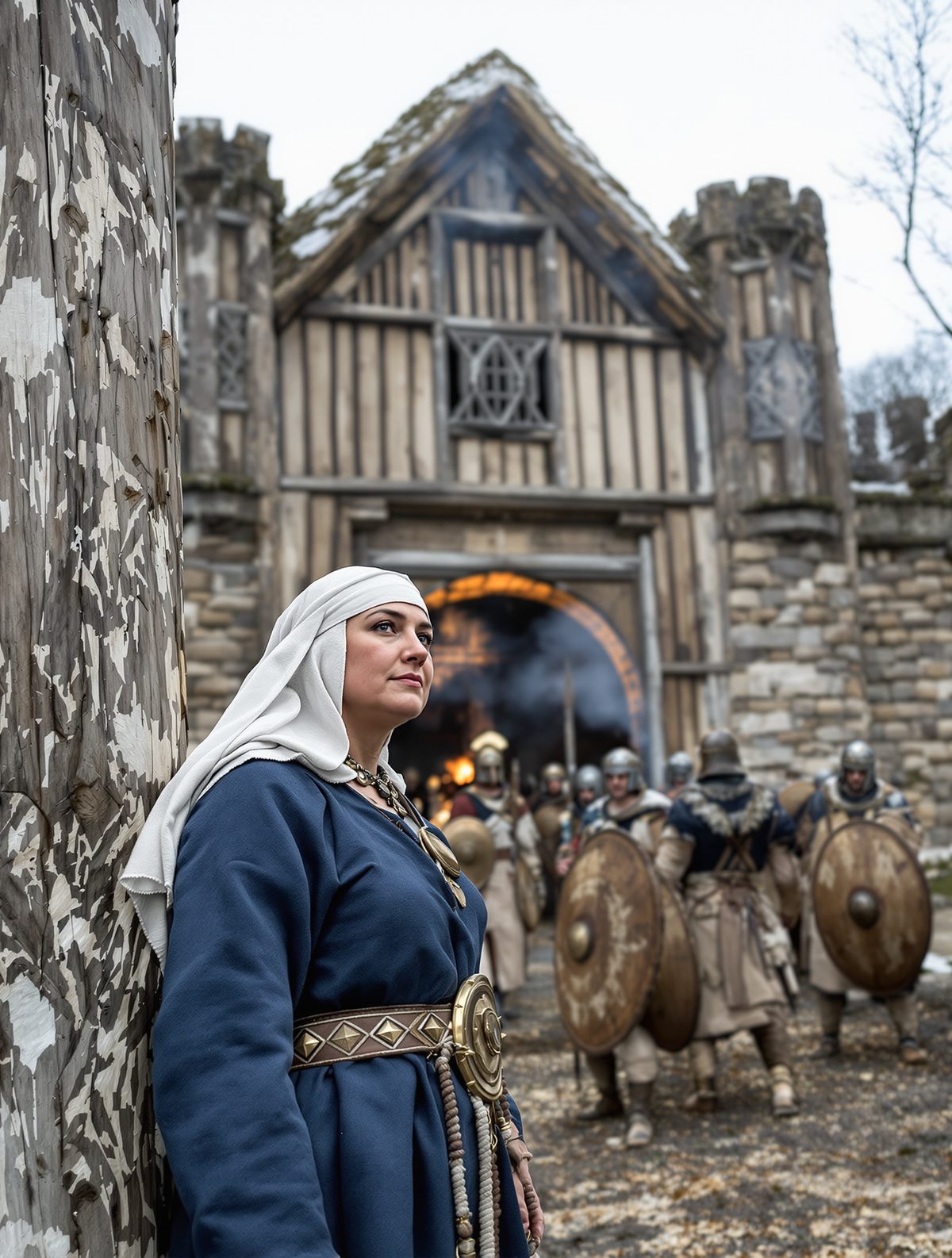
When war-torn lands lay vulnerable to marauders, Æthelflæd possessed the foresight to fortify them. From 910 AD until her death, she constructed a series of ten burhs—militarized fortresses—and her vision of a chain of robust defenses stitched the fabric of a fragile nation into a stronghold against Viking encroachment. Imagine the stout walls of Chester, Warwick, and Tamworth, where once open fields had stood, now brimming with the plucky defiance of a people reclaiming their sovereignty.
Read next: The Day a Saxon Abbot Walked Into a Slave Market Alone
Remarkably, these fortresses were not only defensive bulwarks but also centers of economic revival. By securing vital trade routes, Æthelflæd ensured the flow of commerce and culture, breathing life back into a beleaguered land.
The Battle for Derby
In 917 AD, Æthelflæd launched an audacious campaign to recapture Derby from Danish control. A tale oft-shrouded in legend, her strategy involved exploiting the fractured alliances among the Vikings. She reined in her forces deftly, and without drawing an arrow herself, Æthelflæd enveloped Derby in a calculated siege. The Danes, beleaguered and outmaneuvered, conceded, and Derby fell back into English hands, leaving Æthelflæd not a warlord but a strategic sovereign.
But the recapture of Derby was only the penultimate jewel in her vast crown of triumphs. Leicester soon followed, adding to her reputation as a ruler with not just the heart but the mind for such endeavors. The legendary chroniclers acknowledged these victories, noting her not as a queen by birthright alone but by power and persuasion.
Diplomacy by Design
Æthelflæd’s genius lay not only in building fortresses or reclaiming towns — it was her adept diplomacy that set her apart. Her negotiations played an equally pivotal role in securing peace and allegiance from neighboring territories. By 918 AD, the people of York — itself a Viking stronghold — purportedly even offered to submit to her rule, recognizing her prowess and authority.
Additionally, her alliances with Welsh kings and the formidable naval power of Hiberno-Norse Dublin showcased her skills in diplomacy. In an era of swords and shields, Æthelflæd wielded treaties and words with the same precision and efficacy, a craft few rulers mastered.
The Legacy Left Untold
Æthelflæd’s reign was cut short by her untimely death in June 918 AD, yet her legacy was more enduring than any kingdom's borders. Her daughter, Ælfwynn, briefly succeeded her, a testament itself to the change Æthelflæd had inspired in a male-dominated lineage. Though ultimately overshadowed by the reign of her brother, Edward the Elder, Æthelflæd’s influence was immortalized in the foundations of a surging English nation.
The Lady of the Mercians accomplished what seemed insurmountable—she molded a fractured land into cohesive strength, underscored by the fortresses that dotted the landscape and the alliances she carefully wove. A female ruler in a time where women’s leadership was denigrated to whispers of legend, Æthelflæd dared to forge her own mythos.
A Lesson from the Past
Today, as we reflect on Æthelflæd’s groundbreaking reign, the lessons of her story resonate stronger than ever. In a world straining under the pressures of division and conflict, her legacy underscores the power of unity, fortitude, and diplomacy. Like Æthelflæd, we too can weave strength from adversity and rise resilient from the ashes.
As the morning sun rose over Mercia on that fateful day in 918 AD, Æthelflæd had already painstakingly sewn the seeds of a renewed England. The Lady of the Mercians left a testament not just in stone and deed, but in the enduring spirit of an unconquerable nation.