In the early dawn hours of July 19, 1972, the sleepy port town of Mirbat in Oman was about to witness an epic clash that would remain hidden from the world for years. Shimmering in the mist, the silhouettes of nine men could barely be distinguished against the sandy backdrop, yet their resolve was unwavering. Among them was Sergeant Talaiasi Labalaba, a Fijian warrior who would earn his place in history that day. When the monsoon haze lifted, it revealed an approaching wave of relentless guerrillas—250 strong. What happened next is no less than a legend, a tale of bravery and strength against insurmountable odds, a legend they left out of the textbooks.
The Onslaught at Mirbat
As the first light split the horizon on that fateful day, insurgent fighters of the Popular Front for the Liberation of the Occupied Arabian Gulf (PFLOAG) emerged from the swirling mists and bore down upon the fortified SAS position. These guerilla fighters, highly experienced and well-armed, sought to capture the strategically vital port of Mirbat. At the heart of the defense line stood nine soldiers of the Special Air Service (SAS), part of British efforts to support the Sultan of Oman during the Dhofar Rebellion.
Outnumbered by more than 25 to one, these men faced an onslaught that would test their resolve to its limits. With bullets slicing through the air and mortar shells exploding around them, the small SAS team needed to hold fast. The stakes were high: losing Mirbat meant a slippery slope into total strategic collapse of the region they had fought hard to stabilize.
Talaiasi Labalaba's Dash
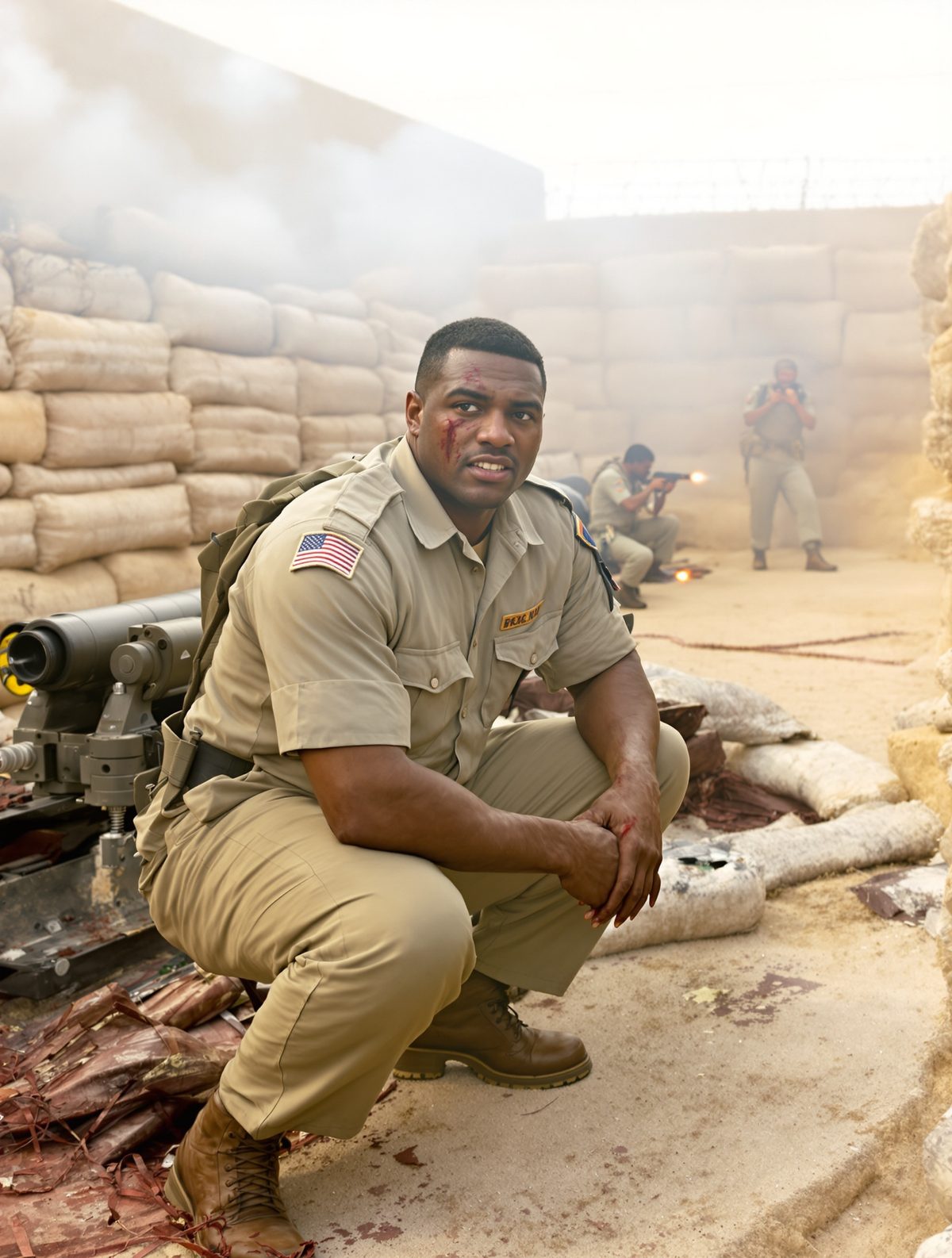
In the chaos and clamor of battle, the SAS team knew they needed heavy firepower. One solution lay in a World War II-era 25-pounder field gun positioned some 200 meters away. While the fastest route there demanded a treacherous sprint across open ground, Sergeant Labalaba did not hesitate. With steadfast determination, he dashed through the strafing rain of bullets to the gun site, alone.
Read next: The Day a Blind Pauper Boy Sang Before a Queen
His destination was a weapon not designed for solitary operation. Typically, a team of six men operated the artillery piece to ensure accurate and sustained fire. Yet, Labalaba's towering presence seemed to muster the strength of a whole crew. Despite his bullet-shattered jaw and relentless, searing pain, he trained the gun on the enemy advance and continued to fire, halting the combatants in their tracks.
The Reinforcements and Relief
Back at the fort, his comrades knew the odds were slim. Yet, inspired by Labalaba’s audacious stand, they too held their positions with ferocity. Calling for reinforcements was their slim hope. As if the heavens responded, help finally arrived in the form of Omani soldiers and later British marines. With Labalaba's artillery support, they gradually pushed the offensive forces back into the mist and mirage from which they had emerged.
Sergeant Labalaba's bravery gave just enough time for the reinforcement to rally, a critical factor in curbing the potential carnage and retaining control of Mirbat. Yet, the toll was personal. A fellow SAS soldier, Sullivan, who attempted to offer reinforcement to Labalaba, fell in the crossfire, validating the extreme danger and the remarkable nature of Labalaba's lone stand.
Hidden Valor
The events that unfolded in Mirbat remained a closely guarded secret for nearly three years. The British Government, conscious of Cold War-era diplomacy and the intricacies of secret military operations abroad, preferred such heroic yet politically sensitive actions to remain in the shadows.
It was not until 1975 that the courage displayed by Labalaba came to light, revealing the self-sacrificial acts of a man described affectionately as a "quiet giant." This delay in acknowledgment only intensified the awe and reverence with which his actions were received. Posthumous commendation came in bittersweet measures, as his legacy stirred the hearts of the military and public alike.
The Legacy of Heroes
Today, the tale of Talaiasi Labalaba resonates not just as an account of valor, but as a testament to the spirit that endures amid adversity. It brings to light the unseen sacrifices and forgotten fighters whose battles shape the edges of history. Monuments stand in his honor, and his story is passed soldier to soldier as a timeless testament to courage and dedication.
As we ponder this saga, the lesson extends beyond battlefields. In a world still marked by conflict and strife, Labalaba reminds us that courage is often unseen and unsung, originating from the ordinary, transforming us all into warriors of our own daily struggles.
The day Sergeant Labalaba ran to the gun and would not leave it offers not just a snapshot of remarkable bravery but a broader reflection on duty, sacrifice, and the complex human spirit that warfare both clouds and clarifies. As history moves forward, stories like Labalaba’s urge us to appreciate the profound legacies left in ordinary places by extraordinary people.