In the deep amber glow of an English autumn, as golden leaves whispered to the ground, a rumble reached the shores of Maldon in 991 — an ominous chorus carried by the crisp sea breeze. It wasn't the familiar howl of the wind, but the sound of longships slicing through the water, their dragon-headed prows casting looming shadows against the rising sun. This was the sound of the Viking fleet, a fearsome harbinger of an ultimatum that would define a people. At the forefront of this legendary standoff, one figure emerged: a Saxon monk named Leofsunu, whose solitary walk into the Viking encampment would resonate through history.
The Gathering Storm: Vikings at the Gates
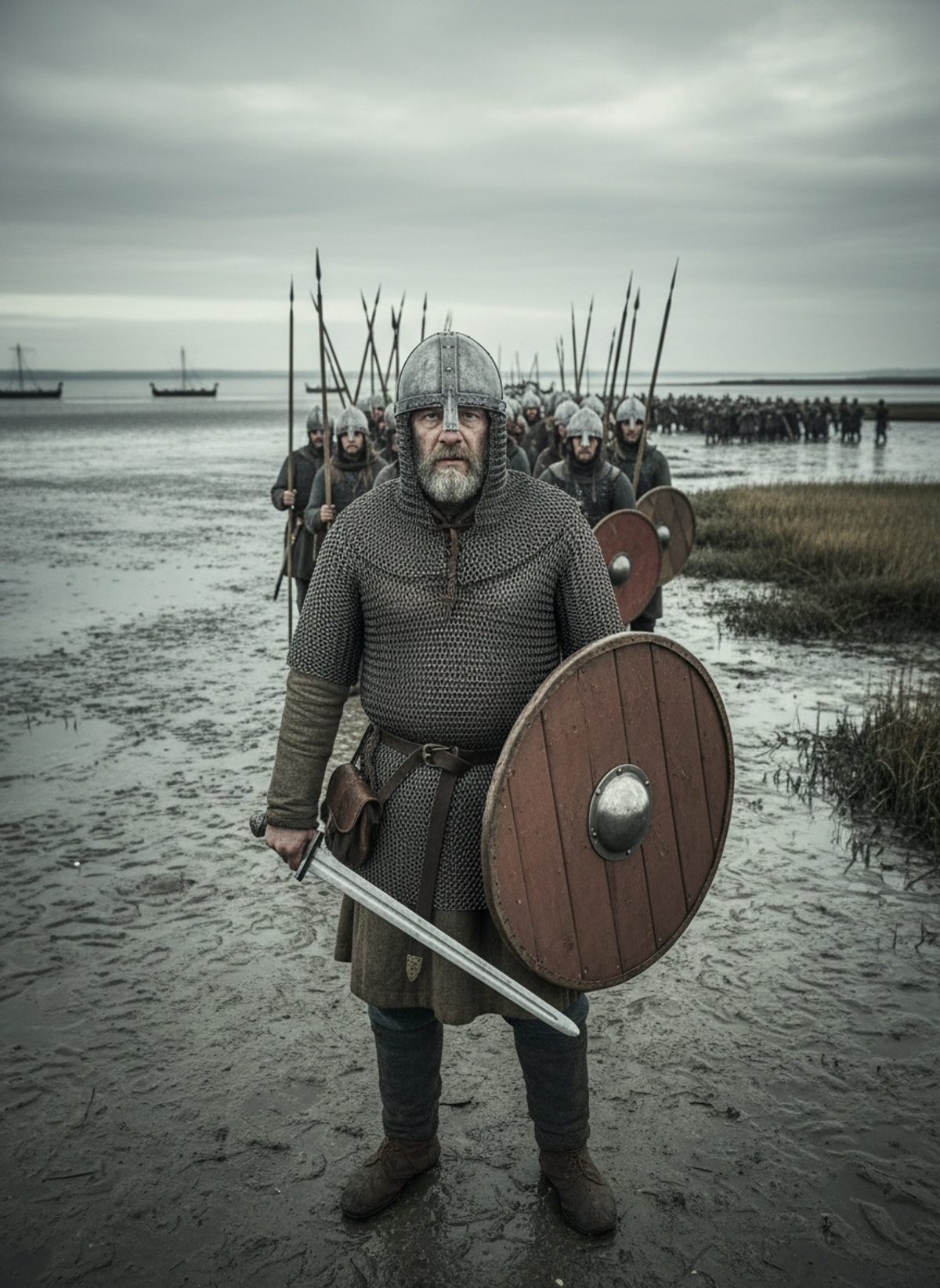
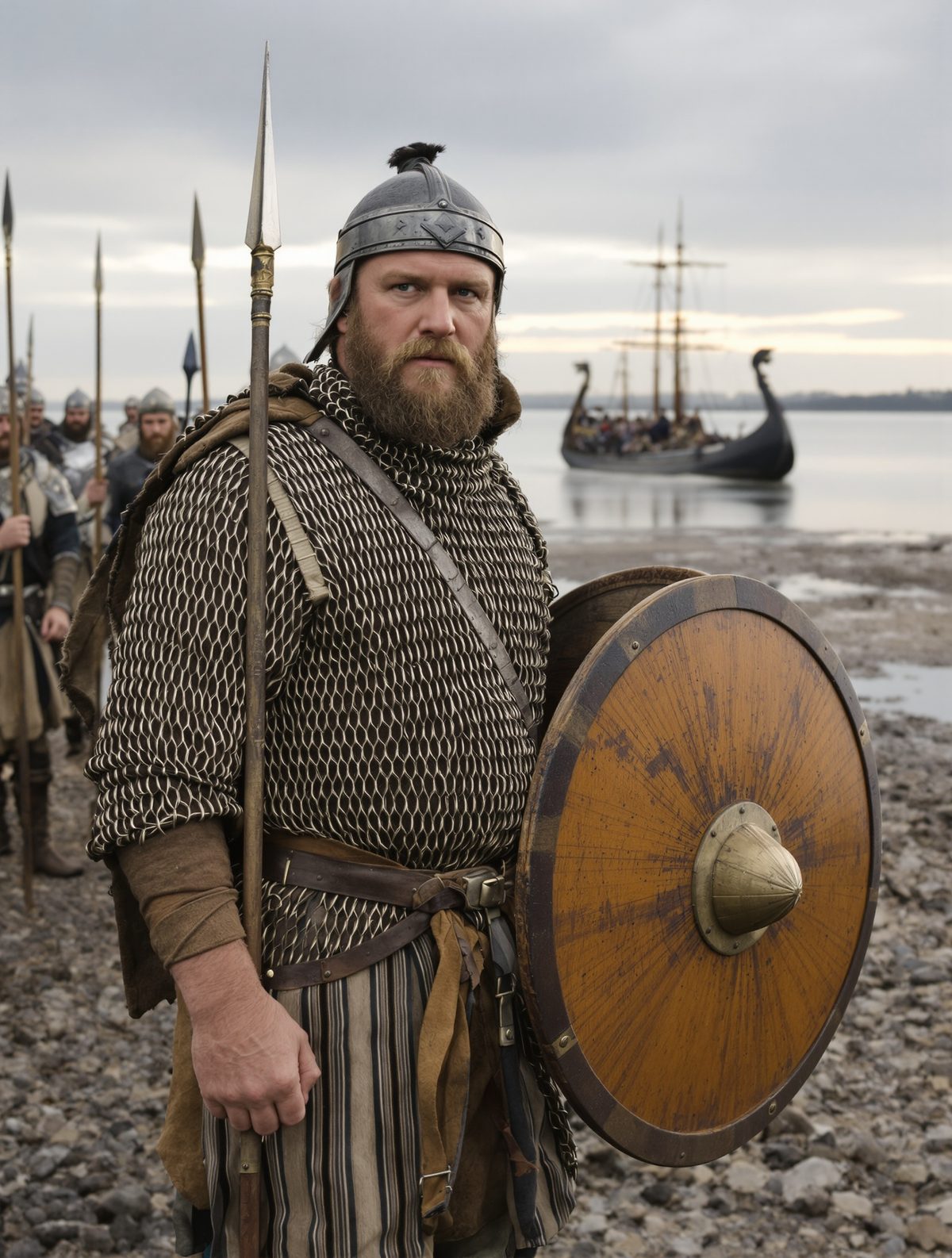
The Vikings had long been the stuff of nightmares for the English coastal dwellers — sea kings who descended upon the shores with blades as sharp as their unyielding wills. By 991, these Norse warriors were no strangers to the Saxon lands, their incursions having become a grim sort of regularity for those living on the exposed fringes of the Anglo-Saxon kingdom. A fleet of perhaps as many as 93 ships, led by Olaf Tryggvason, descended upon the Essex coast, their demand starkly simple: silver for peace or steel for resistance.
Maldon, a modest settlement hugging the River Blackwater, found itself in the path of this aggressive negotiation. The English, led by the venerable elderman Byrhtnoth, a man of courage and integrity, knew that the choice laid before them was a forked path with potentially fatal consequences. Yet what was perhaps most significant was not the display of force, but the indomitable spirit of a few ordinary men — one of whom chose to carry a message that would echo through the ages.
One Man's Stand: Leofsunu's Lone Journey
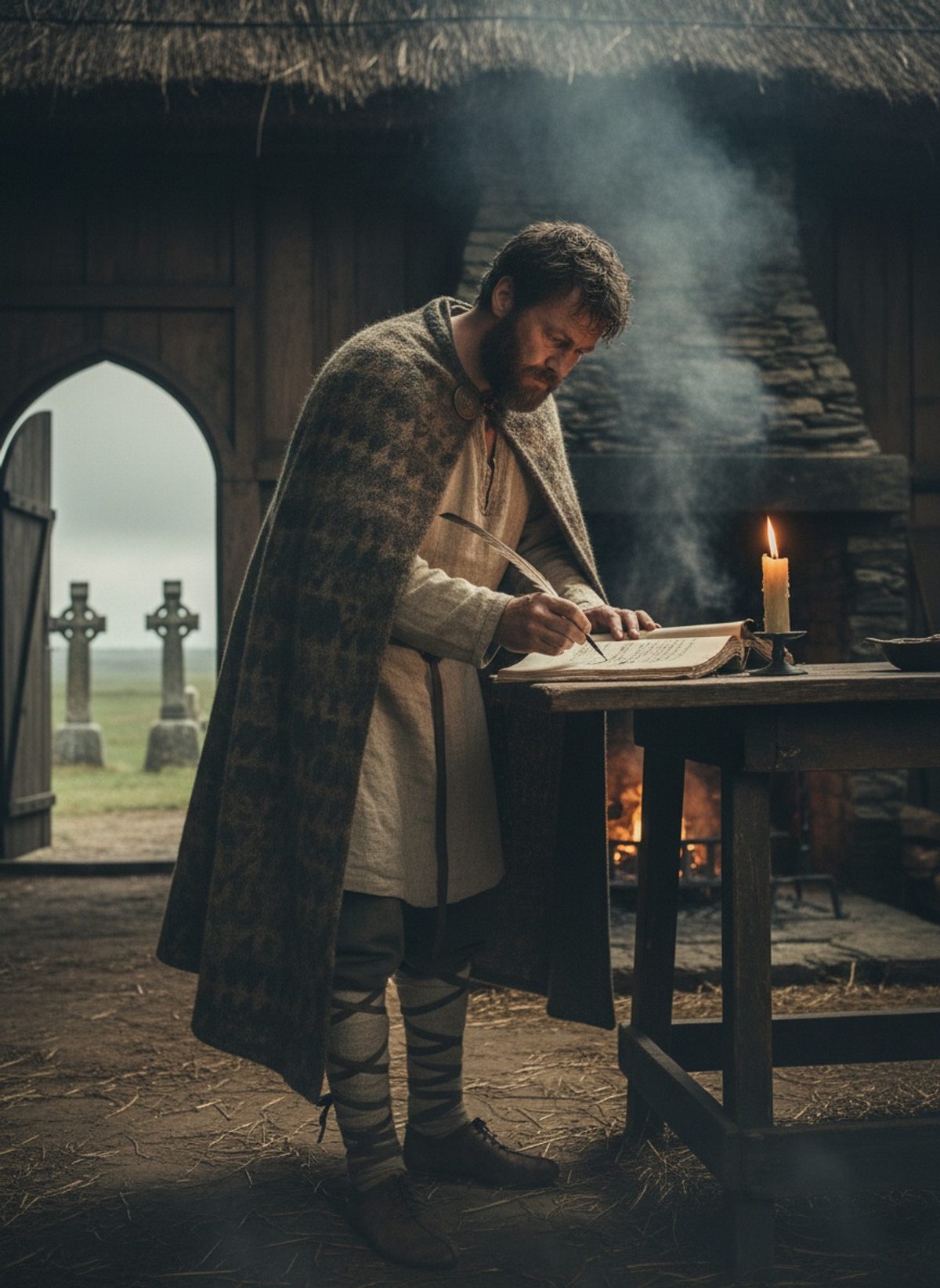
Leofsunu was no warrior clad in mail and helmed for battle. A man of the cloth, it would seem unlikely that his name would endure centuries when many seasoned fighters have been forgotten. Yet, as the Vikings’ ultimatum hung in the air, it was Leofsunu who stepped forward with resolute courage, leaving the safety of his kinsmen behind to meet the invaders face to face.
Read next: The Day a Saxon Abbot Walked Into a Slave Market Alone
Imagine, for a moment, the sand crunching beneath his sandals as he made his solitary way toward the encampment, every measured step echoing the heartbeat of a nation on edge. When he reached the water's edge, he was not a herald of submission but a messenger of defiance. His response has since become legendary, immortalized in the *Old English* poem known as "The Battle of Maldon":
"Your settlement," he declared with a voice unshaken by the looming threat of death, "shall be paid out in darts, poisoned spears and proven weapons — the ransom of battle."
The Clash of Shields: The Battle of Maldon
The day that followed was one of fierce, tragic valor, marked by acts of bravery and stubborn resistance that immortalized the men who stood their ground. Byrhtnoth, displaying both gallant foolishness and tactical error, allowed the Vikings to cross the causeway, granting them fair combat on the land. In the heat of battle, his own life was claimed, but not before rallying his warriors with a cry that has stood through the annals of time: "Mind must be firmer, heart the more fierce, courage the greater, as our strength diminishes."
The English, heavily outnumbered, were ultimately overpowered by the Viking onslaught, and yet, their legacy was sealed in their refusal to buy peace at the cost of dignity. Names like Leofsunu, Byrhtnoth, and others were etched into history, carved with the sharp quill of sacrifice rather than the blade of submission.
Legacies Through Poetry: The Power of Words
The poem, "The Battle of Maldon," remains a compelling narrative not merely for its artistry but for its ability to capture the essence of what it meant to be Anglo-Saxon. It wasn't just a tale of defeat; it was a demonstration of identity, a defiant proclamation that some things, like honor and valor, could not be measured in silver. The loss at Maldon was a symbolic victory that transcended the immediate aftermath, bolstering a resolve that would eventually see the Saxons push back against their Viking aggressors.
It's a lesser-known fact that this episode also contributed indirectly to the eventual formation of a more unified England, as it became clear that regional defense forces were inadequate against these formidable sea raiders. The need for a more cohesive national strategy and centralized response was never more evident than in the aftermath of this encounter.
Reflections in Modern Times: Why This Matters
Today, the echoes of Leofsunu’s solitary walk and the ensuing battle remind us that strength does not solely reside in victorious battles, but in the resilient spirit of standing firm against overwhelming odds. In a world where the lines of conflict may not always be drawn in blood, the courage to confront challenges with bravery and unwavering convictions is a timeless legacy.
In our own lives, as we face the metaphorical longships on our personal horizons, the story of Maldon — with its intertwined themes of steadfastness, sacrifice, and identity — invites us to consider the values we choose to uphold. When faced with the choice between integrity and concession, the tale of the day a Saxon monk walked into a Viking camp alone reminds us of the power of one voice, one decision, to resonate across the ages.