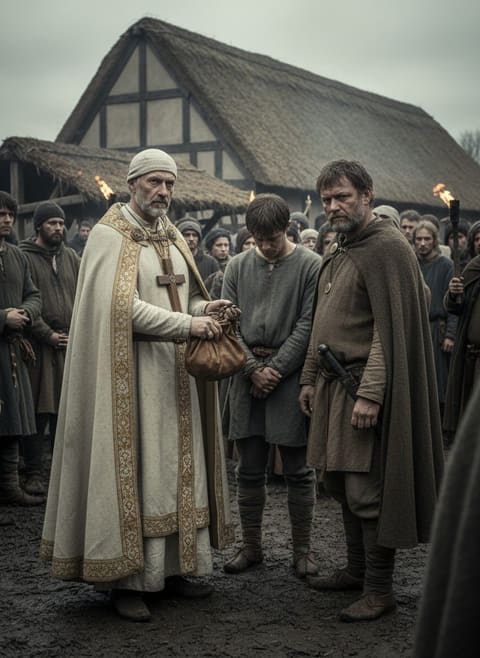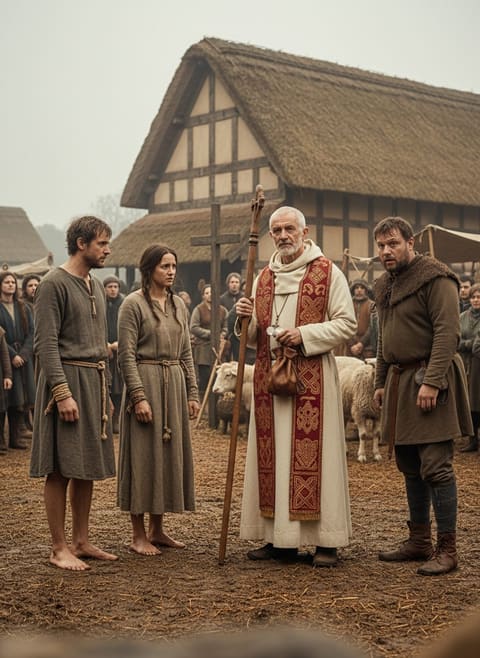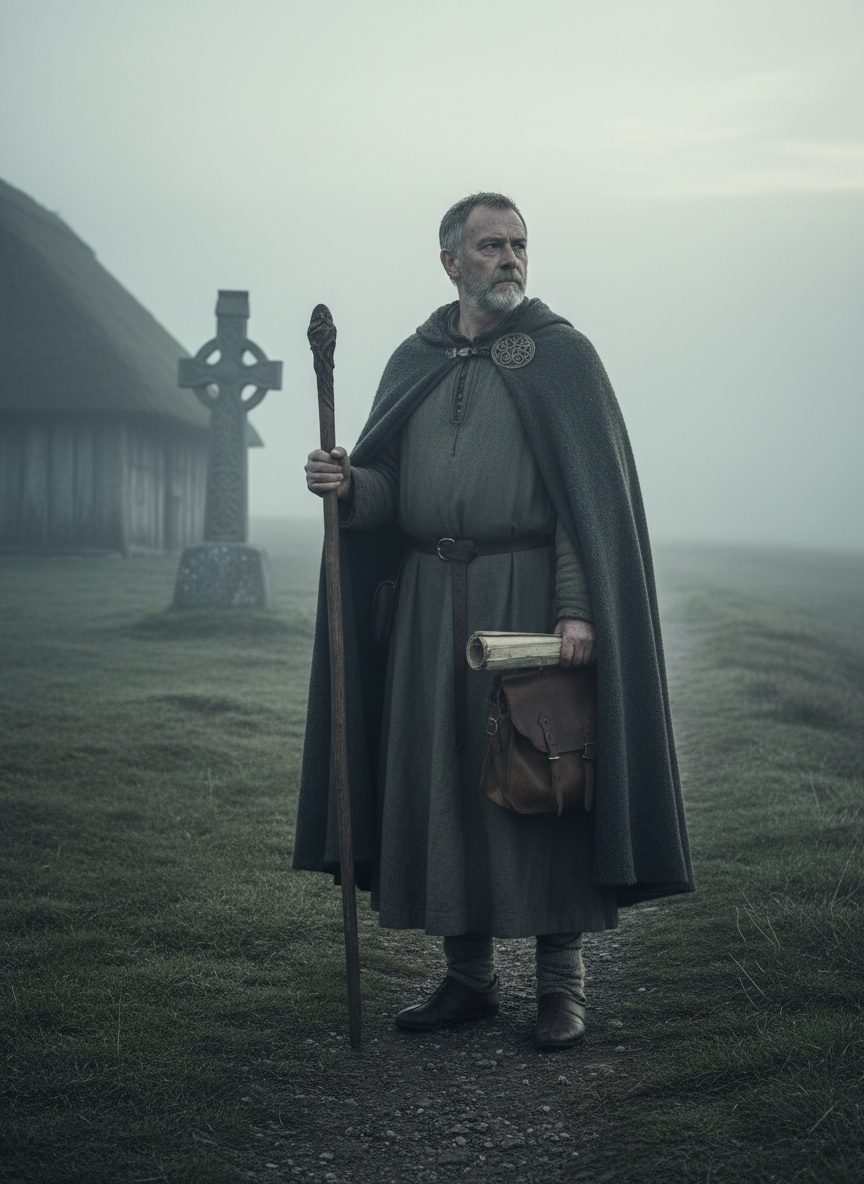
The chill of a Northumbrian morning in 684 AD hung in the air like a veil, muting the vibrant hues of the dawn. The Ekedale Valley was draped in mist, its verdant slopes rising towards the pale sky, where the sun struggled to pierce the cloud cover. This was a land where silence reigned, broken only by the soft whisper of the breeze as it moved through the towering trees. Into this solitude stepped Wilfrid, a Saxon monk whose footsteps marked the beginning of a journey few dared imagine. His mission was fraught with uncertainty — he had been stripped of his position and cast into exile by his own king, yet within him burned a resolve that would carry him far from these familiar shores.
A Kingdom in Turmoil
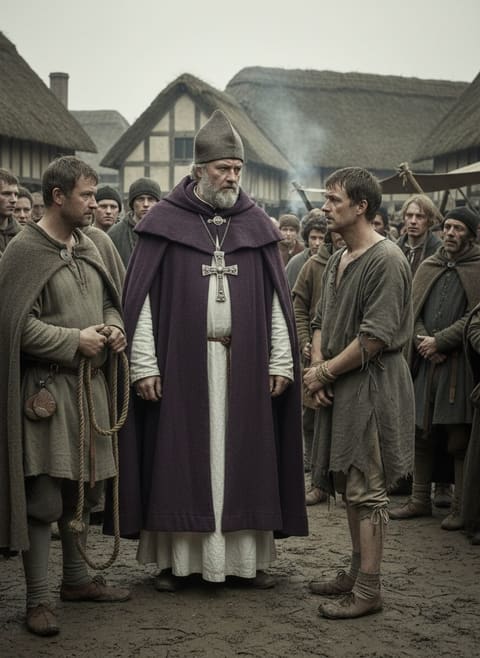
At the time, Northumbria was a realm awash in political intrigue and religious tension. King Ecgfrith, desperate to consolidate power and assert his dominion, had turned against one of the most influential men in his court. Bishop Wilfrid, renowned for his dedication and fervent belief in the ecclesiastical authority of Rome, found himself at odds with the king's vision of a unified regional church. This clash was not merely a disagreement of policy but a confrontation that could reshape the spiritual landscape of Anglo-Saxon England. The decree arrived: Wilfrid was to relinquish his see and leave the kingdom.
Yet, in banishing Wilfrid, King Ecgfrith may have underestimated the monk's resilience and the power of his faith. For Wilfrid, the exile was not merely a personal setback; it was a call to reaffirm the spiritual integrity of his mission. As he walked away from his home, bearing nothing but the certainty of his conviction, the bishop embarked on a path that would see him outlast three kings and return as a symbol of unwavering fidelity to his principles.
Crossing the Unknown
Wilfrid's journey took him first through the lands of southern Britain. Each step marked a measure of defiance, a testament to his belief that his exile was but a temporary setback in a divinely inspired calling. The road was perilous, winding through forests and across rivers, with none but the soft shuffle of leaves to accompany his silent prayers. When he arrived at the coast, his eyes turned to the open sea, and he knew he must leave the shores of Britain behind.
Read next: The Day a Saxon Abbess Stood Between a King and His Rage
Upon crossing into the broader realm of Christendom, Wilfrid's resolve was further tested. The trials he faced — imprisonment, further banishments — underscored the uncertainty of his fate. Yet, at each turn, Wilfrid found sanctuary in the faith that he had carried with him. His interactions with ecclesiastical authorities across the continent not only solidified his standing but also sowed the seeds of alliances that would prove invaluable in his eventual return to Northumbria.
Unyielding Faith
To fully understand Wilfrid’s journey, one must appreciate the fervor that underpinned his actions. He stood staunchly in defense of the Roman practices in a region still fraught with an older Celtic tradition. While many might see ecclesiastical disputes as mere footnotes of history, they were, in truth, battles fought not just on the grounds of doctrine but over the nature of power and leadership in a rapidly evolving world. Wilfrid's steadfast commitment to Roman orthodoxy was emblematic of a broader struggle for influence that shaped the very fabric of medieval ecclesiastical power.
Throughout Europe, Wilfrid was both a diplomat and a defender of his faith. His travels took him as far as Rome, where he petitioned the pope himself, ardently arguing for a restoration of his see. Wilfrid's pleas found favor, and he received papal support, a validation that bolstered his cause. Here was a monk who refused to be silenced, whose voice, though temporarily muted, reverberated through the halls of the Church.
Triumphant Return
The road back to Northumbria was fraught with challenges, but Wilfrid's perseverance bore fruit. The kings who had opposed him fell one by one, victims of their own machinations and the unpredictable nature of medieval politics. By the time Wilfrid finally returned, his reputation had swelled beyond the confines of his homeland. He came not as a supplicant but as a leader whose exile had made him an exemplar of ecclesiastical endurance.
Read next: The Day a Small Island's Language Conquered the World
His return marked a turning point, as he resumed his position with a renewed vigor, determined to guide his flock with an authority sanctioned by Rome itself. In this victory, Wilfrid saw not just the vindication of his personal struggles but the triumph of a faith that transcended the arbitrary whims of monarchs. The Northumbrian church would never be the same. Under Wilfrid's leadership, it blossomed, a testament to the enduring power of conviction in the face of adversity.
The Legacy of Courageous Conviction
In examining Wilfrid’s incredible journey, one is struck by the power of solitary conviction. His life in exile was a testament to the notion that it is often through the crucible of exile and adversity that one's true character is forged. Wilfrid's story echoes through the corridors of history, reminding us of the enduring impact of a single individual's resolve to stand for what he believes to be right, regardless of the personal cost.
This narrative speaks to a timeless human theme: the challenge of staying true to one's beliefs in the face of external pressures. As we reflect on Wilfrid's eventual triumph, we are called to consider how the ripples of steadfast faith and commendable defiance can extend far beyond their immediate circumstances, leaving an indelible mark on the history of a nation, long after the original actors have left the stage.