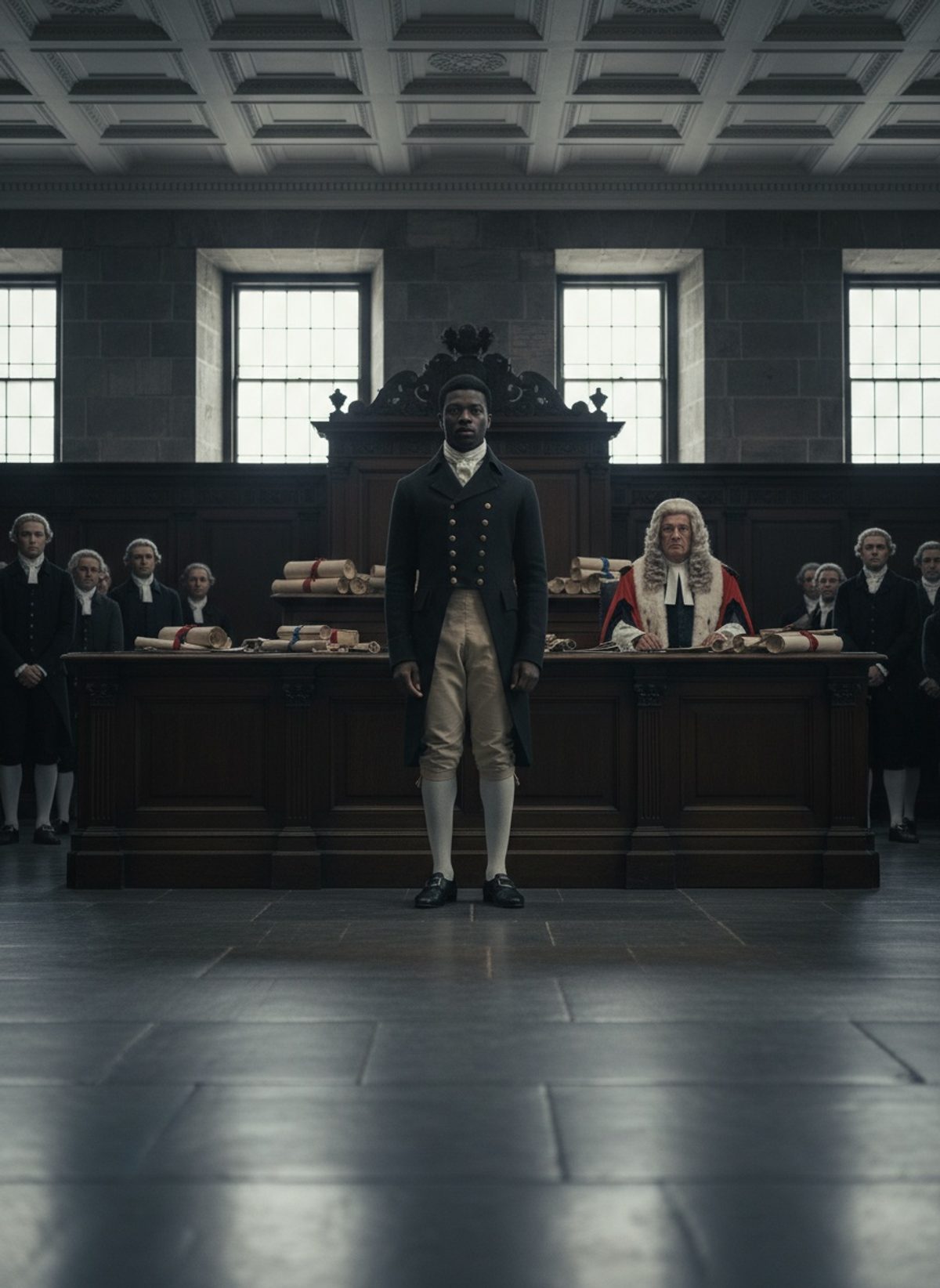
August 15, 1778. A cool breeze swept through the grand halls of Edinburgh as the Court of Session prepared to deliver a verdict that would ripple through the annals of history.
The Rise of an Uncomfortable Question
In late 18th-century Scotland, the Court of Session in Edinburgh was a place of formidable authority. The country was part of a burgeoning British Empire, thriving on the backs of colonies far and wide, and the legal questions it entertained often seemed distant from everyday life. But in 1778, the court faced a case that brought the far-flung reaches of empire abruptly to its door—a question that danced around the consciences of all who were present: Could a man be property in Scotland?
The man in question was Joseph Knight, a name that has since become synonymous with the fight for individual freedoms. Brought from Jamaica to Perthshire by John Wedderburn, a Scottish planter, Knight had served as Wedderburn's servant—his property. As the story unfolded, it was apparent that Knight's presence in Scotland challenged the very ideas of liberty and humanity in an era built on colonial wealth and the associated cruelty.
As Knight sought his freedom in this distinguished hall of justice, he was not just asking for his release from bondage, but challenging an institution deeply entwined with the economic fabric of the time. This solitary man's plea brought into focus the intricate dichotomy of the Enlightenment spirit, which celebrated human rights even while many Enlightenment philosophers remained complicit in the systems of slavery from which they profited.
Read next: The Castle That Has Never Changed Hands in 800 Years
In the Halls of History
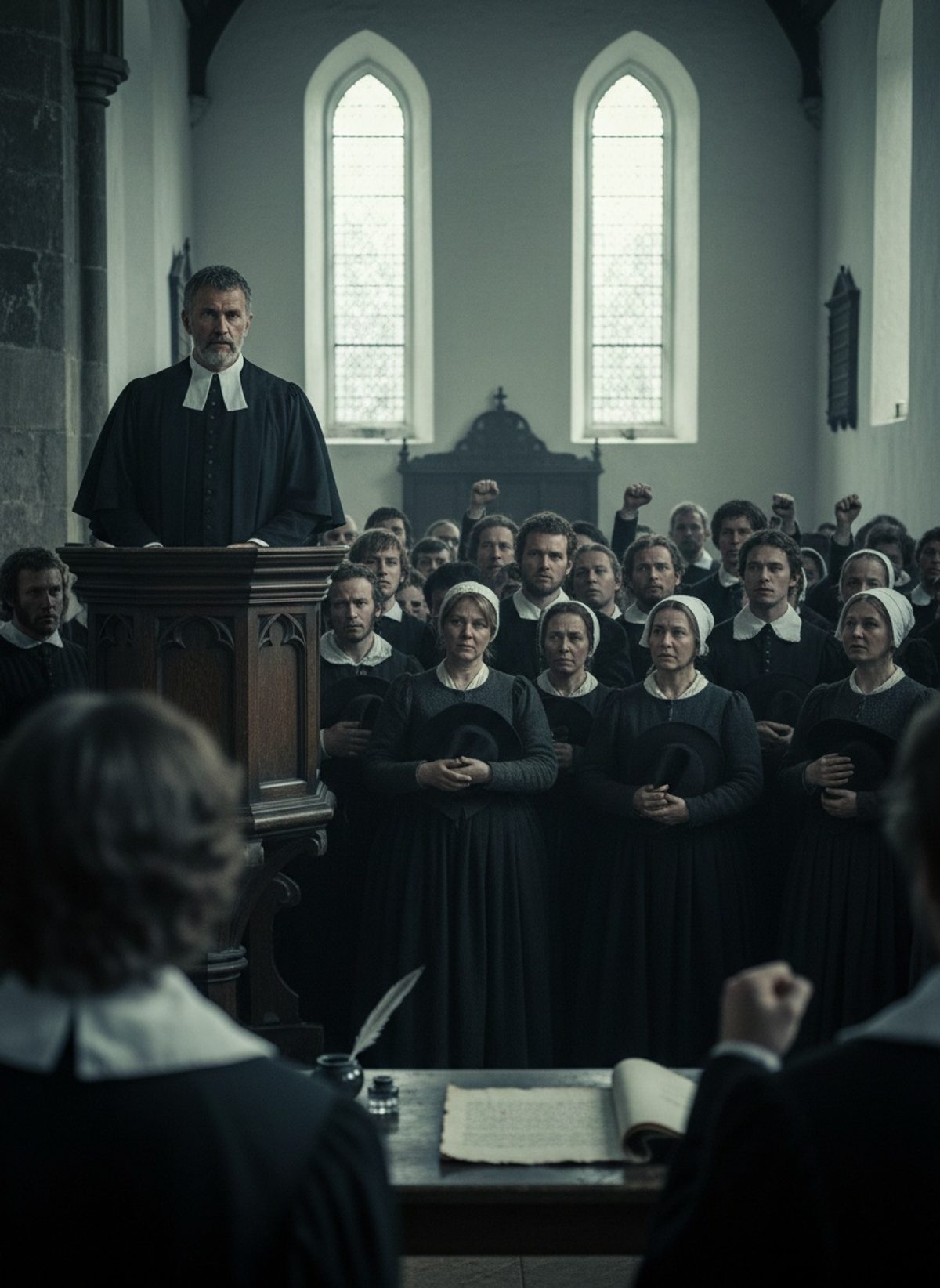
Imagine the tension within those stone walls in Edinburgh as intellectual heavyweights argued the case with fervent eloquence. The air must have been thick with anticipation, for the very soul of the nation seemed to hover in the balance. Lord Kames, a renowned legal philosopher known for his progressive thoughts on civil society, sat among the robed arbiters of justice. His presiding presence was a beacon of rationality in the turbulent legal waters stirred by Knight's case.
The court was presented with compelling arguments on both sides. On one, the defense argued the natural order of property rights intertwined within the colonial machinery—where owning another human as chattel was inconveniently necessary. On the other, the proponents of liberty, wielding arguments steeped in moral philosophy and the emerging human rights narratives, contended that Scotland should be a land where the air conferred freedom.
This courtroom scene embodied the larger struggle of the period: the confrontation between the values of the Enlightenment and the economic realities of an empire sustained by the bondage and suffering of others. The uncomfortable truths exposed in Joseph Knight's case highlighted this broader ethical struggle and set the stage for a defining moment in Scottish—and British—legal history.
Lord Kames and His Unexpected Ruling
With bated breath, observers, judges, and the parties involved awaited the decision. Historically documented as a man of both intellectual prowess and moral conscience, Lord Kames leaned toward compassion and logic in his decision-making. This moment was no exception; his verdict, echoing through the ancient halls, declared a powerful sentiment: Scotland had no legal framework to support slavery. In a stunning acknowledgment of the universal right to freedom, Lord Kames concluded that no man could be owned, not even within the liberating airs of Scottish soil.
The decision was groundbreaking, serving as a clarion call of justice while sending shockwaves far beyond the boundaries of Edinburgh itself. For Joseph Knight, this meant walking out of court not as a man's possession but as a free individual who had fought the chains that once bound him through the sheer force of legal right and ethical reasoning.
Lord Kames's declaration was not merely a verdict for Joseph Knight; it acted as a moral lighthouse for Scotland and its onlookers. It resonated against the prevailing norms, asserting a profound truth that spoke louder than any colonial decree. It set a precedent that would inspire and eventually contribute to broader abolitionist efforts, signaling the beginning of the end for legalized bondage within the empire.
The Ripples Felt Beyond Courtroom Walls
The case of Joseph Knight didn't just liberate one man; it nudged society toward the enlightenment it so vocally praised yet inconsistently applied. Scotland, through this judgment, became a stage upon which the empire would have to rationalize the incongruity of preaching enlightenment values while engaging in the darkness of enslavement.
This landmark decision reverberated across the waters, adding to the mounting pressure for reform and abolition throughout the empire. It inspired societies, individuals, and future cases toward a path where human dignity could no longer be subservient to economic expediency. While the shadow of slavery would hover for many decades more, Knight's case was a tectonic shift worth more than the sum of its parts, a testament of resistance against indefensible traditions.
Generations would reflect on this courtroom battle as a catalyst in a broader civil rights movement that would forever alter the British Empire's relationship with human rights. The implications were clear: a legal and cultural precedent was set, and though resistance was fierce, the voices calling for true egalitarianism grew stronger, taking their lessons from the courage of individuals like Joseph Knight.
The Enduring Impact of Knight's Fight for Freedom
The Court of Session's decision in August 1778 was more than an isolated judgment; it was a statement on humanity that transcended the limitations of its time. Knight's struggle highlighted the contradictions within a society that lauded freedom yet denied it to so many. It was a reminder that justice does not inherently reside in laws, but in the moral courage to interpret them for the greater good.
This legal battle in Georgian Scotland resonates today as a powerful reminder that the quest for freedom and justice often emerges from the most unforeseen circumstances and the most unlikely of champions. In the fight against oppression, beauty is found in the triumph of truth, standing undeterred, like a lonely figure in chains defying the odds against the majesty of human dignity.