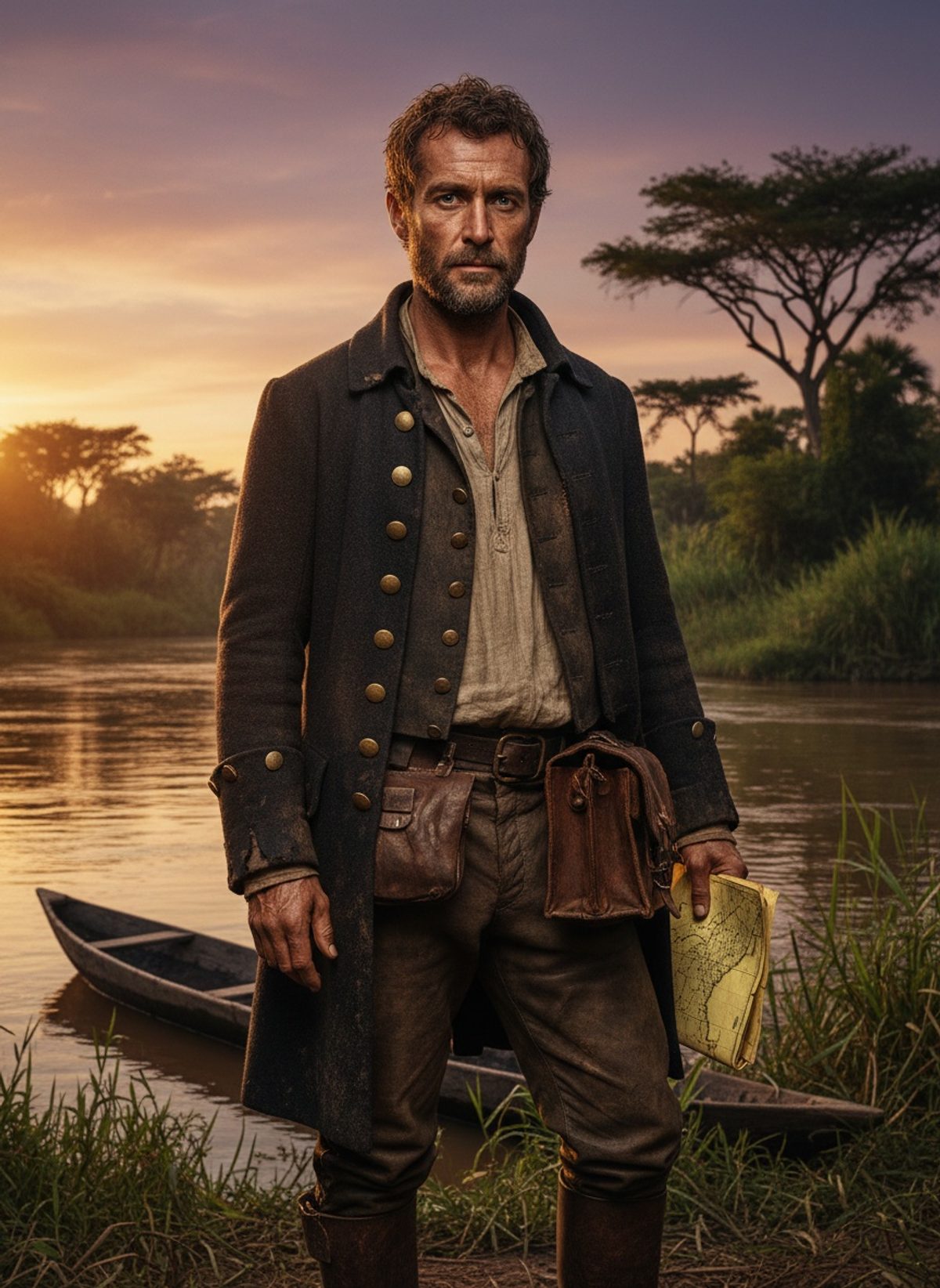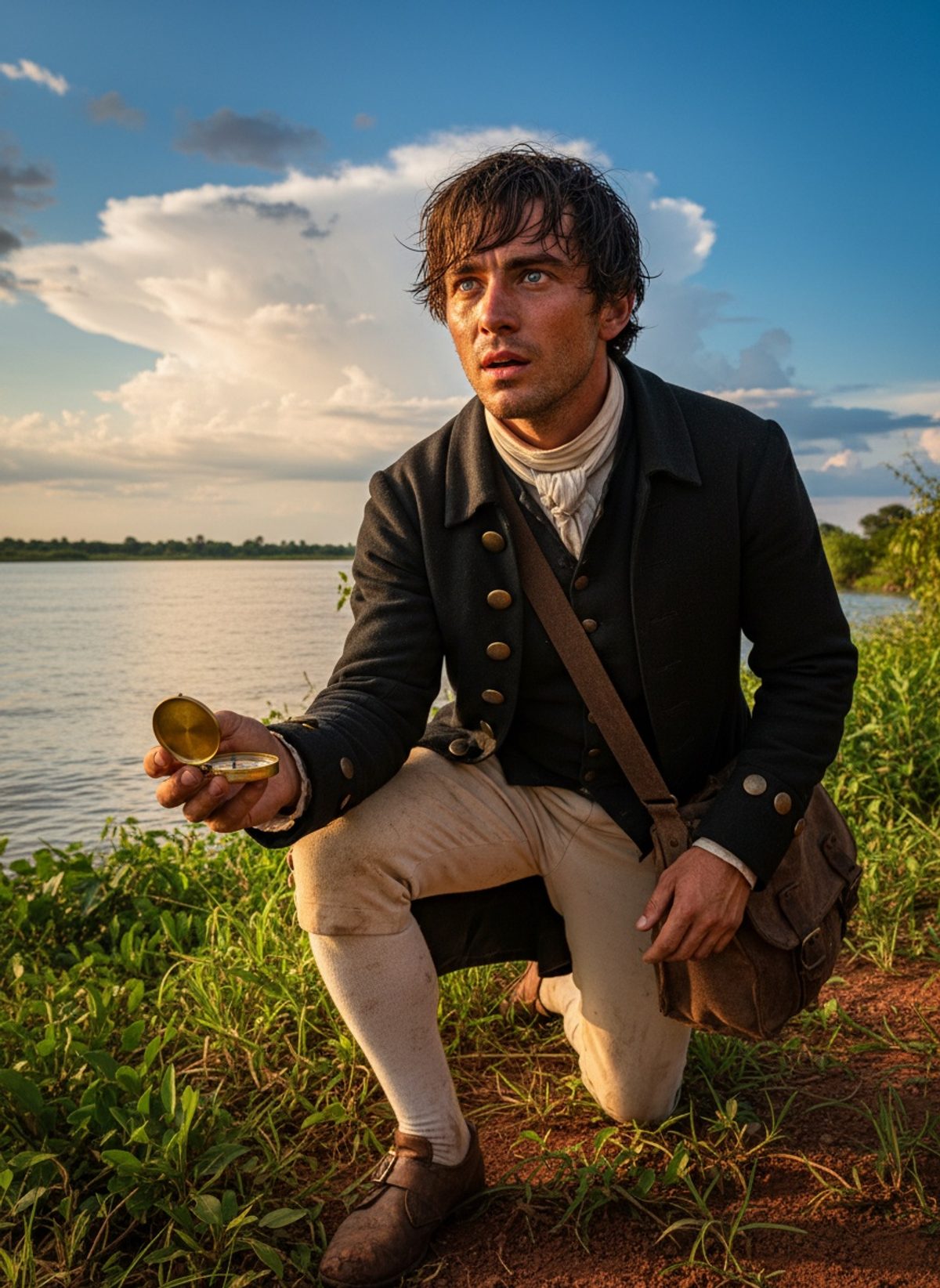
The harsh sun pounded relentlessly on Mungo Park’s back as he hacked his way through dense West African underbrush, each step a triumph over suffocating humidity and unseen dangers lurking in the verdant shadows. His heart raced not only from the exertion but also from the fevered anticipation of discovery. This young Scottish surgeon was alone in a land mapped only in myths, driven not by lucrative contracts or military strategy but by a profound, insatiable curiosity. It was sheer determination that had brought him here, to the brink of an unravelled continent, and that same determination pulsed through him now, compelling him further onward.
The Solitary Adventurer
In the latter half of the 18th century, the Niger River was a mystery that piqued European curiosity. Armchair geographers back home in Britain pondered over maps fraught with guesswork, filling in Africa's vast unknowns with speculative inkblots. But for Mungo Park, it wasn't enough to trace the supposed path of this river from the comfort of a cluttered study. At twenty-five years old, with zeal only youth can afford, Park took up the mantle of explorer, pulling himself away from the familiar windswept hills of Selkirkshire and plunging into the daunting obscurities of West Africa.
Armed with nothing more than a compass and a notebook, Park's expedition could easily have been a suicide mission. Previous explorers succumbed to diseases or hostile encounters; yet, for Park, each breath of stifling air inhaled in this unknown territory was a testament to his survival. Upon his arrival in 1796, Park discovered an overwhelming sense of isolation. His approach was unorthodox, lacking the security of guides or the strength of armed escorts. Yet, this very vulnerability fostered an unexpected affinity with the local communities he encountered along his journey. He pieced together their stories, myths, and knowledge of the land into the pages of his journals, his primitive maps coming to life with the lines that those who had traversed the lands before him described.
But not every encounter was friendly. Captured by hostile men, Park was imprisoned, his fate resting precariously upon their whims. For days, the prospect of death loomed, yet Park's resilience never wavered. Finally released, worn and weary, he pressed on — a testament to his unwavering resolve. It was this unyielding spirit that guided him when, at last, the shimmering surface of the Niger unfolded before him, a sight no European had ever recorded seeing. It was a river of life, carrying whispers of distant lands and countless secrets, visible proof of Park’s triumph over the impassable barriers both real and imagined.
Read next: The Day a Scots Surgeon Walked Into the Amazon Alone
Into the Niger's Embrace
The river flowed with an ancient, tranquil majesty, its breadth and beauty striking a profound chord within Park. This great river was elusive to the Western world, its source, direction, and destiny entwined with Africa’s own enigmatic lore. In that moment, all his trials coalesced into a singular purpose — to trace the meandering pathways of the Niger, to illuminate a landscape shrouded in the half-light of myth and assumption.
His journey along the river, however, was no gentle drift. The challenges along the Niger were myriad, from torrential rains that threatened to stop him in his tracks, to the continuing threat of disease. Malaria lingered at the periphery, a silent, invisible predator stalking through the night. Yet, Park remained undeterred. Occasionally, he found solace in the welcoming arms of riverside settlements, modest bastions of culture and life amid the vast wilderness. Here, he shared food, stories, and laughter, the universal languages of human connection shaping each new friendship along his path.
But his journey was not merely one of map-making. It was a narrative exchange, a trading of tales as much as it was an observation of geography. The people he met added dimensions to his understanding not just of the Niger, but of Africa itself. The land wasn’t a void filled with European spectres of the exotic or dangerous; it was vibrant, intricate, and alive with its own stories and songs. Park became, in many ways, a conduit for these voices, a traveler sharing the wisdom of the land back home in Britain.
Legacies of Uncharted Waters
As Park eventually found his way back to Europe, he bore witness not only to the physical terrain he had traversed but also to the bonds he had forged during his expedition. His accounts of the Niger and its people shattered the image of Africa as "the Dark Continent" — a figure of speech among Europeans that signified the sift between myth and reality, ignorance and knowledge.
Park's narrative was a powerful catalyst for future exploration, a testament that incited the spirit of adventure in others, igniting the imaginations of those who sought to touch the fringes of the known. His mission was ostensibly geographic, yet it rippled through the intellectual and cultural fabric of the time, inspiring a vision of Africa informed not solely by its distance from Europe, but by its own innate richness and diversity. His published journals imbued readers with a vision of a land not to be feared, but to be understood and respected.
Mungo Park's odyssey remains a narrative of extraordinary endeavor, emblematic of the indomitable human spirit. As global understanding expands and matures with each new generation, Park’s journey stands as a reminder of an essential truth: worlds perceived as distant and disparate are, more often than not, closer and more connected than they appear. In an age where borders are continuously redrawn and cultural landscapes evolve, the essence of Mungo Park’s solitary journey pulses with relevance — a vivid reminder of the limitless possibilities within the scope of human courage and curiosity.