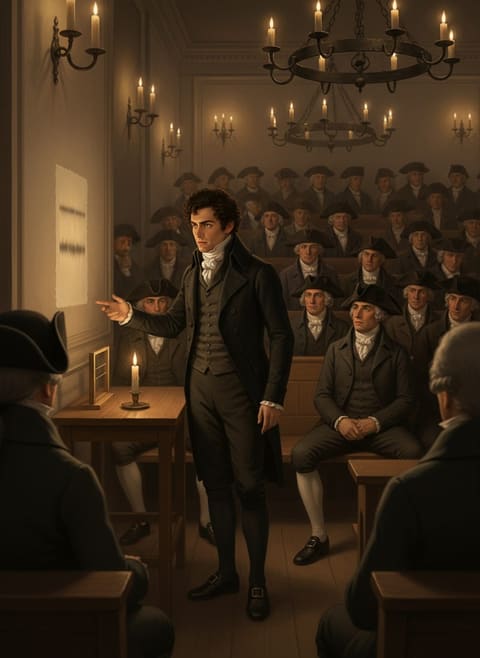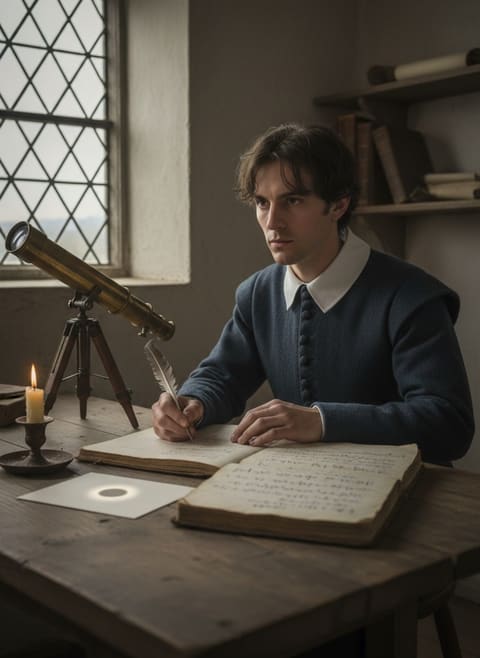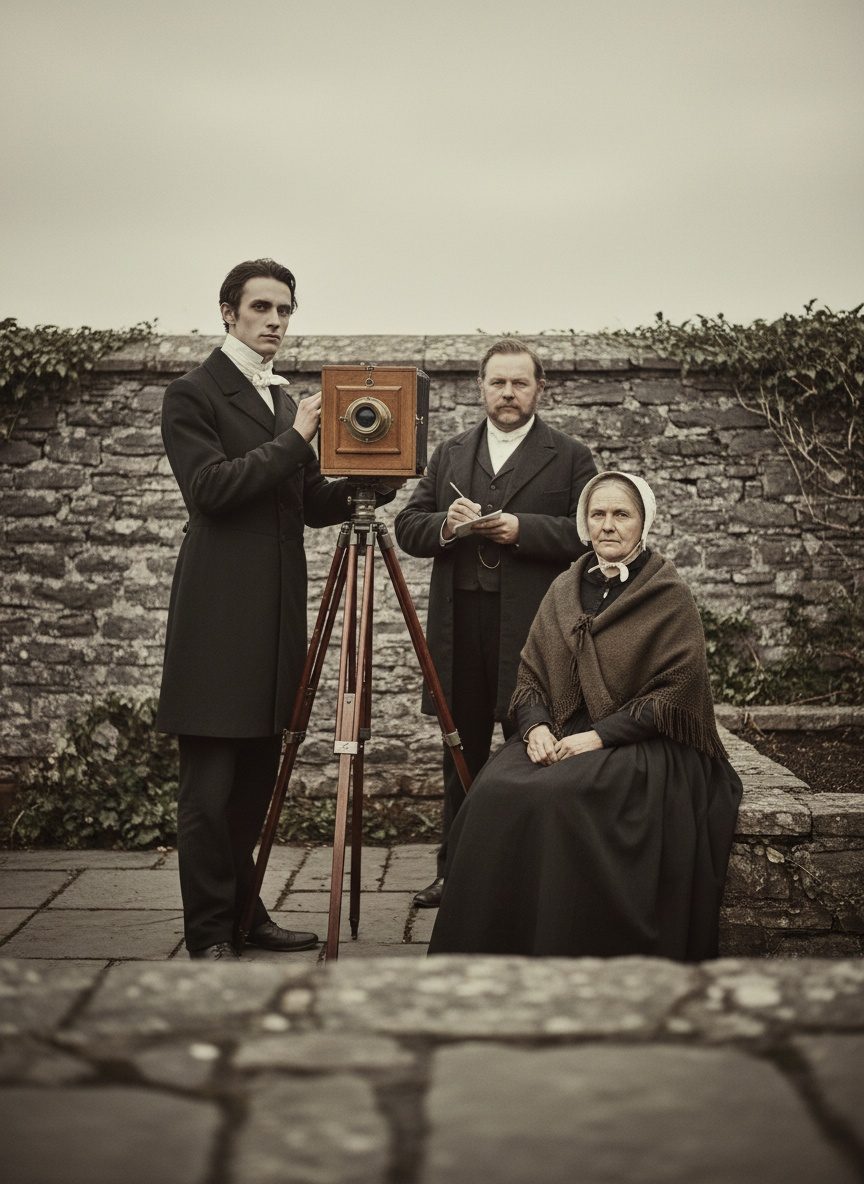
The garden of St Andrews, caught in the delicate light of a Scottish dawn, was silent save for the distant call of seabirds and the whisper of the wind through the whispering leaves. The cloud-heavy sky was a muted canvas, promising rain yet holding back as if to witness the unfolding of a quiet revolution. In a corner of this garden, beneath an ancient oak, a small wooden shed stood defiantly against the creeping decay of time. Within its humble walls, the faint scent of chemical sorcery lingered — an alchemy born of ambition and desperation. It was here, amidst the haunting beauty of this storied landscape, that a frail Scottish blacksmith’s son breathed life into a bold new art form.
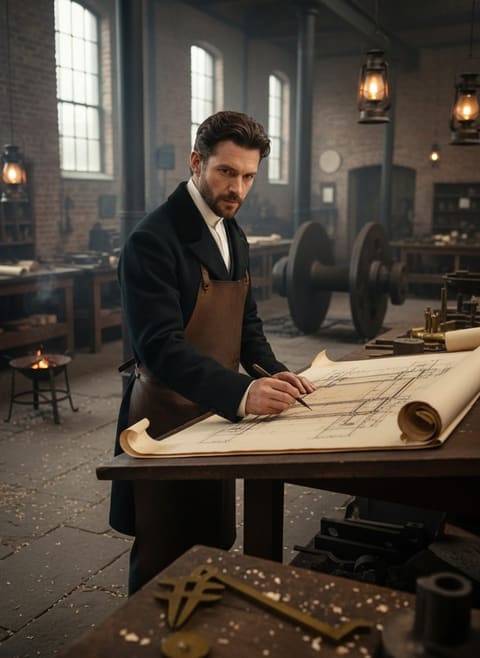
Robert Adamson, constrained by the failing strength of his own body, found purpose and power in a wooden box camera, gifted to him by his friend James Nasmyth. Nasmyth, famous for his mighty steam hammer, saw in Adamson not the shadow of illness but a spark of genius. Adamson, determined to defy time one last time, set about capturing the world as it was disappearing before their eyes. With each passing day, the specters of St Andrews would step into his garden studio — plaid-clad fishwives, solemn ministers, stern soldiers and playful children — all eager to have their likenesses preserved in a form they struggled to comprehend.
The year was 1843. The heavy mists of the Victorian era masked the dichotomy between rapid progress and persistent poverty, innovation and entropy, life and death. In this charged atmosphere, Adamson and his artistic collaborator, David Octavius Hill, conjured the first portrait studio the world had ever seen. It was unlikely, and perhaps even impossible, had it been conceived by any but these two kindred spirits. Together they navigated the uncertainties of the nascent art of calotype photography, where light and shadow played their secret games on sensitive paper.
Hill, a gifted painter yearning to immortalize Scotland’s assemblage of noble souls, joined hands with Adamson in a seamless partnership that merged technology with artistry. Hill’s sketches transformed into ghostly images as Adamson devoted each waning day to perfecting his scientific technique. Light streamed through the garden's hedgerows during those balmy summer days, caressing the subjects like a gentle hand guiding the reticent toward the frame while the exposure worked its magic on sheets of treated paper.
Read next: The Day a Weaver's Son Mapped the Invisible World
Their images were not mere shadows; they were lives. Their unassuming shed blossomed into an unlikely haven for Scotland's everyman and elite alike, creating a tapestry of human experience. The portraits contained the echoes of sermons, the laughter of children, the chants of fishwives toiling by the sea, all suspended in time. One could almost hear the crackle of a bonfire during Beltane festivities or the solemn hush of kirk prayers within those still frames.
As Adamson’s health waned, a fierce urgency quickened their pace. In just four short years, they captured over 3,000 portraits — a miracle of production because every image was handmade with meticulous care. The calotype process welcomed imperfections, and the images often appeared dreamlike, bordering on abstract. Yet those blurs and smudges only deepened the connection between sitter and viewer. Those precious photographs were not just records; they were testaments to the enduring spirit of those immortalized by them.
Read next: The Day a Clockmaker's Son Rewired How We See the Stars
The endeavor did not go unnoticed. News of their work spread beyond the garden fences to Edinburgh's circles of art and science, drawing the inquisitive and the skeptical alike. Here was documentary photography before anyone had named it, but it took root, a tiny seed that would one day grow into an oak as mighty as the one shading their studio. Even as the pair’s work began to gain acclaim, Adamson's strength dwindled until it was but a whisper. Near the end, even holding the camera became a labor, yet Hill, ever the loyal partner, cast aside brush and canvas to infuse each photograph with his imagination.
When Robert Adamson succumbed to his frailty in 1848, the world lost a pioneer whose vision heralded a new era of visual storytelling. David Octavius Hill was left with the legacy of their collaboration, a trove of images illuminating the richness of human experience that words could scarcely convey. Through Hill’s dedicated efforts, their archive influenced future generations of artists and documentarians, bridging gaps between past and present and encouraging an unshakeable pursuit of truth through the lens.
Decades have since passed, and while technology has wrought advancements beyond their wildest dreams, the fundamental brilliance of Adamson and Hill’s endeavor endures. In a world now overflowing with images, these early photographs remind us that each face, each expression, and each life has a story worth sharing. As we stand at the intersection of history and innovation, the garden in St Andrews whispers to us still — offering the timeless wisdom that, though time might steal our bodies, it can never steal the memories we leave behind.