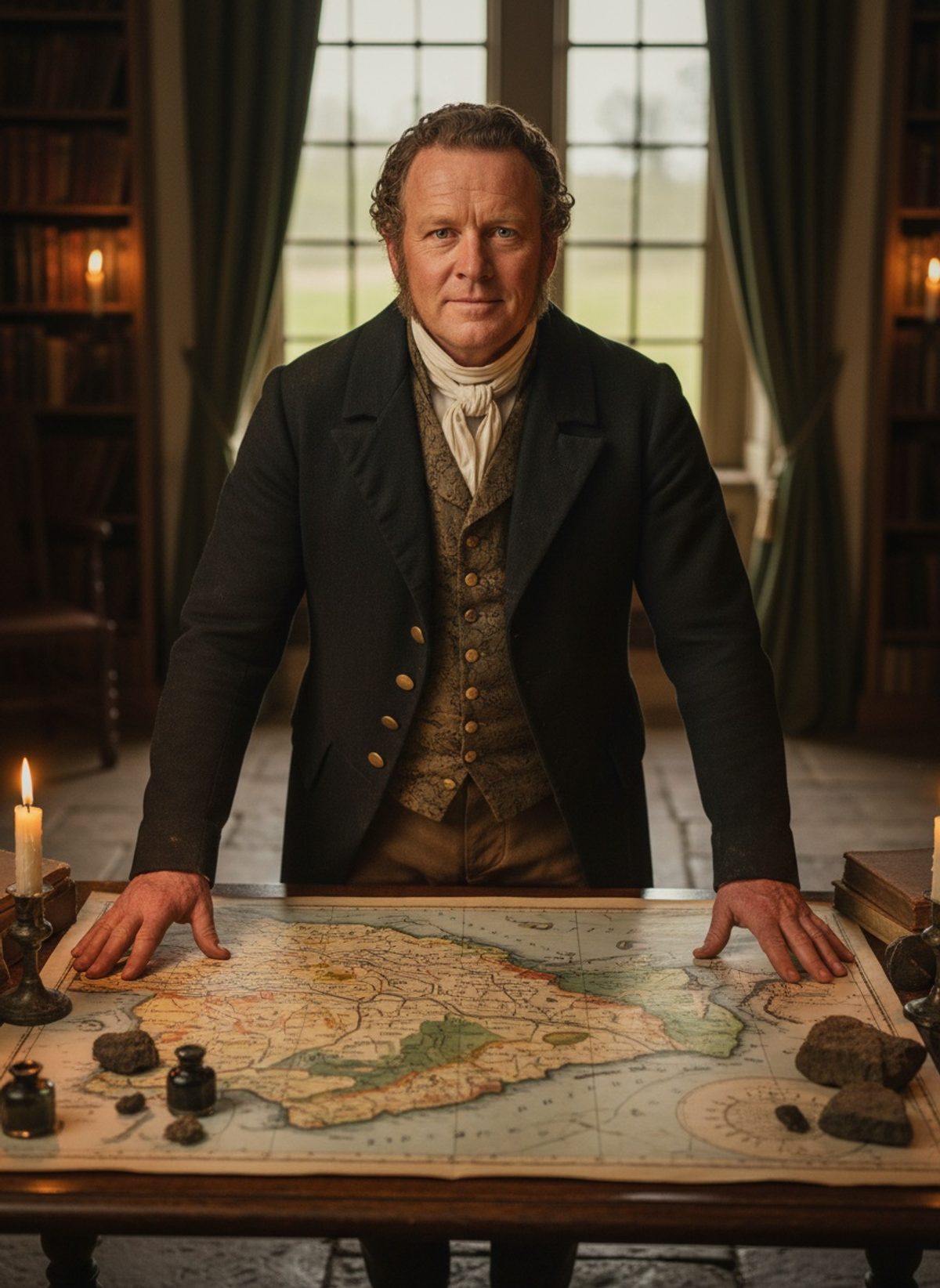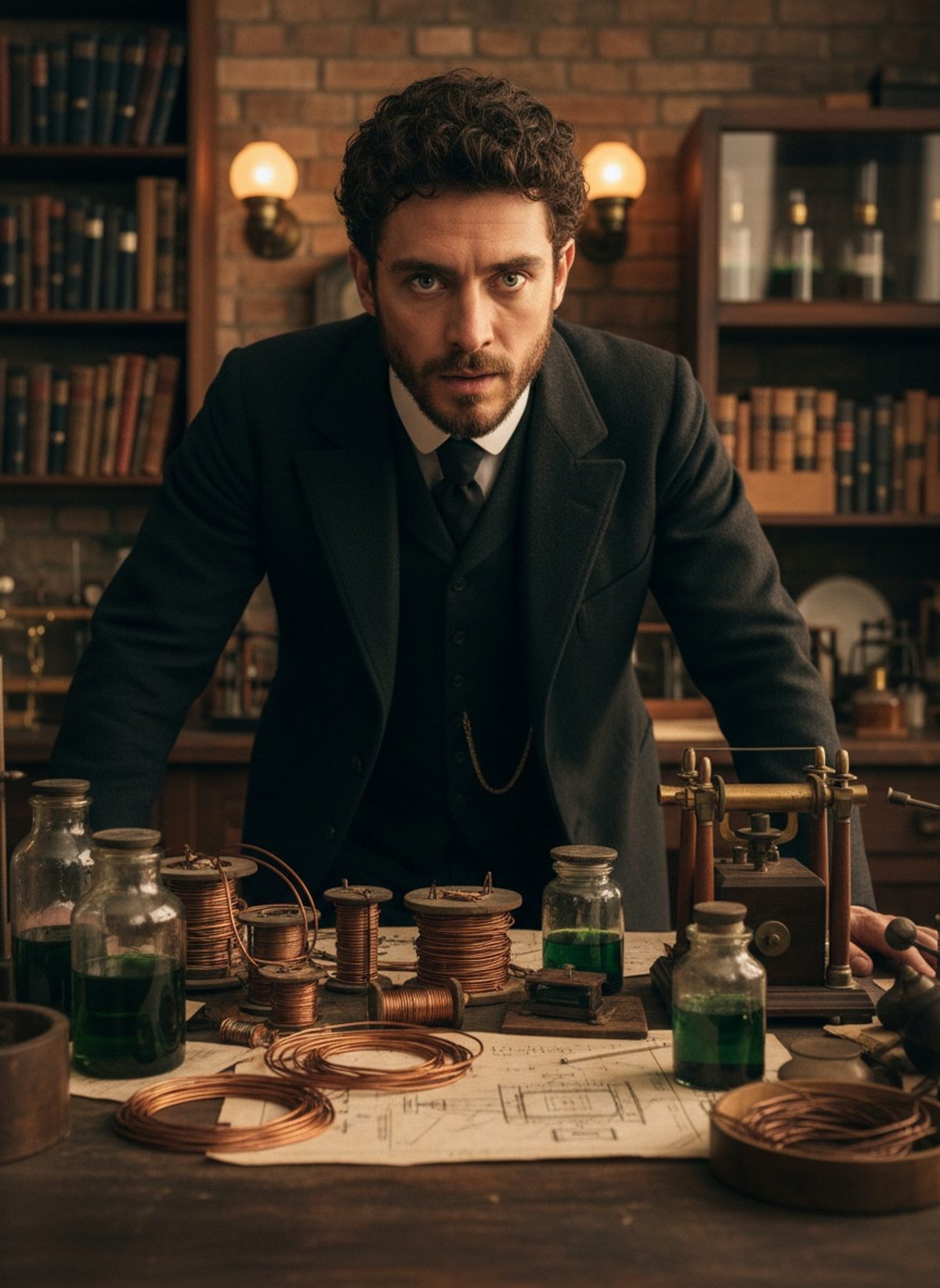
His fingers were more familiar with looms than lenses. The man who revolutionized the way we see light was the son of a Scottish weaver.
A Weaver's Apprenticeship to the Cosmos
James Clerk Maxwell, born in Edinburgh, found himself charting a destiny unlike any weaver’s son. By the time he reached the august halls of the Royal Institution in London in 1861, Maxwell was stepping well beyond the expectations set by his ancestry—a distinction not unusual for Scotland's ambitious sons during the Victorian Era. His early life brimmed with challenges and opportunities, as curiosity guided him more than any loom could. From a young age, Maxwell’s mind was a tapestry interwoven with questions about the world around him, nudging him towards a universe many could barely dream of exploring.
The Victorian Era was an epoch of scientific enlightenment yet with its roots deeply entrenched in traditional values. The period saw the painting of landscapes and portraits in delicate hues, but the real marvel lay in Maxwell’s ability to understand and then orchestrate the colors of light—a field still shadowed largely by mystery. His early interest in geometry and optics eventually found expression in a groundbreaking theory on the nature of color vision, setting the stage for an audacious experiment that would echo through time.
The Rainbow Unleashed
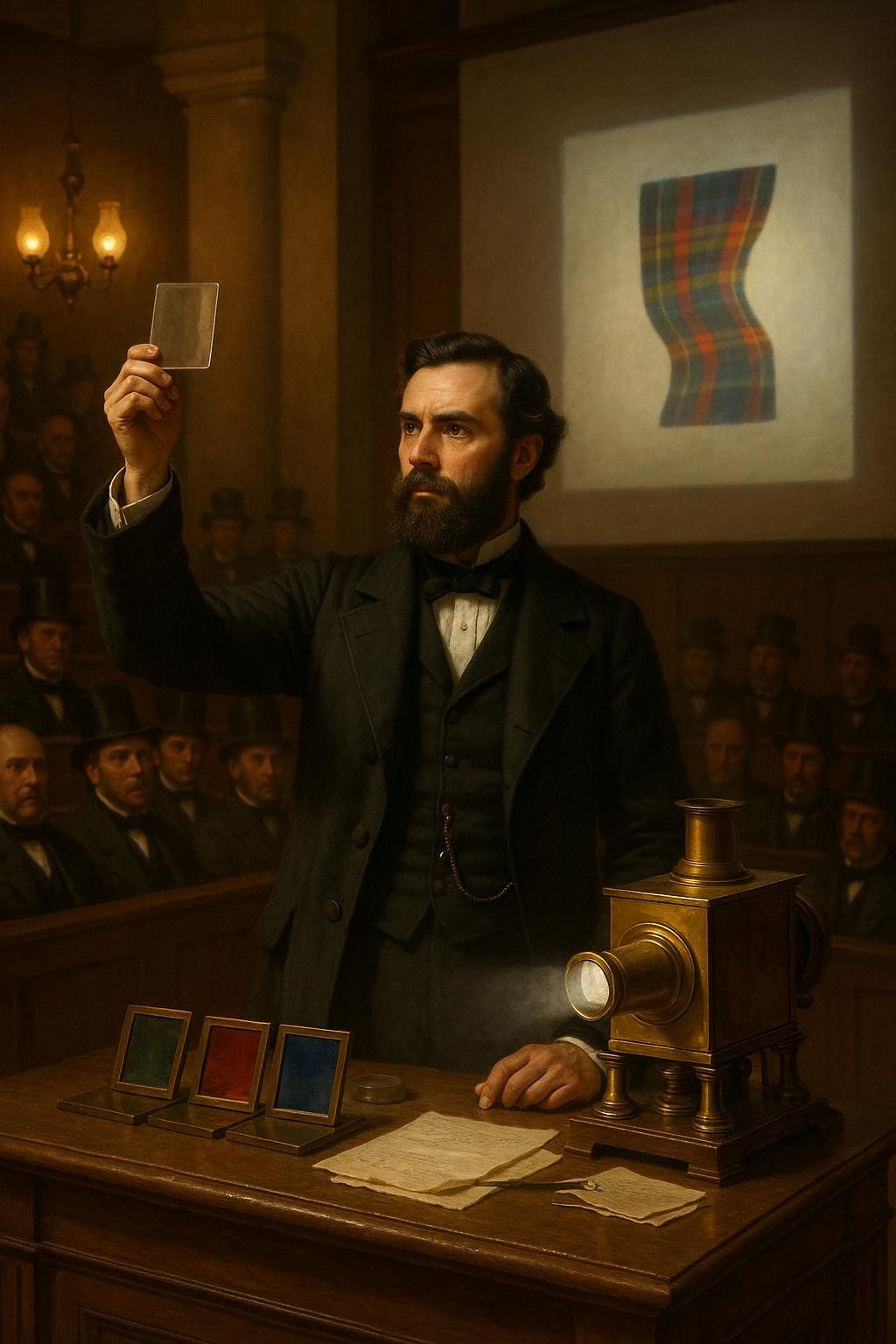
1855. Maxwell posited a theory suggesting that human perception of color could be quantitatively broken down into three fundamental components—a trichromatic scheme corresponding to red, green, and blue. Six years later, in the hallowed lecture room of the Royal Institution, Maxwell stood poised to demonstrate this theory in an unexpected spectacle. It wasn’t merely a scientific demonstration; it was a magic show of sorts, where the reveal was nothing less than the world's first true reproduction of a colored photograph.
Read next: The Day a Miner's Son Gave the World Safe Light
Before the astounded attendees, Maxwell meticulously projected a strip of tartan—woven wool dyed in vivid colors—through three distinct glass filters. By overlapping images taken through red, green, and blue filters using a special technique, the illusion of the tartan's original colors magically reappeared on the screen. While the scene was silent, the air buzzed with the realization that Maxwell had revealed how colored photography could transcend mere probabilities to become an astounding reality. The rainbow, it seemed, was no longer the elusive arch in the sky but a tangible, reproducible phenomenon bound by principles humanity had never before grasped so completely.
Colors Brew Out of the Shadows
This scientific marvel was more than a triumph of optics; it was a profound turning point in human perception. Maxwell's experiment essentially laid the foundations for what photography would blossom into—something you see scattered across coffee tables in our modern age: color photos. It inspired generations to see beyond the grayscale images that had once defined the epoch.
Maxwell's innovation brought a kaleidoscope of possibilities cascading onto society, echoing through the following decades as technology caught up with theory. Before the world could process the impact fully, this one Scottish physicist had handed it inevitable progress. His experiments didn't just throw a rainbow onto the screen but enveloped entire technological fields, making color representation as natural as light itself. He left a chromatic legacy that painted future imaginations in hues the human eye and brain could now both understand and cherish.
The Not-So-Hidden Genius
Amidst a backdrop of emerging technologies and daring discoveries, Maxwell was regarded by contemporaries with curiosity and perhaps a touch of academic awe. Perhaps it was his quiet modesty, masked behind the characteristic Scottish reticence, that left his achievements less sung than those of his peers. Still, the scientists who would follow in his wake couldn't overlook his contributions. "He had wit," they might say, peering through historical memoirs, for his rainbow experiment was just a chapter in the larger work of Maxwell's established genius.
Beyond the colors, Maxwell's mathematical wizardry imbued many aspects of scientific endeavor with sophistication, enabling insights into electromagnetic fields that would influence the great scientific thinkers of future generations. Einstein himself, enthralled by Maxwell’s equations, heralded them as transformative—a foundation upon which much of modern physics would rise like a grand, ever-evolving skyscraper. Maxwell understood early that the natural world was a symphony of frequencies and waves, creating an oeuvre of life as much shaped by color as it was by unseeable forces.
A Legacy Colored in Light
The story of how James Clerk Maxwell gave the world its rainbow is not simply a narrative of scientific achievement; it is a reminder of the colors that paint our dreams. In an age defined by industry, coal-black smoke, and classical pursuits, Maxwell brought forth ideas of progress tinged with the vibrancy of rainbows. In reimagining a core aspect of reality—our perception of color—he didn't just leave an academic legacy. He changed the way humanity visualizes itself and its stories, setting a spectrum amiss that would ripple across art, science, and technology.
As you gaze upon any colorful photograph in an album or museum today, consider how a Scottish weaver's son crafted the very language of color to speak through lenses and screens into the future. The rainbow, once a fleeting symbol of hope and wonder, was caught in the frame of a tartan slip—and therein, an invitation into worlds yet unseen by Victorian eyes but now a vivid part of all our lives. Maxwell gave us not just the ability to capture the light but the infinite possibility to look beyond the limits of a monochrome world, confirming that even simplicity, like a strip of fabric, holds within it the power to change everything we know.