He was just sixteen years old. John Travers Cornwell had never sailed into a battle before.
The dawn of May 31, 1916, found the North Sea simmering under an overcast sky. Two massive fleets, the British Grand Fleet and the German High Seas Fleet, were converging off the coast of Denmark's Jutland Peninsula. Their collision would signal the largest naval battle of World War One. Amidst this clash of titans, young John Travers Cornwell, a boy seaman from Leyton, stood aboard HMS Chester, one of the ships spearheading the British effort. For Cornwell, the youngest among seasoned men, the approaching fog of war brought fear and anticipation, but the determination outweighed all else.
Born in 1900, Cornwell was every bit the product of his time—a time when the British Empire had spread its influence across the globe, and national service was a calling that many answered with eagerness. Enlisting in the Royal Navy was a dream for many young boys, and Cornwell joined its ranks with enthusiasm, leaving behind both the familiar streets of Leyton and the schoolbooks he had barely outgrown. What he lacked in size and experience, he made up for with an unyielding spirit, a trait he would need all too soon.
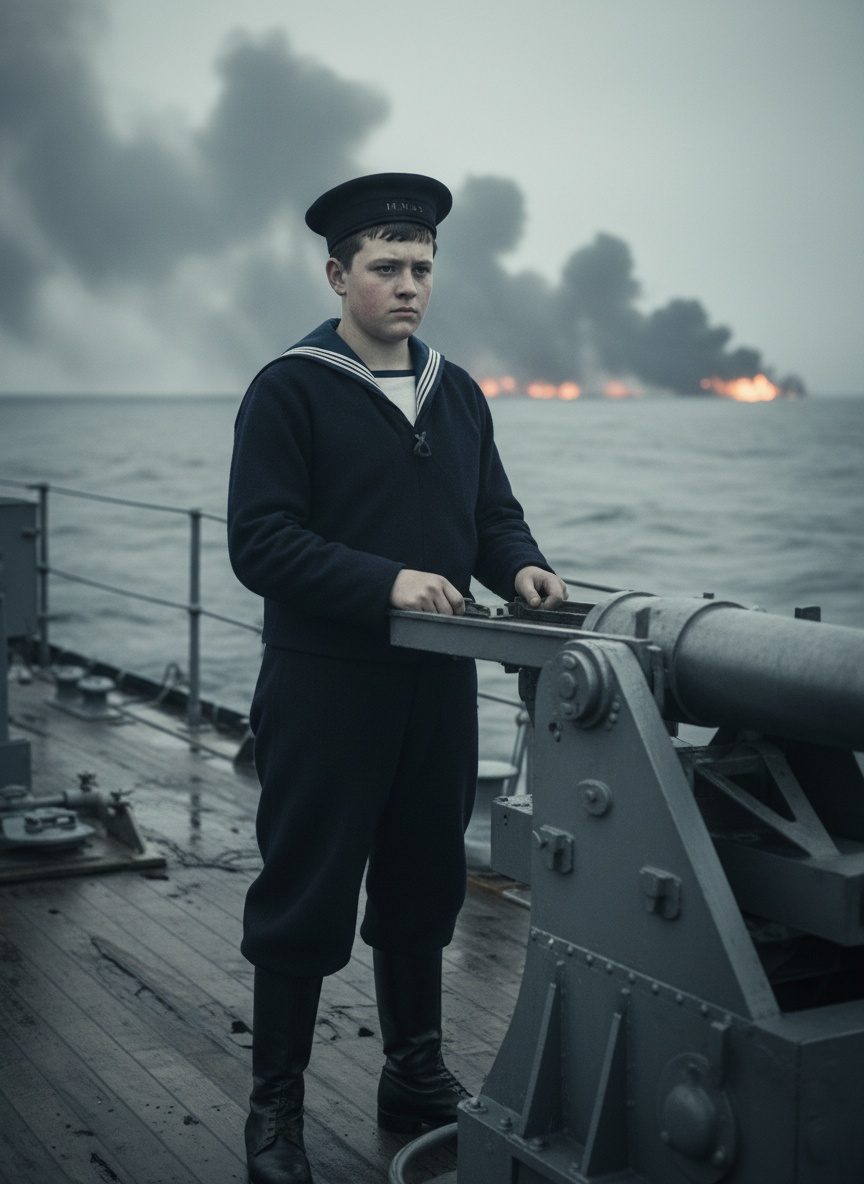
The morning air carried the rumble of distant artillery as HMS Chester approached the battle lines. Cornwell manned the Number One gun—his station and responsibility amongst the chaos. With the fleet maneuvering and positioning, he prepared for what would become an inferno on the water. As the first German salvoes tore through the sea, the magnitude of warfare descended upon the young sailor and his crew.
Read next: The Day a British Padre Carried the Dying From No Man's Land
They stood on deck, enveloped by the sound and fury of naval combat—a symphony of orders, shouts, metallic clatters, and the deafening reports of their own guns. The skies seemed to echo with the cries of shells whistling towards them. Each man knew the stakes were high, as did the teenager who stood steadfast at his gun, eyes sharp, awaiting the commands of those around him.
A sudden explosion rocked the ship. In a matter of seconds, Cornwell’s world transformed into a nightmarish tableau. Chaos reigned; his crewmates lay lifeless around him, their bodies testament to the brutal cost of warfare. Blood stained the steel beneath them, gun smoke swirled like gory mist, yet Cornwell stood unscathed but completely alone beside the weapon. His training had not prepared him for this isolation, yet abandoning the gun was never an option. With a stoic resolve that belied his years, he remained vigilant, maintaining his post against the specter of despair.
The intensity of the battle was beyond anything he had pictured in his youthful imagination, yet amidst this chaos, his thoughts were clear—one simple task: man the gun and await further orders. The iconic silhouette of a boy against the backdrop of devastation became a powerful image, one the history books would call upon in the recounting of Jutland.
Minutes stretched into harrowing eternity. Cornwell's courage, though unnoticed in the frenzy of survival, was forged in the unrelenting fire and noise of battle. His stand at the gun was not one of grand gestures or heroic cries, but a silent, steadfast defiance against impending oblivion. The stories would tell of how the youngest among them stood alone, but within him a quiet strength burned as he awaited commands that would never come.
When finally relieved from his lonely vigil, Cornwell was gravely wounded—a testament to a battle that showed no mercy. Post-battle, his injuries proved too severe, and in the aftermath of heroism and horror, he succumbed to them. His actions, however, resonated far beyond those moments of solitude on deck. The story of Boy Seaman Cornwell reached the ears of a grateful nation, wrapping him in the embrace of a legacy earned by bravery and devotion beyond measure.
In the corridors of power and within the hearts of the public, Cornwell's story struck a chord. Great Britain's highest honor, the Victoria Cross, was awarded posthumously—an accolade signifying extraordinary valor when only sacrifice might suffice. His youth did not diminish his heroism but instead, cast an even greater light upon it. The tale of a teenage boy standing alone at his gun transformed into more than just an episode of war; it embodied the spirit of duty and courage, echoing through the years, reaching beyond textbooks and classrooms.
John Travers Cornwell's legacy captures a moment of profound bravery that demands remembrance. It is a tale reminding us of the extraordinary potential within the ordinary, that courage knows no age, and that the name of a sixteen-year-old boy remains etched in the annals of history. Not merely as a lesson in patriotism, but as a powerful testament to the depths of human resolve, standing as a reminder that in even the bleakest of times, the heart's fire can illuminate the darkest sea.