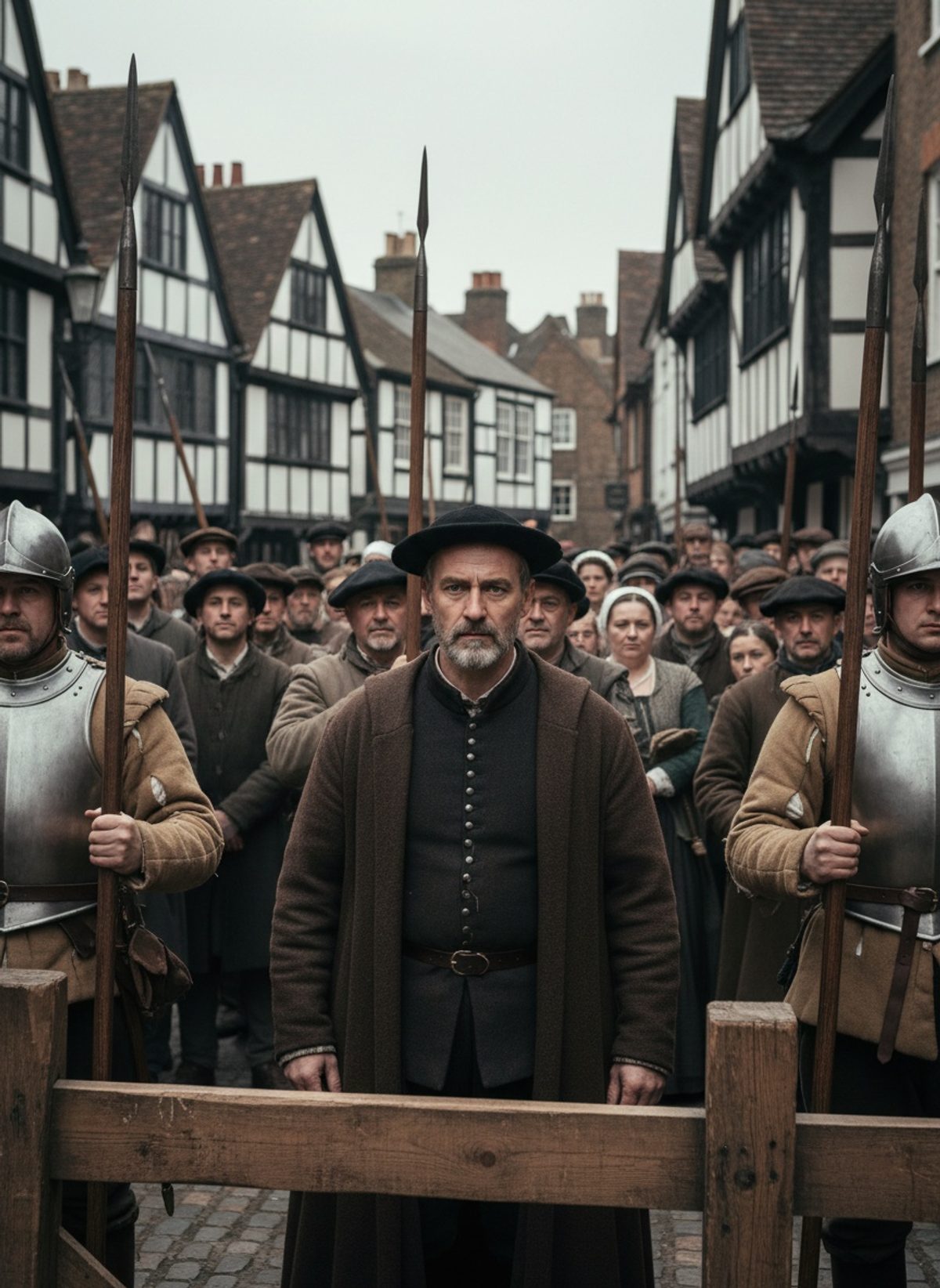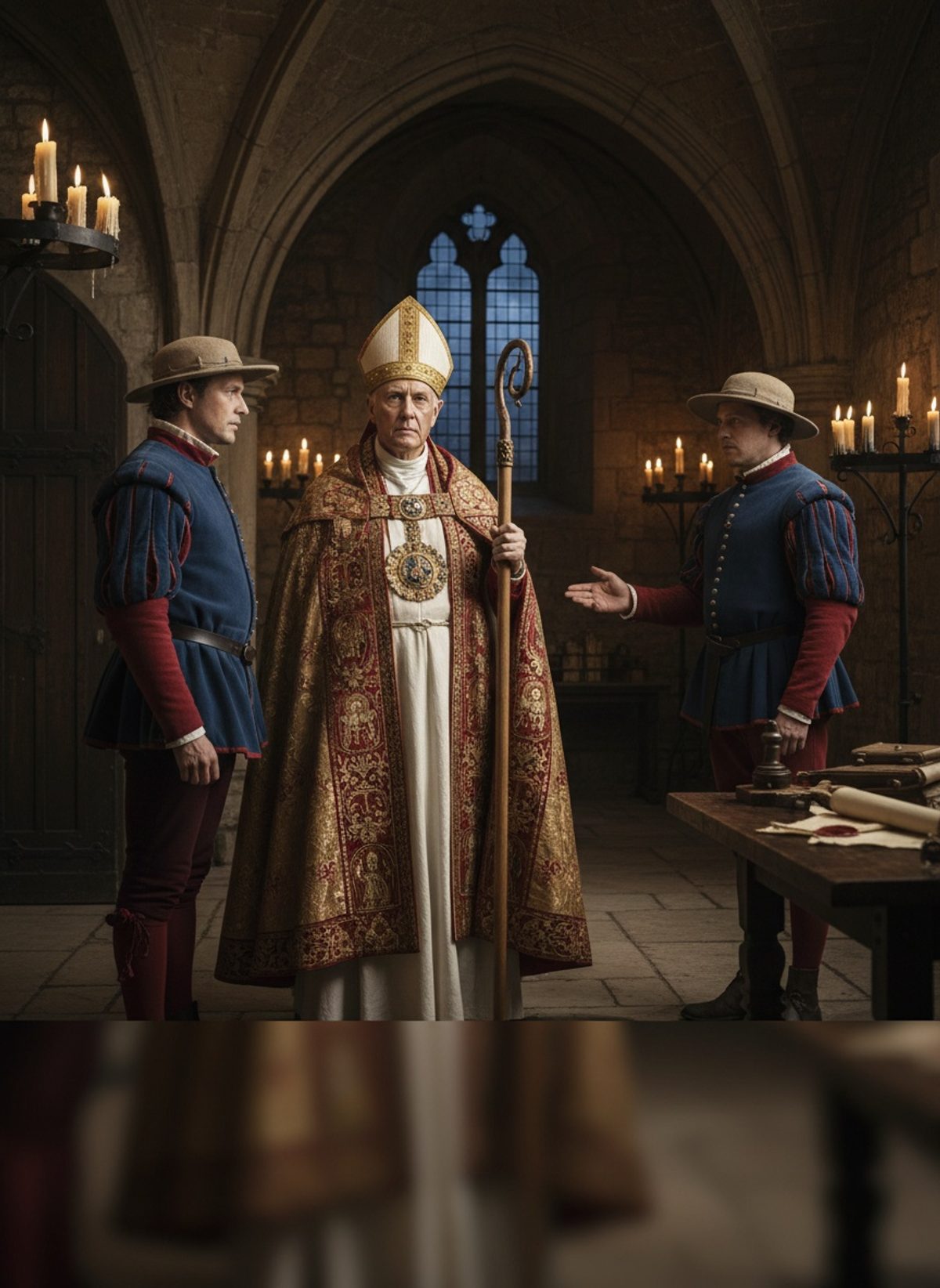
Most Tudor bishops knew when to yield. John Morton did not.
The Usurper King
In July 1483, the streets of London were abuzz with anticipation and unease. The city, a tangled web of cramped alleys and cobblestone, was the stage for Richard III's impending coronation. The air teetered between expectation and trepidation as banners bearing the king's emblem fluttered in the summer breeze. Richard III had seized the throne, declaring himself the rightful king of England, yet his path to power was marred with controversy and shadowed whispers of murder and betrayal.
Securing the throne required not only the loyalty of allies but the blessing of God, represented in this world by the Church. England's churchmen were pivotal players, wielding spiritual authority that could either cement or unravel a ruler's claim. Richard, aware of the precariousness of his ascent, leaned heavily on Archbishop Thomas Bourchier to lend his legitimacy. Bourchier, a man of politics as much as of faith, acquiesced. He had survived the treacherous twists of Yorkist and Lancastrian schemes before and knew the cost of defiance.
However, Richard’s claim was not universally acknowledged. Beyond the conspiring courtiers and swordsmen stood John Morton, the Bishop of Ely. A shrewd and learned man, Morton had served various masters, but his moral compass never wavered, even when the cost was personal. The seizure of the crown by Richard cast a dark shadow over the kingdom, one that Morton could not ignore. To Morton, the boys—Edward V and his brother Richard—presumed dead in the Tower of London, were the legitimate heirs, and this new king, a mere usurper. Morton, ever defiant, refused to lend his ecclesiastical blessing to Richard’s coronation.
Read next: The Day a Tudor Lawyer Walked Into the Tower and Refused to Lie
The Prison Bishop
John Morton's refusal was an audacious act that quickly turned him from bishop to prisoner. Captured and confined in a castle, his quarters were decidedly less perilous than the Tower, but the walls were no less confining. The Bishop of Ely, once part of bustling court life, was confined to silent stone chambers, left alone with his thoughts. Yet, Morton was made of stern stuff, a man molded by England’s harsh political realities. His imprisonment was more than a mere setback; it became a silent protest, an emblem of resistance against tyranny.
During his confinement, rumors of discontent outside the castle walls reached Morton's ears. England was unsettled, the countryside buzzing with disquiet. Noblemen loyal to the young princes, and those who dreamed of a different future, cast their lot with Henry Tudor, a distant but legitimate claim to the throne. Morton, though imprisoned, became a symbol of this bubbling resistance. His integrity and staunch refusal to recognize Richard's authority reverberated far beyond the walls of his cell.
John Morton’s confinement did not silence him; rather, it magnified his defiance. Allies and clerics visited, some in secret, whispering of hope and rebellion—words which Morton surely knew could be as dangerous as daggers. Despite the heavy hand of Richard's spies and the threat of execution, Morton maintained his allegiance to a higher principle, knowing full well that movements were often ignited by mere ideas.
The Quiet Victory
While Morton languished behind stone walls, the nation he loved inched closer to change. His quiet defiance influenced those of power and persuasion, feeding the fires of insurrection against the embattled Richard III. Morton’s name became a rallying cry amidst the whispers of dissent. In the grand tapestry of history, the imprisoned bishop unwittingly penned threads of rebellion, a narrative driven by honor and fidelity to lawful kingship.
The culmination of Morton's defiance rose in a swell tides cannot halt. On Bosworth Field in 1485, Richard III met his end. Henry Tudor’s victory was a decisive blow to Richard’s usurpation, a victory that Morton’s defiance had indirectly sown. Once king, Henry VII rewarded Morton’s loyalty with the highest honor he could bestow, naming him Archbishop of Canterbury. Morton’s steadfastness, initially viewed as futile stubbornness, had laid the very groundwork upon which the Tudor dynasty was built.
The story of John Morton is not merely one of resistance against power; it is a tale of the conscience unmoved by fear. In refusing to anoint a king he believed was illegitimate, Morton risked his freedom, his position, and possibly his life. Yet, as history unfolded, his principled stand inspired a movement that reshaped the English crown. In an age where crowns were won and lost through blood and battle, the quill and the prayer proved mightier. Morton’s legacy, like many tales, reminds us of the quiet power of steadfast conviction.