The Tower of London loomed above the city as a grim sentinel, its stone walls barely warm from the intermittent June sunshine. A breeze whispered through the fortress, rustling the banners that bore the king's crest, and a tangible heaviness hung in the air—a reminder of destiny's inexorable approach. For those confined within the Tower’s cold embrace, the echoing footsteps of guards signaled imminent judgement. Among these prisoners was Thomas More, once Henry VIII’s trusted confidant, now the silent conscience of a nation grappling with seismic shifts in faith and power.
The Quiet Defiance of a Man
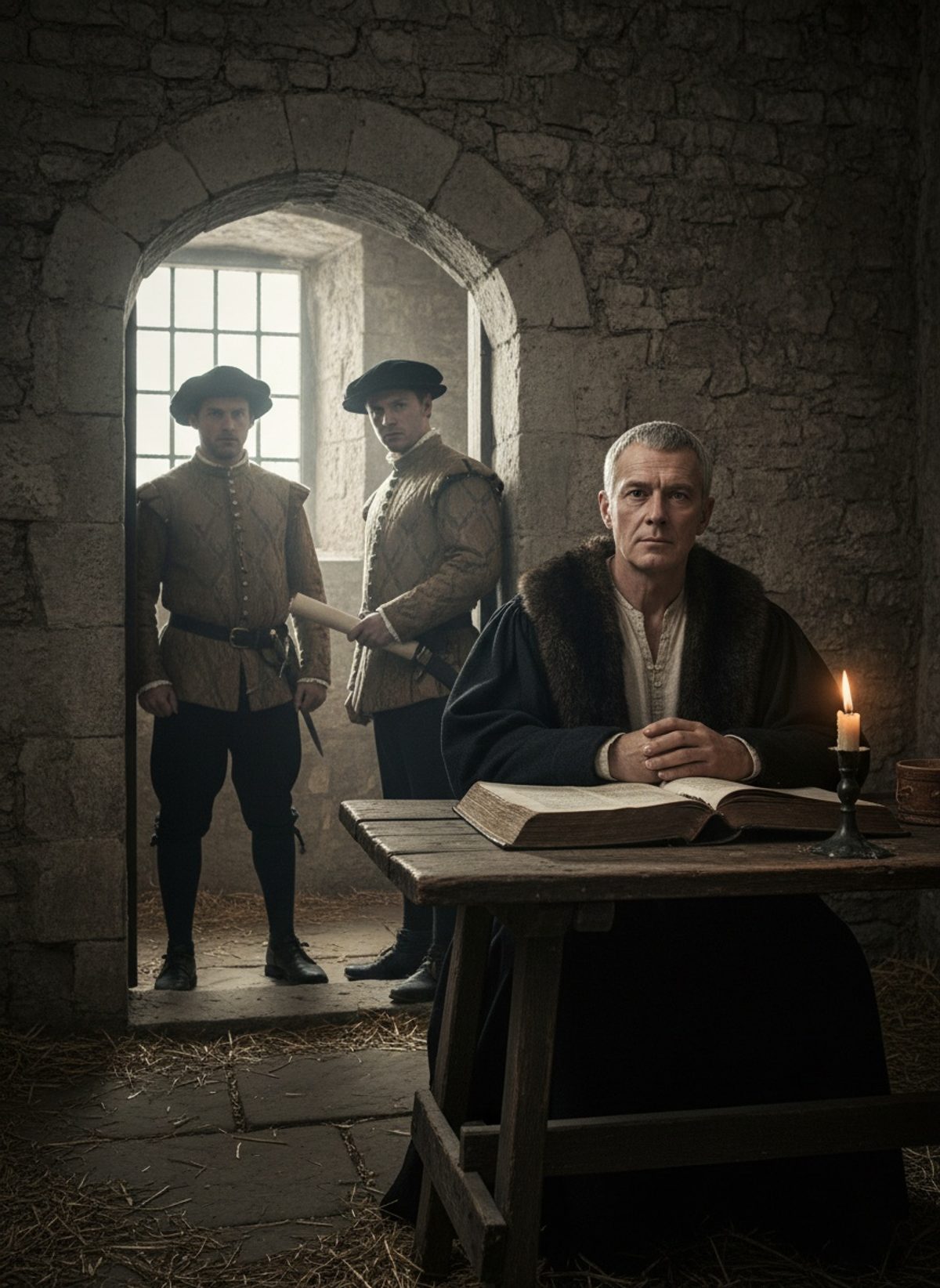
Inside a dimly lit chamber, its sparse furnishings stark and unyielding, Thomas More sat serenely against the tide of fears and foreboding. More, a revered scholar and astute lawyer, had been ensconced in the brooding confines of the Tower for a year. Once a central luminary in the king's court, More's refusal to bend to Henry's will placed him on a trajectory with an inevitable end. The stakes were monumental; it was not only his life but the very soul of England at stake.
More's silence had spoken volumes in an era where the voice of the monarchy sought to eclipse every other. He remained unmoved by the command that every man across the land must recognize Henry VIII as the head of the Church in England. This ultimate decree was born from Henrician rage and desire, yet More, rooted in his unwavering faith, refused to disavow allegiance to the Papacy. The heralds of Henry's religious revolution came with pleas, threats, and eventually a promise of reprieve—sign the oath, call the king what he demanded to be called, and all would be well. But More understood the duplicity of conscience; a man cannot abandon his own truth without succumbing to a living death.
With each visit from the king's emissaries, More's resolve became an inspired testament of human resilience. The silence he maintained was more powerful than any spoken protest, leading even his jailors, men whose lives were tethered to duty, to a reluctant admiration. More knew what all men cannot easily accept: that the might of a crown cannot compel the consent of a steadfast soul. It was a quiet war, fought not with armies but with principle, and More stood as its most noble commander.
Read next: The Day a Tudor Lawyer Chose His Head Over His King
England's Reckoning
The echo of uncertainty reverberated throughout the Tudor realm following Henry's seismic break with Rome. The king's proclamations reshaped the nation's religious landscape with the force of an earthquake. A millennium of ecclesiastical tradition was cast as mere rubble beneath the ambition of a sovereign who deemed his authority divine. Across the land, monasteries were dismantled, their stones repurposed or left to crumble, much like the faith and fortunes they had so long upheld.
In this tempest, Thomas More's steadfastness offered an anchor for the conscience of the nation. He represented a dedication to a legal and moral code that transcended mortality. More, who penned "Utopia," weaving ideals for a better world, understood the fragility of truth in the face of power. He was no zealot clamoring for martyrdom, but rather a man whose scholarly pursuits and devout loyalties pushed him to actions of profound courage.
More remained a pivotal figure not only in his defiance but in embodying the struggles that pervaded England. Neighbors, friends, and families found themselves divided, with loyalties tangled between crown and church, earthly king and heavenly adherence. More's final days in the Tower would be mirrored in the hearts of those who quietly questioned, who attempted to reconcile new decrees with long-held beliefs. His choice to remain resolutely silent begged questions of patriotism, faith, and integrity.
The king's soldiers, pragmatic in duty yet perceptive of the impossible choices dictated by political upheaval, played messenger and reluctant witness to the fall of a luminary. Their appeals, dictated from above, were met with a serene fortitude—a reminder that even in times when violence and coercion shape destiny, some lines are not meant to be crossed.
The Weight of History
The dawn of July 6, 1535, broke over the city with a cruel clarity, the Tower casting its shadow far across the Thames, though it was within its walls that the most influential darkness dwelt. More, transported from that grim chamber to the scaffold, ascended the steps with the quiet dignity that had characterized each moment of his imprisonmen. Observers watched as a life dedicated to service and learning approached its bloody conclusion, compelled by nothing less than an unyielding clarity of purpose.
More's last words, recorded as a humble man’s acknowledgment of duty to both earthly and divine sovereigns, resonated through the ages as a testament to human integrity. To the south of the city, the whisper of his resolve fluttered past the open cells of fellow prisoners who awaited similar fates, and beyond the walls into the nation that soon wrestled with the consequences of a king's demands.
Why delve into the final stand of a Tudor lawyer who chose silence over compromise? Because his story reverberates in each voice raised for justice, each conscience unbent by pressure to conform. More’s life and death are pathways marked along humanity's struggle to define the incorporeal lines between compliance and conviction. In today's world of shifting allegiances and threats to individual freedoms, More's legacy is a call to courage in the face of unrelenting tides. His spectral journey, from celebrated advisor to silent martyr, fuels the timeless dialogue of power and principle, enduring as a silent beacon within history’s vast, unfolding narrative.