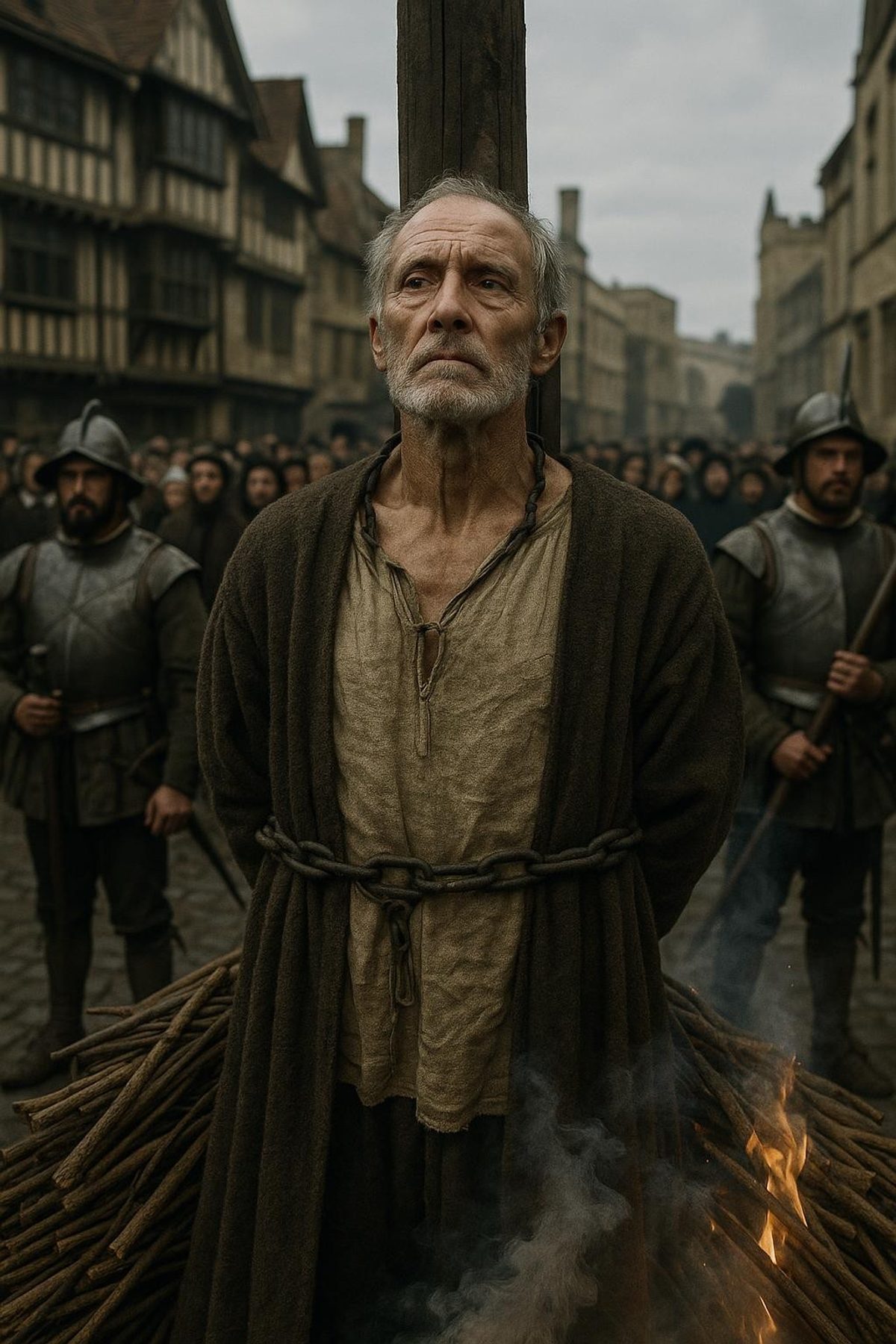
The heat seared through the thick, smoke-filled air, blurring the edges of the daunting stakes. As John Rogers stood before the expectant crowd at Smithfield, he sought solace not in the mercy of man but in the courage of his convictions. The acrid scent of burning wood clawed at his throat, but his resolve remained. Offered one final chance to recant his beliefs, the choice before him was stark as the bordering flames—speak or perish.
The Scholar Turned Martyr
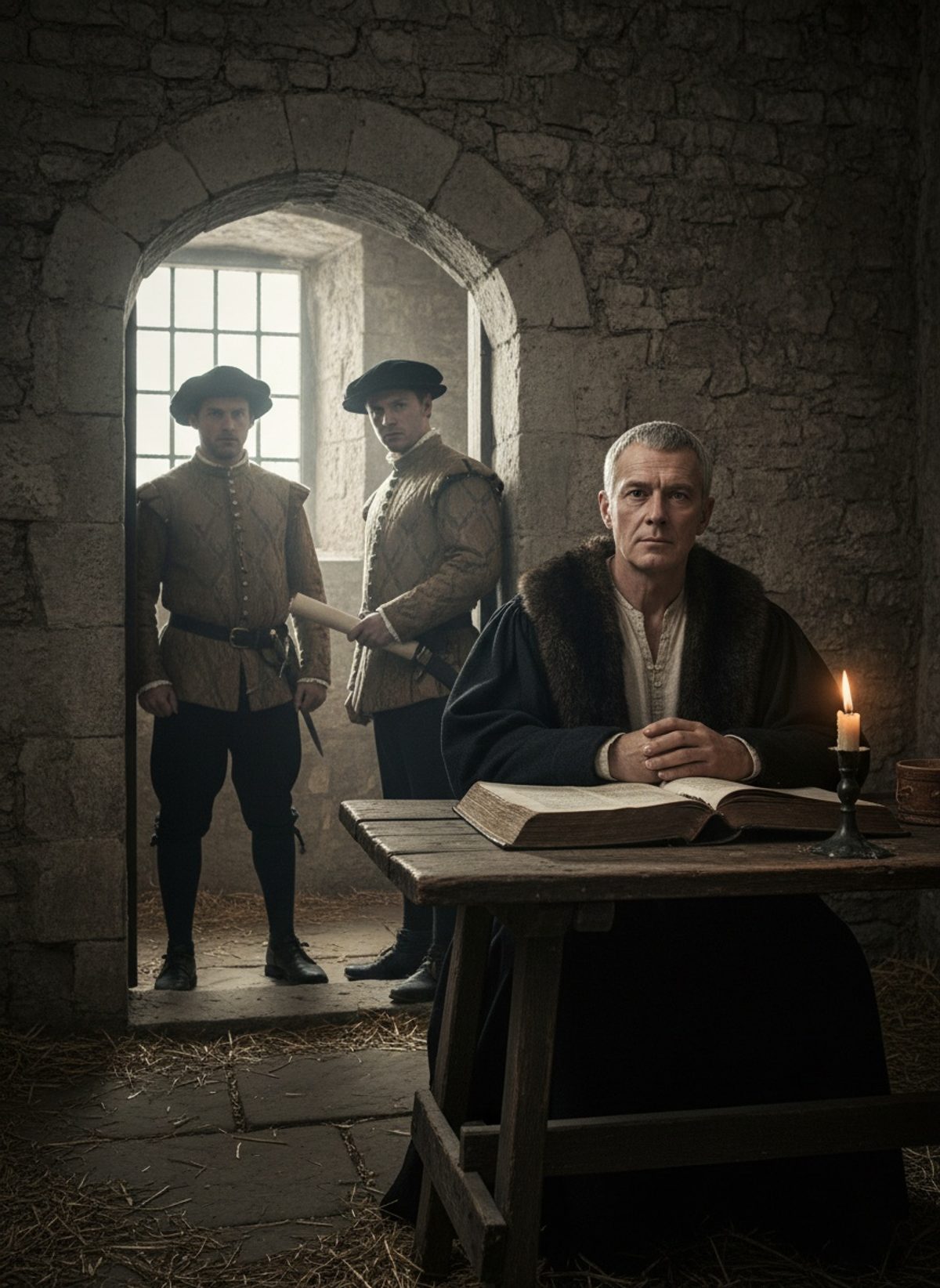
Long before he found himself amidst the crackling embers, John Rogers was immersed in ink and parchment, a world of words that sought to shine light where shadows often prevailed. A man of the cloth and mind, Rogers contributed to England’s first complete printed Bible—a labor of love, faith, and sheer scholarly dedication. His efforts in translating and compiling the sacred texts provided a beacon for the Reformation’s burgeoning flame. But that pursuit of spiritual clarity came at a dire cost.
Queen Mary’s reign marked a restored allegiance with Rome, undoing her father’s legacy to carve a Catholic resurgence across England’s landscape. Anyone challenging this tide risked everything. Rogers’ Bible, read in taverns, homes, and hidden chapels, had become a tool of defiance. By 1555, being a Protestant carried the weight of treason, and Smithfield—a patch of earth destined for infamy—became a stage upon which faith was tested by fire.
The Reluctant Hero
John Rogers was not by nature a provocateur. His life had been unfurling in quiet contemplation until the call of duty beckoned him to wise action. With every manuscript, he crafted more than the words; he wove a resilient tapestry of hope and resistance. Nevertheless, as a figure of the Reformation, Rogers was no stranger to adversaries. His colleagues whispered dire warnings of the stakes awaiting those who refused to bow to Mary’s decree.
Read next: The Day a Tudor Queen Walked Into Her Own Burning
When summoned by the authorities, the demand was clear: betray his fellow reformers, name those who worked alongside him, or face the fiery consequences of his defiance. Silence could be a death sentence, yet speech was a betrayal Rogers found inconceivable. Before a church that condemned yet preached love, his heart and mind were at a stark crossroads. His learned resilience became his armor, a silent testament to undying faith.
The Day Courage Ignited History
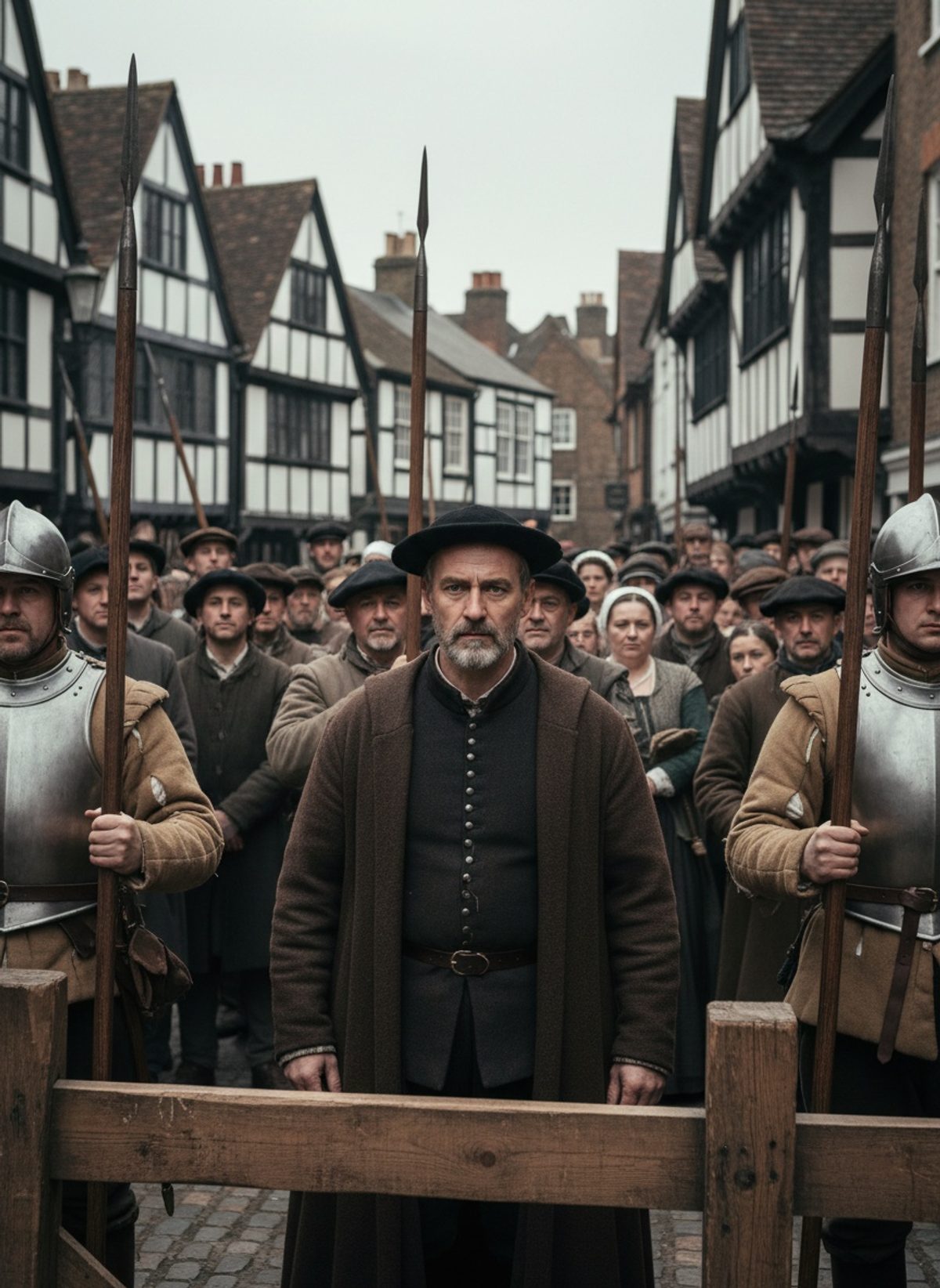
As the crowd thronged the makeshift arena at Smithfield on that chilly February morning, it was not just the curl of smoke that blurred vision; it was the inner turmoil of watching a life reduced to ash. Rogers stood against the unyielding fate determined by human hands, embodying a defiance that left none untouched. The hum of murmured prayers rose above the fire’s crackle, mingling with the cries of those awaiting his unmade choice.
Yet there he remained. Upon facing his final offer of redemption before the flames took him, he rejected the false salvation proffered at the cost of his soul’s integrity. There was no turning back the wheel once set to turn, only the promise of an unwritten end that history would pen as an enduring narrative. For Rogers, it wasn’t just a stand against tyranny; it was the assertion that some truths were undeniably worth dying for.
Echoes in the Ashes
The melancholy bravado of John Rogers’ last moments reverberated far beyond the pyre. The ground at Smithfield cooled, but waves of reform continued to cascade across England. Rogers’ stoic acceptance of martyrdom was but the harbinger of many yet to come, each name an echo carried on silent winds through Robin Hoods and church bell towers. Queen Mary’s reign, albeit firm and fiery, could not erase the indelible impression left by Rogers’ sacrifice.
The community he left behind gathered fortitude from the roar of that inferno. Whispers of his courage fanned the flames of reformation, resounding from the soot-flecked pages of clandestine Bibles to the timber pulpits standing defiantly against persecution. The harrowing choice Rogers made allowed others the courage to question, speak, and ultimately change. In his silence, he not only safeguarded the identities of his allies but ignited a resilience that would lead to a new dawn.
In Death, An Eternal Voice
History often owes its memory to those who choose conscience over compromise, the flames unwelcome yet necessary dance partners in the theater of reform. The story of John Rogers in 1555 Smithfield begs us to ask ourselves unwavering questions of faith, identity, and valor. The raw power vested in the decision to give all for a belief is both daunting and profound.
With quiet resolve and fierce conviction, John Rogers taught us something elemental: that the true measure of a person is not found in words spoken but in truths upheld, even in solitude. His legacy is that of an echo that challenges us to recognize the values worth the ultimate cost and see in the quiet ashes of defiance a light that cannot be extinguished—not by fire, not by time.