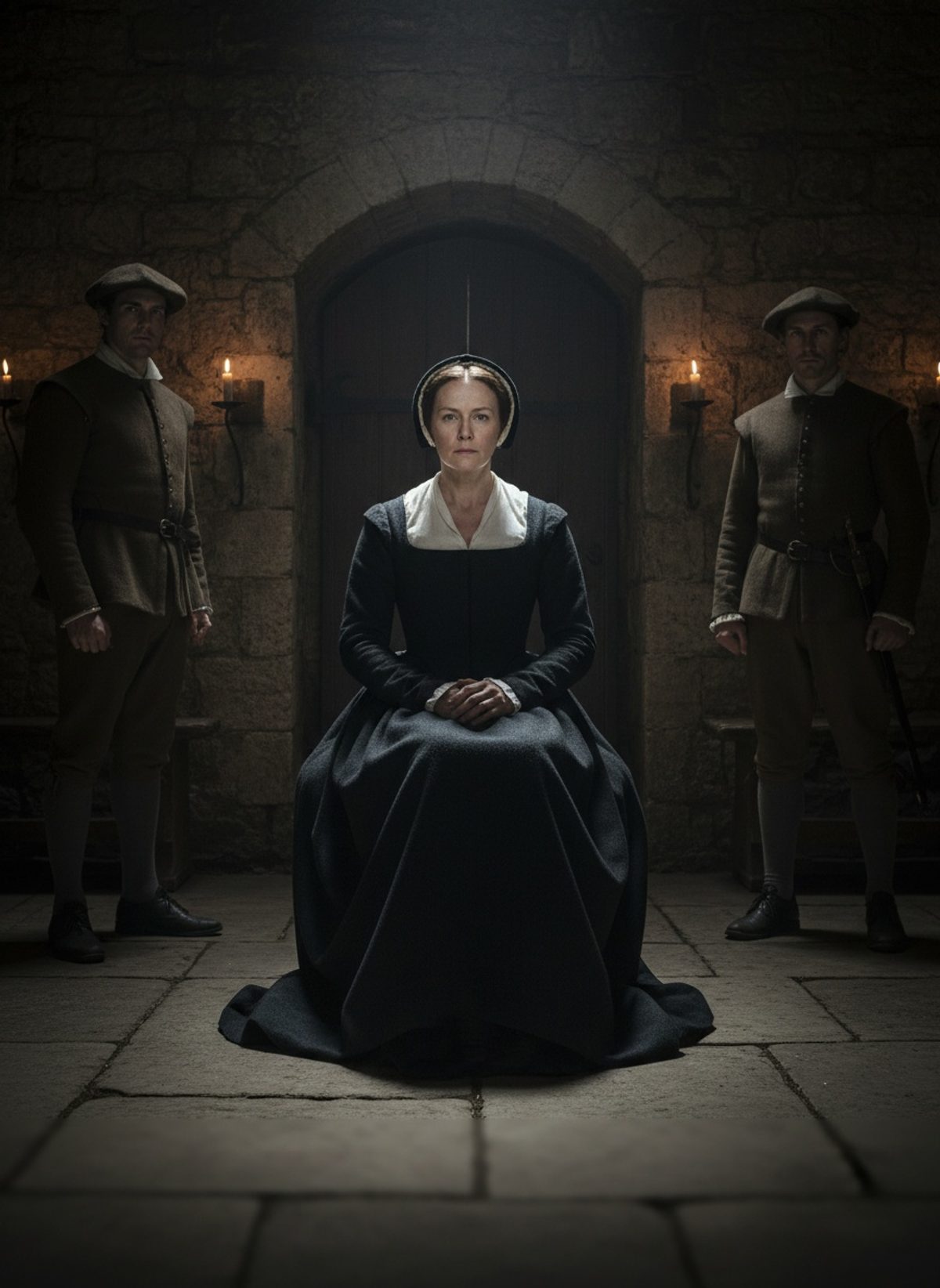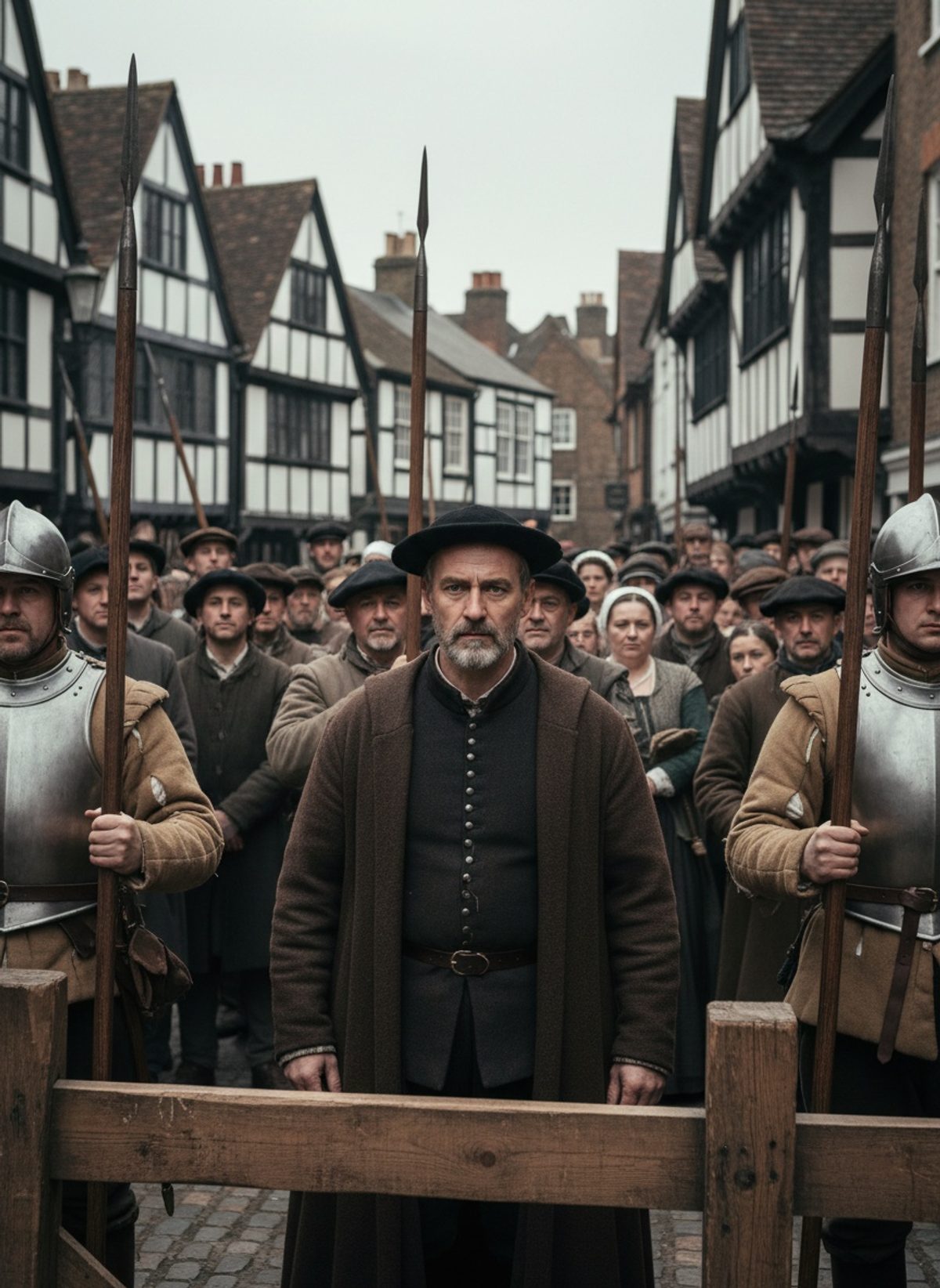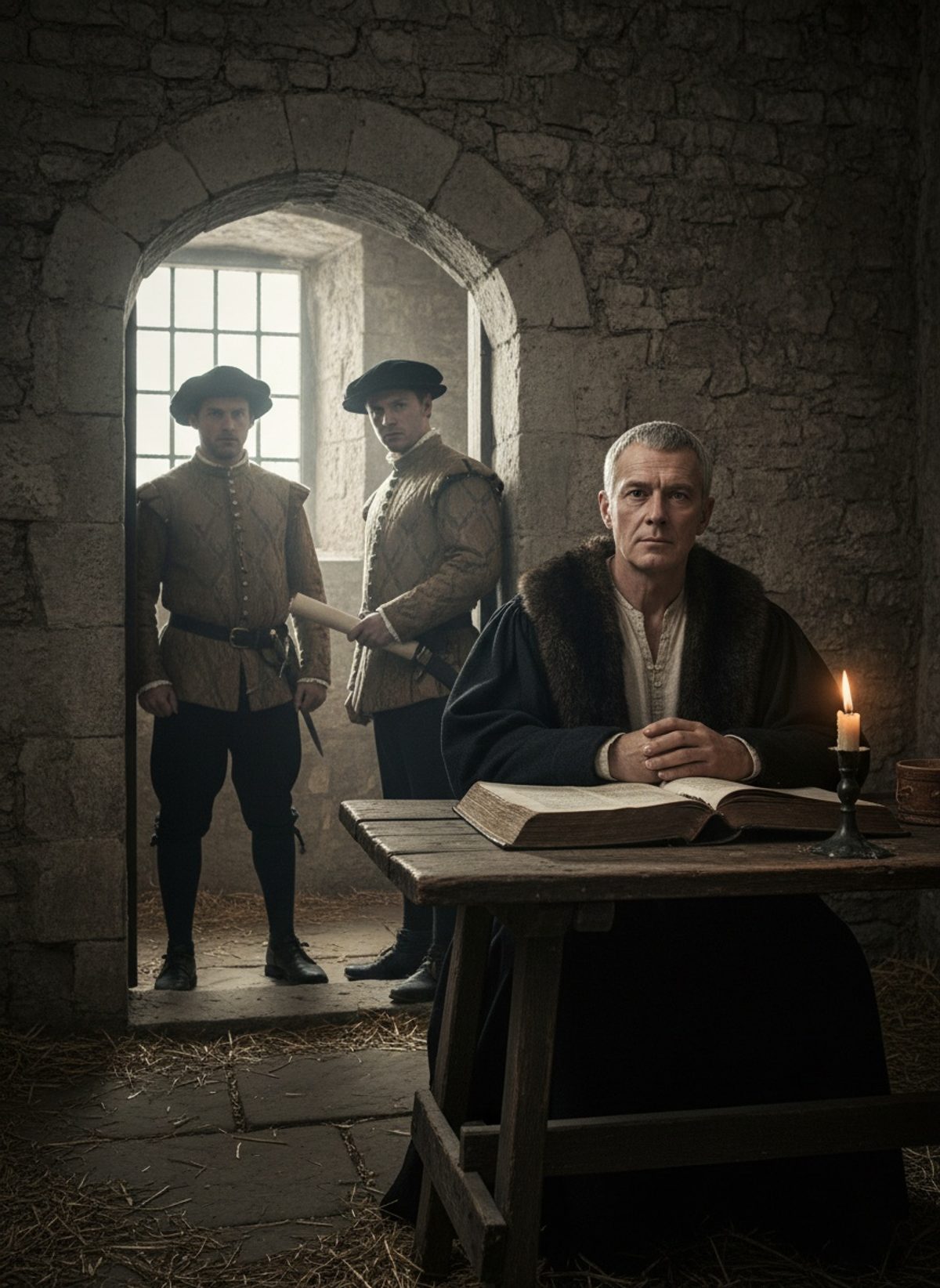
The morning sun barely pierced through the grim veil of fog that carpeted Smithfield, muffling the quiet bustle of merchants setting up their wares and the distant clangor of hoofbeats on cobblestones. The stones beneath were chilled, and the air, damp with a clinging mist, carried a stillness that presaged something far larger than the usual market-day stir. Among the growing crowd, whispers floated like specters—words of fear, dissent, faith, and the slow-burning dread of witnessing a woman face the ultimate consequence of standing in defiance of a king.
The Iron Grip of the King
England in 1546 was a kingdom gripped by unease. Henry VIII's rule was a shifting tide of policies and religious transformation, a royal stage upon which creed and crown danced a mortal waltz. The specter of heresy loomed over nobles and commoners alike, threatening to pull them into the depths of royal disfavor and punitive wrath. Amidst this chaos, a linen draper's daughter from Lincolnshire emerged as an unlikely figure of defiance.
Anne Askew's arrest was not merely another entry in the growing list of those caught in the maelstrom of Henry’s reign. Her real 'crime' lay not just in her Protestant beliefs but in her refusal to implicate others, specifically among the powerful women encircling the throne. Treachery and betrayal were the language of the court, yet Anne chose silence over falsehood—a choice that sentenced her to the rack.
A House of Torture
The Tower of London, foreboding and silent, became Anne's purgatory. Its stone corridors, steeped in the anguished echoes of those who had come before, led her to a room of horror—a room where truth and lies could be twisted from a body in unnatural ways. The King’s men sought names, whispered confessions that could topple more than just beliefs but dynastic alliances irretrievable once betrayed.
Read next: The Day a Tudor Bishop Defied a King and Chose the Fire
The ghastly device—a frame of wood and iron—awaited her unyielding form. The winding 'rack,' a mechanism so brutal, promised shattering pain. It is said that the bones in her slight frame were pulled until her very joints dislocated. Still, from Anne’s lips came no treason against queen or lady. The torturers exchanged uneasy glances, unsettled by a mettle they could not break. Behind closed eyes, Anne Askew found a fortitude beyond bodily agony, denying the King his ambition with a strength more enduring than any iron.
The Walk of Grace
Unable to stand from the cruel work of the rack, Anne Askew was carried to her execution in a chair. The journey from the Tower to Smithfield was a passage through England’s intertwining of faith and politics, her own journey to a blazing departure from the mortal coil. Her steadfastness became a whisper among those watching the grim parade—a silent sermon heard amidst the cobblestones and market stalls.
The crowd gathered not simply for the spectacle of fire but as witnesses to an act of quiet rebellion. Firewood, kindling, and tar awaited their charge like spectral harbingers of cleansing flame. Anne was bound and braced, her eyes either closed against the impending pain or lifted to some ethereal horizon beyond earthly flames. Her silence remained unbroken as if she'd declared by her muteness that some truths cannot be rended with heat or hideous device.
The Echo of Silence
As the flames enveloped her, consuming but never conquering, Anne Askew transcended mere historical footnote. Her silence was a defiance that echoed louder than any cry for mercy. The crowd, a living constellation of the everyday and the noble, bore witness to this refusal to bend before tyrannical will. And in that moment, Anne's silence cracked the facade of monolithic royal power, sending whispers through halls both ancient and common.
In choosing the fire over the lie, Anne Askew embodied the ultimate paradox of Tudor England: the power of a single voice unyielding to kingly wrath. Her story isn't preserved in the gilded pages of textbooks; instead, it smolders in the shared consciousness of those attuned to history’s unspoken truths. She stands—unbowed and resolute—as a testament to the courage found in integrity, whispering from the past, "Some fires consume, others illuminate." The question for us, as it was for her contemporaries, persists: when faced with tyranny, will we echo the silence of valor or the cacophony of fear?