He was the king's most trusted confidant and the brilliant mind behind many of England's legal reforms. Yet, Sir Thomas More was willing to surrender everything, including his life, over a simple word of approval.
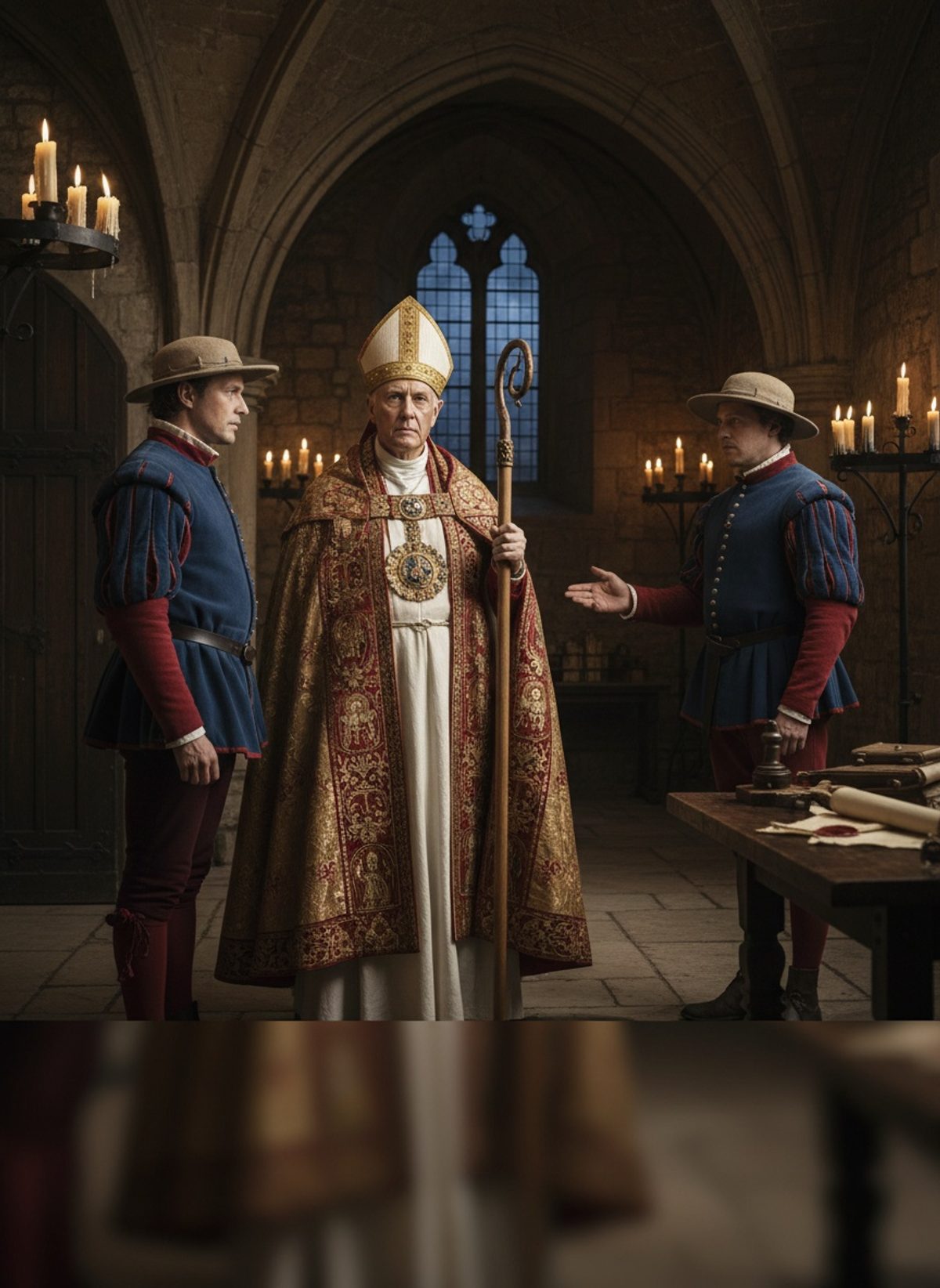
The year was 1535, and the tense echo of resolve and betrayal reverberated through the hallowed stones of the Tower of London. Here, high walls had witnessed the imprisonment of Sir Thomas More, a man who had once been the proud Chancellor of England, second only to the King himself. But for over a year, those towering walls contained a silence thicker than stone, as More refused to utter the words that could save him. His crime? A principled refusal to acknowledge King Henry VIII's supremacy over the Church of England, a statement More believed no man had the authority to make. His silence was not born from obstinance; rather, it was a manifestation of his unwavering faith and integrity.
More was not merely a political figure; he was a devout Catholic, a man driven by core beliefs that neither politics nor friendship could sway. His relationship with Henry VIII was once warm and brimming with mutual respect. As the King's confidante, More had observed Henry's fluctuating moods and his shifting allegiances. He served diligently in the King's court, crafting reforms and lending his legal expertise to the realm. His loyalty to Henry was profound, yet it was ultimately this same loyalty that became a source of strife. When Henry sought a divorce from Catherine of Aragon to marry Anne Boleyn, more than marital affairs were at stake; the act required Papal approval, which was firmly denied.
In response, Henry declared himself the Supreme Head of the Church of England, severing ties with the Catholic Church. The Act of Supremacy was passed, requiring all who served the crown to take an oath recognizing Henry's new ecclesiastical role. More's conscience gripped him like a vise. To him, earthly allegiances paled in comparison to divine fidelity. Silence became his refuge, the only safe path amidst an inescapable moral labyrinth. Yet, silence also made him suspect—an adversary to the King's will. It was a silence that the justice system could not largely interpret as compliance.
Read next: The Day a Tudor Printer Chose the Flames Over a Lie
Inside the Tower of London, More's imprisonment was filled with a mixture of reflection and resilience. Separated from his family and the liberty he cherished, he kept his thoughts anchored to theological study and prayer. Visitors, both staunch critics and fervent supporters, tried to coax words from his careful lips, but the ex-Chancellor endured in his quiet solitude. The pages of letters exchanged with his daughter, Margaret, remain as testaments to his fortitude and clever mind, many composed in Latin to ensure their sanctity against prying eyes. In one letter, he wrote of his ironclad reliance on spiritual salvation, reinforcing the notion that temporal loss was of little consequence if one’s soul remained intact.
The nation's mood under Henry's rule was restless, and the King's desire for unquestioned support swelled. It was in late spring, May of 1535, when the moment of More’s reckoning arrived. Silence, his shield, was stripped from him in a trial designed to break his resolve. Accused of treason, he faced a jury inclined undeniably toward the King's perspective. Yet, even before this tribunal, More’s measured words were chosen carefully, never once conceding Henry's claim to spiritual leadership over the Church.
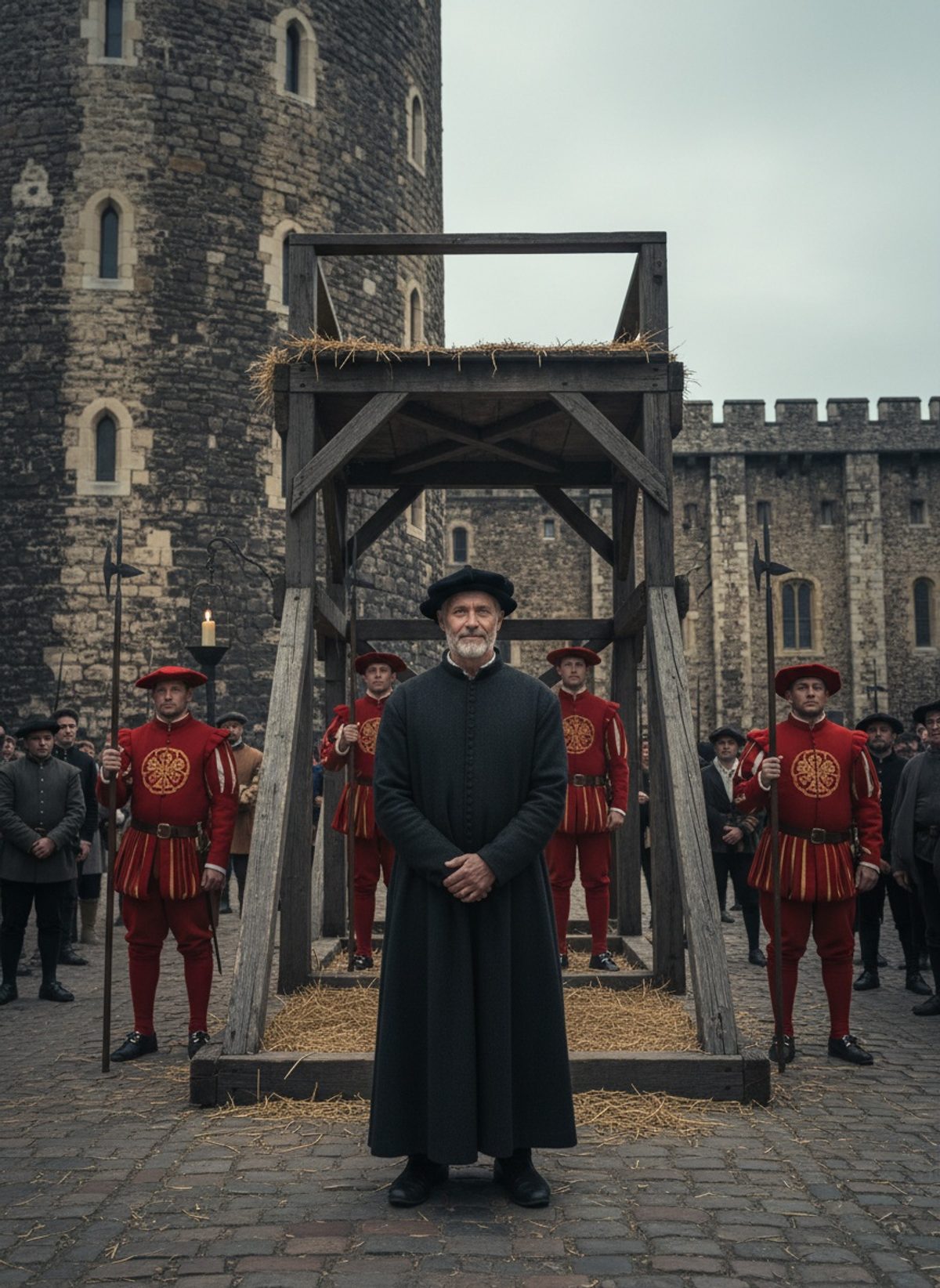
As the verdict was declared, More’s fate lay sealed. Death awaited on the scaffold, an execution symbolic of both King's authority and More’s defiance. Reactions were mixed; while some viewed More as a martyr of principle, others saw a figure who might have saved himself and altered history with a mere agreement. The contrasting perspectives highlighted the turbulent essence of Tudor England, a realm under transformation yet divided by religious and political fault lines.
When that fateful day in July arrived, the sky above Tower Hill was draped in somber hues. Spectators gathered, lamenting not just the loss of a brilliant mind, but the portrayal of a tragedy that could have been averted. More's final moments underscored a surreal calm. He walked to the scaffold with a demeanor that defied expectations, a quiet serenity painting his features. He smiled as he mounted the steps—an act of defiance and acceptance. In his restrained farewell, he addressed the crowd, maintaining his innocence and reaffirming his allegiance to a higher faith.
Those final words, spoken with clarity and conviction, echoed long after the axe fell. His death, though a singular event in the vast tapestry of Tudor history, became an enduring illustration of the power of conscience. For some, More’s defiant silence and ultimate sacrifice portray a timeless truth—a testament to the unyielding strength of belief and integrity. His staunch refusal to vocalize a royal lie challenges each of us to consider the weight of our convictions. More’s story reminds us that silence can communicate a legacy as enduring as the loudest declaration of loyalty to truth.