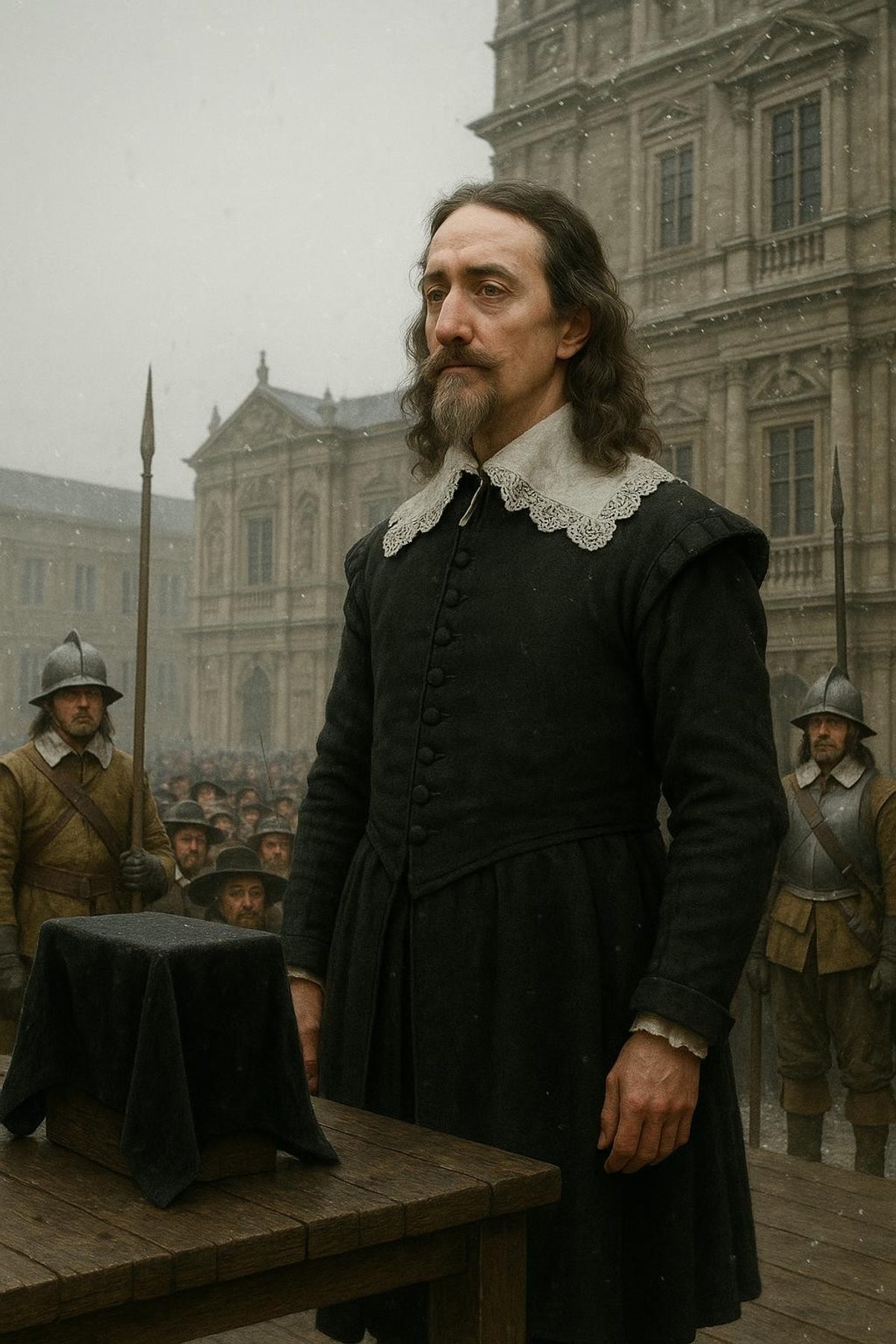
October 16, 1555. The morning mist hovered like a shroud over the streets of Oxford.
A Gathering Storm
On this cool October morning, the city of Oxford hummed with an uneasy energy. The air was thick with anticipation, as if the cobblestones themselves knew that something momentous was about to unfold. The citizens of Oxford, who walked the cramped and twisting lanes, felt it too. Among the throngs were the curious, the devout, and the undecided, all drawn by the news that had spread swiftly: two respected figures of the church, renowned for their eloquence and steadfastness in the face of adversity, would face the fiery death that awaited those condemned as heretics.
The men at the heart of this storm were Hugh Latimer, the former Bishop of Worcester, and Nicholas Ridley, once the Bishop of London. Both were revered reformers—a beacon for Protestant hopes during their time—and had stood at the forefront of a religious transformation that swept England in the previous reigns. However, now under the austere gaze of Mary I, known as "Bloody Mary" for her zealous restoration of Catholicism, they were marked as traitors to the realm’s spiritual order.
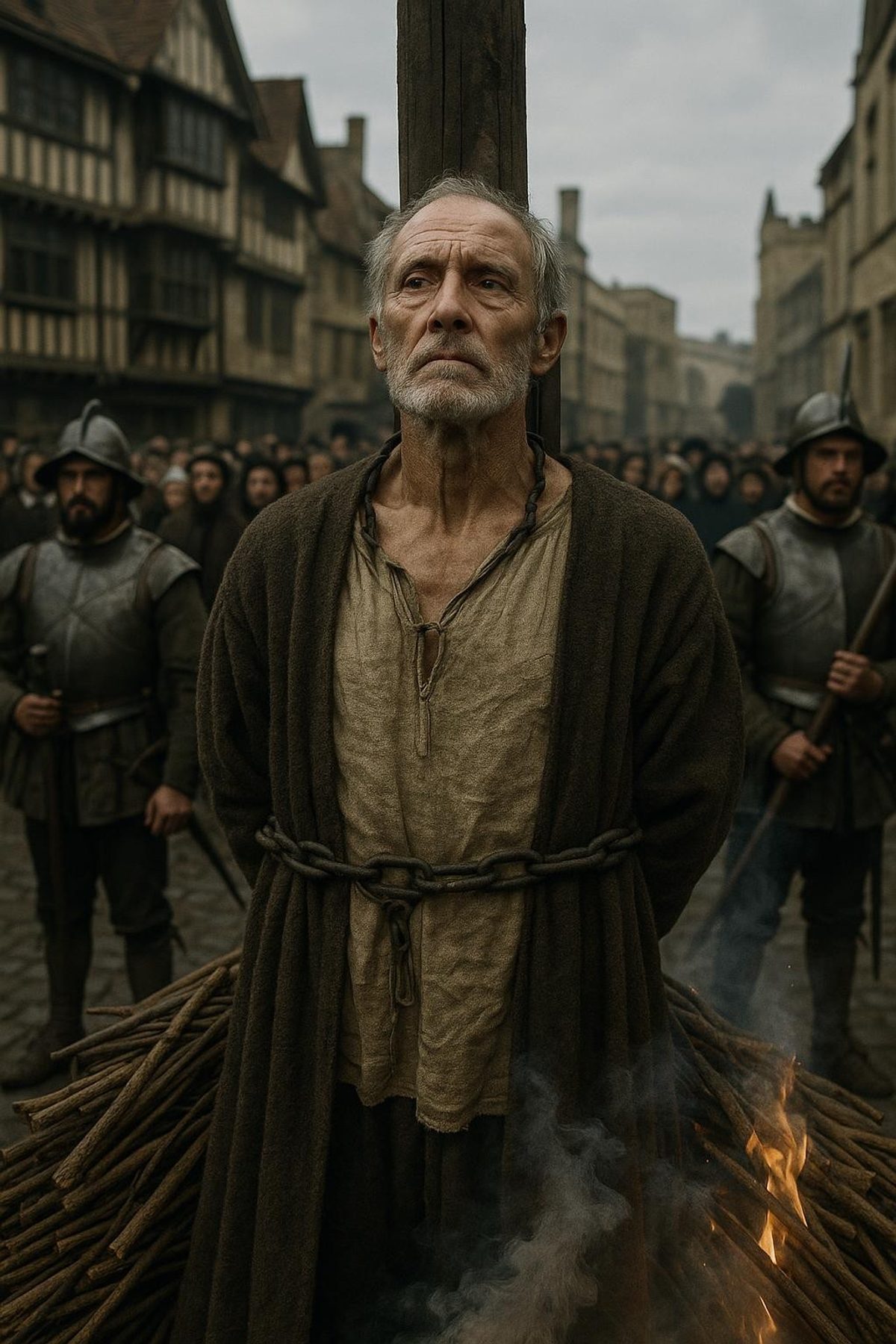
The transformation from advisors under King Edward VI to condemned men under his sister Mary had been swift and unyielding. Neither Latimer’s age nor Ridley’s once influential status provided shelter. These two elderly men, clad in worn clerical garments, were marched to the public square, chained together at the stake in what was meant to be a cautionary spectacle. Their refusal to recant their Protestant beliefs was a thunderous act of defiance against a monarch whose grip tightened daily.
Read next: The Day a Tudor Priest Walked Into the Flames for a Friend
They were not the only ones to suffer during Mary's reign, yet their execution would prove particularly poignant. Friends to the late Archbishop Thomas Cranmer, these were men who had shaped the transition to a more reformed England. Now, in Oxford, they faced the culmination of the religious seesaw that marked the Tudor dynasty.
Chained by Faith, Freed by Fire
Smoke clung to the air—a presaging of the pyre soon to be ignited. A chill permeated the crowd, but it was not enough to contain the spirit of Bishop Hugh Latimer. With no trial offering clemency, Latimer and Ridley's fate was cemented by their unwavering devotion to a Protestant doctrine, one that had been on the ascendancy before Mary's turn on the throne. As they were fastened to the stake with iron chains, the distance between life and eternity shortened.
It's here that history bestows a sliver of eternity on Latimer—known for his fervent preaching and uncompromised convictions. Turning to his fellow prisoner, his voice rose above the murmurs of the crowd, a moment captured and echoed through the annals of time. "Be of good comfort, Master Ridley, and play the man," he declared. "We shall this day light such a candle, by God's grace, in England, as I trust shall never be put out."
Such courage left an indelible mark not only on the crowd gathered that day but on the very foundation of the English Reformation. He extolled Ridley to 'play the man'—a call to an honorable death with dignity and valor. The stakes—both literal and proverbial—suggested men grounded in righteous belief, in a maintaining of integrity despite the promise of flames licking at their heels.
The firewood crackled, and the flames leapt hungrily upward, engulfing both Latimer and Ridley in a searing farewell. Smoke clouded the air, but their steadfastness was like a beacon slicing through the fog of uncertainty engulfing England. Chained to their ideals, even in their final moments, they became martyrs for a cause that would eventually shape the spiritual landscape of the nation.
The Sound of Echoing Words
Latimer's prescient words on that Oxford morning proved more than just a powerful testimony of individual faith; they epitomized a pivotal point in England's religious evolution. The candle he foresaw flickering into being was not merely a metaphor for hope amidst despair—it symbolized the eventual flame of Protestantism that would blaze across the country.
Mary's reign, marked by the persecution of Protestants, would eventually give way to the ascension of Elizabeth I, under whose long and stable rule the religious pendulum would steady in favor of a more Protestant alignment. The memory of Latimer and Ridley’s unyielding stands against renunciation became emblematic of a struggle much larger—a struggle to separate conscience and conviction amid the capricious governance of Tudor absolutism.
This poignant act of defiance resonates with an enduring relevance, not just in terms of its religious consequences but as a testament to resilience in the face of adversity. It reminds us of the perpetual conflict between power and personal belief. In an era when the consequences of dissent were mortality, such moments etched themselves into history as a reminder that courage often shines brightest when it stands against the darkest shadows.
Latimer's prophecy about the lasting illumination their sacrifice would provide indeed came true. That ignited candle flickered, providing direction and illumination through England's turbulent religious transformations, securing their place not only in textbooks but in the spirit of a nation still grappling with defining the measures of true faith and courage.