January 1649. The ground was frostbitten, and the air cut sharp against the skin.
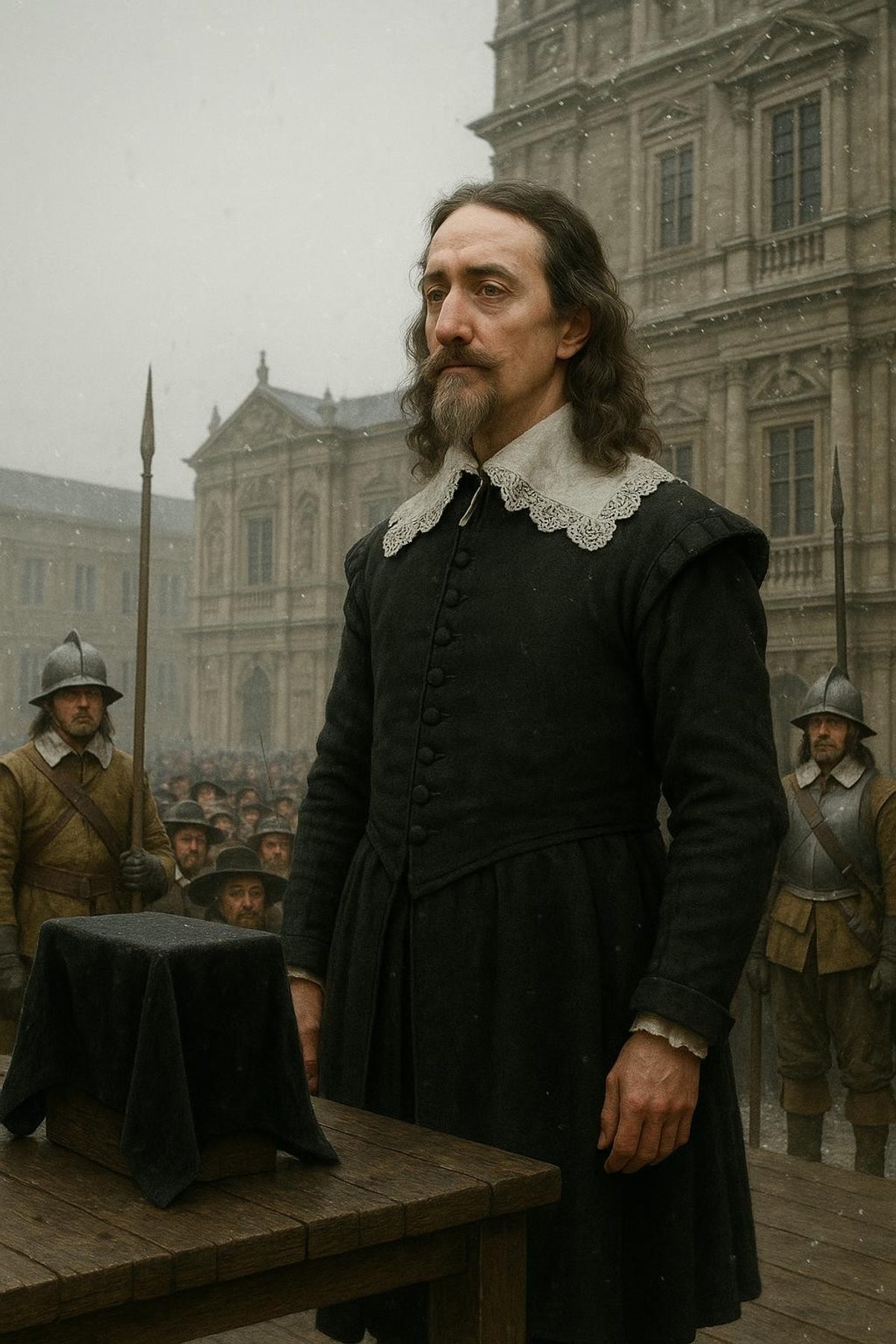
Amidst this biting cold, King Charles I emerged from the confines of Whitehall Palace, draped in a dignity befitting his fallen grace. He was calm. His preparations were meticulous, down to the clothing he chose; he donned two shirts beneath his regal attire. Charles feared not death, nor the gallows, but he feared that a shiver from the chill might be misinterpreted as a quiver of fear by the thousand eyes that scrutinized his every move. On this day, spectacle was unavoidable — every moment was intended to stand both for the ages and on trial before them.
The very spot, Whitehall, was both a symbol and a sinister reminder of Charles's reign. It was here that he had once commanded a kingdom with the divine right he so fervently believed in. A span of turbulent decades had led to this moment, a turbulent era when the Stuart king navigated the tempestuous seas of a kingdom divided by war, religion, and politics.
The execution itself, unlike the tumultuous civil uprisings and pitched battles that had led here, was strangely subdued. Charles ascended the steps of the scaffold with a demeanor more akin to attending court rather than facing death. His unflinching resolve was an act of public theatrics, yet of personal sincerity. Charles had both frustrated and baffled his subjects with a reign marked by contradictions—a monarch asserting absolute power yet inviting strife through inflexible insistence.
Read next: The Day a Stuart Judge Refused to Send an Innocent Man to Death
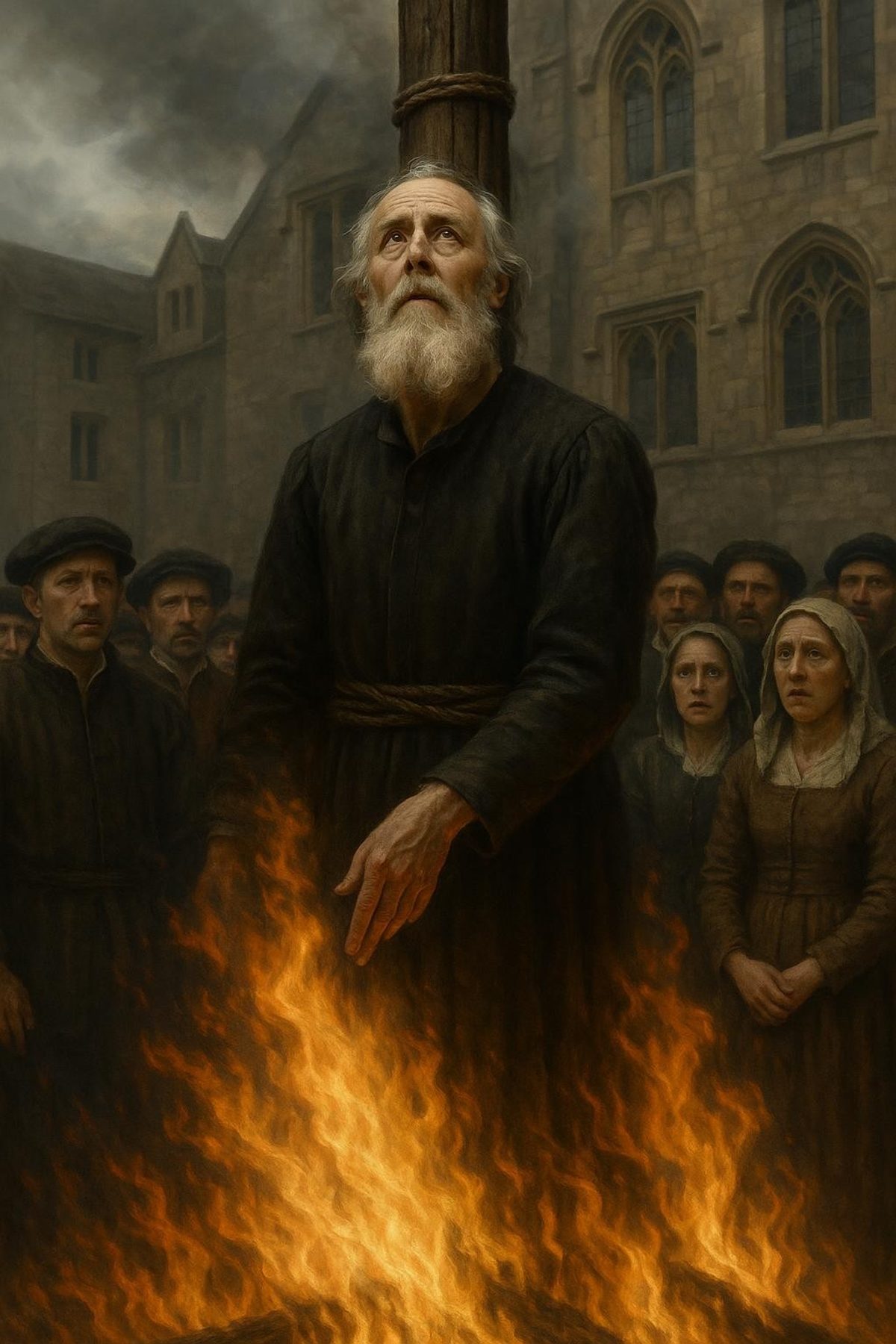
The assembled crowd was a tableau of somber anticipation. Many amongst them were witnesses of history, conscripts of curiosity or loyalty, who brimmed over with a mixture of dread, reverence, and, for some, the intoxicating sense of justice being duly served. Parliament's victory, embodied in this execution, was not simply the culmination of a bloody civil war but a harbinger for an uneasy new order.
Yet, if the king’s end was inexorably tied to his deeds—His Majesty’s obstinate belief in divine rule, captured so poignantly in his purported final speech—they were truths contested fiercely by history's narratives and records. With the stroke of the axe, the question of monarchy and Parliament never found a definitive answer, only the revelation of deeper divisions.
The onlookers observed, some hoping for a plea, others recoiling at the finality of the sentence being carried out. Even those who wished for an end to his reign could not detach from the human drama presented before them. The executioner, masked and tasked with this solemn role, was left to deliver the decisive act that would send ripples throughout Britain and beyond its shores, spiraling into political aftershocks that reverberated through Europe.
It is this moment—an eventful pageant of human defiance versus stoic acceptance—that crystallized as one of England's pivotal points. On the grounds of Whitehall, when the act was done and the head raised, it was not merely the end of a tyrant, but the beginning of introspective debate about the rights of subjects and sovereign alike. The beheaded monarch lay bare a fundamental question: where, truly, does the essence of leadership reside?
Charles's execution did what neither side of the conflict could have fully envisioned. It became the fulcrum on which history tilted toward modernity. This moment acted as a catalyst for an ideological unraveling, reframing the perceived infallibility of monarchical rule which had persisted for centuries. The initial horror melted into myth, and subsequent awe transformed into long-lasting, politicized discourse.
Perhaps in silent irony, the Stuart king achieved through death what he had struggled to assert in life—a moment of complex unity amidst chaos. His composed stalwartness, whether perceived as brave or helplessly tragic, offered a new lens of examination for revolutions yet to come—an ever-relevant discussion on the fundamental rights and the governance of mankind.
January 1649 remains not just a date marked by the fall of a king, but a hallmark of the transition from medieval rule to the principles of modern statehood. The scaffold where Charles I walked to his death transformed into the pulpit from which the very concepts of democracy and monarchy were preached to a shifting world. As shadows lengthened over Charles’s final resting place, the reality stood unmistakable—history itself had taken a great leap forward in that fleeting yet eternal moment.