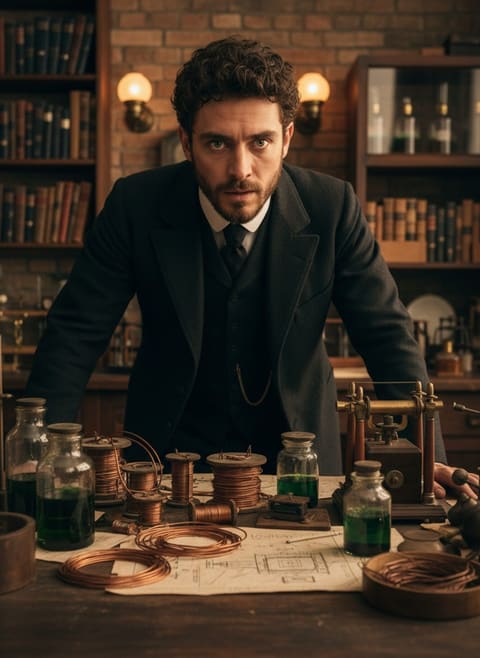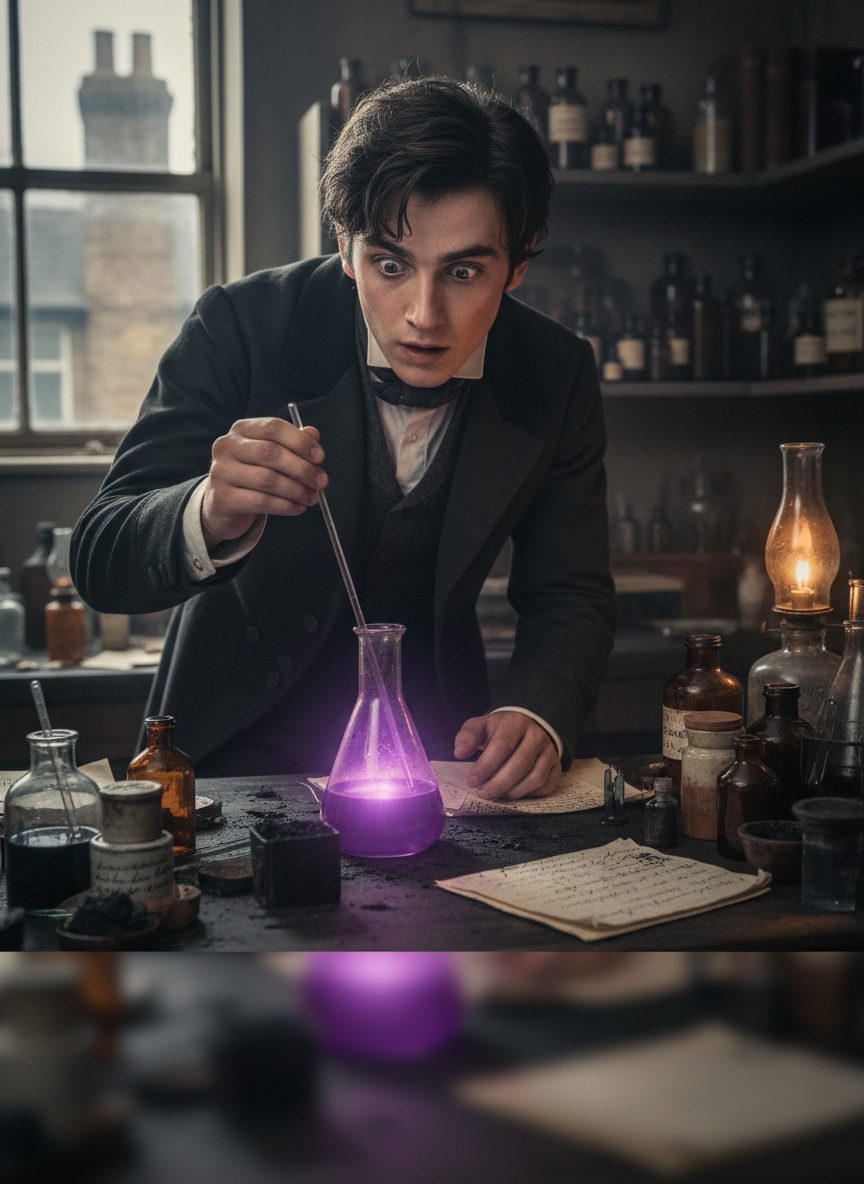
It was a damp spring evening in London, 1856. The city was swept in a palette of muted greys and browns, with drizzle falling persistently from a sky that hung like a wet, woolen blanket over the rooftops. Gas lamps flickered in the streets, their glow barely cutting through the mist. Somewhere in the heart of this vast metropolis, hidden away from the bustle, lay a small, cluttered laboratory. Here, the air was thick with the acidic tang of chemicals, and the faint hiss of burning fuel under Bunsen burners provided a constant backdrop. Amidst this nocturnal theatre of glass vials and bubbling solutions, an eighteen-year-old chemist named William Henry Perkin was about to make a discovery that would colour the world anew and illuminate new paths in fashion, medicine, and science.
The Accidental Artefact
William Perkin was a man driven by a singular ambition as he stood amidst the cacophony of bottles and flames. A student of the acclaimed German chemist August Wilhelm von Hofmann, Perkin had been tasked with an experiment aimed at a noble cause: synthesizing quinine, the sought-after cure for malaria. This substance was precious, its rarity and value matched only by its effectiveness in warding off the lethal fevers that plagued European colonists in the tropics. The stakes were high, and Perkin's determination unflagging, as he labored to transform mundane coal tar into medicinal gold.
But instead of the clear crystalline compound he sought, Perkin was left with a residue unlike anything he'd expected. It was mauve, a rich, vibrant purple that seemed to shimmer with an inner light. While it was a failed medicinal experiment, this unexpected residue was no ordinary waste. It caught light in a way that made it almost glow against the drab hues of the laboratory. Intrigued, Perkin soaked silk in this striking dye, and the result was a fabric unlike any seen before, its colour both exotic and luxurious — a shade of enduring allure from an error that flirted with fate.
The colour caught the eye of those beyond scientific circles, symbolizing wealth and standing due to its rarity in the natural world. Traditionally, purple dyes were extracted from mollusks, available only to the elite. Perkin's discovery democratized this hue, and in short order, clothing across Europe began to bloom in this newfound vibrancy, forever altering the landscapes of fashion and commerce. This serendipitous breakthrough marked the inception of the synthetic dye industry, a kaleidoscope born from a slip of the pipette.
Read next: The Day a Weaver's Son Mapped the Invisible World
The Ripple Effect of Mauve
While the colour's instant popularity in the world of fashion was undeniable, the implications of Perkin’s discovery rippled far beyond fabrics and garments. The dye, dubbed "mauveine," captured the attention of manufacturers, spurring a wave of innovation across chemical industries. As word of Perkin's accidental innovation spread, it heralded a burgeoning interest in aniline dyes sourced from coal tar, leading chemists to explore the potential of synthetics with fervor.
Notably, it wasn’t just about creating new colours. The synthesis process that Perkin pioneered signaled the dawn of the modern chemical industry. Soon, laboratories emerged across Europe, dedicated to harnessing coal tar compounds for various synthetic products, sparking advances in pharmaceuticals and dyes alike. Indeed, many of the chemical processes and understanding born of this era laid the groundwork for what would later evolve into breakthroughs across countless fields, from the development of new medicines to the creation of lasting pigments and materials.
Perkin's accidental discovery also marked a significant turning point in the industrialization of chemistry, intersecting with the Industrial Revolution's shadow as it extended across Europe. This moment transformed chemistry from an art into an essential science, driving it into the industrial age and seeding a legacy that would blossom into today's vast pharmacological and chemical enterprises. As one historian noted, the discovery of aniline purple was like the ignition of a scientific revolution that carried implications far beyond what even an ambitious young Perkin could have imagined that misty London evening.
Read next: The Day a Clockmaker's Son Rewired How We See the Stars
A Legacy of Colour and Creation
The mauveine dye quickly found its way into the wardrobes and hearts of Europe's elite, yet its most profound impact lay in its ability to embed itself in the fabric of innovation. Its creation was more than a happenstance; it was a catalyst that fueled an era of unprecedented creativity and collaboration. But why does this story matter in a modern world so far removed from the coal soot and gaslight of Victorian London?
William Perkin's serendipitous discovery serves as an enduring reminder of the role that chance plays in the realms of innovation. His youthful miscalculation continues to underscore a timeless truth: that even in failure, there lies the potential for triumph. It reveals the subtle symbiosis between the unpredictable and the groundbreaking, a dance as intricate as the chemical reactions Perkin himself once orchestrated in his laboratory.
In today’s fast-paced world, where innovation often feels engineered and premeditated, Perkin’s story is a beacon of inadvertent genius. It urges us to consider the many unforeseen paths that may lead to discovery. It reminds us to remain open to the unexpected, to see beyond the mistake, and appreciate the beauty of uncertainty. For in that little lab, in coal tar's shade of royal purple, lay the fuel that not only coloured textiles but also coloured the very world of scientific inquiry with boundless possibilities.