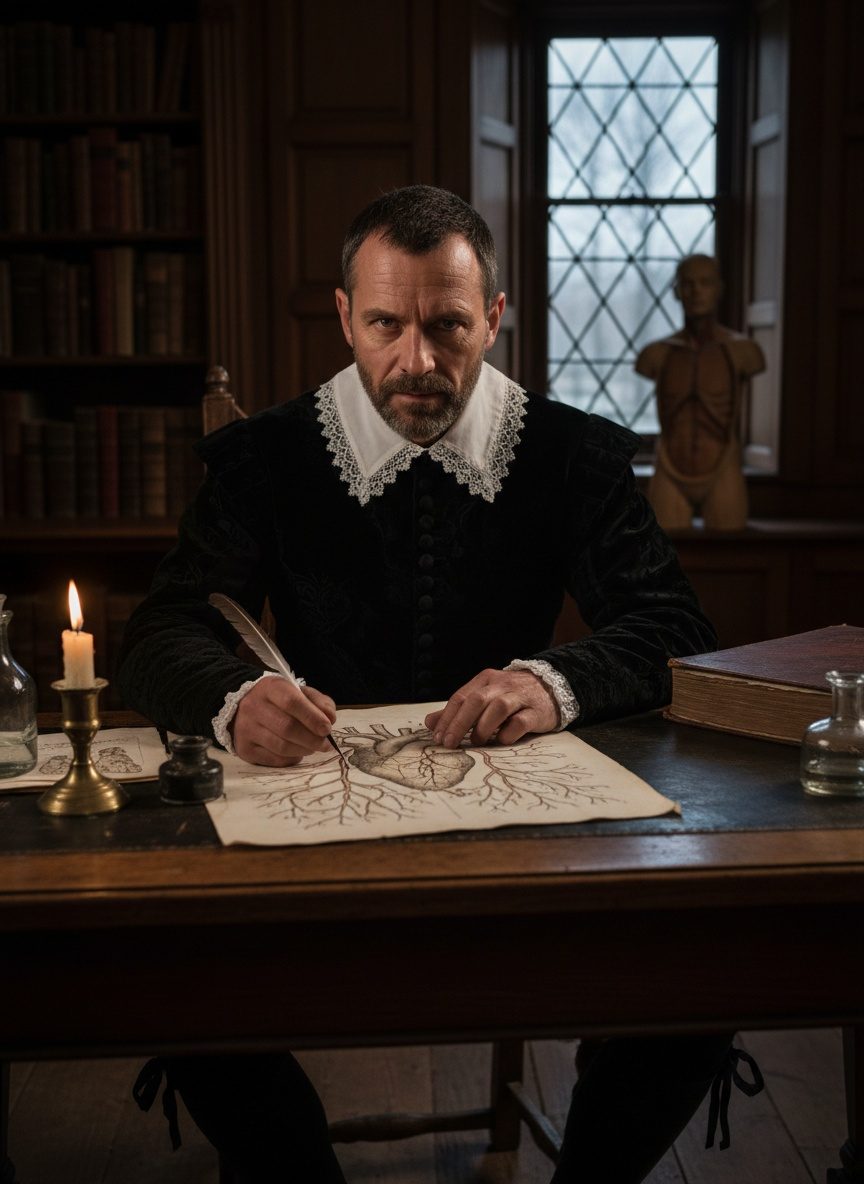
The musty smell of parchment mingled with the warmth of the candlelight as William Harvey gently placed his hand over a beating heart. In this quiet London study, tucked away from the bustling noise of the early 17th-century streets, Harvey was about to reshape two millennia of medical understanding with a simple, profound revelation: blood was not a stagnant pool within the body, but rather, a dynamic river.
The Ink That Redefined Life
The chilly air of early modern London seemed a stark contrast to the fervent heat of William Harvey's dedication. Born to a Yorkshire farmer’s family, Harvey's insatiable curiosity had led him to the capital, where he pursued medicine with a ferocity driven by questions that could no longer abide the dusty stains of ancient texts. For centuries, Galen, the revered Roman physician, had dictated the belief that blood was formed in the liver, seeping slowly through invisible channels to nurture the body. Yet, Harvey's observations painted a revolutionary picture that defied tradition.
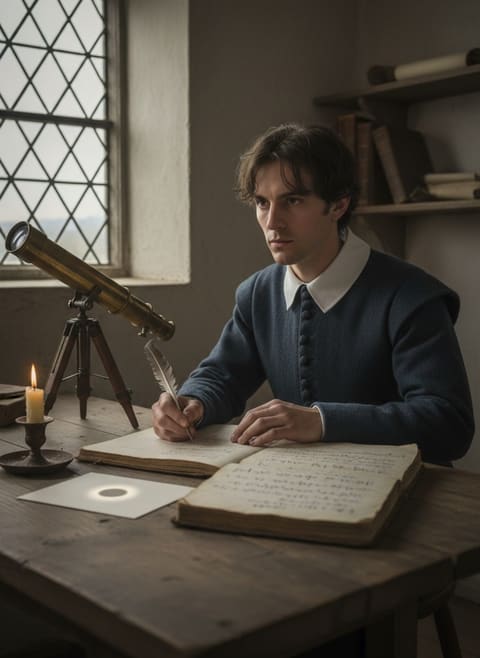
In 1628, armed with quills, ink, and a small Latin manuscript titled Exercitatio Anatomica de Motu Cordis et Sanguinis in Animalibus ("An Anatomical Study of the Motion of the Heart and of the Blood in Animals"), Harvey revealed his discoveries. Inside those forty pages lay profound insights drawn from twelve painstaking years of study and experimentation. Harvey meticulously recorded his findings from vivisections of animals, as the rhythmic pulse of their hearts pulsed knowledge through his fingers. It was through direct confrontation with the heart itself that Harvey realized blood made a complete circuit within the body, driven by the heart's robust muscularity.
Harvey understood that every examination of life was an examination of motion. As he scribbled his undeniable conclusions, he could feel the metaphorical heartbeat of truth against his palm. Blood, he concluded, traveled through the veins, was pumped out through the arteries, and returned back to the heart, completing a circular journey. This cycle occurred incessantly, repeating with each heartbeat, supplanting the ancient notion of a sluggish seepage. The implications were immense—a dance of life occurring incessantly within each human and animal alike, unseen but irrevocable.
Read next: The Day a Weaver's Son Mapped the Invisible World
The Aftershock of Knowledge
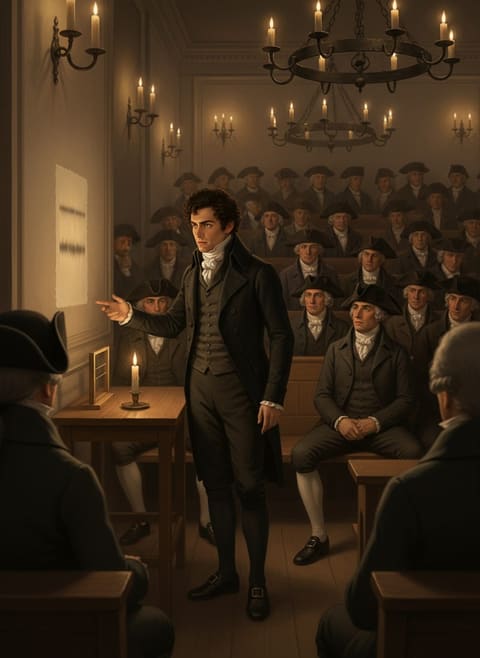
London's academic circles buzzed with Harvey's bold declaration. The meticulous layout of his argument, fortified with empirical evidence, reverberated through the halls of learning. A ripple began that would expand far beyond the confines of medicine. Yet, this upheaval came at a personal cost; Harvey’s departure from accepted knowledge was met with skepticism and resistance.
Many of his contemporaries found his notions unsettling. Galen’s teachings were woven deeply into the fabric of medical training, and Harvey's radical ideas could not easily unthread them. As the ink of his book spread across Europe, translating into various tongues, it incited both bewilderment and revolution. The old guard tilted, and in its place, a new vista emerged, inviting physicians to reconsider the tools of their scholarship: observation and experiment over blind reverence for doctrine.
The importance of Harvey's work went beyond the anatomical. It exemplified a seismic shift in scientific inquiry: the birth of skepticism towards received wisdom, and the inception of the empirical method that challenges assumptions with rigorous testing. By daring to examine what others had accepted as absolute, Harvey did more than transform medicine—he kindled the flames of scientific revolution, illuminating shadows cast deep by the past.
Read next: The Day a Clockmaker's Son Rewired How We See the Stars
Legacy of the Beating Heart
William Harvey's discovery did more than overturn two thousand years of medical dogma—it heralded a new era of enlightenment where observation and evidence supplanted tradition and lore. As the manuscripts of De Motu Cordis traveled through Europe, they laid the groundwork for future titans of science like Robert Boyle and Isaac Newton, opening the door to exploration and curiosity now unrestrained by ancient confines.
The broader implications of Harvey's work instigated questions that reached far beyond anatomical structure to touch the very essence of life. How does nature compose her symphonies within the body? What unseen orchestras keep us in motion? In each heartbeat was borne the promise of discovery that would inspire generations to seek, to question, and to understand the world within and around them.
Today, we remember the quiet moments in William Harvey’s London study not merely as an insight into the circulatory system but as a beacon that lights the curiosity at the heart of the human spirit. Here was a Yorkshire farmer's son who dared to place his hand on a pulse of the unknown, and in doing so, defied the ancients and crafted a legacy not mentioned in textbooks but felt in every human throb. It reminds us that true knowledge is not static; it is a movement, a circulation of ideas, feeding the endless quest for truth.