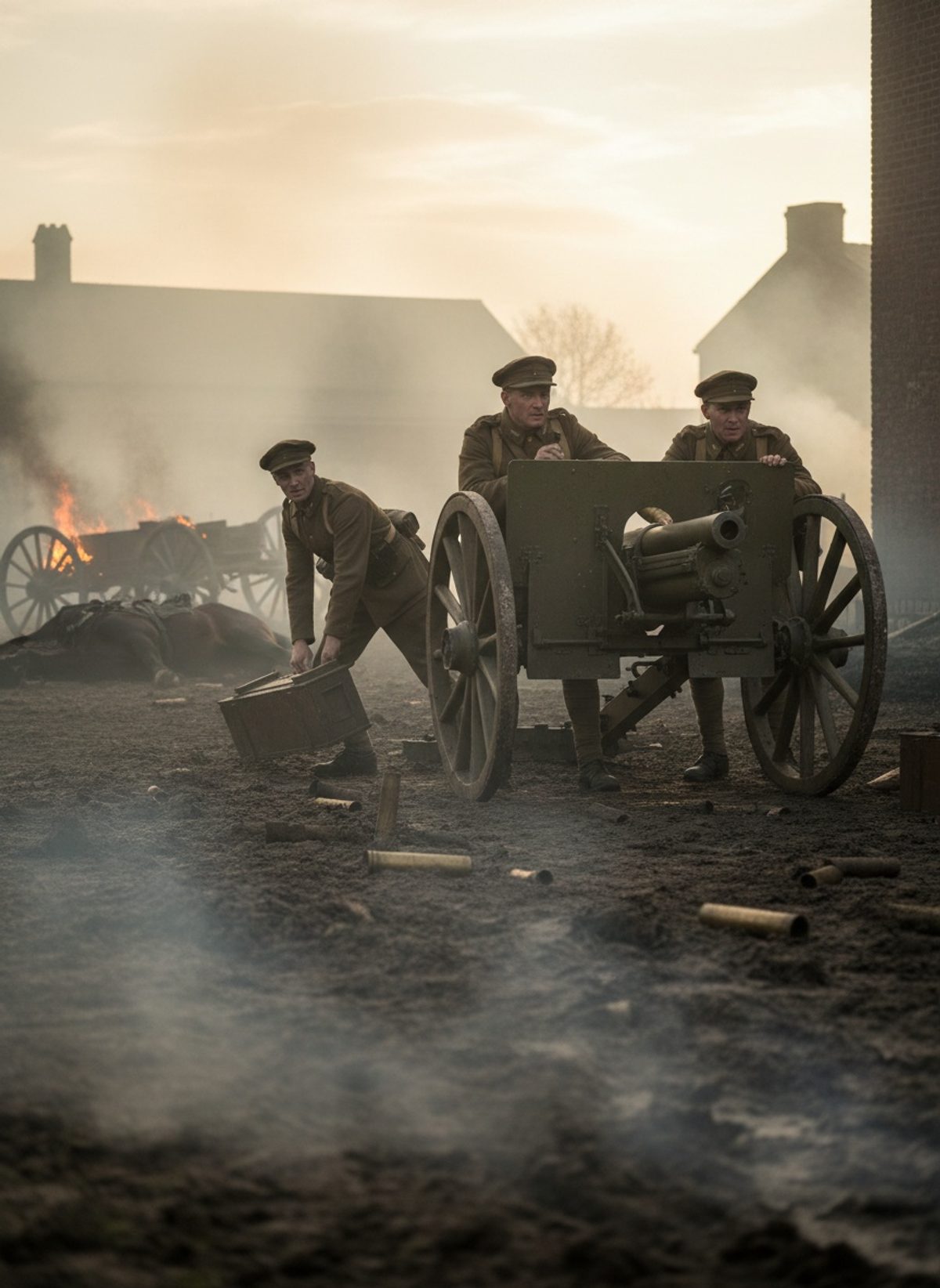
In the early, uncertain days of World War One, an extraordinary event unfolded. On an August morning in 1914, a small contingent of British soldiers faced the overwhelming force of the German army near the industrial town of Mons, Belgium. It was here that raw courage and unparalleled rifle skills transformed an outnumbered unit into a legend. What happened next not only stunned the German High Command but also shifted the gears of a war that had just begun.
The Calm Before the Storm
In the languid summer of 1914, on the eve of battle, one could almost mistake Mons for any other sleepy European town. But as dawn broke on August 23, the British Expeditionary Force (BEF) found itself on the edge of a storm. Tasked with facing the full brunt of the German Army’s rapid advance into Belgium, the BEF was undersized, wielding only around 70,000 troops against a German force numbering 160,000 strong. The disparity was more than just numbers; the British soldiers were fresh to this conflict, defending an alien landscape far from home.
Yet the British were not entirely at a disadvantage. The German High Command underestimated them, expecting these men to falter, to break — predictions fueled by their overwhelming superiority in both artillery and manpower. But the heart of the British machine was unique: the infantrymen trained to perfection. While the Germans anticipated machine guns based on the rate of fire, what they faced instead was something wholly different.
Training for Perfection: The Mad Minute
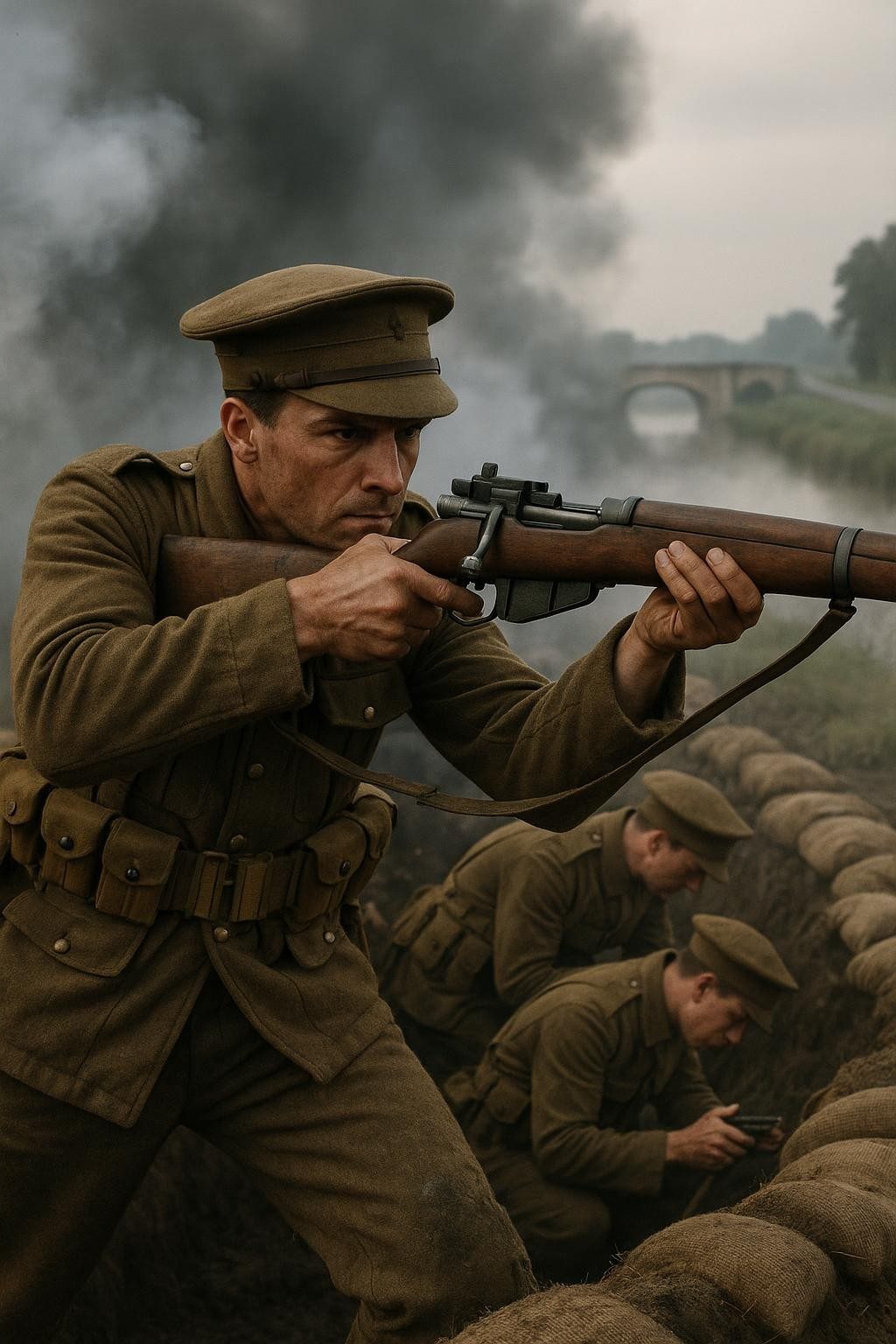
In a turn of fate, the British riflemen's remarkable effectiveness was honed through rigorous peacetime training. Enter the legendary mad minute. British riflemen were trained to fire fifteen aimed shots in one minute using their bolt-action Lee-Enfield rifles — a feat only achievable through relentless practice. Each soldier, with foot steady and eye sharp, became a one-man band of steel. Consider the astonishment of a lesser-known fact: a well-trained rifleman could unleash up to 20 rounds a minute during drills.
Read next: The Day a British Padre Carried the Dying From No Man's Land
This relentless training proved invaluable. It wasn’t just about efficiency; it was about psychological weaponry. A foe, expecting a barrage of impersonal machine gunfire, faced instead a disciplined volley where each bullet had a name on it. The confusion and fear sown by this method cannot be overstated, and on that fateful day, it turned the tide for the beleaguered BEF.
Baptism by Fire at the Nimy Bridge
At the strategic Nimy Bridge, a stone throw from Mons, the ruthless face-off began. Lieutenant Maurice Dease, a young officer just 24, took up position with his men as the Germans advanced. The initial onslaught was brutal, and in a world before air supremacy, the skies were eerily silent, with the focus solely on the infantry's grit. Dease's platoon, exemplifying stoic British defiance, was at the heart of the resistance. Though outflanked and taking heavy losses, British riflemen, erupted into a cacophony of rapid-fire. Their precision made it appear as though they commanded a battalion of machine guns.
Dease’s courage under fire became legendary. Knowing the survival of many hinged on their perseverance, he stayed at his post until incapacitated by grievous wounds. His actions earned him one of the first Victoria Crosses awarded in the conflict. It was the act of standing one's ground against the odds that etched the grim scenes into history.
Fighting Teeth to Nail: The Rearguard Action
Even as the retreat was ordered later that day, the British riflemen’s tenacity did not wane. In what can only be described as one of the most remarkable withdrawals ever conducted, Chief Germany’s General Karl von Bülow would later marvel at the orderliness of the British retreat that belied the chaos expected from an overwhelmed force. Every skirmish, every stand became a test of wills and a testament to the tenacity of those in the BEF. Men like Private Sidney Godley, who manned a machine gun to cover his comrades' retreat despite being wounded twice, embodied the spirit that defined the day.
This rearguard action slowed the German advance, buying crucial time for both the BEF’s regrouping and for the bolstering of French defenses. That delay played a vital role in the buildup to the Battle of the Marne, a defining moment in the early war strategy.
Lessons from Mons: Steel, Spirit, and Strategy
The Battle of Mons reverberates throughout history not merely because of its military implications but because of the impact of human resolve against overwhelming odds. It emphasized the necessity of preparedness — the riflemen's skills exemplified what rigorous training delivered in the battlefield's inferno. This narrative, often overlooked, sheds light on the microcosms of bravery that shaped the war's macro strategies.
As we reflect today, Mons teaches us the importance of valor, precision, and tenacity. In a modern era where technological might often overshadows human will, the story of Mons serves as a poignant reminder. The day the British riflemen stood against an army with little more than their wits and skillful hands challenges us to revere history's silent heroes — the unseen, the unsung, the ones who steel the backbone of nations and defy the odds.
The legends of history's bylines were forged not in grand proclamations but in moments like Mons where a handful stood still, braving all, and whispered through the ages: *Here, we made our stand.*