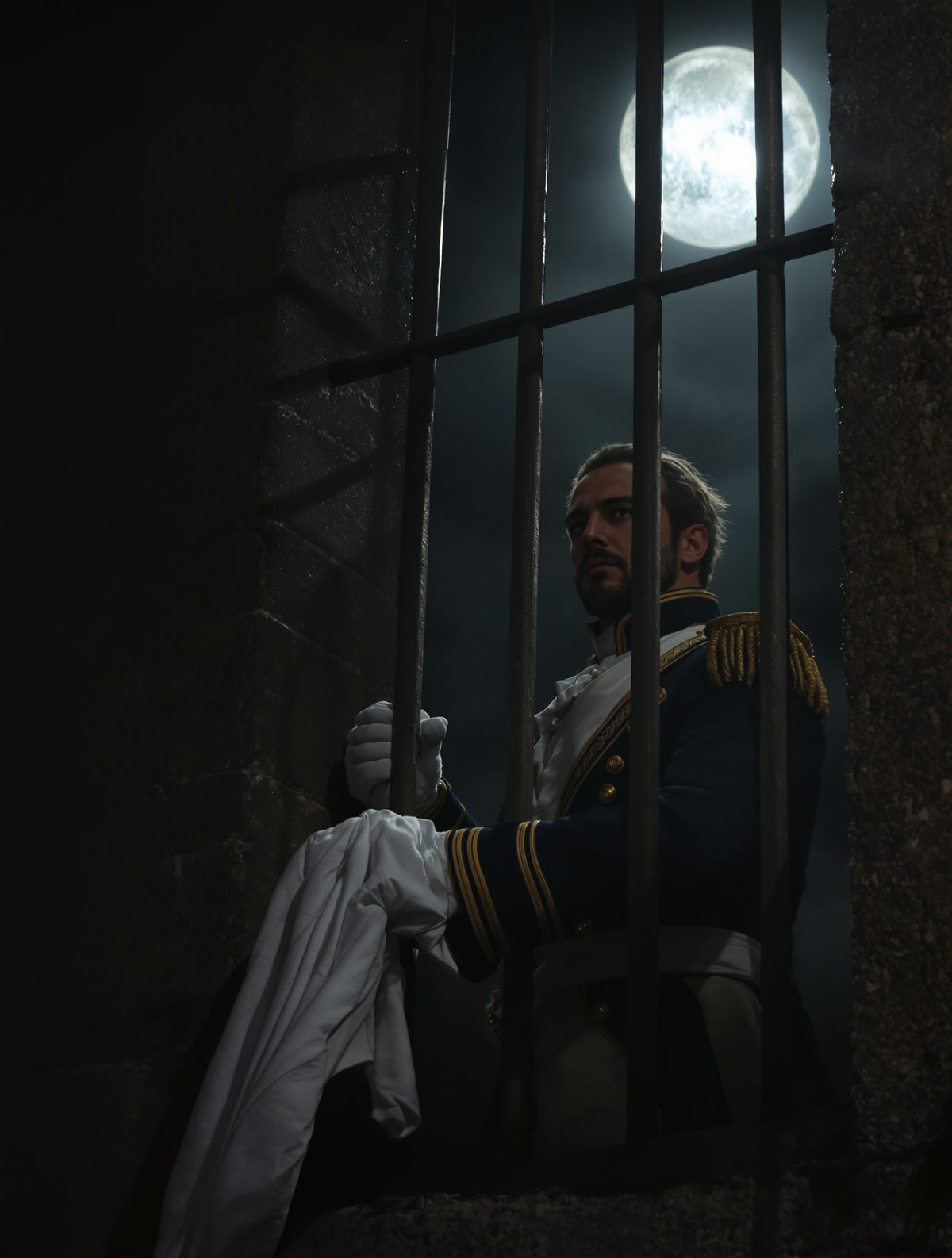
The rope of twisted bedsheets dangled forty feet down the outer wall of King's Bench Prison, swaying in the midnight breeze of a June night in 1814. At the top, gripping the windowsill of his cell, crouched one of Britain's most celebrated naval heroes—Admiral Lord Thomas Cochrane, the man Napoleon himself had called "Le Loup de Mer"—the Sea Wolf. Below him lay the cobblestones that could shatter his bones. Behind him, a prison sentence that threatened to destroy his reputation forever. In his heart burned an unshakeable conviction: he was innocent, and he would not rot in this place for a crime he did not commit.
What happened next would become one of the most audacious prison escapes in British history—a desperate gambit by a man who had spent his career defying impossible odds on the high seas.
The Hero Who Fell From Grace
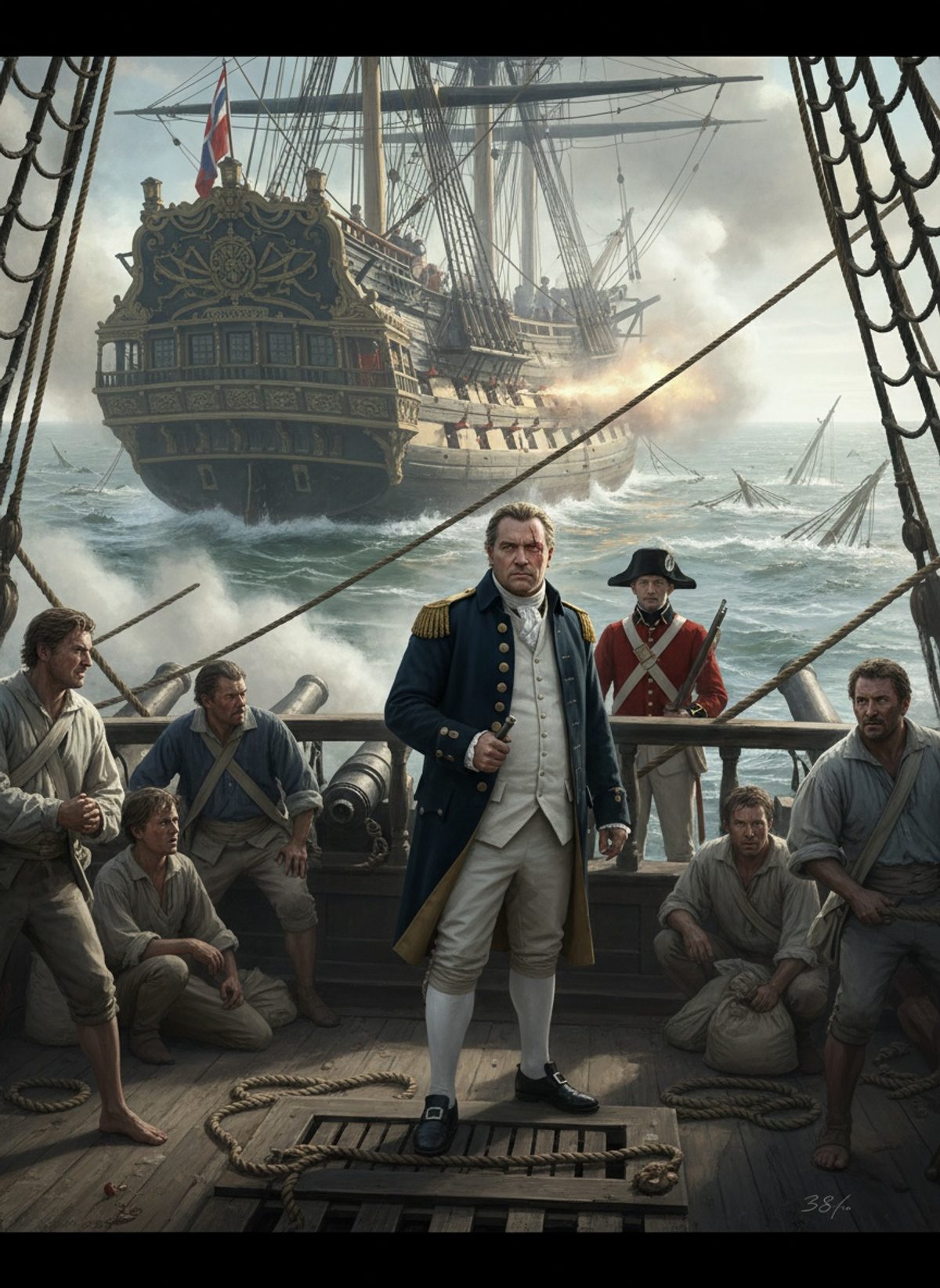
Thomas Cochrane was no ordinary prisoner. At 39, he stood as perhaps the most brilliant and feared naval commander of his generation. His exploits during the Napoleonic Wars read like fiction: he had captured over 50 enemy vessels, terrorized the entire Mediterranean coast with a single small frigate, and once held off a Spanish fleet with nothing but audacity and cunning. His tactics were so revolutionary that future naval strategists would study them for decades.
The French had placed a bounty of 500,000 francs on his head—an astronomical sum that reflected just how much damage one man and his ship could inflict. Spanish mothers frightened their children with tales of "El Diablo," as they called the red-haired Scotsman who seemed to appear from nowhere to sink their ships and vanish like smoke.
Read next: The Day a British Captain Stood Between Slaves and the Sea
But on February 21, 1814, Cochrane's world had collapsed in a single day. He stood accused of conspiracy in the "Great Stock Exchange Fraud"—an elaborate scheme involving a fake French officer who had supposedly brought news of Napoleon's death. The hoax had sent government bond prices soaring before the truth emerged, and several conspirators had made fortunes selling at the peak. Among them, prosecutors claimed, was Lord Cochrane.
The evidence was circumstantial but damaging. Cochrane had indeed sold government bonds on that fateful day—but he maintained he had done so on the advice of his financial advisor, knowing nothing of any conspiracy. His uncle, Andrew Cochrane-Johnstone, was undeniably involved in the fraud, but Thomas swore on his honor as a naval officer that he was innocent.
The establishment didn't believe him. Or perhaps they simply didn't want to.
A Kangaroo Court and Powerful Enemies
The trial that followed was a travesty of justice that would make modern legal observers wince. Lord Ellenborough, the presiding judge, displayed such obvious bias against Cochrane that even contemporary observers were shocked. The judge repeatedly interrupted the defense, made sarcastic comments about Cochrane's character, and seemed determined to secure a conviction regardless of the evidence.
Why such hostility toward a war hero? The answer lay in Cochrane's politics and personality. As a Member of Parliament, he had made dangerous enemies by relentlessly exposing corruption in the Admiralty and the prize court system. His radical political views and his vocal criticism of naval incompetence had earned him the hatred of powerful men who now saw an opportunity for revenge.
Admiral Sir Alexander Cochrane, Thomas's cousin, would later write: "The whole proceeding was a disgrace to British justice. They were determined to destroy him, and the facts be damned."
On June 20, 1814, Cochrane was sentenced to twelve months imprisonment, a £1,000 fine, and one hour in the pillory. More devastating still, he was stripped of his knighthood and expelled from the Royal Navy in disgrace. The hero of a hundred battles was now a pariah, locked away in the King's Bench Prison in Southwark while his supporters raged at the injustice.
Planning the Impossible
King's Bench Prison was no ordinary jail. Built to house debtors and gentlemen criminals, it operated more like a small town than a traditional prison. Inmates with money could rent private rooms, receive visitors, and even leave during the day if they posted bond. But Cochrane, branded a fraudster and stripped of his naval rank, was watched more carefully than most.
His cell was on the second floor of the main building, its single window offering a view over the prison wall to the streets of Southwark beyond. For weeks, he had studied every detail of his confinement—the guard rotations, the wall's height, the distance to the ground, and most importantly, the activities in the courtyard below.
The plan that formed in his tactical mind was characteristically bold and simple. If he could fashion a rope long enough to reach the ground, the window offered a viable escape route. The challenge was materials—and timing.
Cochrane began collecting bedsheets, blankets, and any strips of cloth he could obtain. His visitors, unaware of his intentions, unknowingly contributed by bringing fresh linens. Using techniques learned during his naval career, he began the painstaking process of creating a rope strong enough to bear his weight—approximately 180 pounds of muscle and determination.
The Sea Wolf's Midnight Gambit
June 6, 1815—exactly one year after his sentencing—Cochrane made his move. He had chosen this date deliberately, knowing the symbolism would not be lost on his supporters: one year to the day after his imprisonment, the Sea Wolf would taste freedom again.
At 11:30 PM, after the final guard check, Cochrane began his preparations. He tied one end of his makeshift rope securely to the heavy iron bed frame, testing the knots repeatedly. Through his window, he could see the gaslight flickering on the street beyond the wall—freedom lay just forty feet down and thirty feet across.
The rope, when fully extended, was composed of six bedsheets, two blankets, and several strips torn from his own clothing, all twisted together and knotted at strategic intervals to provide handholds. By his own later estimation, the entire contraption was "barely adequate for the task, but adequately determined."
At midnight, Thomas Cochrane squeezed through the narrow window and began his descent into history. Hand over hand, the man who had once swung between the rigging of his frigate in Atlantic storms now trusted his life to bedsheets and prayer.
The descent was terrifying. Halfway down, one of the knots began to slip, and for a heart-stopping moment, Cochrane thought his makeshift rope might fail entirely. But his sailor's knots held, and after what felt like an eternity, his feet touched the cobblestones of Southwark.
The most feared naval commander of his generation was free.
Freedom and Vindication
Cochrane's escape caused a sensation that dominated London newspapers for weeks. The government was humiliated, the public was delighted, and his political enemies were apoplectic. How had Britain's most closely watched prisoner simply vanished into the night?
But Cochrane's victory was short-lived. After hiding with supporters for several weeks, he voluntarily returned to prison in July 1815, calculating that completing his sentence would strengthen his case for eventual vindication. It was a decision that spoke to both his legal strategy and his unshakeable belief in his own innocence.
Upon his release in 1816, Cochrane found Britain's doors closed to him. Undaunted, he sailed for South America, where he commanded the Chilean and Brazilian navies with his usual brilliance, helping to secure independence for multiple nations. Later, he would serve with distinction in the Greek War of Independence, earning new glory and gradually rehabilitating his reputation.
The vindication he craved finally came in 1832, when a dying man confessed to the stock exchange fraud and completely exonerated Cochrane. He was reinstated in the Royal Navy, restored to his rank, and eventually became an Admiral of the Fleet. Queen Victoria herself would restore his knighthood, acknowledging the injustice he had suffered.
Why the Bedsheet Escape Still Matters
Lord Cochrane's midnight escape was more than just a daring prison break—it was a powerful symbol of resistance against institutional injustice. In an age when the establishment's word was rarely questioned, one man's refusal to accept false accusations helped expose the corruption and bias that plagued Britain's legal and naval systems.
Today, when we debate the integrity of our institutions and the courage required to challenge authority, Cochrane's story resonates powerfully. His willingness to risk everything—including a forty-foot fall onto cobblestones—rather than quietly accept injustice reminds us that sometimes the most patriotic act is defying those who claim to speak for your country.
The bedsheets that carried the Sea Wolf to freedom were more than mere prison laundry—they were the threads from which legends are woven, and proof that even in our darkest hours, audacity and principle can still triumph over power and prejudice.