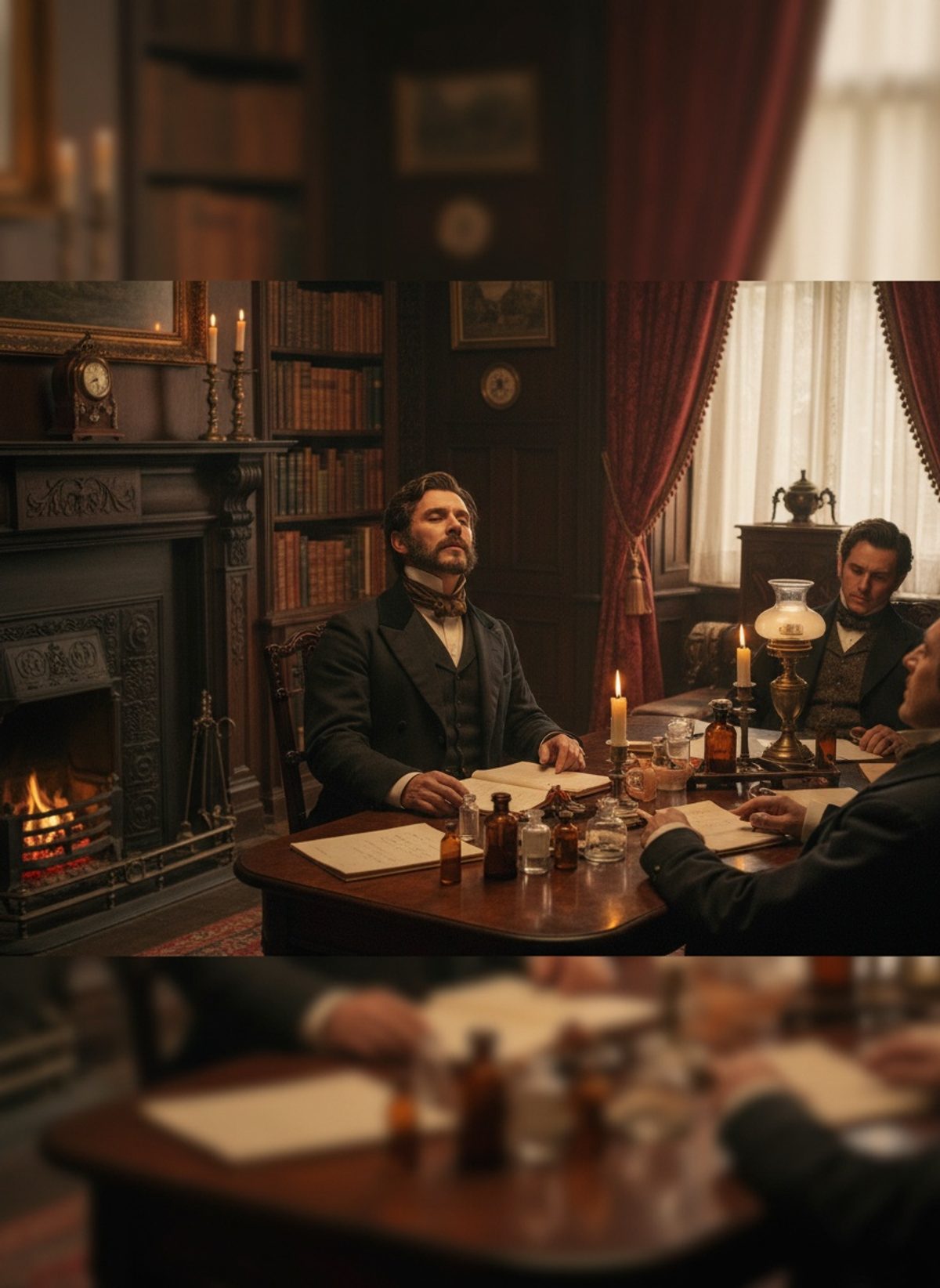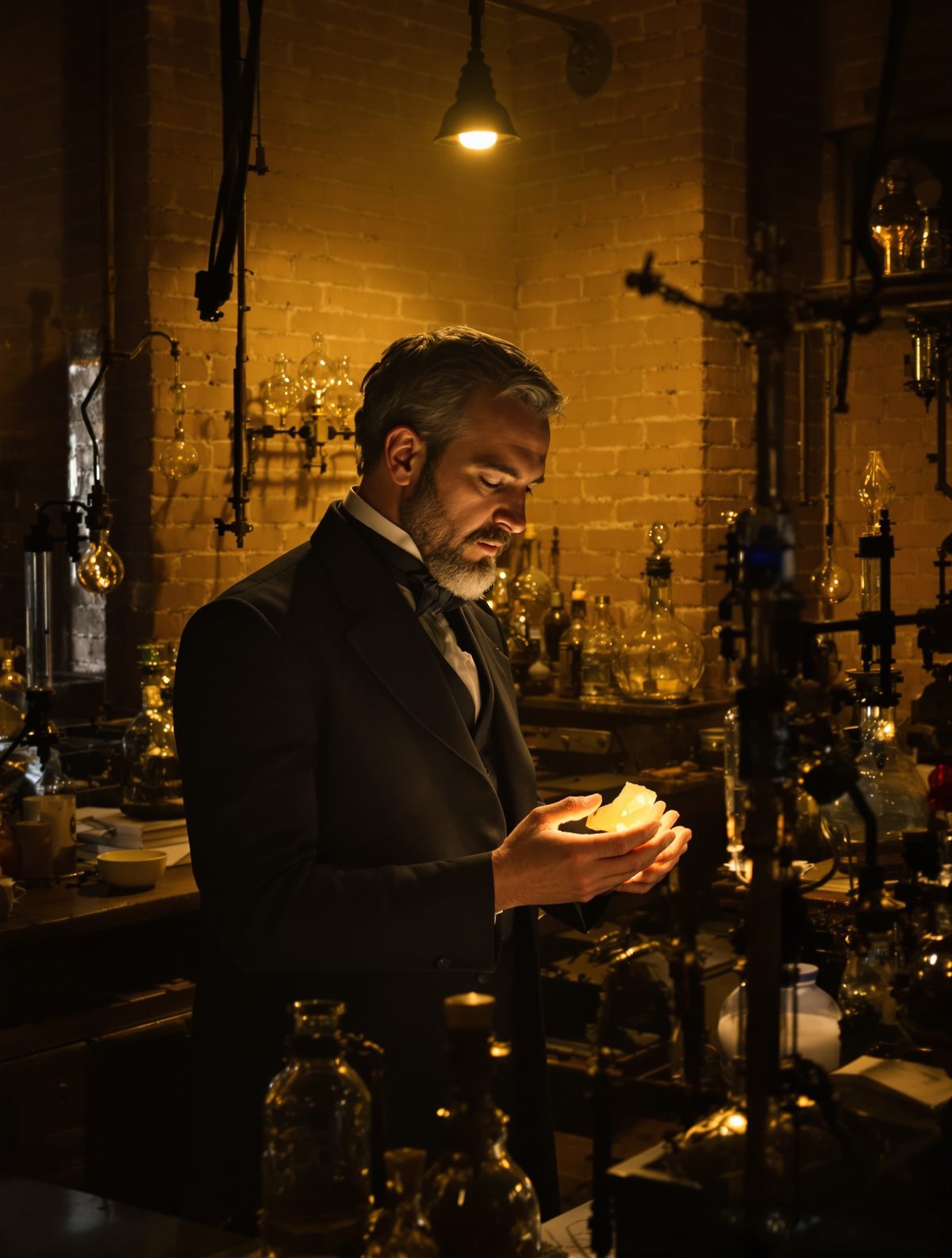
The acrid smell of chemicals hung thick in the cramped Birmingham laboratory as Alexander Parkes hunched over his workbench, stirring a peculiar mixture that would unknowingly reshape human civilization. It was 1862, and this unassuming metallurgist was about to create something that had never existed in the four billion years of Earth's history: a completely artificial material that could be molded into any shape imaginable. He called it Parkesine, and it was the world's first synthetic plastic.
What Parkes couldn't have known as he mixed nitrocellulose with camphor that fateful day was that he was opening Pandora's box—unleashing a material so revolutionary that it would eventually replace ivory, revolutionize manufacturing, enable space travel, and ultimately create both the convenience and environmental crisis of our modern world.
The Alchemist of Hackney Road
Alexander Parkes was no ordinary Victorian inventor. Born in Birmingham in 1813, he had already earned a reputation as something of an industrial alchemist by his forties. His workshop on Hackney Road was a wonderland of bubbling retorts, grinding machinery, and experimental contraptions that would have made his neighbors distinctly nervous had they known what lurked behind those grimy windows.
By 1862, Parkes had already patented processes for waterproofing fabrics and developed new techniques for electroplating—coating objects with thin layers of precious metals. But his obsession lay with nitrocellulose, a highly explosive compound created by treating cotton or wood pulp with nitric acid. Most sensible chemists approached nitrocellulose with extreme caution; it was the key ingredient in smokeless gunpowder and had an unfortunate tendency to detonate without warning.
Read next: The Day a Widow's Son Lit Up the Victorian Night
Parkes, however, saw potential where others saw peril. He had discovered that by carefully dissolving nitrocellulose in alcohol and ether, he could create a clear, flexible film. But the real breakthrough came when he began experimenting with additives to make the material more workable. Camphor—the waxy, aromatic substance extracted from camphor trees—proved to be the magic ingredient.
The Miracle Material Takes Shape
What emerged from Parkes' laboratory that day was nothing short of miraculous by Victorian standards. When heated, Parkesine became soft and malleable, able to be pressed, molded, or rolled into any conceivable shape. When it cooled, it retained that form with remarkable durability. Unlike any natural material, it could be made transparent or opaque, colored with dyes to any hue, and given the appearance of horn, tortoiseshell, or even ivory.
The implications were staggering. Victorian society was built on natural materials—wood, metal, glass, leather, and organic polymers like rubber. Each had limitations. Ivory, prized for everything from piano keys to billiard balls, came from elephants and was becoming increasingly expensive and scarce. Tortoiseshell, used for combs and decorative items, required the slaughter of endangered sea turtles. Horn, bone, and wood were limited by the size and shape of the animals or trees that produced them.
Parkesine promised to transcend all these limitations. Here was a material that could be manufactured in any quantity, shaped into forms impossible with natural materials, and produced at a fraction of the cost of rare organic substances. Parkes had essentially invented artificial matter itself.
The Great Exhibition Sensation
Parkes unveiled his wonder material to the world at the 1862 International Exhibition in London, just eleven years after the famous Crystal Palace Exhibition that had showcased British industrial might. His display booth featured an array of objects that seemed to defy explanation: combs that looked like tortoiseshell but weren't, buttons that appeared to be carved from horn but felt different, and sheets of material so thin they were nearly transparent yet tough enough to resist tearing.
The Victorian press was fascinated. The Times described Parkesine as "hard as horn, but as flexible as leather," while other publications marveled at objects that could "assume the appearance of the most costly materials." Parkes won a bronze medal at the exhibition, and orders began flooding in from manufacturers across Britain and Europe.
But there was a problem that would plague early plastics for decades: consistency. Parkesine was notoriously difficult to manufacture reliably. The mixture of nitrocellulose and camphor had to be precisely balanced, and slight variations in temperature, humidity, or timing could produce material that was too brittle, too soft, or worse—still dangerously flammable. Many early Parkesine products cracked, warped, or even caught fire in customers' hands.
Dreams and Disasters
Despite the technical challenges, Parkes was convinced he had created the material of the future. In 1866, he founded the Parkesine Company with financial backing from investors who shared his vision of replacing natural materials with synthetic alternatives. The company set up production facilities and began manufacturing everything from combs and buttons to knife handles and jewelry boxes.
The dream quickly became a nightmare. The manufacturing process proved far more difficult to scale up than Parkes had anticipated. Workers struggled to maintain the precise conditions needed for consistent production, and quality control was a constant battle. Customers complained about products that fell apart within weeks of purchase. The company's reputation suffered, and by 1868, just two years after its founding, the Parkesine Company had collapsed into bankruptcy.
Parkes was devastated but not defeated. He continued experimenting with formulations, eventually developing an improved version he called "Xylonite." However, he lacked the financial resources to properly commercialize his innovations, and other inventors began to take notice of his work. In America, John Wesley Hyatt was developing his own version of nitrocellulose plastic, which he called "celluloid"—a name that would eventually become synonymous with early cinema.
The Ripple Effect of Revolution
Although Parkes never achieved the commercial success he dreamed of, his invention had opened a door that could never be closed. Celluloid went on to revolutionize photography and film, making possible the birth of cinema and modern visual media. The billiard ball industry was transformed as celluloid provided a cheaper alternative to ivory—though early celluloid balls had an alarming tendency to explode on impact, occasionally startling saloon patrons with sounds resembling gunshots.
More importantly, Parkesine had proven that humans could create entirely new materials through chemistry. This concept—that matter itself could be engineered and designed—would inspire generations of chemists and inventors. Leo Baekeland's Bakelite in 1907, the development of nylon in the 1930s, and the explosion of synthetic materials in the post-war era can all trace their conceptual origins back to that cramped Birmingham laboratory where Parkes first mixed nitrocellulose with camphor.
The man himself lived to see the early stages of this revolution. Parkes continued inventing until his death in 1890, securing dozens of patents for improvements in metallurgy, rubber processing, and plastic manufacturing. He never became wealthy from his most important invention, but he had the satisfaction of knowing he had fundamentally altered the trajectory of human technology.
The World That Plastic Built
Today, as we grapple with microplastics in our oceans and debate the environmental legacy of synthetic materials, it's worth remembering that it all began with one man's curiosity about an explosive compound and his willingness to experiment with dangerous chemicals in a Victorian workshop. Alexander Parkes couldn't have imagined that his Parkesine would eventually lead to credit cards and computer keyboards, space suits and artificial hearts, disposable cups and polymer banknotes.
The material that changed everything started as a solution to the Victorian era's material limitations—a way to stop slaughtering elephants for ivory and turtles for tortoiseshell. In solving one environmental problem, Parkes inadvertently created another that we're still struggling to address more than 160 years later. It's a reminder that every revolutionary invention carries within it both tremendous promise and unforeseen consequences, and that the most world-changing discoveries often happen not in grand laboratories with enormous budgets, but in cluttered workshops where curious minds dare to mix things that have never been mixed before.
The next time you pick up any plastic object—from your smartphone to your coffee cup—remember Alexander Parkes, the Birmingham metallurgist who gave humanity the power to create matter itself, and in doing so, changed everything.