The morning of October 14th, 1705, began like any other in Bath—with blood on the cobblestones. Two gentlemen had settled their gaming dispute in the traditional manner: steel at dawn behind the Abbey. By the time the magistrates arrived, one lay dead over a disagreement about a marked card worth three shillings. The winner had already fled to London, leaving Bath's residents to shake their heads and step carefully around yet another crimson reminder of their town's reputation as England's most elegant hellhole.
But something extraordinary was about to happen. A flamboyant Welsh lawyer's son named Richard Nash was preparing to do the impossible: transform this den of vice into the pinnacle of European sophistication using nothing more than an iron will wrapped in silk gloves and an almost supernatural understanding of human vanity.
A Town Built on Vice and Mineral Water
To understand Nash's achievement, you must first picture Bath as it truly was in 1705—not the graceful Georgian crescents of tourist postcards, but a ramshackle medieval town experiencing a violent growing spurt. The rediscovered Roman baths had attracted England's elite seeking cures for everything from gout to melancholy, but along with the invalids came the parasites: professional gamblers, fortune hunters, pickpockets, and prostitutes.
The town's narrow streets thronged with an explosive mixture of bored aristocrats carrying thousands in gambling money and desperate rogues willing to kill for it. Swords were as common as walking sticks—and far more likely to be drawn. The primitive lodging houses reeked of unwashed bodies and chamber pots, while the famous healing waters were contaminated by the very sewers that should have carried away the town's filth.
Read next: The Day a Baronet Stood Up in Court and Freed His Slaves
Captain Webster, the previous Master of Ceremonies, had tried to impose some order on this chaos. His reward? A sword through the chest in 1705, courtesy of a hot-headed visitor who objected to Webster's interference in a card game. As Webster bled out on the floor of Harrison's Assembly Rooms, the gentlemen simply stepped around his body and continued their play.
Into this vacuum stepped Richard "Beau" Nash, a 31-year-old failed barrister with expensive tastes, modest means, and an audacious plan that would have seemed laughable if anyone had fully grasped its scope.
The Peacock Who Became King
Nash understood something that eluded his predecessors: in a society obsessed with status, the man who controls the symbols of status wields ultimate power. He didn't seize authority—he made it irresistible to surrender to him.
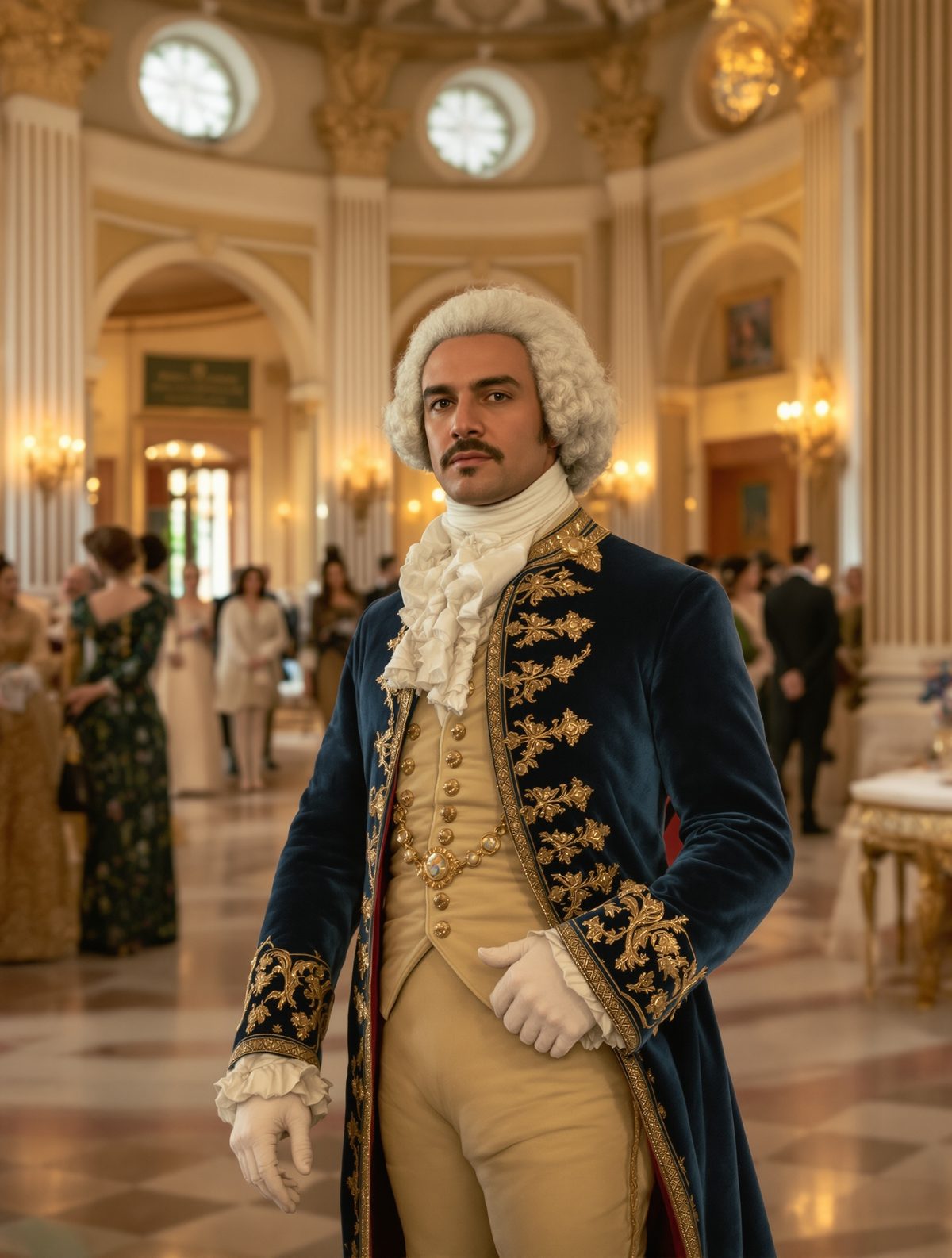
His first masterstroke came within days of Webster's murder. At the next assembly, Nash appeared not in mourning black but in a cream-colored suit so exquisitely cut it made every other man in the room feel shabby. He carried no sword—a shocking omission that whispered of either supreme confidence or suicidal foolishness. When the Duchess of Queensberry arrived wearing muddy riding boots (perfectly acceptable by Bath's low standards), Nash approached with a bow so elegant it could have graced Versailles.
"Your Grace," he said, his voice carrying across the suddenly silent room, "surely diamonds deserve better companions than dirt?" He gestured toward her feet with such theatrical dismay that the Duchess found herself laughing—and within minutes, sending her servant for proper shoes.
That single moment announced Nash's revolutionary philosophy: shame was more powerful than sword-point, and ridicule sharper than any blade. The assembled company had just witnessed the birth of something unprecedented in English society—enforceable etiquette.
The Velvet Revolution
Nash's genius lay not in his rules—though they were brilliantly crafted—but in making compliance seem like privilege rather than submission. His famous "Rules to be observ'd at Bath" read like commandments handed down from Mount Fashionable.
Rule number one struck at the heart of Bath's violence: "That no person of what quality soever, shall presume to dance in boots in the ballroom." It sounds trivial until you realize that gentlemen wore boots to conceal the daggers strapped to their calves. By banning boots, Nash had effectively disarmed the entire assembly without once mentioning weapons.
Rule six was even more audacious: "That the elder ladies and children be content with a second bench at the ball, as being past or not come to perfection." In an age when precedence could trigger duels, Nash had casually rearranged the social hierarchy based on his personal aesthetic preferences—and made it stick.
But perhaps most revolutionary was his rule about gambling: games would end precisely at eleven o'clock, regardless of who was winning or losing. This seemingly arbitrary curfew struck at the root of Bath's violence. Most sword fights erupted in the early hours when drink had clouded judgment and losses had mounted beyond reason. By forcing an end to play while men could still think clearly, Nash eliminated the conditions that bred blood on cobblestones.
The truly extraordinary thing? Within months, people were competing for the privilege of following these restrictions. Nash had somehow convinced England's most unruly aristocrats that submission to his whims was the ultimate mark of sophistication.
The Theater of Transformation
Nash understood that lasting change required more than rules—it needed theater. He transformed Bath's social season into an elaborate performance where everyone played their assigned role in his grand production of civility.
Each morning began with Nash's carefully choreographed arrival at the King's Bath. Dressed in his signature white hat and gold-headed cane, he would glide between the bathers like a master of ceremonies conducting a symphony of small talk. He knew everyone's name, their ailments, their scandals, and their weaknesses. A whispered compliment here, a raised eyebrow there—Nash orchestrated every interaction to reinforce his vision of proper society.
Evenings at the Assembly Rooms became legendary across Europe. Nash had personally designed every detail, from the order of dances to the arrangement of card tables. He banned the private gaming parties that had previously fragmented Bath society, forcing everyone into the public rooms where behavior could be monitored and corrected. The result was a nightly pageant where England's elite performed their refinement for each other under Nash's watchful eye.
His most audacious innovation was the morning concerts in the Pump Room. By requiring everyone to gather publicly to take the waters—previously a private, often sordid affair—Nash created a daily ritual of shared gentility. Aristocrats who had previously settled disputes with swords found themselves discussing the finer points of Handel while sipping sulfurous water from delicate porcelain cups.
The Price of Paradise
Nash's Bath was not without its contradictions and dark corners. The man who preached virtue ran a gambling empire that enriched him through others' losses. He maintained a mistress, Juliana Popjoy, for over forty years while lecturing others on propriety. His famous charity was funded by the very vices he publicly condemned.
The transformation came at human cost too. The rogues and desperados didn't simply vanish—they were pushed into Bath's shadows, where they preyed on servants and tradespeople who lacked aristocratic protection. Nash had not eliminated violence so much as rendered it invisible to polite society.
Yet even his critics acknowledged the miracle he had wrought. By 1715, just ten years after Webster's murder, Bath had become the undisputed capital of English fashion and manners. Foreign visitors marveled at a society where disputes were settled with cutting remarks rather than cutting blades, where ladies walked unescorted without fear, and where the greatest scandal might be wearing the wrong color ribbons to the Assembly.
The Dandy Who Changed a Nation
Richard Nash's achievement at Bath resonates far beyond one Georgian spa town. In an age when might made right and violence was the gentleman's first resort, he proved that society could be transformed through the power of shame, aspiration, and carefully orchestrated peer pressure.
His methods—creating arbitrary rules that became marks of distinction, using ridicule more effectively than force, and making compliance seem like privilege—would echo through centuries of social change. From Victorian moral reform to modern movements for civil behavior, Nash's template of peaceful transformation through social pressure remains remarkably relevant.
Perhaps most significantly, Nash demonstrated that one individual with sufficient audacity and understanding of human nature could reshape an entire society. In our own age of social fragmentation and online incivility, the Beau's lesson feels surprisingly urgent: civilization is not a natural state but a performance that requires constant direction, and sometimes it takes a peacock to teach eagles how to soar.