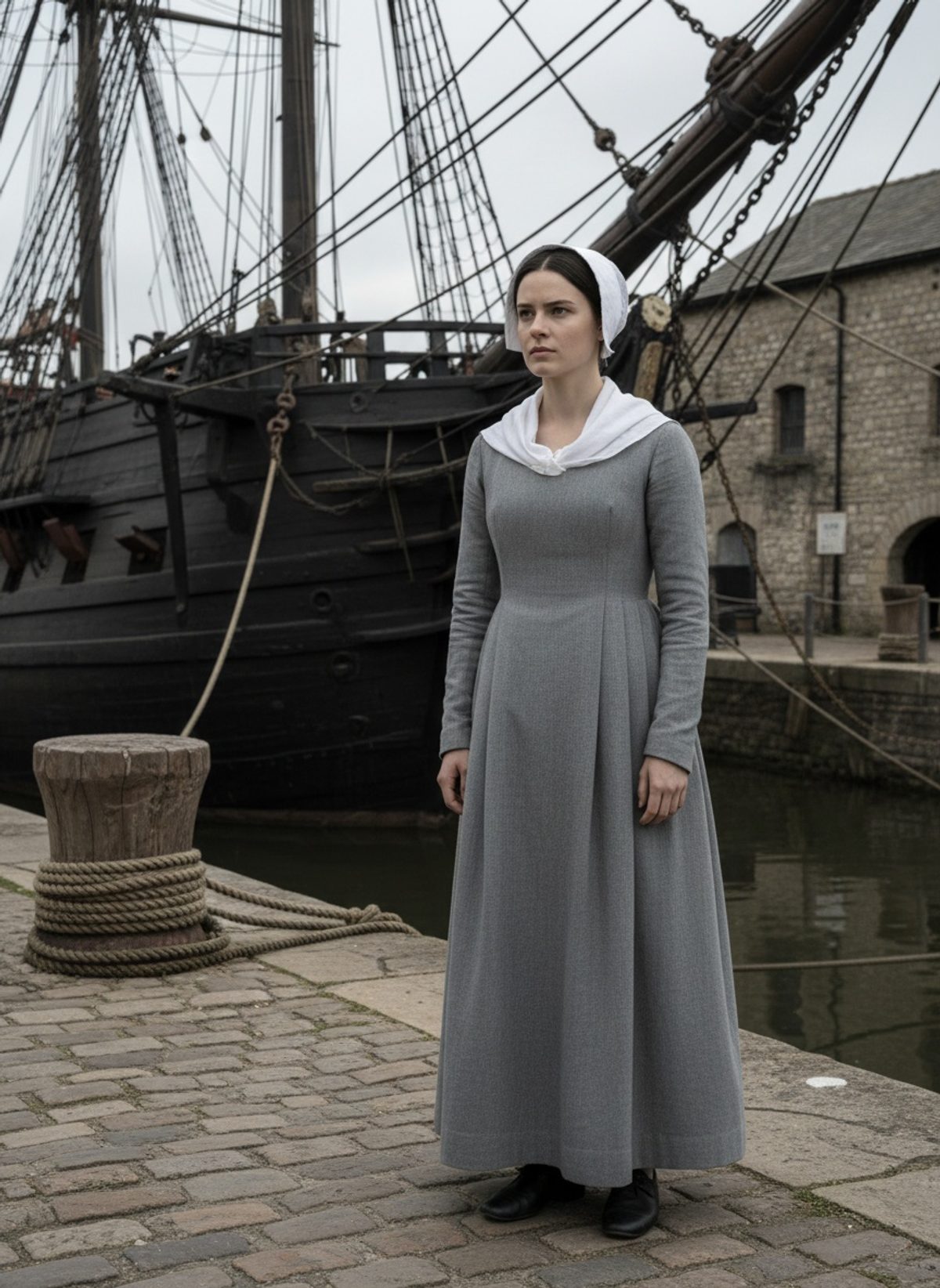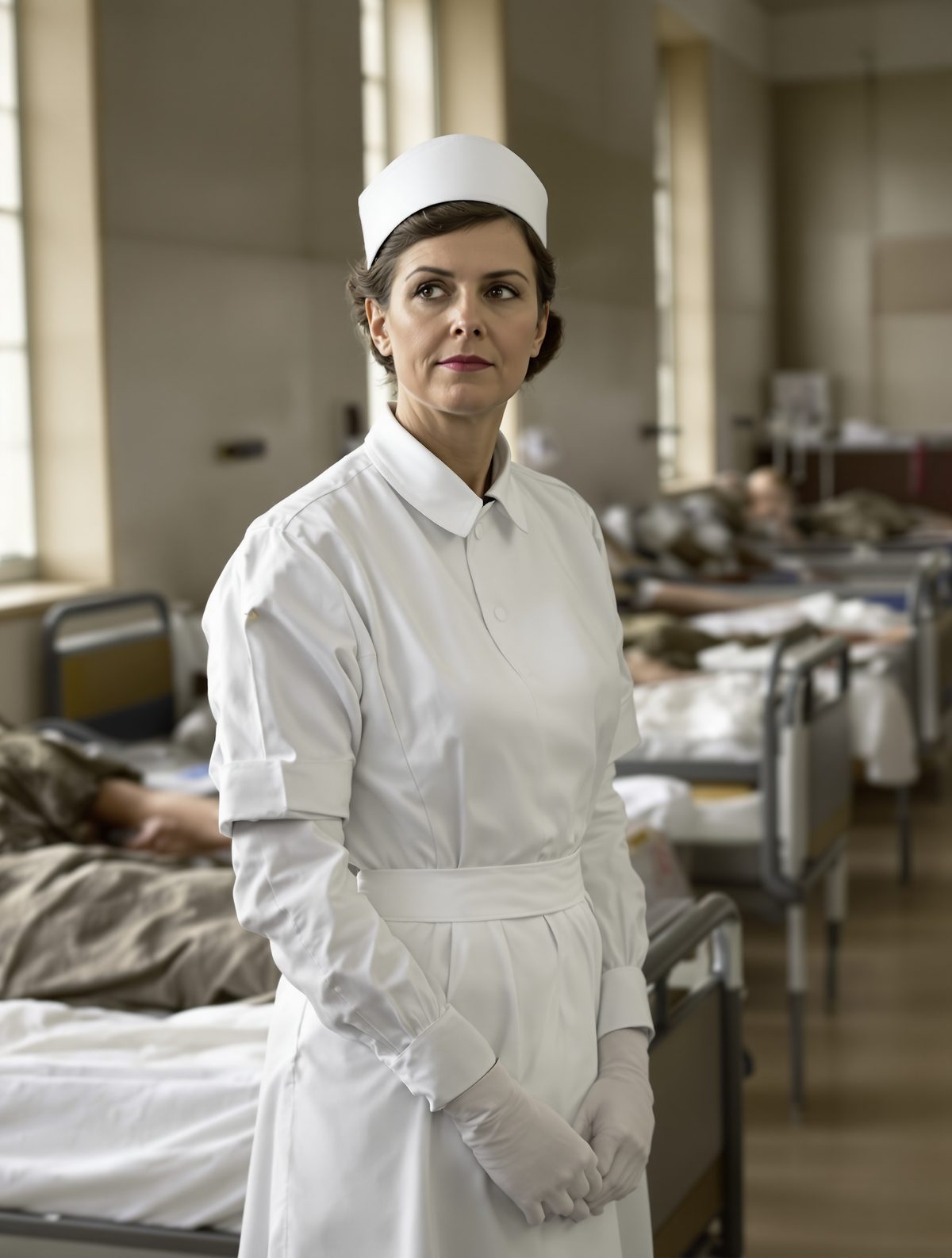
The woman lying on her narrow cell bed in Brussels' Saint-Gilles prison couldn't sleep. Not because of fear—Edith Cavell had long since made peace with the consequences of her choices. As the first light of October 12, 1915, crept through her barred window, she knew these would be her final hours. In a few minutes, German guards would escort her to a firing squad. Her crime? Showing the same compassion to wounded Allied soldiers that she'd shown to their German captors.
What the executioners didn't know was that the quiet Norfolk nurse they were about to shoot had run one of the most successful escape networks in occupied Belgium. By day, she tended German wounded with the same gentle care she'd given patients for decades. By night, she orchestrated an underground railroad that had spirited over 200 Allied soldiers to safety. In Edith Cavell's world, humanity trumped nationality—a philosophy that would make her a martyr and change the course of the Great War.
The Unlikely Spy in Sensible Shoes
When German boots marched into Brussels in August 1914, 49-year-old Edith Cavell was exactly where you'd expect to find a respectable English nurse: at her post. As matron of the Berkendael Medical Institute, she'd spent the past eight years revolutionizing nursing education in Belgium. The Germans, initially suspicious of any British nationals, soon realized they needed her expertise. Wounded soldiers were flooding into the city, and Cavell's hospital was one of the few functioning medical facilities.
What happened next reveals everything about Cavell's character. Rather than flee to neutral Holland—a mere 15 miles away—she chose to stay. Her patients needed her, she reasoned, regardless of which uniform they wore. The German military authorities, grateful for her medical skills, granted her permission to continue running the hospital. They had no idea they'd just handed operational cover to one of the most effective resistance operatives in occupied Europe.
Read next: The Day a Blind Pauper Boy Sang Before a Queen
Cavell's transformation from nurse to underground operative began gradually. In November 1914, two British soldiers—wounded stragglers from the retreat at Mons—appeared at her door. They'd been hiding in cellars and barns for months, slowly making their way toward the Dutch border. Local Belgian resistance members had directed them to the English nurse who, they whispered, could be trusted.
The Underground Railroad in Lace Collars
What Cavell created over the following months was breathtakingly audacious. Operating under the very noses of German military police, she established a network that stretched from Brussels to the Dutch frontier. The system worked with clockwork precision: Belgian civilians would shelter escaped prisoners or shot-down airmen until they were strong enough to travel. Guides would then shepherd them to safe houses in Brussels, with Cavell's hospital serving as both medical facility and coordination center.
The operation required nerves of steel and meticulous planning. Escapees arrived at the hospital hidden in coal carts or disguised as Belgian workmen. Cavell would treat their wounds, provide civilian clothes, and arrange false identity papers through her network of contacts. Local women would teach the soldiers basic Flemish phrases. Guides memorized safe routes through German patrol patterns. Money—often provided by wealthy Belgian patriots—funded the entire operation.
By summer 1915, Cavell's network was processing roughly 20 soldiers per month. British, French, and Belgian troops all received identical treatment: medical care, civilian disguises, and passage to the Netherlands. From there, they could rejoin their units and return to active service. The Germans, meanwhile, remained completely unaware that their trusted English nurse was operating one of the most successful escape lines in occupied territory.
Living a Double Life Under the Kaiser's Nose
The psychological toll of Cavell's double existence was enormous. By day, she moved through hospital wards caring for wounded German soldiers with the same professional dedication she'd always shown. She learned their names, wrote letters to their families, and sat beside dying young men who called for their mothers in German. Her colleagues noted no change in her demeanor—the same calm efficiency, the same gentle bedside manner.
But after dark, a different Edith Cavell emerged. She met with resistance contacts in shadowy doorways, memorized railway timetables, and counted British sovereigns destined for guide payments. In her private quarters, she maintained detailed records of every soldier she'd helped—names, regiments, escape routes, and destinations. It was methodical, dangerous, and utterly at odds with the image of a middle-aged nursing matron.
The most remarkable aspect of Cavell's operation wasn't its size—though 200+ successful escapes represented a significant intelligence coup—but its humanity. She made no distinction between nationalities when providing medical care, and her network helped Allied soldiers regardless of rank or social class. Private soldiers received the same assistance as captured officers. Her moral universe recognized suffering, not politics.
The Web Unravels
Cavell's downfall came through betrayal, as was so often the case with wartime resistance networks. In late July 1915, German counter-intelligence arrested several Belgian guides working with escape lines. Under interrogation, one revealed details about the English nurse who coordinated operations from her Brussels hospital. The Germans, initially skeptical that such a respected medical professional could be involved in espionage, began watching Cavell closely.
On August 5, 1915, German military police raided the Berkendael Institute. They found Cavell's hidden records, civilian clothes intended for escapees, and correspondence with resistance contacts. Faced with overwhelming evidence, Cavell made a decision that sealed her fate: she confessed everything. Not to protect herself—she knew the consequences of her actions—but to minimize punishment for her Belgian co-conspirators.
Her confession was characteristically methodical. She admitted helping 200 soldiers escape to neutral territory. She named no names beyond those already known to German intelligence. She expressed no regret for her actions, explaining simply that she had followed the dictates of her conscience. The Germans, expecting denials or pleas for mercy, found themselves dealing with a defendant who seemed almost indifferent to her fate.
Facing the Firing Squad
The military trial that followed was a foregone conclusion. Under German military law, assisting enemy soldiers to escape was punishable by death. Cavell's own testimony provided all the evidence prosecutors needed. What surprised observers was her complete composure throughout the proceedings. She answered questions directly, showed no emotion when the death sentence was pronounced, and returned to her cell with the same quiet dignity she'd maintained throughout her ordeal.
International efforts to save her life began immediately. The American ambassador—representing British interests in occupied Belgium—appealed directly to German military authorities. Spanish diplomats, representing a neutral power, requested clemency. Even some German officials privately questioned the wisdom of executing a woman whose only crime was excessive compassion.
But German military command had decided to make an example. Too many escape networks were operating in occupied territory. Executing the English nurse would send an unmistakable message to anyone considering similar activities. On the evening of October 11, 1915, Cavell received her final visitor: an Anglican chaplain who found her reading Thomas à Kempis and preparing for what she called "the end."
Her final recorded words have become legendary: "I realize that patriotism is not enough. I must have no hatred or bitterness towards anyone." At dawn on October 12, 1915, she walked to the execution ground without blindfold or restraints, faced the firing squad, and died as she had lived—with quiet courage.
The Legacy of Compassion
The execution of Edith Cavell proved to be one of Germany's greatest propaganda disasters of the Great War. News of the nurse's death sparked outrage across neutral nations, particularly in America, where recruitment posters soon featured her image alongside the caption "Remember Edith Cavell." Her martyrdom became a powerful symbol of German brutality and helped shift public opinion in favor of the Allied cause.
But focusing solely on Cavell's propaganda value misses the deeper significance of her story. In an age of unprecedented industrial warfare, when national hatreds reached fever pitch, she demonstrated that individual conscience could transcend political boundaries. Her willingness to treat German wounded with the same care she showed Allied prisoners offers a profound lesson about the possibility of maintaining humanity during humanity's darkest hours.
Today, as conflicts around the world test our capacity for empathy across political and cultural divides, Edith Cavell's example remains startlingly relevant. She proved that ordinary people, armed with nothing more than professional competence and moral clarity, can make extraordinary differences. Her legacy reminds us that sometimes the most powerful form of resistance is simply refusing to let circumstances diminish our humanity—even when that refusal costs us everything.