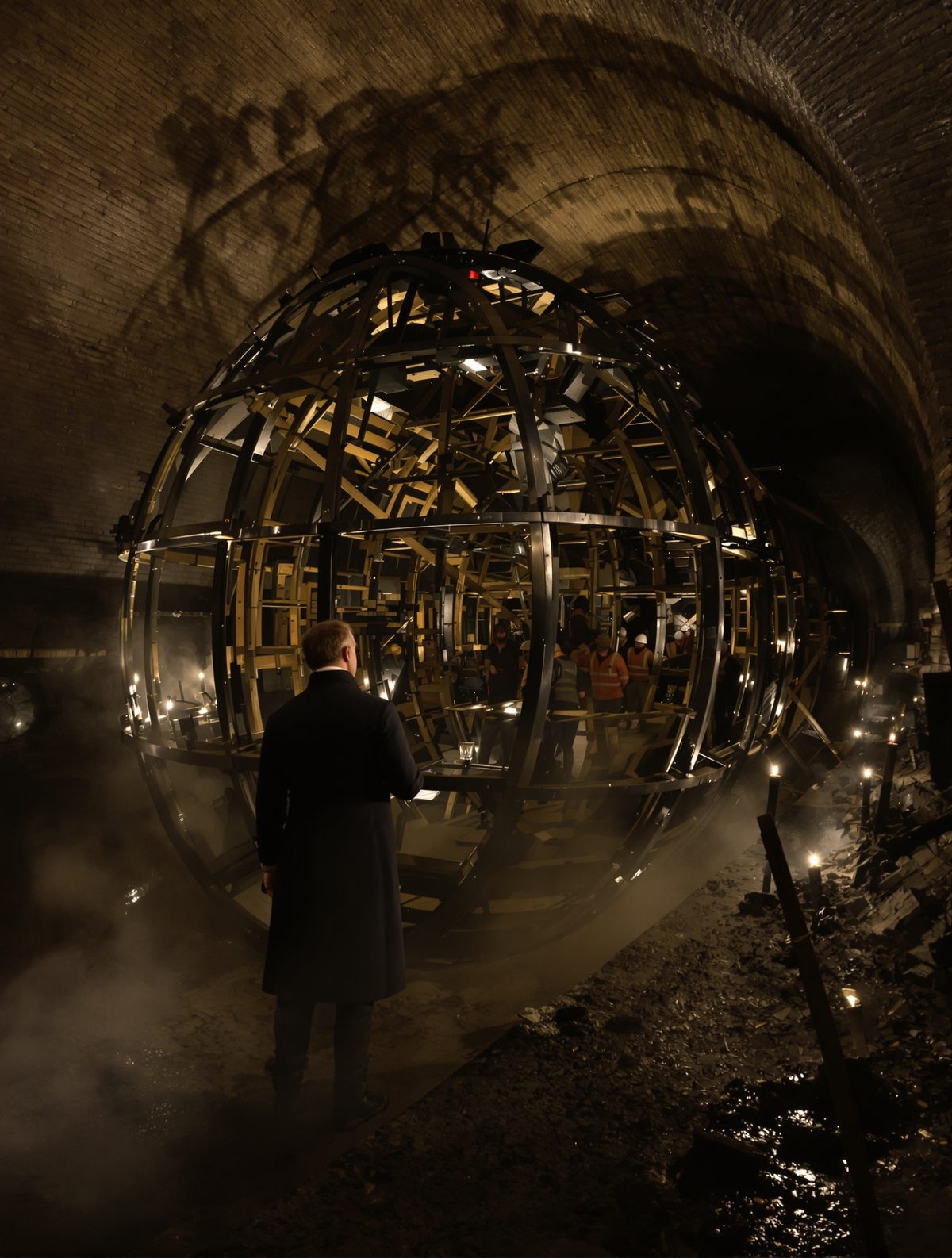
The screaming came first. Then the thunderous roar of water smashing through timber supports. On January 12, 1828, eighteen men were carving through the suffocating darkness beneath London's Thames when the river suddenly decided to reclaim its territory. In seconds, millions of gallons of Thames water—thick with sewage, industrial waste, and the detritus of England's greatest port—came crashing down through the tunnel ceiling like the wrath of Poseidon himself.
Six workers would drown in those terrifying moments. But for the revolutionary iron shields protecting the other twelve diggers, the death toll would have been catastrophic. Those shields—the ingenious invention of French-born engineer Marc Isambard Brunel—had already saved dozens of lives since construction began three years earlier. Now they would prove their worth in the most dramatic way possible.
This wasn't just another industrial accident. This was the testing ground for an invention that would literally reshape the world beneath our feet.
The Graveyard Shift: Death Beneath the Thames
By 1825, London had a problem. The Thames—the city's lifeline and main highway—had become a bottleneck strangling the world's greatest port. Ships queued for hours at London Bridge, the only river crossing east of Westminster. Goods crawled through streets clogged with traffic. Something had to give.
Read next: The Day a Mill Owner Kept Paying Wages He Could Not Afford
Marc Brunel had the audacious solution: dig beneath the river itself. Not around it, not over it, but straight through the treacherous river bottom. The very idea seemed like madness. Previous attempts to tunnel under rivers had ended in disaster, with workers entombed in muddy graves or drowned like rats in flooded shafts.
But Brunel had noticed something fascinating during his walks through London's shipyards. He watched in wonder as Teredo navalis—the ship worm—bored through the hardest oak timbers. The creature's head was protected by a hard shell while its body remained safely enclosed in the tunnel it carved. Nature, Brunel realized, had already solved the problem of safe tunneling.
What followed was eighteen months of fevered planning. Brunel sketched, calculated, and obsessed over his revolutionary design. By the time work began in February 1825, he had created something never before seen: a massive iron framework that would keep workers alive while they carved through the Thames riverbed, one bucket of mud at a time.
The Iron Guardian: Brunel's Revolutionary Shield
Picture a cast-iron apartment building lying on its side, 22 feet high and 37 feet wide, divided into 36 individual cells. This was Brunel's tunneling shield—a massive protective framework that served as both fortress and mobile workshop for the miners working beneath the Thames.
Each cell housed a single worker, protected on three sides by iron plates. The worker would chip away at the clay and mud in front of him, removing just enough material to fill a small wooden box. Once filled, the box would be passed back through the shield to be hauled away by rope and pulley. When enough earth had been removed, the entire shield would be inched forward using enormous screw jacks, and the process would begin again.
Behind the shield, bricklayers worked frantically to line the newly carved tunnel with brick and Roman cement, creating the permanent walls that would hold back the Thames for centuries to come. It was like performing surgery inside a moving coffin, lit only by flickering oil lamps and filled with the constant dread of sudden death.
The genius lay in the details. Each iron plate could be removed individually, allowing workers to excavate small sections while the rest remained protected. Springs pushed the plates against the tunnel face, automatically adjusting to the pressure. Most importantly, if water or gas broke through, workers could slam emergency boards into place and retreat to safety—at least in theory.
A Descent Into Hell: The Tunnel's Deadly Reality
The reality of working beneath the Thames was far more horrific than any engineering manual could capture. The air reeked of sewage and rotting matter that seeped through the riverbed. Methane gas accumulated in deadly pockets, causing explosions that could incinerate a worker in seconds. The clay was so soft in places that it oozed through gaps in the shield like thick porridge, threatening to bury diggers alive.
But it was the floods that truly terrorized the workers. The Thames bottom was a minefield of old river channels, sewage outlets, and ship ballast that had been dumped for centuries. Break through into any of these, and the river would come roaring down with unstoppable force. Between 1825 and 1828, the tunnel flooded five times. Each flood meant frantic evacuation, pumping operations that lasted weeks, and the grim task of recovering bodies.
The psychological toll was immense. Workers developed what we might now recognize as PTSD, jumping at every sound, refusing to work in certain sections of the tunnel. Many quit after a single shift. Those who stayed demanded wages three times higher than surface construction work—blood money for risking their lives in London's newest version of hell.
Marc Brunel's son, Isambard Kingdom Brunel—future engineer of the Great Western Railway—was working as resident engineer when the devastating flood of January 1828 struck. The young man barely escaped with his life, hauling unconscious workers to safety as the Thames claimed its victims. The experience left him with injuries that would trouble him for years, but also with an unshakeable faith in his father's shield design.
Triumph Through Catastrophe: The Shield Proves Its Worth
The great flood of January 1828 should have ended the project. Six men were dead, the tunnel was completely flooded, and investors were fleeing faster than rats from a sinking ship. Work stopped for seven years as Brunel struggled to find funding and the political will to continue. Critics called the tunnel "The Great Bore" and suggested it be abandoned as a costly folly.
But Brunel knew something the critics didn't: his shield had worked exactly as designed. In the moments before the flood struck, workers had reported seeing river water trickling through the tunnel face. The shield's segmented design allowed them to immediately install emergency boards in the affected sections while continuing work elsewhere. When the main flood hit, the shield's iron framework directed the water's force around the workers rather than crushing them instantly.
Of the eighteen men in the tunnel that day, twelve survived specifically because they were protected by the shield's iron embrace. Without it, the Thames Tunnel would have become London's largest underwater cemetery, and the dream of subaqueous engineering would have died for another generation.
When work finally resumed in 1835, Brunel had refined his design based on hard-won experience. The new shield incorporated better drainage, improved ventilation, and stronger emergency systems. More importantly, the workforce now understood exactly how the device protected them. Instead of fearing the shield, they trusted it with their lives.
The Legacy: How One Invention Changed the World
The Thames Tunnel finally opened to pedestrians on March 25, 1843—eighteen years after construction began. Queen Victoria herself came to inspect what newspapers called "the Eighth Wonder of the World." Visitors descended the ornate spiral staircases to walk beneath the river in chambers illuminated by gas lamps, marveling at the brick archways that held back millions of tons of water and mud.
But the tunnel's real significance lay not in its role as a tourist attraction, but in the revolutionary construction method it had proven. Brunel's tunneling shield became the template for every major underwater tunnel that followed. The technique was used for New York's first subway tunnels, the Paris Metro, and eventually evolved into the massive tunnel boring machines that carve through mountains and ocean floors today.
Every time you ride through the Channel Tunnel, take a subway beneath a harbor, or drive through an underwater crossing, you're experiencing the legacy of Marc Brunel's iron shields and the men who risked everything to prove the concept beneath the Thames.
The numbers tell the story: without the shield, engineers estimated that tunneling beneath the Thames would have killed over 200 workers. With it, despite floods, fires, and cave-ins spanning nearly two decades, fewer than twenty men lost their lives—a revolutionary improvement in industrial safety that would echo through every major infrastructure project that followed.
Today, as we bore tunnels for high-speed rail, fiber optic cables, and water systems that would astound Victorian engineers, we're still using principles that Marc Brunel developed in that suffocating darkness beneath London's river. His greatest invention wasn't just a tunneling shield—it was proof that human ingenuity could conquer seemingly impossible challenges, one carefully protected step at a time. The question is: what seemingly impossible challenge will the next generation of engineers solve with equal audacity?