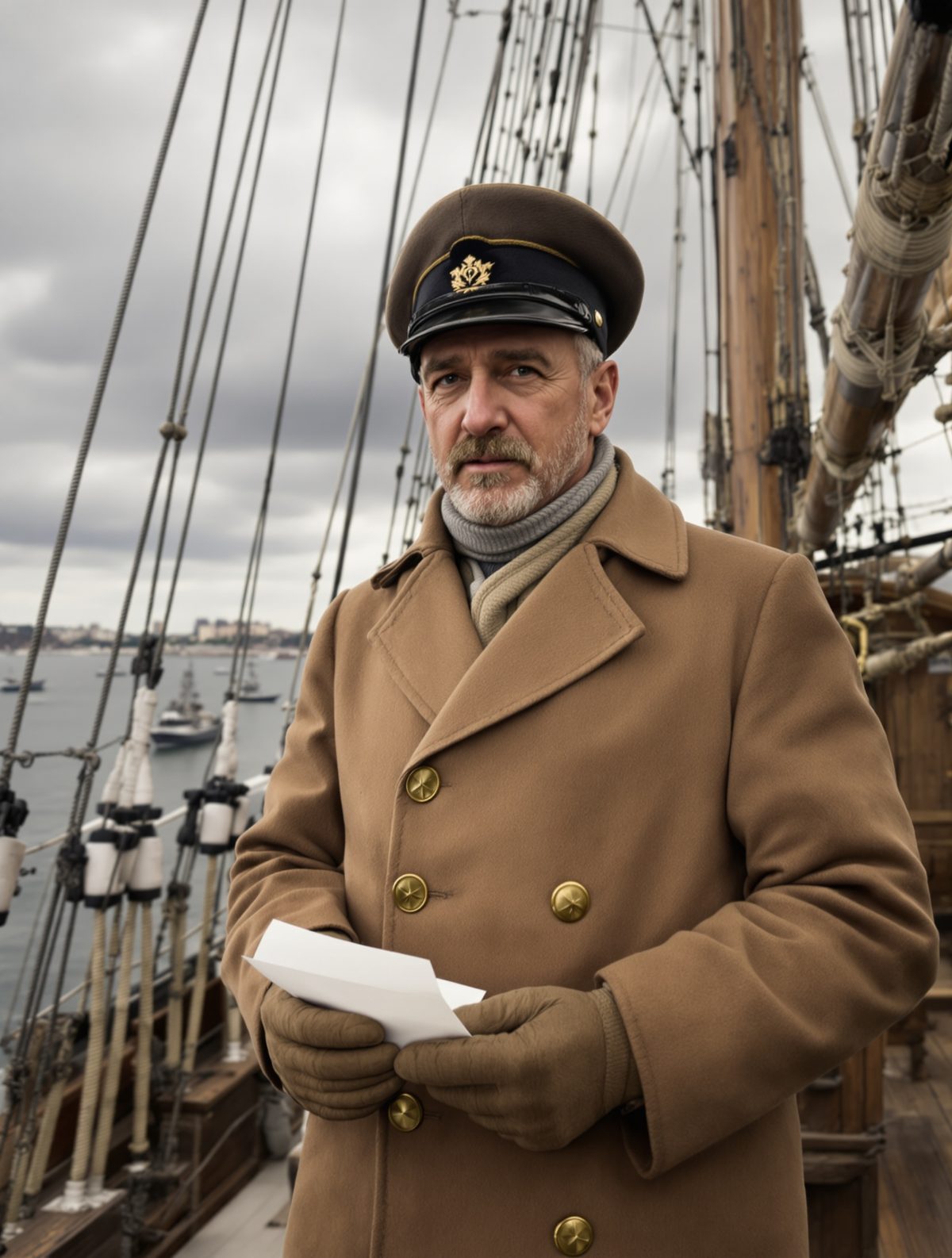
The telegram arrived at Millwall Docks on August 4th, 1914, just as the last crates of provisions were being loaded aboard the Endurance. Ernest Shackleton stood on the quay, watching his dream incarnate—three years of planning, fundraising, and preparation for what he called "the last great polar journey." In just hours, his ship would set sail for Antarctica and immortal glory. Then a messenger boy changed everything.
The note was brief: Britain had declared war on Germany. The Great War had begun.
What happened next would become one of history's most extraordinary acts of patriotic sacrifice—and one of its most haunting ironies. For in offering his ship to the Royal Navy, Shackleton unknowingly condemned his crew to a different kind of hell than the trenches of France. They would spend the next twenty months not fighting Germans, but fighting the most brutal enemy on Earth: Antarctica itself.
The Moment That Changed Everything
Shackleton didn't hesitate. Within hours of reading that fateful telegram, he had composed his own message to the Admiralty: "Sir Ernest Shackleton presents his ship Endurance and entire crew to the service of the Admiralty." The offer was staggering in its scope—not just the vessel, but 5,000 tons of supplies, 69 sledge dogs, and 27 men who had signed on for polar exploration, not warfare.
Read next: The Day a British Stretcher-Bearer Refused an Order to Save Lives
The Endurance was no ordinary ship. Built in Norway specifically for ice navigation, she was a floating fortress designed to punch through polar pack ice. Her hull was nearly three feet thick in places, reinforced with Norwegian fir and backed by English oak. At 144 feet long, she was perfectly sized for naval conversion—perhaps as a patrol vessel or supply ship in the treacherous northern waters where the Royal Navy would soon battle German U-boats.
But in Whitehall, a different calculation was being made. Winston Churchill, then First Lord of the Admiralty, faced an impossible decision. The Royal Navy desperately needed every available vessel, yet Shackleton's expedition represented something more than personal ambition. It was a matter of national prestige, scientific advancement, and—perhaps most crucially—British supremacy in polar exploration at a time when national pride had never mattered more.
Churchill's reply arrived the next morning: a single word that would seal the fate of 28 men. "Proceed."
The Explorer Who Couldn't Stay Home
To understand the magnitude of this moment, you must understand Ernest Shackleton himself. At 40, he was already a polar legend, having come tantalizingly close to reaching the South Pole in 1909—just 97 miles short when dwindling supplies forced him back. "Better a live donkey than a dead lion," he had famously told his wife, but the failure haunted him.
By 1914, Roald Amundsen had claimed the South Pole, leaving Shackleton to devise an even more audacious plan: the first crossing of Antarctica from sea to sea via the Pole. It would be a journey of 1,800 miles across the most hostile continent on Earth, requiring two ships, two teams, and flawless coordination across impossible distances.
The financial cost had been enormous. Shackleton had mortgaged his future, sweet-talked wealthy donors, and even accepted £24,000 from Scottish textile magnate James Caird—enough to buy several London townhouses. The human cost was equally steep: months away from family, careers abandoned, lives literally wagered on Shackleton's vision of glory.
Now, with a single telegram, he was prepared to throw it all away for King and Country. His crew, assembled from across the British Empire and beyond, faced an agonizing choice: abandon the expedition for military service, or trust that their leader's gamble would pay off.
Into the Unknown
On August 8th, 1914, the Endurance slipped away from London's grimy docks into a world transformed by war. Behind them, Britain was mobilizing with unprecedented speed—Lord Kitchener was already calling for 100,000 volunteers, and young men were queuing outside recruiting stations with patriotic fervor that would soon curdle into the horror of the Somme.
The contrast couldn't have been starker. While their countrymen marched toward the mechanized slaughter of modern warfare, Shackleton's men sailed toward a wilderness unchanged since the dawn of time. They carried no rifles, no artillery, no poison gas—just the tools of exploration: sledges, scientific instruments, and unshakeable faith in their leader.
The expedition photographer, Frank Hurley, captured their departure with his revolutionary cinematography equipment—technology so advanced that his footage remains breathtaking today. In those final images of civilization, the men appear confident, almost jaunty. They had no idea they were sailing toward a trial that would make the Western Front seem merciful by comparison.
As the Endurance crossed the equator, news reached them of the war's early battles. The British Expeditionary Force had landed in France. The Germans had invaded Belgium. The world was tearing itself apart with industrial efficiency, while 28 men sailed steadily toward the bottom of the world, their fate now inextricably linked to ice, wind, and the crushing pressure of polar pack ice.
The Gamble That Became a Nightmare
By January 1915, as British and German soldiers settled into the muddy stalemate of trench warfare, the Endurance found herself in her own kind of hell. Trapped in the Weddell Sea pack ice, she began a slow-motion battle for survival that would last nearly two years.
The irony was devastating. While Shackleton had offered his ship to save lives in service of the Empire, that same ship was now locked in ice 1,200 miles from the nearest human settlement. The pack ice didn't recognize British courage or imperial determination—it simply squeezed, with pressure that could crush a ship like an eggshell.
Frank Worsley, the ship's captain, recorded pressure readings that defied belief: millions of tons of ice pressing against their wooden fortress. The sounds were unearthly—groaning, cracking, shrieking as the ice sought to destroy this small intrusion into its domain. Hurley's photographs captured scenes of surreal beauty and terror: the ship tilted at impossible angles, her rigging stark against the Antarctic sky, while around her the ice heaved and buckled like a living thing.
On October 27th, 1915—as the Battle of Loos raged in France—the Endurance finally succumbed. The ice won, crushing her hull and sending Shackleton's magnificent ship to the bottom of the Weddell Sea. Twenty-eight men now stood on the ice with three small boats, hundreds of miles from safety, facing odds that made the Western Front seem almost hospitable.
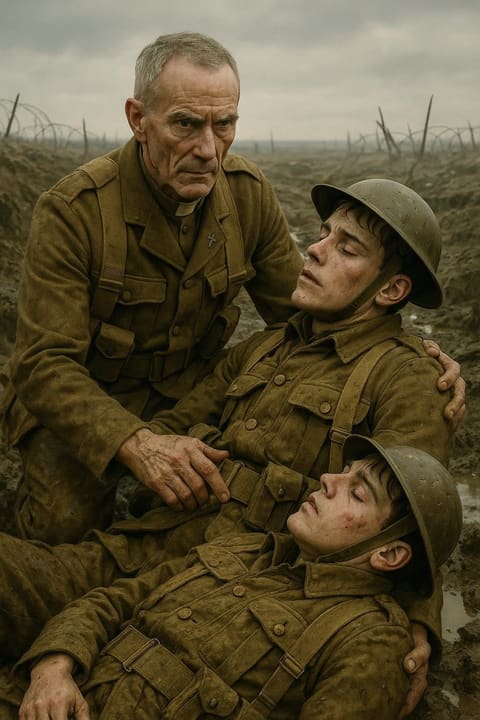
Read next: The Day a Army Chaplain Gave His Coat to a Dying Stranger
The Price of Proceeding
What followed was one of history's greatest survival stories. For five months, Shackleton's men camped on drifting ice floes, hoping the pack would carry them toward open water. When it became clear that hope was false, they launched their small boats into the most dangerous waters on Earth, navigating by dead reckoning toward a tiny speck of land called Elephant Island.
The 16-day boat journey tested human endurance beyond all reasonable limits. Men sat in freezing water for days, their clothes frozen solid, drinking melted ice and eating raw seal meat. Several came close to madness. All came close to death. When they finally reached Elephant Island on April 15th, 1916, they had achieved the impossible—but they were still 800 miles from civilization.
Shackleton's final gamble was the most desperate of all. Taking five volunteers, he sailed the largest boat, the James Caird, across the Southern Ocean toward South Georgia Island. It was a journey that experienced sailors considered suicidal—800 miles of the world's most violent seas in a 22-foot boat, navigated by sextant sightings stolen between towering waves.
Miraculously, they made it. But even reaching South Georgia wasn't enough—they landed on the uninhabited side, forcing Shackleton and two companions to cross the island's unmapped mountains on foot. When they finally stumbled into Stromness whaling station on May 20th, 1916, the manager who greeted them was the first outsider they had seen in 17 months.
The Legacy of a Single Word
When Shackleton finally rescued his remaining men from Elephant Island on August 30th, 1916, the world had changed beyond recognition. The Battle of the Somme had claimed over a million casualties. The war that was supposed to end by Christmas 1914 had become an industrial nightmare consuming entire generations.
Churchill's single word—"Proceed"—had saved 28 lives from the trenches but condemned them to an ordeal that, paradoxically, proved more transformative than destructive. Not one man was lost from the Endurance expedition. Not one. In a war that killed 16 million people, Shackleton's crew survived through leadership, teamwork, and sheer human determination.
Today, as we face our own global uncertainties, Shackleton's story offers a different kind of lesson. Sometimes the greatest service we can provide isn't rushing toward the obvious fight, but proceeding with the deeper mission—even when that mission leads us into uncharted territory. Churchill's decision to let the expedition continue may have saved more than 28 lives; it preserved a demonstration of human resilience that continues to inspire over a century later.
The Endurance herself was finally found in 2022, perfectly preserved in the frigid Antarctic waters, her ship's wheel still intact. Like Shackleton's legend, she had endured the ultimate test of time, waiting patiently to tell her story to a world that still desperately needs to hear it.