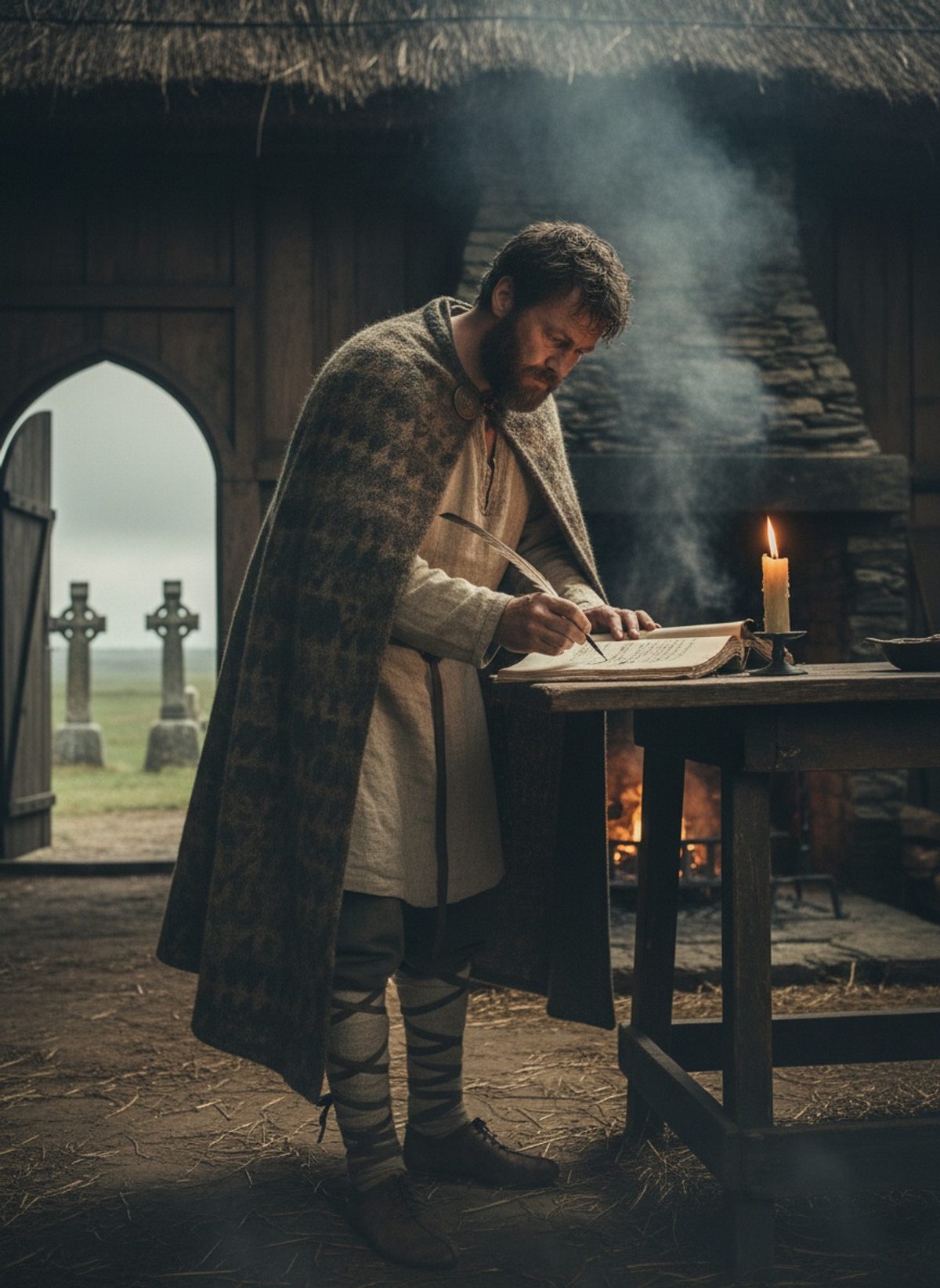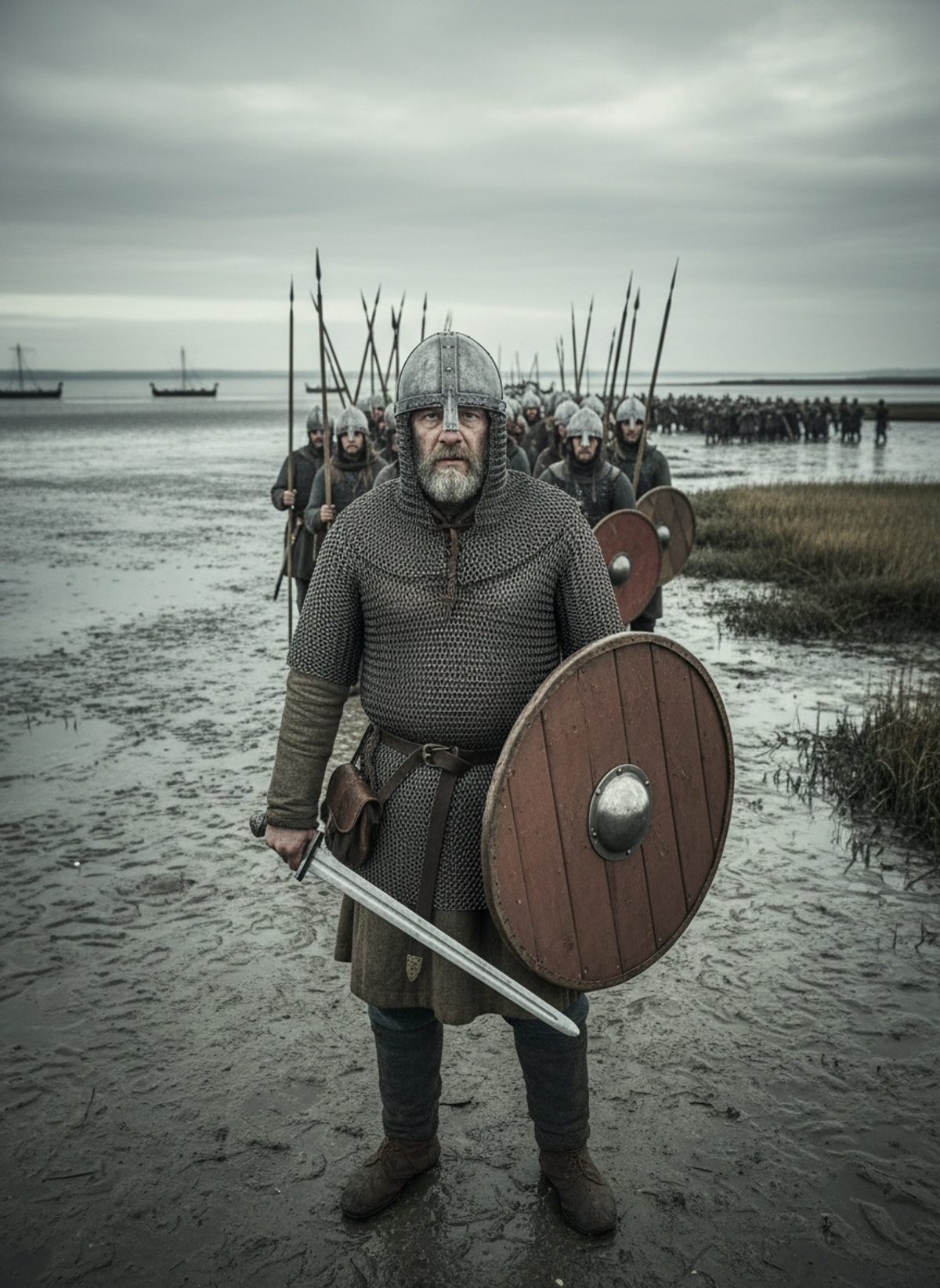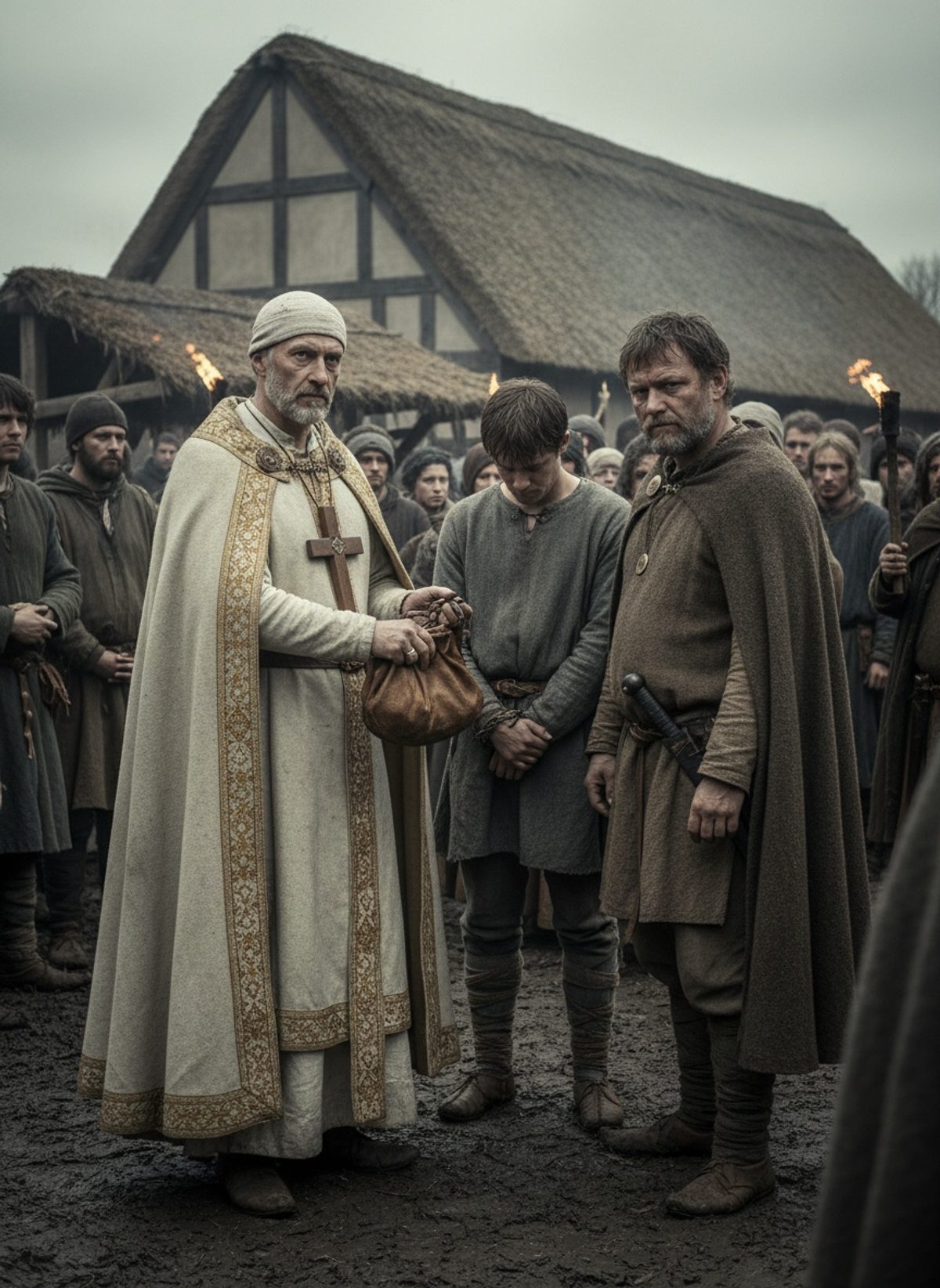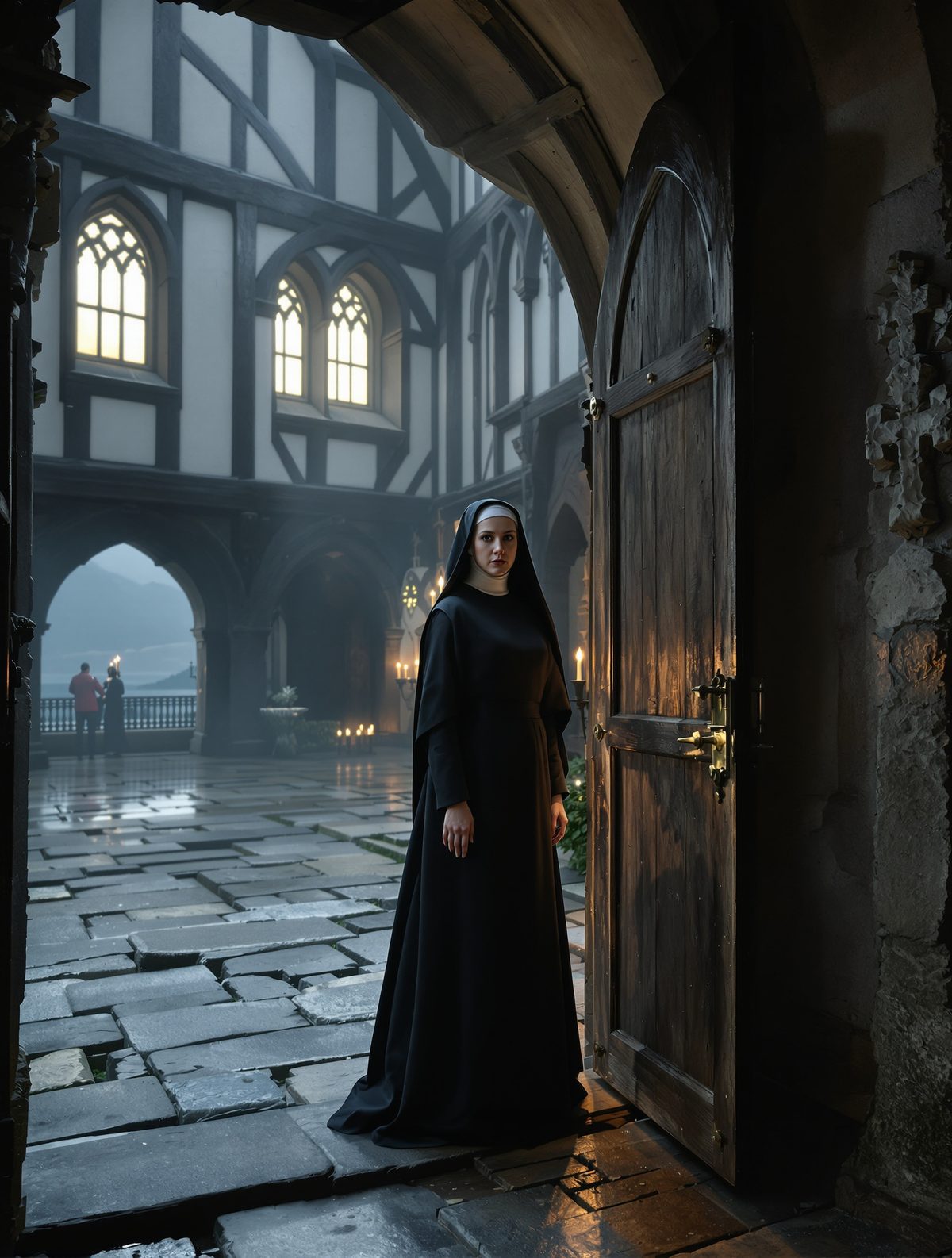
The salty North Sea wind whipped across the clifftops of Whitby as two groups of men in religious robes faced each other across the stone floor of the abbey. It was autumn 664 AD, and the most powerful debate in English Christianity was about to begin. At stake? Not just when to celebrate Easter, but the very soul of a nation still finding its Christian identity.
Standing between these opposing forces was one of the most remarkable women of the Anglo-Saxon age: Abbess Hilda of Whitby. At 59 years old, she commanded respect from kings and commoners alike. But even she couldn't have predicted that the decision made within her abbey walls would echo through British history for the next 1,400 years.
The Woman Who Dared to Host History
Hilda wasn't just any abbess—she was royalty turned revolutionary. Born around 614 AD as a princess of Northumbria, she had converted to Christianity at age 13 alongside King Edwin, her great-uncle. But unlike most noble women of her era, Hilda refused to fade into the background of history.
By 657 AD, she had founded the double monastery at Whitby, where both monks and nuns lived and studied under her guidance. This wasn't merely unusual—it was groundbreaking. In an age where women wielded little public power, Hilda had created an intellectual powerhouse that rivaled any center of learning in Europe. Her monastery produced five bishops, more than most kingdoms could claim.
Read next: The Day a Saxon Abbot Walked Into a Slave Market Alone
When King Oswiu of Northumbria needed a neutral venue for the most important religious council in British history, there was only one choice. Hilda's abbey commanded respect from both sides of the great Christian divide that was tearing England apart.
When Two Christianities Collided
The England of 664 AD was a patchwork of competing Christian traditions. In the north and west, Celtic Christianity dominated—brought by Irish missionaries like the beloved Saint Columba. These Celtic Christians followed ancient traditions passed down from the earliest days of British Christianity, calculating Easter by lunar cycles and sporting distinctive tonsures where monks shaved the front of their heads from ear to ear.
But from the south came Roman Christianity, championed by Augustine's mission to Canterbury in 597 AD. The Roman church followed papal authority, calculated Easter differently, and insisted on the distinctive crown tonsure where monks shaved the top of their heads in a circle.
This might sound like theological hair-splitting, but the implications were enormous. Families were celebrating Easter weeks apart. King Oswiu, who followed Celtic tradition, would be fasting for Lent while his wife Queen Eanflaed, raised in Roman tradition, was already celebrating Easter with feasts and festivities. The royal household was a microcosm of a nation pulled in two directions.
Even more crucially, this wasn't just about calendar dates—it was about authority. Would English Christianity answer to Rome or remain independent? Would Britain be connected to the broader European Christian community or maintain its unique island traditions?
The Great Debate: Heaven's Keys at Stake
The Synod of Whitby opened with the weight of destiny hanging in the autumn air. King Oswiu presided, but the real intellectual combat lay between two formidable opponents: Colman, the Irish Bishop of Lindisfarne representing Celtic Christianity, and Wilfrid, the young but brilliant advocate for Roman tradition.
Bishop Colman spoke first, his voice carrying the authority of centuries. He argued that Celtic Easter traditions came directly from Saint John the Apostle, passed down through the revered Saint Columba. "We follow the customs of our fathers," Colman declared, "learned from the blessed apostle who leaned on Christ's breast."
The Celtic case seemed formidable. After all, hadn't Irish missionaries like Saint Aidan brought Christianity to pagan Northumbria when Rome had failed to reach them? Hadn't Celtic monks preserved learning through the Dark Ages while continental Europe burned?
But Wilfrid was ready. Rising to speak, the young cleric delivered what may be the most consequential speech in English religious history. He methodically dismantled the Celtic position, arguing that their calculations were mathematically flawed and that their isolation had led them astray from universal Christian practice.
Then came his masterstroke. Wilfrid invoked the authority of Saint Peter himself: "The only Easter we should observe is the one kept by those to whom the Lord said, 'You are Peter, and on this rock I will build my church... I will give you the keys of the kingdom of heaven.'"
The Decision That Changed Everything
King Oswiu's response has become the stuff of legend. After listening intently to both sides, he posed a crucial question: "Tell me, which of these two, Columba or Peter, has the greater power in the kingdom of heaven?"
When Colman admitted that Christ had indeed given the keys of heaven to Peter, Oswiu made his fateful declaration: "Then I will not contradict the doorkeeper of heaven. I will obey his commands in everything, lest when I come to the gates of heaven, there is no one to open them because the one who holds the keys has turned away."
With those words, English Christianity pivoted toward Rome forever. The decision wasn't just about Easter dates—it was a fundamental choice about England's place in the Christian world. Oswiu had chosen continental connection over island independence, papal authority over local tradition.
The immediate aftermath was dramatic. Bishop Colman, unable to accept the decision, gathered his Irish monks and departed for Iona, taking with him some of Saint Aidan's bones. The great Celtic monastery at Lindisfarne, once the jewel of northern Christianity, was handed over to Roman adherents.
Hilda's Silent Revolution
Throughout these momentous proceedings, Abbess Hilda remained diplomatically silent about her personal views. But her actions spoke volumes. Though she had been raised in the Celtic tradition and maintained deep respect for Irish Christianity, she implemented the synod's decisions without resistance.
This wasn't mere political expedience—it was masterful leadership. Hilda understood that unity mattered more than tradition. Her abbey became a model for how Celtic and Roman traditions could merge, preserving the scholarly rigor and spiritual intensity of Irish Christianity while embracing Roman organization and continental connections.
Under Hilda's guidance, Whitby became a bridge between two worlds. The monastery continued to produce exceptional scholars and saints, but now they were connected to the broader currents of European Christianity. She had achieved something remarkable: evolution without destruction.
The Legacy That Lives On
The Synod of Whitby's impact extended far beyond religious calendars. By aligning English Christianity with Rome, the decision connected Britain to the intellectual and cultural mainstream of medieval Europe. This would prove crucial during the Viking invasions, when English churches needed continental support, and during the Norman Conquest, when shared religious traditions eased the transition.
But perhaps most importantly, the synod established a precedent for religious unity under royal authority—a concept that would echo through English history from Henry VIII's break with Rome to the modern establishment of the Church of England.
Today, as Britain again debates its relationship with European institutions, the Synod of Whitby offers a fascinating historical parallel. In 664 AD, England chose continental integration over island isolation, universal standards over local traditions. The decision brought both benefits and losses—greater unity and international connection, but also the erosion of unique local customs.
Abbess Hilda's legacy reminds us that history's most crucial moments often happen not on battlefields, but in quiet councils where thoughtful people wrestle with fundamental questions about identity, tradition, and change. The windswept cliffs of Whitby witnessed more than a religious debate—they hosted a nation's choice about what kind of people it wanted to be.