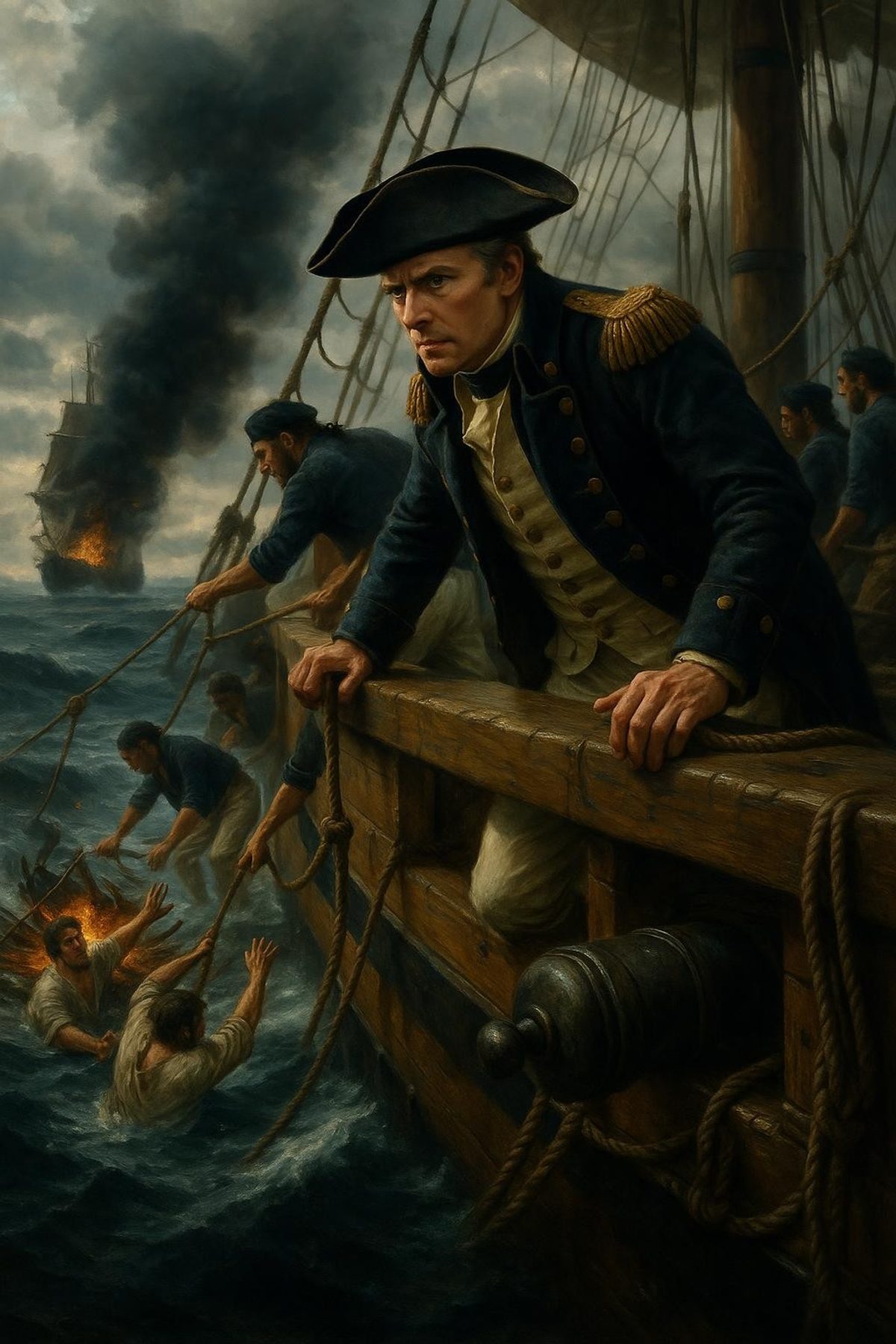
The Indian Ocean stretched endlessly in all directions, its surface deceptively calm in the pre-dawn darkness of February 26, 1852. Aboard HMS Birkenhead, 643 souls slept peacefully as the iron paddlesteamer cut through the waters two miles off Danger Point, near the fishing village of Gansbaai, South Africa. In just minutes, this routine voyage would transform into one of history's most extraordinary displays of military discipline—and give birth to the maritime code that still governs us today.
At 2 AM, with a grinding, thunderous crash that shattered the morning stillness, the ship's hull tore open on an uncharted rock. As freezing seawater poured into the lower decks, 438 British soldiers faced an impossible choice: save themselves, or uphold an honor code that would cost them their lives.
The Iron Ship That Carried an Empire's Sons
HMS Birkenhead was no ordinary vessel. Launched in 1845, she was one of the Royal Navy's first iron warships, a technological marvel of the industrial age. But on this fateful voyage, she served as a troopship, ferrying reinforcements to the Cape Colony where British forces were engaged in the Eighth Frontier War against the Xhosa people.
Among her passengers were seasoned soldiers from elite regiments—the 74th Highlanders, the 91st Light Infantry, the 12th Lancers—men who had served across the Empire from Ireland to India. But perhaps more significantly, the ship also carried 25 women and children, families of officers making the long journey to join their husbands and fathers in South Africa.
Read next: The Day Napoleon Surrendered to the Ship That Shot at Him
Captain Robert Salmond commanded the vessel, while Lieutenant-Colonel Alexander Seton of the 74th Highlanders led the military contingent. Neither man could have imagined that their names would soon be etched into maritime legend for reasons far removed from their military careers.
Two Minutes That Changed Everything
The collision happened with terrifying suddenness. The uncharted rock, later named Birkenhead Rock in the ship's memory, punched through the iron hull like a giant spear. The engine room and the forward compartments where soldiers slept in hammocks flooded instantly. Men who had survived battles across the Empire drowned in their beds, trapped below deck as thousands of gallons of seawater rushed in.
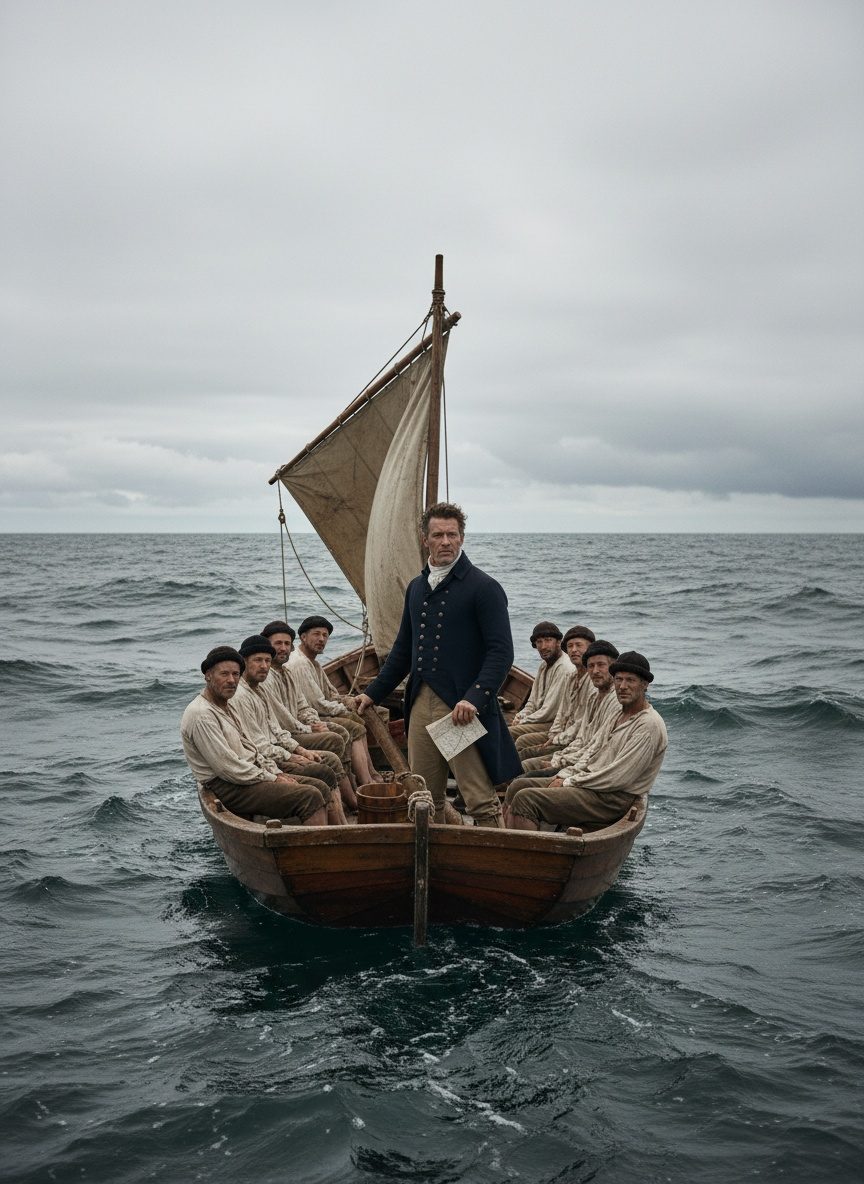
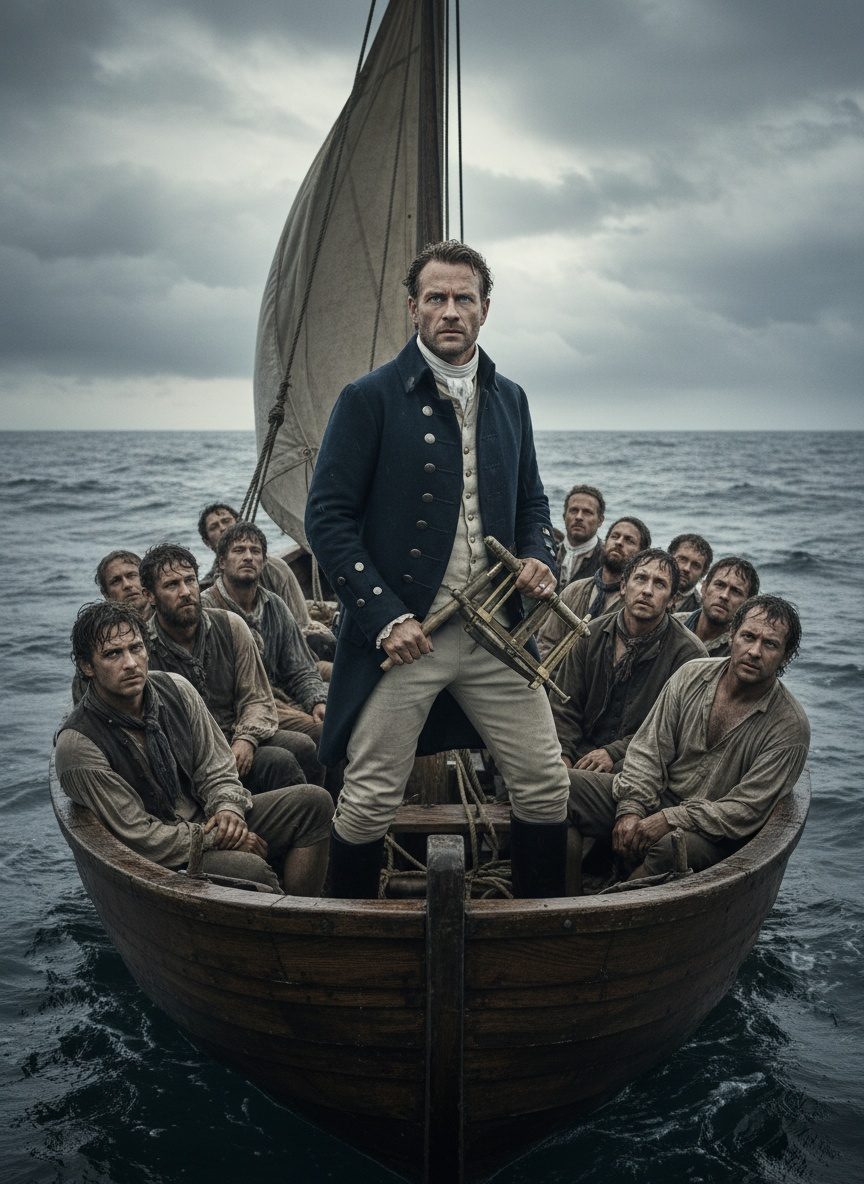
Within minutes, it became clear that HMS Birkenhead was doomed. The ship's three lifeboats could accommodate perhaps 180 people—but there were over 600 souls aboard. Captain Salmond and his crew worked frantically to launch the boats, but one was already smashed, and another was lowered incorrectly and rendered useless. Only one lifeboat remained fully operational.
In the chaos, with the ship's deck tilting at an increasingly severe angle, Lieutenant-Colonel Seton made a decision that would echo through history. Rather than allow his men to rush the lifeboats in a desperate scramble for survival, he ordered them to form ranks. As if they were on parade.
The Formation That Defied Death
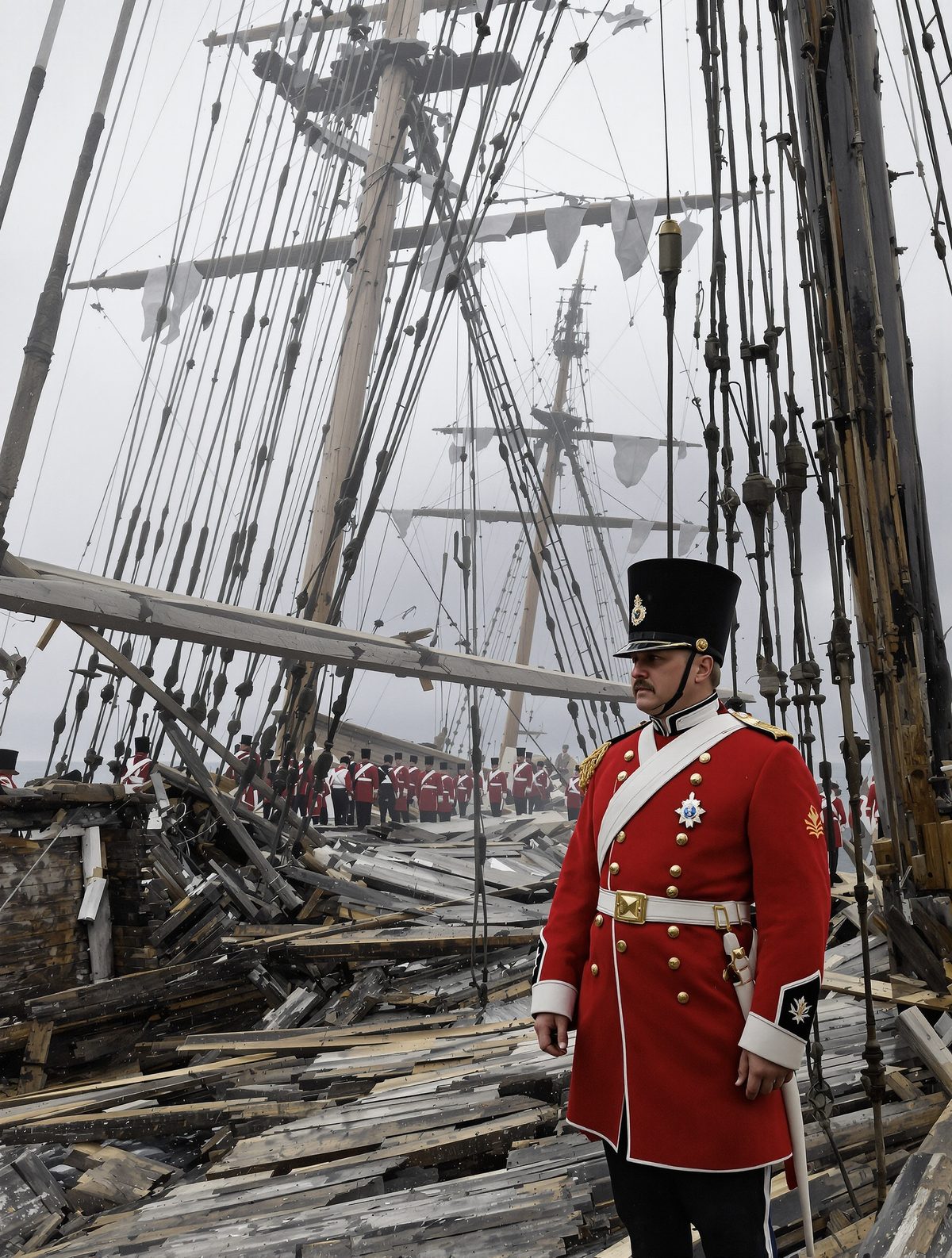
What happened next defies modern comprehension. As the iron deck lurched beneath their feet and the ship's death throes grew more violent, 438 British soldiers formed perfect lines. They stood at attention—backs straight, eyes forward, rifles at their sides—as women and children were carefully loaded into the remaining lifeboats.
The scene was surreal: grown men, trained killers who had faced enemy fire across continents, standing motionless as certain death approached. Some were barefoot, having been roused from sleep. Others had grabbed their uniforms but stood without boots. Yet every man held his position.
Captain Salmond shouted across the tilting deck, urging the soldiers to save themselves. "Every man for himself!" he called. But Seton's voice rang out above the chaos: "No! Stand fast!" The colonel understood what many others realized in that moment—if nearly 440 desperate men rushed the lifeboats, everyone would die. Women, children, sailors, and soldiers alike would perish in the freezing waters.
The discipline held. Not one soldier broke ranks. Not one man made a move toward the boats.
The Sea Claims Its Own
Twenty minutes after the collision, HMS Birkenhead's back broke with a sound like thunder. The stern section, weighted down by the massive paddle engines, separated and plunged into the depths, taking most of the soldiers with it. Those who remained found themselves clinging to the floating bow section, which stayed afloat for a few more precious minutes before it too surrendered to the sea.
Some men managed to swim toward shore, two miles away across shark-infested waters. Others clung to debris and wreckage. But the vast majority simply vanished beneath the waves, their perfect formation maintained until the very end.
Of the 643 people aboard HMS Birkenhead, only 193 survived. Every single woman and child was saved—a survival rate of 100 percent among the most vulnerable passengers. This was no accident; it was the direct result of military discipline maintained in the face of certain death.
Birth of an Immortal Code
News of the Birkenhead's fate reached Britain months later, but when it did, the nation was stunned. The image of soldiers standing at attention as their ship sank captured the Victorian imagination and embodied everything the Empire wanted to believe about itself—duty, sacrifice, and honor above self-preservation.
The disaster gave birth to the "Birkenhead Drill," the maritime protocol of "women and children first" that became an unwritten law of the sea. This wasn't merely a British invention—it became an international standard, referenced in maritime law and practiced (with varying degrees of success) during disasters from the Titanic to modern ferry accidents.
Rudyard Kipling immortalized the soldiers' sacrifice in his poem "Soldier an' Sailor Too," writing of men who "took their chance of what might come after the next bell rang." The story spread across the Empire and beyond, becoming a touchstone for military honor and civilian chivalry alike.
The Legend That Lives On
Today, HMS Birkenhead lies broken on the seabed off Gansbaai, a popular dive site where visitors can still see the ship's massive paddle engines and scattered artifacts. The nearby town has embraced its connection to the disaster, with memorials and museums telling the story of that extraordinary night.
But the real monument to HMS Birkenhead isn't made of stone or bronze—it's woven into the fabric of how we think about crisis and sacrifice. Every time a ship's captain announces "women and children first" during an emergency, every time we expect leaders to be the last to leave a sinking ship, we're invoking the memory of those 438 soldiers who chose formation over flight.
In our modern age of individualism and self-preservation, the Birkenhead story seems almost mythical. Could such discipline exist today? Would soldiers—or anyone—maintain formation while facing certain death? Perhaps the more important question is whether we've lost something essential in our rush toward survival at any cost, or whether we've evolved beyond the need for such tragic displays of duty.
The soldiers of HMS Birkenhead left us more than a maritime code—they left us a mirror in which to examine our own values. In their final moments, standing straight as the ocean claimed them, they asked a question that echoes across the centuries: What matters more than life itself?