The gasps echoed through the cramped shop on Whitechapel Road as another curious Victorian peered through the grimy window, recoiled in horror, then hurriedly pressed their penny into the showman's palm. Inside the makeshift exhibition space, a figure sat hunched in the shadows—a man so severely disfigured that even hardened East London crowds struggled to look upon him. They called him the Elephant Man, a living nightmare made flesh, a creature to be gawked at and quickly forgotten.
But on a crisp November day in 1884, a different kind of observer stepped through that doorway. Frederick Treves, a rising surgeon at the London Hospital, had come not as a thrill-seeker but as a man of science. What he found in that squalid room would change two lives forever—and challenge Victorian society's very notion of what it meant to be human.
The Monster Behind the Curtain
Joseph Carey Merrick—though he would be mistakenly called John for much of his adult life—was twenty-four years old when Treves first encountered him. The surgeon later described the meeting with clinical precision, yet his words betrayed a deeper shock: "The most disgusting specimen of humanity that I have ever seen."
Merrick's condition, later identified as a combination of neurofibromatosis and Proteus syndrome, had transformed his body into something that seemed to defy nature itself. His skull measured an extraordinary 36 inches in circumference—nearly twice the size of an average man's head. Bony protrusions jutted from his forehead like primitive horns, while his right arm had swollen to such proportions that his hand resembled a paddle more than human anatomy. Most disturbing of all was the loose, cauliflower-like skin that hung from his back and torso in pendulous folds, giving him the elephant-like appearance that became his trademark.
Read next: The Day a Surgeon's Son Chose Death Over Silence
Yet it was Merrick's left arm—perfectly formed and delicate—that Treves noticed with particular fascination. Here was proof that beneath the grotesque exterior lived a man, not a monster. When Merrick extended that normal hand in greeting, the gesture carried a dignity that no amount of physical deformity could diminish.
The showman, Tom Norman, had been profiting handsomely from Merrick's misfortune. For a penny, visitors could stare. For tuppence, they could hear the story—a fabricated tale of a pregnant woman frightened by a circus elephant, resulting in her child's horrific condition. It was Victorian pseudoscience at its most exploitative, but it drew the crowds that kept Norman's pockets jingling with coins.
From Freak Show to Operating Theatre
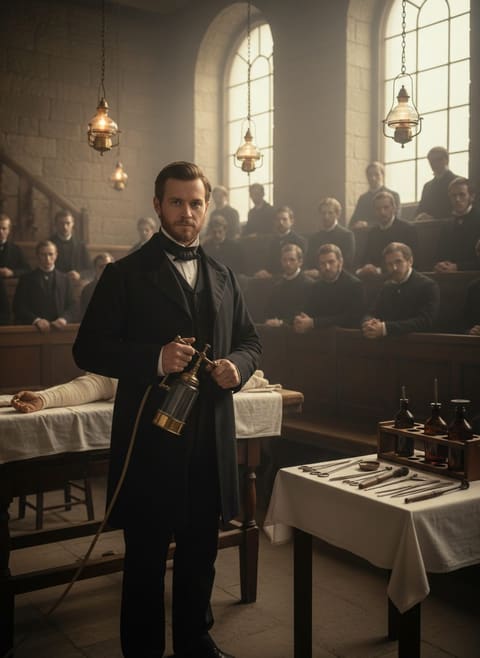
Treves paid his fee and arranged for Merrick to visit the London Hospital for examination. What happened during that medical consultation revealed layers of tragedy that no showman's patter had ever conveyed. Merrick could barely speak—his facial deformities made clear speech nearly impossible, reducing his words to muffled approximations that required patience to decipher.
More heartbreaking still was Merrick's assumption that he was there to be displayed once more. He began the laborious process of removing his clothes, preparing for another exhibition of his malformed body. When Treves gently explained that this was a medical examination, not a show, Merrick's confusion was palpable. Kindness, it seemed, was a language he had almost forgotten how to understand.
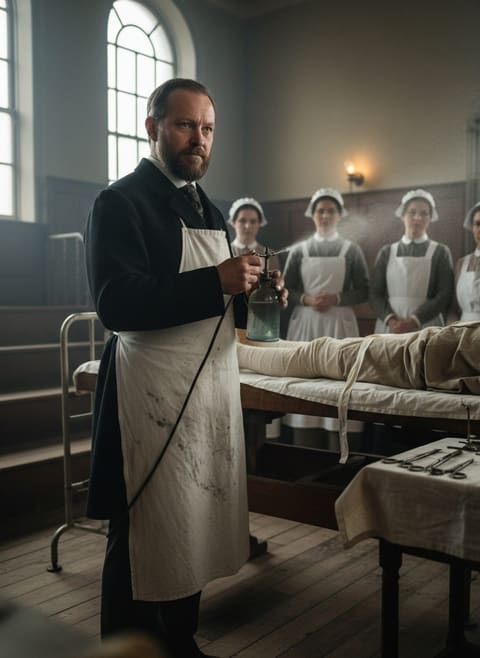
The surgeon took careful measurements and photographs—clinical documentation that would prove invaluable to medical science. But even as he worked, Treves found himself increasingly disturbed by the man's circumstances. After the examination, Merrick shuffled back to his exhibition space, and Treves returned to his comfortable world of Victorian respectability. Neither man imagined they would meet again under vastly different circumstances.
That reunion came two years later, in August 1886, under conditions that would horrify even modern sensibilities. Police officers arrived at Liverpool Street Station carrying what appeared to be a bundle of rags—but the bundle was breathing. Inside the filthy coverings lay Joseph Merrick, abandoned, penniless, and near death.
The Rescue on Platform Two
The story of how Merrick came to be discarded like refuse on a railway platform reads like a Dickensian nightmare. After the Whitechapel freak show was shut down by increasingly restrictive public decency laws, his managers had taken him to Belgium, promising better prospects. Instead, they robbed him of his life savings—£50, a considerable sum he had painstakingly accumulated—and abandoned him in Brussels.
Somehow, Merrick had managed to make his way back across the Channel. The ferry crossing alone must have been an ordeal of stares, screams, and rejections. By the time he reached London, he was carrying only one possession that mattered: a card bearing Frederick Treves' name and the address of London Hospital.
The police officers who found him were initially at a loss. Here was a man so disfigured that passengers fled in terror, yet he seemed to be trying to communicate something important. When they finally deciphered his mumbled words and examined the crumpled card he clutched, they understood: he was asking for help, and he knew exactly who might provide it.
Treves responded immediately to the police summons. Years later, he would write that he barely recognized the broken figure on the stretcher. The man who had once been displayed as a marvel was now reduced to a dying outcast, his condition deteriorated by neglect and starvation. In that moment, the surgeon made a decision that would challenge hospital policy, Victorian social norms, and his own professional standing: Joseph Merrick would never be homeless again.
Room 23: A Sanctuary in Whitechapel
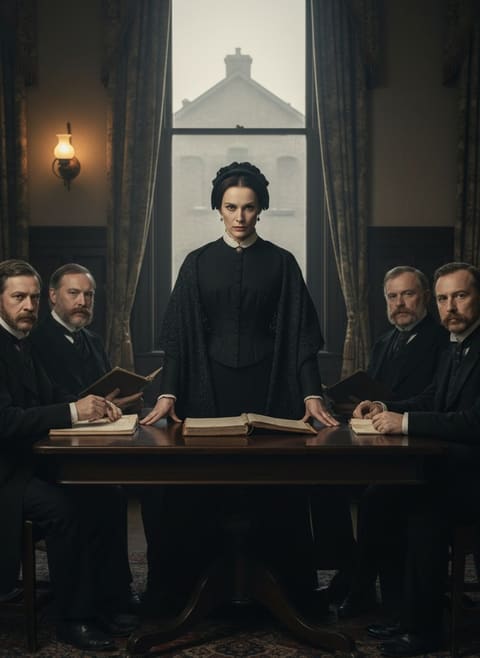
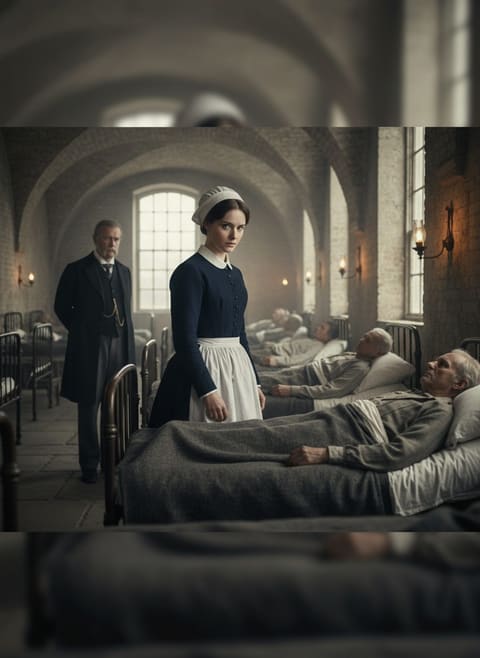
The London Hospital's board of governors faced an unprecedented dilemma. Their institution was a place of healing, not a permanent residence for incurable cases. Merrick's condition could not be treated, only managed. Moreover, his appearance was so disturbing that other patients complained. Some visitors fainted upon accidentally encountering him in the corridors.
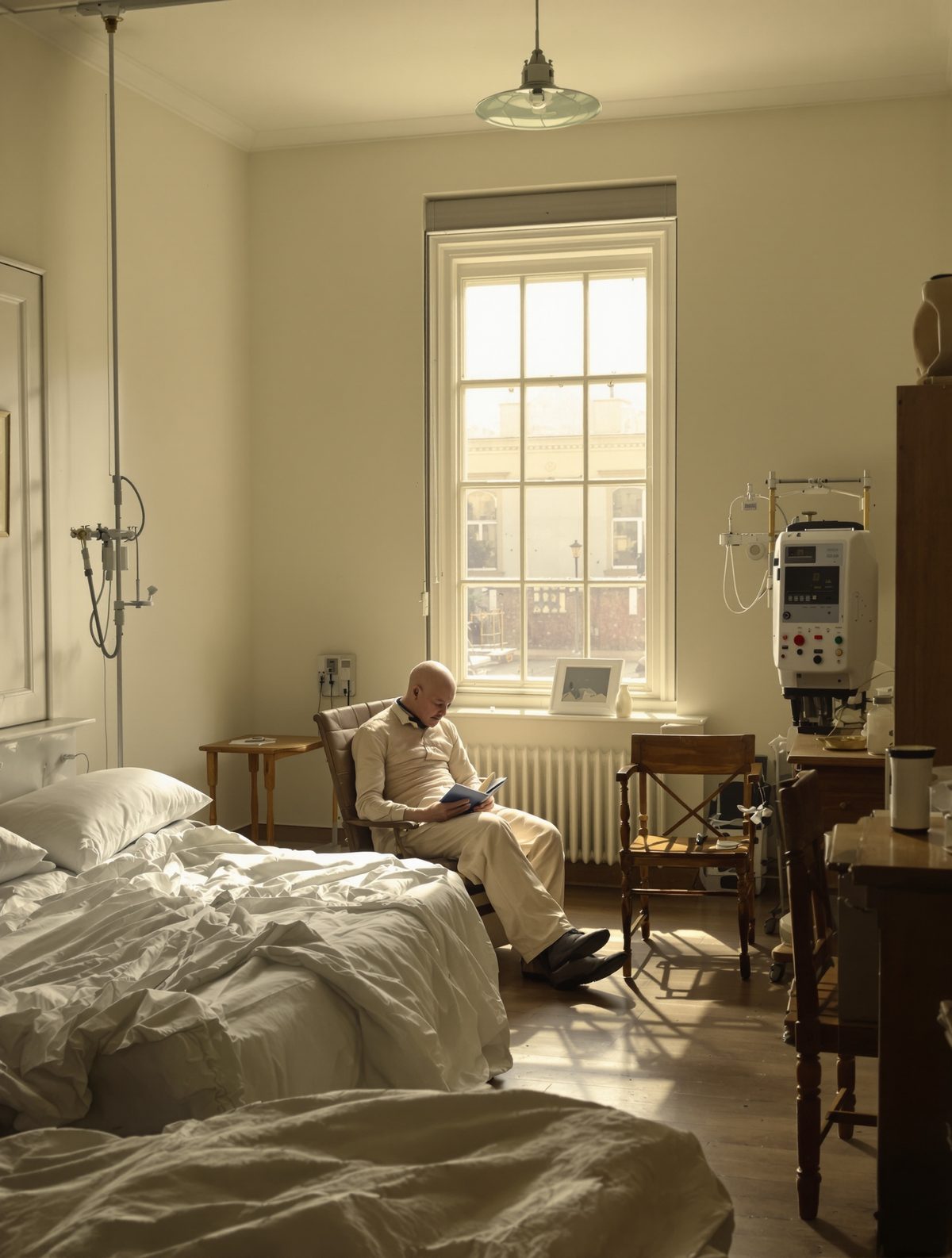
Yet Treves persisted, and gradually, support built for an extraordinary arrangement. Room 23 in the hospital's basement became Joseph Merrick's permanent home—a comfortable suite that included a bedroom, sitting room, and private bathroom. For the first time in his adult life, Merrick had privacy, dignity, and safety.
The transformation that followed astonished everyone who witnessed it. Away from the gawking crowds and exploitative managers, Merrick's true personality emerged like a butterfly from its chrysalis. He revealed himself to be not only intelligent but cultured, with a love of literature that had survived years of degradation. He read voraciously, particularly enjoying romantic novels and poetry that spoke of beauty and love—concepts that life had seemed to deny him.
Even more remarkably, Merrick began to receive visitors of the highest social standing. Word of the "Elephant Man" had spread through London society, but now the story carried a different message. This was no longer a freak to be gawked at, but a man of gentle refinement who had triumphed over unimaginable adversity.
Read next: The Day a Chimney Sweep's Son Shamed a Whole Parliament
The Lady and the Beast
Perhaps no visit symbolized Merrick's transformation more powerfully than that of Alexandra, Princess of Wales, in May 1887. The future Queen consort arrived at Room 23 with gifts and kind words, treating Merrick not as a medical curiosity but as a gentleman worthy of royal attention.
For Merrick, who had spent years being pelted with stones and jeered at by street crowds, the Princess's gracious manner must have seemed like something from a fairy tale. She presented him with a signed photograph and engaged him in polite conversation, demonstrating that beneath his monstrous exterior lived a soul deserving of respect and compassion.
Other notable visitors followed: actresses from the London stage, prominent socialites, even fellow patients who overcame their initial horror to discover Merrick's gentle nature. He began crafting elaborate cardboard models of churches and cathedrals—works of surprising artistry created with his one normal hand. These creations, intricate and beautiful, seemed to represent everything he might have been in a different body, a different life.
The man who had once been exhibited as a monster was becoming something far more powerful: a symbol of human dignity transcending physical limitation. Letters arrived from well-wishers across Britain. Donations poured in to support his care. The Elephant Man had become, paradoxically, one of London's most celebrated residents.
The Final Sleep
On April 11, 1890, Joseph Merrick died peacefully in his sleep at London Hospital. He was just twenty-seven years old. The cause of death was officially listed as asphyxia—his massive skull had finally become too heavy for his neck to support while lying down. Throughout his years at the hospital, he had slept sitting upright to avoid this very fate.
Treves theorized that Merrick had finally decided to experience what it felt like to sleep like a normal person, knowing the risk but choosing human normalcy over safety. If true, it was a final, poignant assertion of his humanity—a decision to die as a man rather than live as a curiosity.
The story of Joseph Merrick challenges every assumption about worth, dignity, and what makes us human. In an age obsessed with physical perfection and genetic optimization, his tale reminds us that the measure of a person lies not in their appearance but in their capacity for grace under unimaginable circumstances.
Frederick Treves gave Merrick a room, but Merrick gave society something far more valuable: proof that kindness can transform monsters into men, and that sometimes the greatest freaks are not those who look different, but those who refuse to look beyond the surface. In Room 23 of a Victorian hospital, dignity didn't just find a home—it taught the world what it truly means to be human.