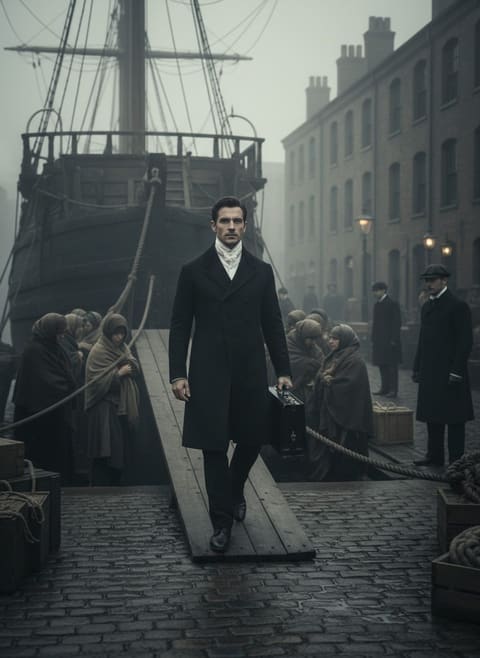
The gas lamps flickered against the grimy windows of Liverpool Street Station on a cold November evening in 1886. Among the crowd of top-hatted gentlemen and bustled ladies, a figure huddled in the shadows—so grotesquely deformed that even the hardened Victorian public recoiled in horror. Joseph Carey Merrick had just escaped from a freak show in Belgium, carrying nothing but a crumpled card with the name of a London doctor who had shown him a fleeting moment of kindness two years earlier. He was about to knock on the door that would transform the final chapter of his tragic life into something approaching a miracle.
The Human Exhibition
Joseph Merrick's journey to that railway station had been paved with unimaginable suffering. Born in Leicester in 1862, he had begun developing severe deformities around age five—his skull enlarging dramatically, his skin becoming thick and lumpy, his right arm growing to enormous proportions while his left remained normal. In an era when physical difference was seen as divine punishment or moral failing, Joseph became a living nightmare for his working-class family.
By 1884, with his mother dead and his stepmother unable to bear the sight of him, Joseph faced a choice that no human being should ever confront: the workhouse or the freak show. He chose the latter, believing that exhibiting himself as "The Elephant Man" might offer some semblance of dignity—at least he would be earning his keep rather than accepting charity.
What few people knew then, and fewer know now, is that Joseph was an intelligent, articulate man who read voraciously and possessed a gentle, sensitive nature. Behind the shocking exterior that made grown men faint and children scream, lived a soul that quoted scripture, crafted delicate cardboard models of churches, and dreamed of simple human connection.
Read next: The Day a Cornish Surgeon Walked Into a Condemned Cell
An Unlikely Savior in Whitechapel
Dr. Frederick Treves was not your typical Victorian physician. At just 33, he had already established himself as one of London's most innovative surgeons at the London Hospital in Whitechapel—the same neighborhood where Jack the Ripper would terrorize the streets just two years later. In November 1884, Treves had visited a freak show across from his hospital and encountered Joseph for the first time.
What struck Treves wasn't just Joseph's extraordinary deformities—though they were unlike anything in medical literature—but his obvious intelligence and gentle manner. Treves paid to bring Joseph to the hospital for examination, treating him not as a specimen but as a patient deserving of respect. He gave Joseph his business card, a gesture that seemed insignificant at the time but would prove to be a lifeline.
When Joseph appeared at Liverpool Street Station two years later, having been robbed and abandoned by his Belgian exhibition managers, that card was his only hope. The police, unable to understand his severely impaired speech, nearly sent him to an asylum before discovering Treves' card sewn into his clothing.
Room 118: A Palace of Dignity
The London Hospital's board faced an unprecedented dilemma when Treves requested permanent accommodation for Joseph in 1886. Hospitals weren't meant to be homes, and resources were desperately needed for acute cases. But something extraordinary happened—word of Joseph's plight spread, and donations began pouring in from across London society. Even Princess Alexandra, future Queen of England, contributed to his care.
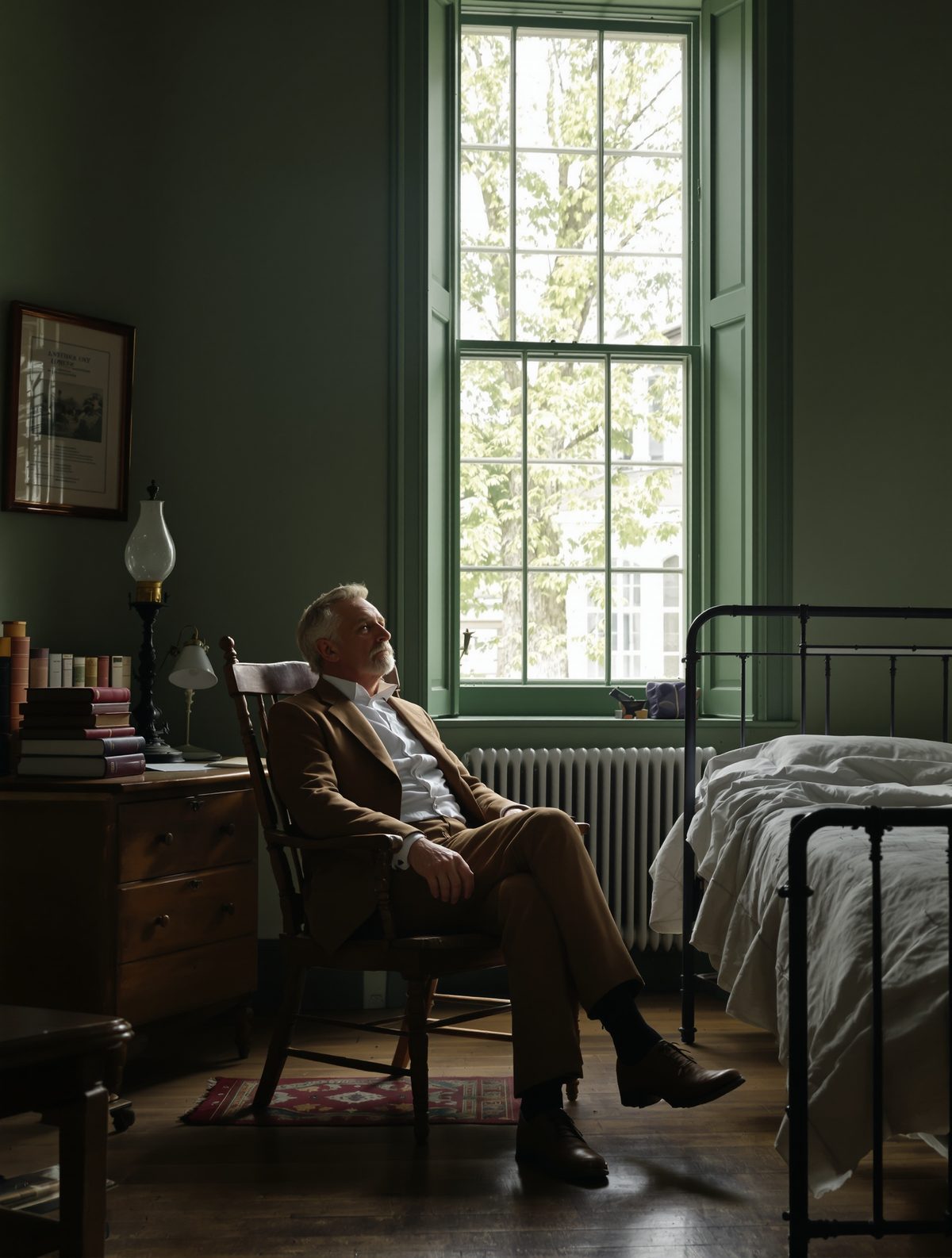
Room 118 became Joseph's sanctuary. Located on the hospital's first floor with windows overlooking a small garden, it was modest by any standard—just a bed, washstand, table, and chair. But for a man who had spent years sleeping in railway carriages and dingy boarding houses, it was a palace. Treves ensured the room was fitted with books, writing materials, and a basket-making kit that allowed Joseph to work with his functional left hand.
What transformed this simple room into something magical wasn't its furnishings but its atmosphere of acceptance. For the first time in his adult life, Joseph could exist without being stared at, without being expected to perform, without apologizing for his very existence. Hospital staff, initially terrified, gradually came to know him as a gentle soul who never complained and always expressed gratitude for the smallest kindnesses.
The Gentleman Caller
Perhaps the most remarkable aspect of Joseph's final years was his emergence into London society—not as an exhibition, but as a person worthy of friendship. Treves introduced him to a carefully selected circle of visitors, including actress Madge Kendal, who became a devoted friend and regular correspondent.
These visits revealed Joseph's true nature. He discussed literature with enthusiasm, showed visitors his intricate cardboard models of St. Philip's Cathedral (crafted entirely from memory), and demonstrated a wit that surprised even Treves. Lady visitors were particularly taken with his gentle manner and complete lack of bitterness despite his suffering.
One visitor noted that Joseph never spoke of his deformities or his past hardships unless directly asked, preferring instead to discuss books, current events, or his latest craft projects. He had taught himself to write with his left hand, producing correspondence that was both eloquent and touching in its simple gratitude for human kindness.
Read next: The Day a Vicar's Son Walked Into a Debtor's Cell and Freed Them All
The Dream of Normality
Joseph harbored one great wish during his hospital years—to sleep lying down like other people. His massive skull made this impossible; he had to sleep sitting up, his head resting on his knees. Treves later theorized that Joseph's death on April 11, 1890, resulted from his attempt to sleep normally, the weight of his head dislocating his neck.
But in those final years, Joseph experienced something far more valuable than normal sleep—he experienced normal human relationships. He attended theater performances from a private box (arranged so other patrons wouldn't be disturbed), took carriage rides through the countryside, and even spent a week at a countryside cottage, his only taste of life outside institutional walls since childhood.
The staff found him on that April morning, positioned as if he had finally achieved his dream of sleeping like everyone else. On his bedside table lay an unfinished letter expressing gratitude for yet another small kindness he had received.
Legacy of an Extraordinary Ordinary Life
Joseph Merrick's story resonates today not because of his deformities—now believed to have been caused by Proteus syndrome—but because of what his final years represent. In an age when difference was stigmatized and the disabled were hidden away, Dr. Treves and the London Hospital community created something revolutionary: a space where a man's humanity mattered more than his appearance.
The £250 raised for Joseph's care (equivalent to about £30,000 today) came from people who never expected to meet him, who simply believed that every person deserved dignity and kindness. Their generosity created a ripple effect—Joseph's story influenced the development of more humane treatment for people with severe disabilities and challenged Victorian society's assumptions about the relationship between appearance and worth.
In our current age of social media scrutiny and appearance-obsessed culture, Joseph Merrick's final chapter offers a profound reminder: true dignity isn't about conforming to society's standards of normality, but about recognizing the fundamental humanity that exists in every person. Room 118 may have been small, but the compassion it contained changed not just one man's life—it challenged an entire society to see beyond the surface and remember what it truly means to be human.