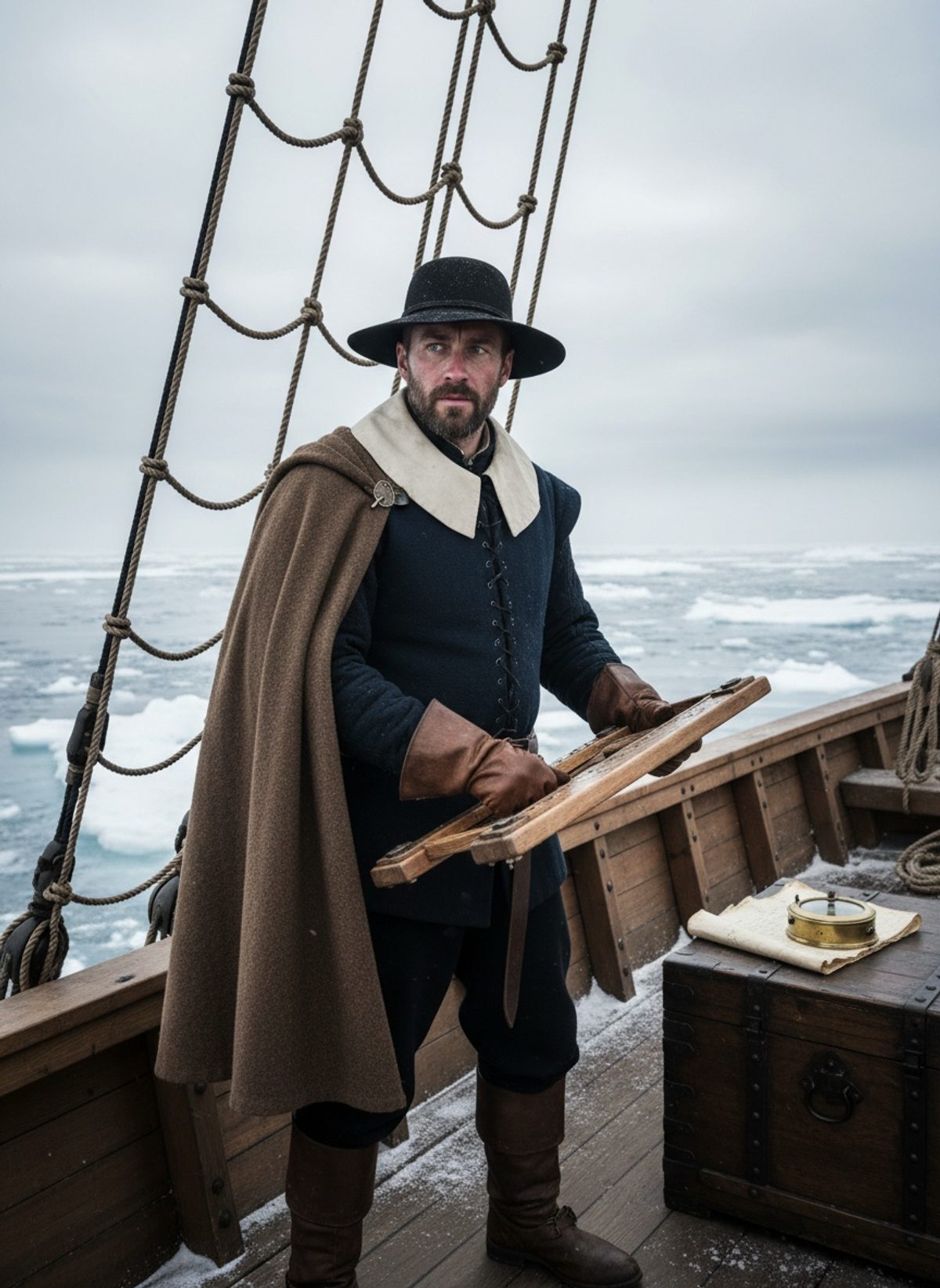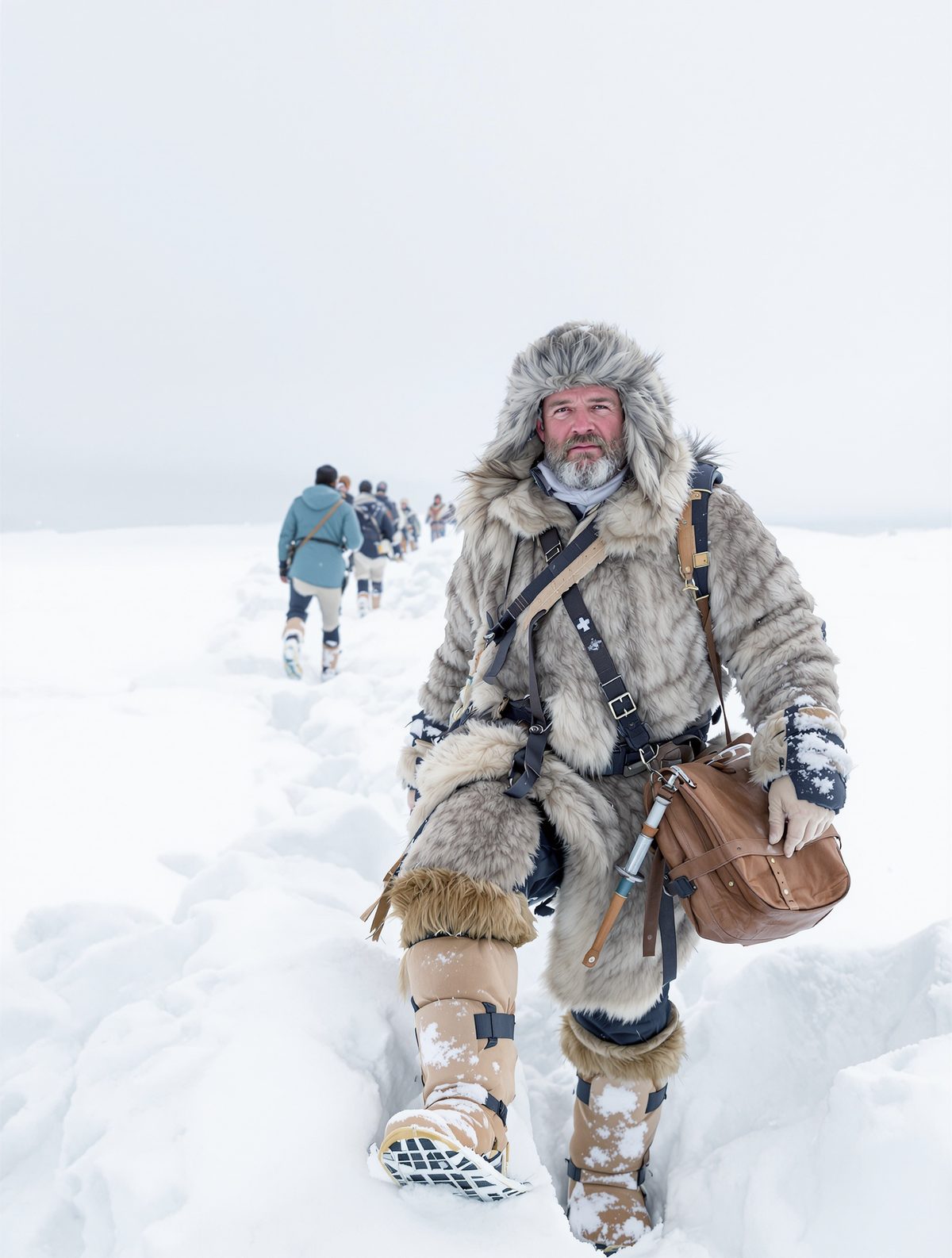
On April 13, 1854, a solitary figure stepped onto the frozen wasteland of the Canadian Arctic. Dr. John Rae carried no fanfare, no naval commission, and certainly no fleet of ships. Just snowshoes on his feet, a pouch of dried meat at his side, and the kind of quiet confidence that comes from learning survival from the Inuit themselves. While the entire British Empire was throwing expeditions worth millions at finding the lost Franklin expedition, this Scottish surgeon was about to accomplish what they could not—by walking 1,100 miles through hell itself.
The Gentleman Who Learned from "Savages"
John Rae was everything the Victorian establishment was not. Born in Orkney in 1813, he'd spent decades working for the Hudson's Bay Company, treating frostbite and broken bones in trading posts that existed at the very edge of the known world. But Rae had done something that scandalized his contemporaries: he'd abandoned "civilized" methods of Arctic travel.
While British naval expeditions dragged heavy sledges loaded with silver cutlery, leather-bound books, and enough tinned food to feed a small army, Rae had quietly learned a different way. He studied Inuit techniques—how to build snow houses in minutes, how to hunt seals through breathing holes, how to read weather patterns in cloud formations. Most shocking of all, he wore Inuit clothing made from animal skins instead of wool uniforms that turned to ice sheets in sub-zero temperatures.
The British Admiralty considered such methods beneath a gentleman. Rae didn't care. He'd seen too many expeditions fail because they refused to adapt. When Franklin's expedition vanished in 1845 with 129 men and two state-of-the-art ships, Rae knew that finding them would require more than British pride—it would require becoming something the Arctic couldn't kill.
Read next: The Day a Devon Captain Mapped the World's Last Shore
Into the White Silence
Rae's 1854 journey began at Repulse Bay, a desolate Hudson Bay Company outpost where temperatures regularly dropped to -40°F. His mission was ostensibly to complete a geographical survey of Boothia Peninsula, but everyone knew his real purpose: find Franklin. Dozens of rescue expeditions had already failed. Ships had been crushed by ice, men had died of scurvy, and the Admiralty was growing desperate.
What made Rae's journey extraordinary wasn't just the distance—though 1,100 miles on foot through Arctic terrain remains staggering even today. It was how he traveled. While naval expeditions required teams of 20-30 men hauling supplies, Rae traveled alone for much of the journey, carrying perhaps 20 pounds of dried meat and tea. He would hunt as he went, building igloos each night with the practiced efficiency of an Inuit hunter.
The landscape he crossed would challenge a modern expedition with GPS and satellite phones. In April 1854, Rae faced endless white expanses where a wrong turn meant death, where sudden blizzards could reduce visibility to mere feet, and where the ice beneath his snowshoes might crack open to reveal black water that would kill him in minutes.
The Testimony of Pelly Bay
On April 21, near Pelly Bay, Rae encountered an Inuit hunter wearing a gold band around his cap. The conversation that followed would solve the mystery that had consumed the British Empire for nearly a decade. Speaking in the Inuit language he'd mastered during his years in the north, Rae learned that the man had obtained the gold from other Inuit who had met white men—starving white men—four winters earlier.
The story that emerged was both tragic and damning. Franklin's men had abandoned their ice-trapped ships and attempted to walk south toward a Hudson's Bay Company post. They had been spotted by Inuit families, their faces black with frostbite, hauling sledges loaded with useless items—silver plate, heavy books, dress uniforms. The Inuit had tried to help them hunt and fish, but the British sailors refused to learn. One by one, they had collapsed and died on the ice.
But Rae gathered more than stories. The Inuit possessed a collection of items that served as physical proof: silver forks and spoons bearing Franklin's family crest, a gold watch, naval buttons, and most conclusively, Franklin's own Order of Merit. For a sum that would barely buy dinner in London—some knives and tools—Rae purchased artifacts that would finally close the book on Britain's greatest maritime mystery.
The Unbearable Truth
The Inuit told Rae something else, something that would destroy his reputation among Victorian society: Franklin's men had resorted to cannibalism in their final desperate weeks. Bodies found by hunting parties showed evidence of having been butchered for meat. Kettles contained human remains. The cream of the Royal Navy had died not as heroes, but as starving, desperate men who had abandoned every principle of Christian civilization.
When Rae reported these findings to the Admiralty in September 1854, the reaction was explosive. Franklin's widow, Lady Jane Franklin, denounced Rae publicly. Charles Dickens wrote articles attacking his credibility, arguing that British naval officers would never stoop to such depths. How dare this colonial doctor, this man who consorted with "savages," besmirch the honor of the Royal Navy?
The establishment's fury wasn't really about cannibalism—it was about method. Rae had succeeded where massive, expensive expeditions had failed, and he'd done it by rejecting everything British polar exploration represented. He'd proven that survival in the Arctic required humility, adaptation, and respect for indigenous knowledge. For a society built on the premise of civilizational superiority, this was intolerable.
The Price of Truth
Rae received the £10,000 reward promised for discovering Franklin's fate, but the money came with a social death sentence. He was quietly marginalized by the exploration establishment, his methods dismissed as ungentlemanly. Later expeditions would confirm every detail of his account—including the cannibalism—but by then, Rae had been written out of the official story.
The irony is devastating. While Franklin became a martyred hero with monuments across Britain, Rae—who had actually mastered Arctic survival and solved the mystery through skill rather than luck—was forgotten. Streets were named after Franklin; Rae got a small plaque in his hometown, installed more than a century after his death.
Modern archaeology has vindicated Rae completely. Recent discoveries of Franklin's ships, HMS Erebus and HMS Terror, confirmed his geographical accuracy down to remarkable detail. Analysis of crew remains has proven the cannibalism accounts. Even Rae's assessment of why Franklin's expedition failed—their refusal to adopt Inuit survival techniques—is now accepted as the definitive explanation.
The Ghost of Arctic Arrogance
John Rae's 1,100-mile walk through Arctic hell reveals something profound about how we approach the impossible. In our age of climate change and global challenges, Rae's story resonates with uncomfortable relevance. He succeeded because he abandoned the arrogance of his own culture and learned from people his society dismissed as primitive. He survived because he adapted rather than imposed.
The British Empire spent fortunes and sacrificed dozens of lives trying to force their methods on an environment that demanded humility. One Scottish doctor succeeded by listening to the people who actually understood that environment. Today, as we face challenges that dwarf even Arctic exploration, perhaps it's worth remembering that the greatest discoveries often come not from those with the biggest budgets or the loudest voices, but from those humble enough to learn from wisdom we've been taught to ignore.
Somewhere in the Canadian Arctic, the wind still howls across the route John Rae walked alone in 1854. It carries with it the echo of a truth Victorian Britain couldn't bear to hear: that survival sometimes requires abandoning everything you thought you knew about who you are.