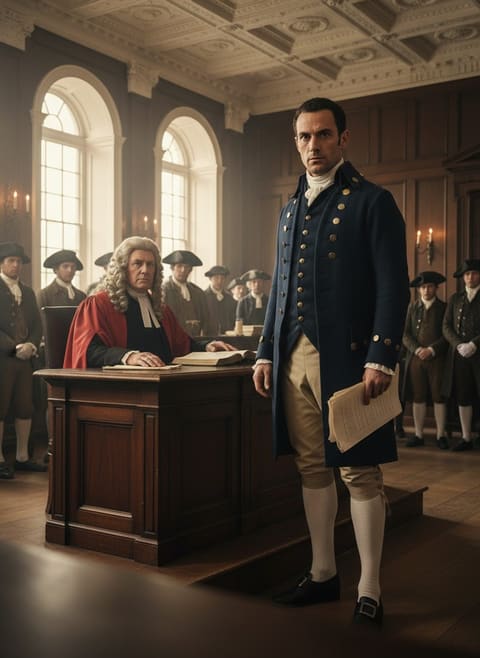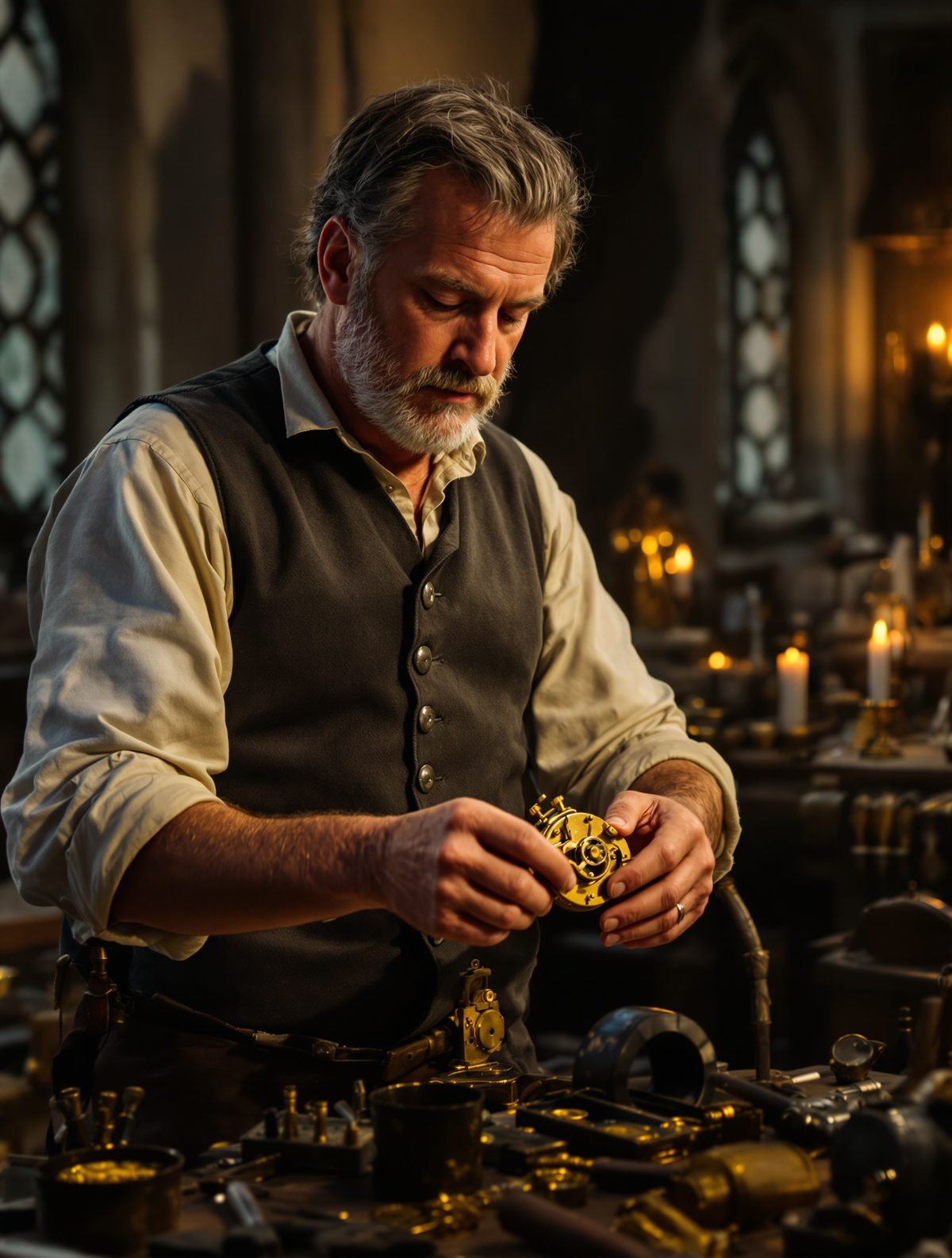
In the grimy, gas-lit streets of Georgian London, where pickpockets ruled the shadows and thieves could slip through a door faster than you could say "Bob's your uncle," one man dared to make the boldest claim in the history of security. Joseph Bramah, a Yorkshire blacksmith turned inventor, hung a peculiar-looking lock in his shop window at 124 Piccadilly in 1784, alongside a painted challenge that would taunt the criminal underworld for the next 67 years: "The artist who can make an instrument that will pick or open this lock shall receive 200 guineas the moment it is produced."
Two hundred guineas wasn't pocket change—it was roughly equivalent to £20,000 in today's money, enough to buy a decent house in Georgian London. Yet there it hung, day after day, year after year, as lock-pickers, burglars, and curious gentlemen alike stared at it through the shop window, their fingers itching to try their luck against what would become known as the most famous unpickable lock in history.
The Blacksmith Who Revolutionized Security
Joseph Bramah wasn't born to be a locksmith. The son of a Yorkshire farmer, he might have spent his life tending fields if not for a leg injury that forced him to abandon agricultural work. Instead, he apprenticed as a carpenter and cabinetmaker, eventually making his way to London in the 1770s. But it was a simple toilet that changed his life—and the course of security history.
Bramah's first patent, granted in 1778, was for an improved water closet design. Yes, the man who would create the world's most secure lock started by revolutionizing the loo. But his mechanical mind was already turning toward more complex challenges. The lock-making trade in Georgian England was dominated by craftsmen who relied on time-honored methods that hadn't changed much since medieval times. Their products were little match for the sophisticated criminal networks that plagued London's streets.
Read next: The Day a Black Sailor Walked Into Court and Freed Himself
In 1784, Bramah received Patent No. 1320 for his revolutionary lock design. Unlike the simple ward locks and lever mechanisms of his contemporaries, Bramah's lock operated on an entirely new principle. The key was a small, cylindrical affair with notches cut at varying depths along its edge. These notches corresponded to a series of sliding plates inside the lock mechanism, each requiring precise positioning before the lock would turn.
The Challenge That Stopped Traffic
When Bramah hung his challenge lock in the window of his Piccadilly shop, it created quite the sensation. The shop itself was a marvel of Georgian commerce—brass fittings gleaming under oil lamps, the sweet smell of metal polish mixing with coal smoke from the street. But it was the modest iron lock, no bigger than a man's fist, that drew the crowds.
The painted challenge on the window glass was written in bold, confident strokes: "The artist who can make an instrument that will pick or open this lock shall receive 200 guineas the moment it is produced." Below it, Bramah's signature served as his bond. Word spread through London's taverns and coffee houses like wildfire. Here was a locksmith so sure of his work that he was literally paying people to prove him wrong.
Professional lock-picks arrived first—shadowy figures who usually plied their trade in less legal circumstances. They came with their traditional tools: tension wrenches, picks, and rakes that had served them well against conventional locks. They left empty-handed and frustrated. The lock seemed to mock their expertise, its mechanism utterly foreign to anything they'd encountered.
Curious gentlemen scientists and mechanical enthusiasts soon followed. In an age when amateur invention was a gentleman's pursuit, many wealthy Londoners had workshops filled with lathes, files, and measuring instruments. Surely, they reasoned, a careful study of the lock's operation would reveal its secrets. They were wrong.
A Mystery That Consumed Generations
As years turned to decades, the Bramah challenge lock became more than a security device—it became a legend. The lock that had once drawn curious crowds now seemed as permanent a fixture of London as the Tower Bridge or St. Paul's Cathedral. Newspapers occasionally mentioned failed attempts, usually with a tone of amused resignation. The Morning Chronicle noted in 1820 that "Bramah's infamous lock continues to guard its secrets with the tenacity of a miser clutching his gold."
What made the lock so impossibly difficult wasn't just its innovative mechanism, but Bramah's obsessive attention to precision manufacturing. Each internal plate was machined to tolerances that pushed the limits of Georgian-era metalworking. The lock required not just the right key, but a key cut to within thousandths of an inch. Even if someone could deduce the lock's operating principle, creating the tools to defeat it required skills that few possessed.
Professional burglars learned to simply avoid Bramah locks altogether. Why spend hours fighting an unpickable mechanism when there were plenty of conventional locks that could be defeated in minutes? This practical response to Bramah's innovation led to a curious two-tiered security system in Georgian and Victorian London: Bramah locks protected the wealthy and important, while everyone else made do with traditional mechanisms that offered little more than psychological comfort.
The lock's reputation grew international. Visiting dignitaries would often make a pilgrimage to Piccadilly to see the famous unpickable lock. Some accounts suggest that Napoleon himself, during a brief peace period, expressed interest in seeing Bramah's mechanism, though whether the Emperor ever made the journey to London remains historically unclear.
The Great Exhibition and Growing Fame
By the time of the Great Exhibition in 1851, Bramah's company (Joseph had died in 1814, but his sons continued the business) was among the most celebrated manufacturers in Britain. Their locks secured everything from the Bank of England to the private chambers of Queen Victoria. The challenge lock, now 67 years old, had become as much a tourist attraction as a security device.
Visitors to the Crystal Palace could see newer Bramah mechanisms on display, marvels of precision engineering that represented the pinnacle of Victorian mechanical arts. But everyone knew the real test of Bramah's genius still hung in that Piccadilly window, as defiant as ever. The lock had survived the Napoleonic Wars, the industrial revolution, and the dawn of the railway age. Surely nothing could defeat it now.
Read next: The Day a London Clerk Walked Into Court for a Dying Slave
Then came Alfred Charles Hobbs.
The American Who Cracked the Uncrackable
Alfred Hobbs was exactly the sort of person who might have made Joseph Bramah nervous, had the old inventor still been alive. An American locksmith with a talent for publicity and an almost supernatural understanding of mechanical security, Hobbs arrived in London in 1851 with a mission: to prove that American locks were superior to their British counterparts by defeating the most famous British lock of all.
Hobbs had already caused a sensation at the Great Exhibition by picking a supposedly unpickable British detector lock in 25 minutes. But the Bramah lock represented the ultimate prize—67 years of invincibility, a legend that had outlasted kings and queens. On July 23rd, 1851, Hobbs received permission to attempt the lock, with one crucial modification to Bramah's original challenge: he would be allowed to work on it over multiple sessions, rather than having to open it in one sitting.
For 51 hours, spread over sixteen days, Hobbs worked on the lock with tools he had crafted specifically for the task. Crowds gathered each day to watch the American tinker with the mechanism that had frustrated thousands before him. Finally, on August 23rd, 1851, the lock opened with a click that echoed around the world. The age of Bramah's invincible lock had ended.
Legacy of the Unpickable
Hobbs received his 200 guineas, adjusted for inflation and the improved terms, though by then the money was largely symbolic. He had achieved something far more valuable: he had proven that no lock, no matter how ingenious, could remain secure forever. The principle that would later be enshrined in modern security thinking—that security is a process, not a product—was born in that moment when Bramah's lock finally yielded.
Yet perhaps the most remarkable aspect of Bramah's achievement wasn't that his lock was eventually defeated, but that it took 67 years for someone to do it. In our modern world of rapidly obsolete technology, where security systems are updated monthly and hackers race against patches, the idea of a single mechanism remaining secure for nearly three generations seems almost mythical.
Bramah's lock reminds us that true innovation isn't about creating something that can never be defeated—it's about creating something so far ahead of its time that the world needs decades to catch up. In an age where our digital locks and passwords are cracked in minutes or hours, Joseph Bramah's 67-year challenge stands as a testament to the power of mechanical genius, Yorkshire stubbornness, and the audacity to hang your reputation in a shop window for all the world to test.