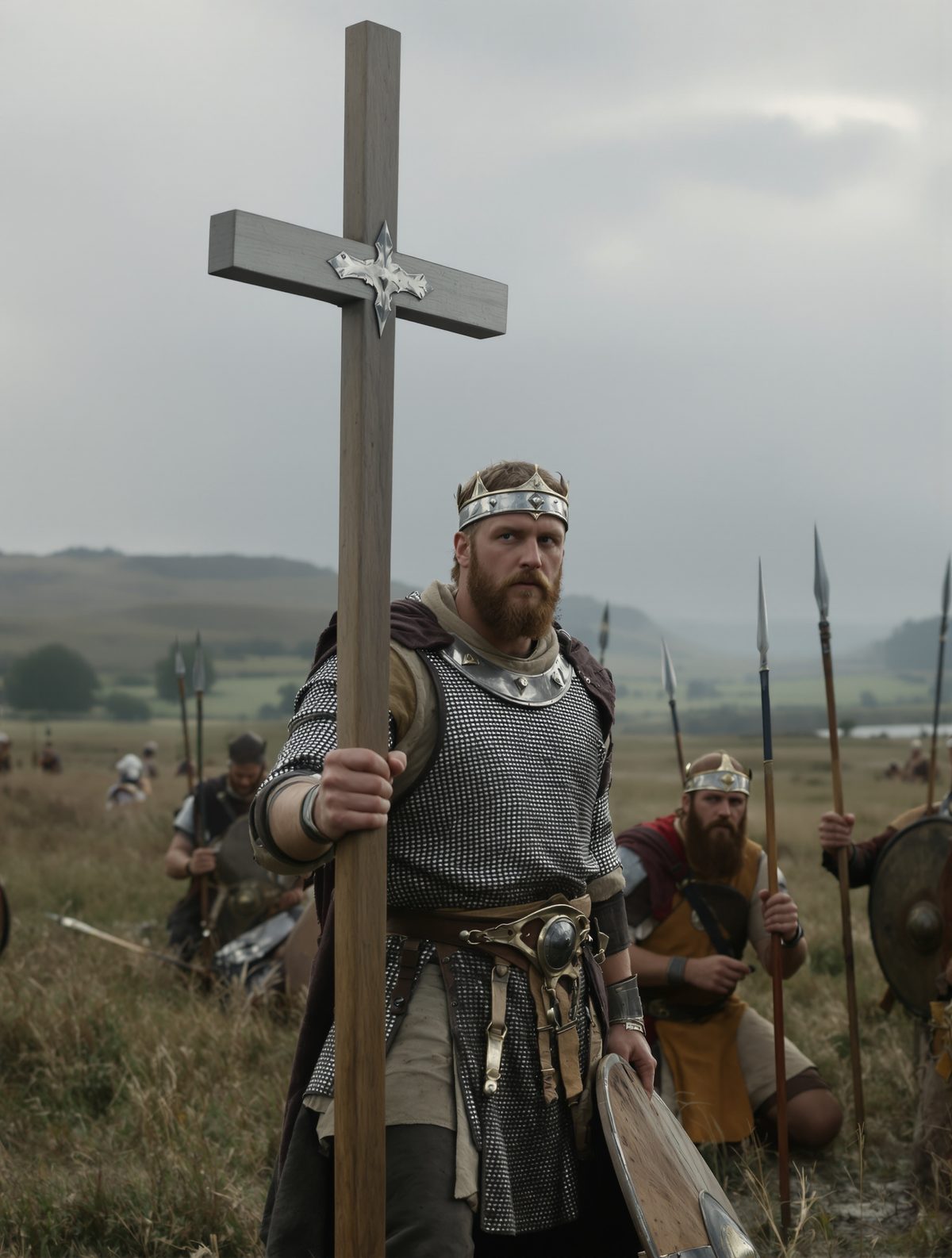
The morning mist clung to the Roman Wall like a shroud as King Oswald of Northumbria knelt in the mud, his royal hands gripping a rough wooden cross. Around him, battle-hardened warriors dropped to their knees—Angles who worshipped Thor, Britons who followed Christ, all united in desperate prayer. It was August 635 AD, and this single moment of faith would echo through English history for the next thousand years.
What happened at Heavenfield that day wasn't just a military victory—it was the birth of Christian England. Yet most people have never heard of the king who literally planted the cross that would convert a nation, or the extraordinary circumstances that led to this pivotal moment in British history.
The Exile's Return: A King Forged in Faith
Oswald shouldn't have been there at all. For eighteen years, he had been a prince without a kingdom, exiled to the remote Scottish island of Iona after his father's death in 616 AD. While his homeland of Northumbria fell under the brutal rule of the Welsh king Cadwallon ap Cadfan, young Oswald grew to manhood among the Irish monks of St. Columba.
These weren't the gentle, book-copying monks of popular imagination. The Celtic Christians of Iona were warriors of faith—men who had sailed through North Sea storms to convert pagans, who fasted until they collapsed, who saw miracles as commonplace as morning prayers. They transformed the exiled prince into something unprecedented: a warrior-king whose sword would serve the cross.
Read next: The Day a Saxon Abbess Stood Between a King and His Rage
When news reached Iona in 633 AD that Cadwallon had killed Oswald's brother Edwin at the Battle of Hatfield Chase, the stage was set for one of history's most unlikely comebacks. Oswald had watched Northumbria—once the most powerful kingdom in England—reduced to a smoking ruin. Cadwallon wasn't content with conquest; he wanted to exterminate the entire Northumbrian people. Towns burned, monasteries fell, and survivors fled north like refugees.
But Oswald had learned something in his island exile that would change everything: the power of absolute faith combined with tactical genius.
The Impossible March: David Against Goliath
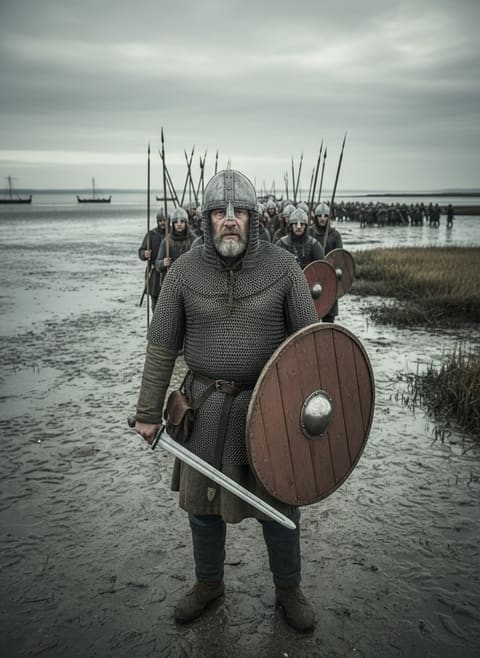
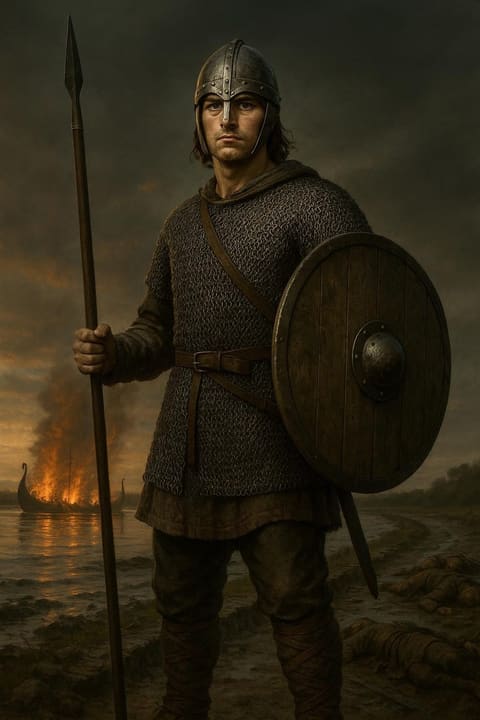
In the spring of 634 AD, Oswald landed on the Northumbrian coast with what contemporary sources describe as a "small army"—probably no more than a few hundred Celtic warriors from Iona and Dal Riata. Against him stood Cadwallon's battle-hardened forces, fresh from two years of systematic conquest and numbering in the thousands.
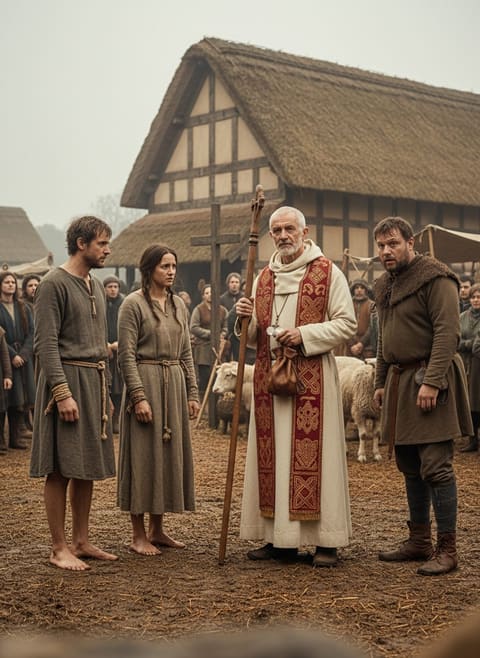
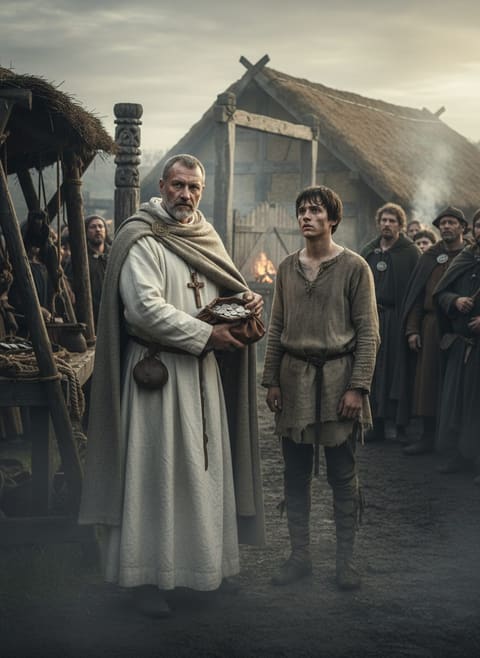
The odds were so hopeless that many Anglo-Saxon nobles refused to join Oswald's cause. Why die for a lost kingdom? But as the young king marched south, something remarkable happened. Farmers abandoned their fields to follow him. Former warriors emerged from hiding. Even some Britons, disgusted by Cadwallon's brutality, switched sides.
They weren't following just another warlord—they were following a man who claimed divine backing. Oswald didn't just talk about God; he carried wooden crosses into battle, held mass before every engagement, and somehow convinced hardened pagans that Christ was stronger than Thor.
By August 635 AD, this unlikely army had cornered Cadwallon near Hadrian's Wall, close to a place the locals called Hefenfelth—"Heaven's Field." The irony of the location wasn't lost on anyone: here, where Romans had once held back barbarian hordes, Christian and pagan would clash for the soul of England.
The Cross in the Mud: A King's Gamble
What happened next became legend even as it was happening. According to the Venerable Bede, writing less than a century later, Oswald ordered his men to construct a wooden cross on the battlefield itself. Not after victory—before the fighting had even begun.
Picture the scene: dawn breaking over the ancient wall, enemy forces visible in the distance, and a king kneeling in battlefield mud to raise a cross with his own royal hands. His soldiers, many of whom had never heard a Christian prayer, knelt beside him as Oswald led them in worship in both Old English and Gaelic.
This wasn't mere symbolism—it was the ultimate military gamble. By planting that cross, Oswald was staking his entire reign, his army's lives, and his people's future on a single proposition: that the Christian God would deliver victory against impossible odds. If they lost, Christianity in Northumbria would die with them. If they won, it would prove to every pagan warrior present that Christ was indeed the strongest of all gods.
The cross itself was remarkable. Unlike the ornate golden crucifixes of later centuries, this was working man's Christianity—rough-hewn timber that warriors could understand, planted in English soil with a king's bare hands. Bede tells us that for generations afterward, people would scrape shavings from that wooden cross, believing they carried healing power.
Thunder and Lightning: The Battle That Changed Everything
When the armies finally clashed, the result was swift and devastating. Cadwallon, who had seemed unstoppable for two years, was not merely defeated but killed in the fighting. His massive army scattered like leaves before a storm. Contemporary chronicles describe the battle lasting only hours—a complete reversal of fortune so dramatic that even pagan observers attributed it to supernatural intervention.
But the real victory wasn't military—it was psychological. Word of Heavenfield spread across Anglo-Saxon England like wildfire. A Christian king with a tiny army had destroyed a seemingly invincible enemy through the power of the cross. For pagan warriors who respected nothing but strength, this was proof they couldn't ignore.
Oswald understood the moment's significance immediately. Instead of pursuing typical victory celebrations, he sent urgent messages to Iona requesting missionaries. Not to convert by force—but to teach a people who were now ready to listen.
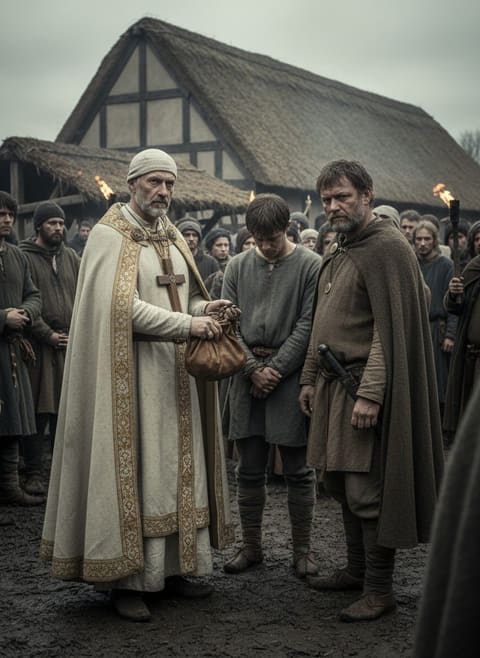
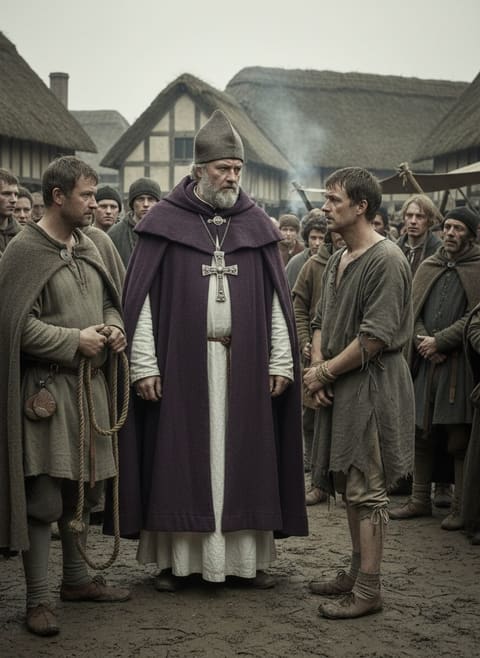
Within months, Irish monks led by St. Aidan had established a new monastery on the island of Lindisfarne, just off the Northumbrian coast. From this base, they would launch the most successful conversion campaign in English history, transforming England from a collection of pagan kingdoms into the foundation of Christendom.
Read next: The Day a Small Island's Language Conquered the World
The Thousand-Year Echo: Legacy of the Heavenfield Cross
The wooden cross that Oswald raised with his own hands stood at Heavenfield for nearly a thousand years. Medieval pilgrims would travel hundreds of miles to see it, touch it, pray beside it. Kings and peasants alike came to the spot where Christianity had triumphed against impossible odds.
But Oswald's influence extended far beyond that single battlefield. His reign, though lasting only eight years before his death in 642 AD, established the template for Christian kingship in England. He was the first English monarch to rule explicitly as God's representative on earth—a concept that would shape the English monarchy for the next fourteen centuries.
The monasteries he sponsored became centers of learning that preserved classical knowledge through the Dark Ages. Lindisfarne monks created illuminated manuscripts so beautiful they still take breath away. English missionaries, trained in houses Oswald founded, would later convert much of northern Europe.
Perhaps most remarkably, archaeological evidence suggests that a wooden cross really did stand at Heavenfield for centuries. In 1717, antiquarians recorded its final destruction, but even then, locals preserved fragments as sacred relics. A stone cross marks the spot today, but visitors often comment on the site's extraordinary atmosphere—as if something momentous really did happen there.
The Cross That Still Stands
Why does King Oswald's moment of faith at Heavenfield still matter? In our age of spin doctors and focus groups, there's something profound about a leader who literally planted his flag—or cross—and staked everything on his deepest beliefs.
Oswald didn't convert England through force or political calculation. He converted it by demonstrating absolute conviction at the moment of greatest risk. His wooden cross, raised by royal hands in battlefield mud, became a symbol more powerful than any golden throne or jeweled crown.
The cross at Heavenfield reminds us that history's most transformative moments often come not from grand strategies or overwhelming force, but from individuals willing to act on faith when everything hangs in the balance. In August 635 AD, a young king knelt in the mud and changed the course of English history forever. The cross he raised that morning cast a shadow that reached across a thousand years—and in some ways, reaches us still.