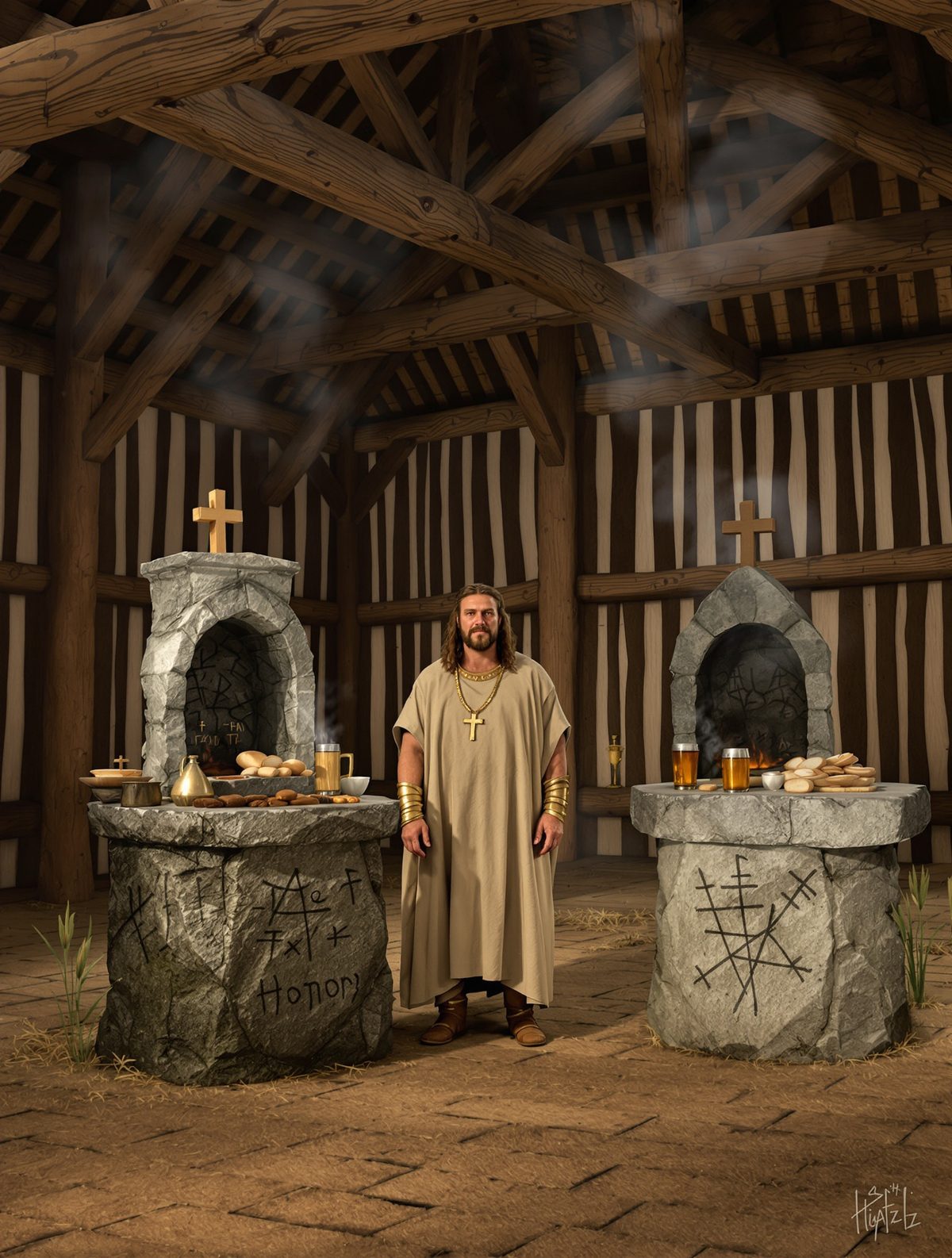
In the flickering candlelight of a great timber hall in East Anglia, two altars stood side by side. On one, a Christian cross caught the amber glow. On the other, ancient Saxon idols gazed out with eyes of bone and gold. It was 604 AD, and the most powerful king in Anglo-Saxon England had just made a decision that would horrify bishops and fascinate historians for centuries to come. King Raedwald had chosen both Christ and the old gods—and he wasn't about to pick sides.
This wasn't mere royal indecision. It was perhaps the most audacious religious compromise in early English history, born from a collision between two worlds that were reshaping Britain forever.
The King Who Ruled Two Worlds
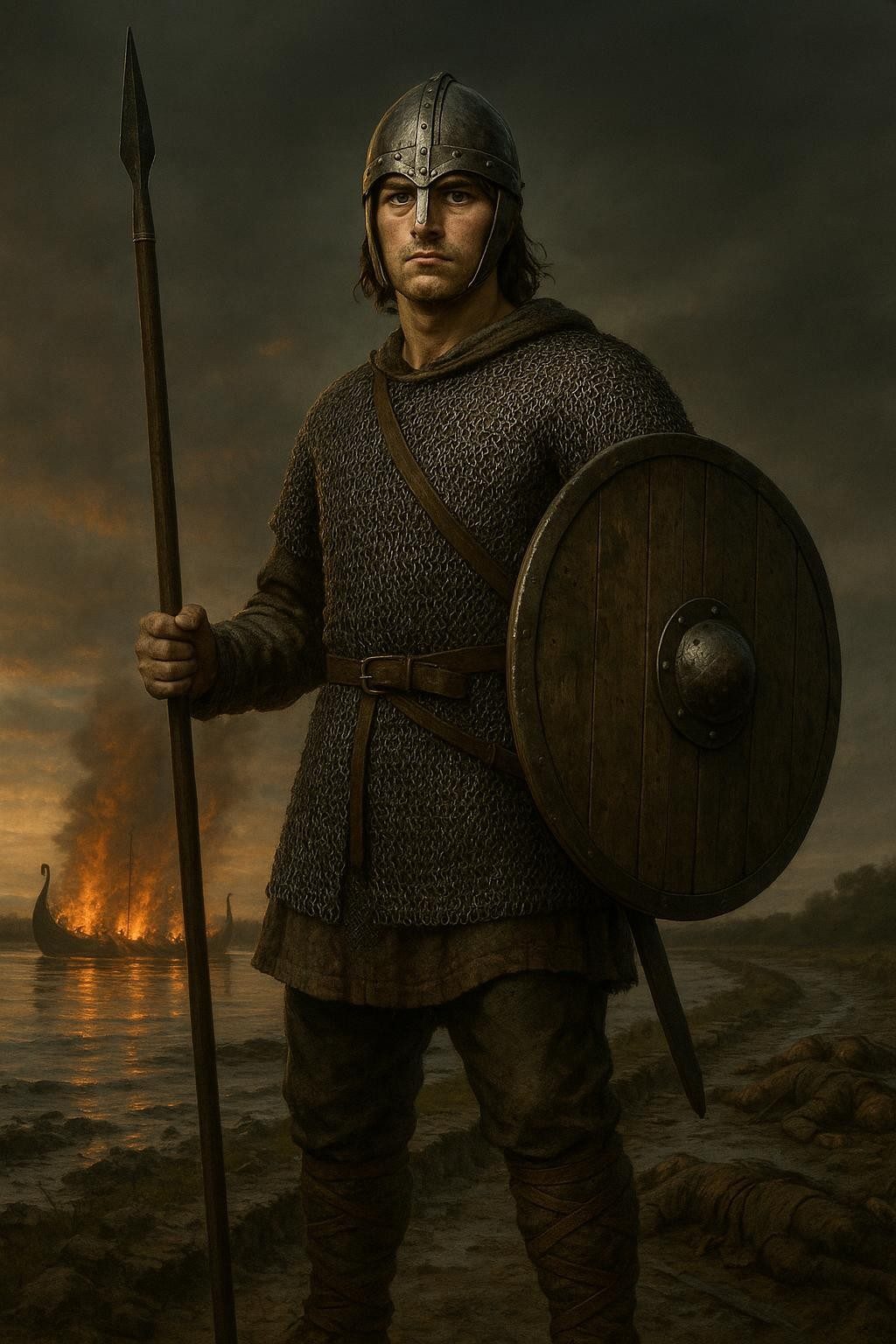
Raedwald wasn't just any Anglo-Saxon chieftain scratching out a living in post-Roman Britain. By 604 AD, he commanded respect from the Humber to the Thames as the Bretwalda—the "Britain-ruler"—a title that made him overlord of multiple kingdoms. His East Anglian realm controlled crucial trade routes across the North Sea, and his warriors' swords had decided the fate of kings.
But Raedwald faced a problem that no amount of military might could solve. Christianity was spreading like wildfire through Anglo-Saxon England, backed by the full authority of Kent's King Ethelbert and the persuasive power of Augustine's missionaries. To ignore this new faith meant political isolation. To embrace it meant abandoning the gods who had blessed his ancestors with victory and prosperity for generations.
Read next: The Day a Saxon King Knelt and Washed a Leper's Feet
The king's dilemma wasn't just personal—it reflected the spiritual crisis gripping all of early medieval England. How do you abandon Thor's hammer for Christ's cross when Thor's storms still lash your ships? How do you forsake Woden's ravens when you need their wisdom in battle?
The Baptism That Changed Everything (And Nothing)
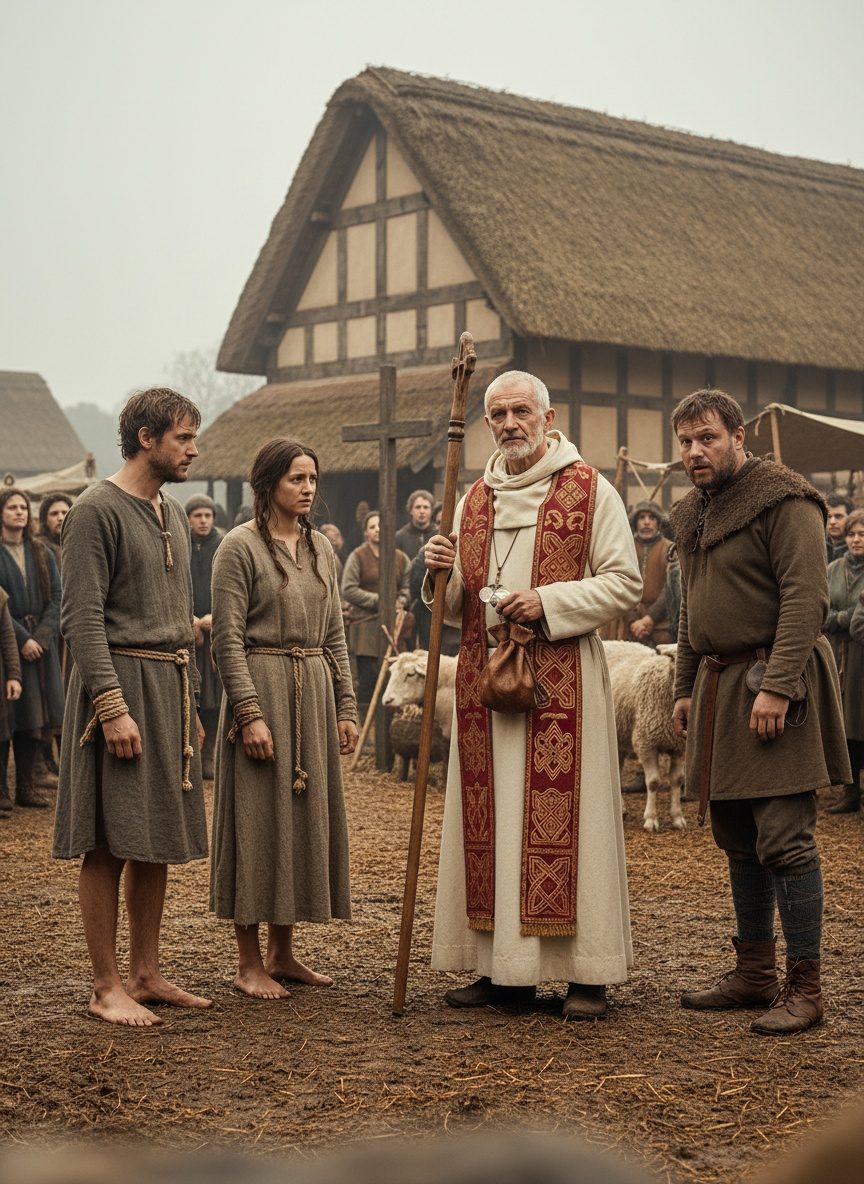
When Raedwald traveled to Kent in 604 AD, he entered the most Romanized kingdom in Anglo-Saxon England. King Ethelbert had married a Frankish Christian princess, welcomed Augustine's mission, and transformed Canterbury into a beacon of the new faith. Here, stone churches rose where pagan temples once stood, and Latin prayers echoed where Germanic war-songs had thundered.
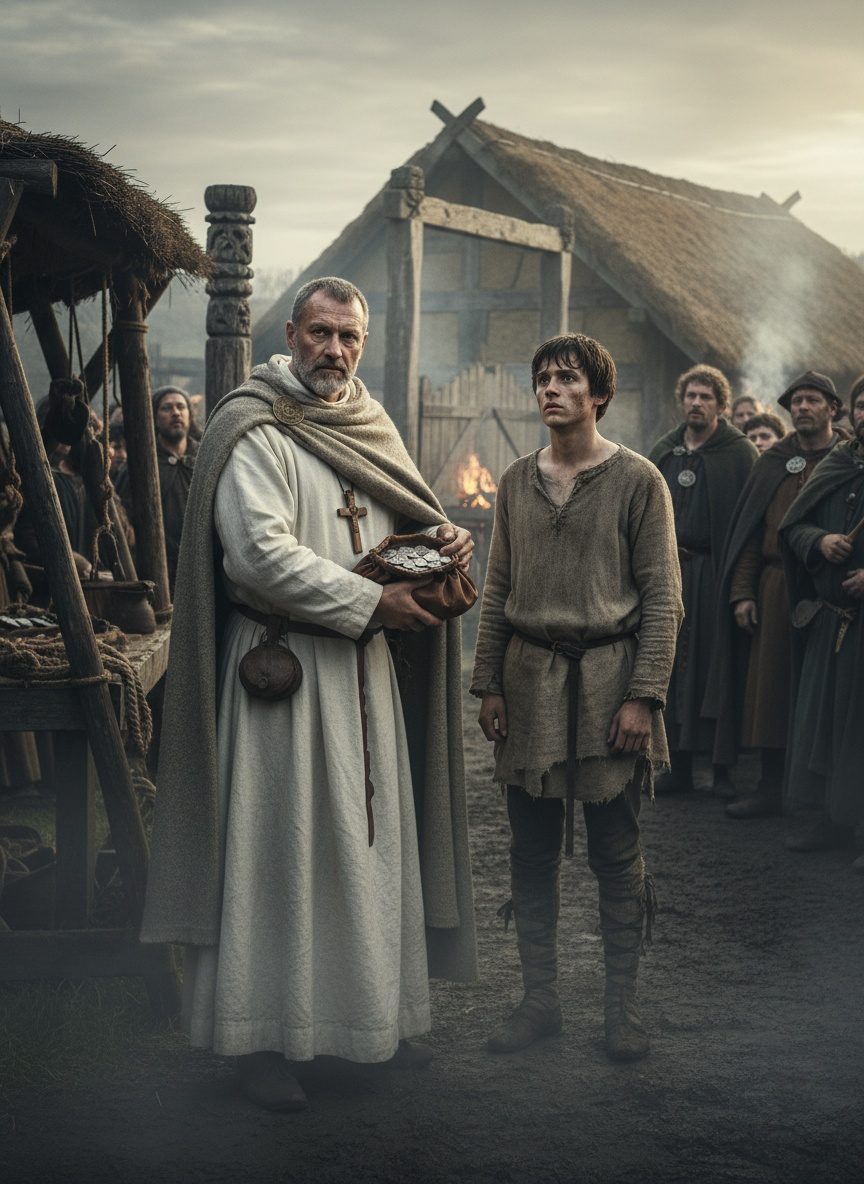
The baptism itself would have been a magnificent affair. Picture Raedwald, this battle-scarred king of the East Angles, standing waist-deep in holy water as Bishop Mellitus performed the sacred rites. Holy oil glistened on his forehead as he formally renounced Satan and all his works. In that moment, Raedwald became the newest—and most politically significant—addition to England's growing Christian community.
But what happened next would have left the bishops speechless. According to the Venerable Bede, our primary source for these extraordinary events, Raedwald returned to East Anglia and promptly installed both Christian and pagan altars in his royal hall. Not in separate buildings. Not in different rooms. In the same sacred space.
Imagine the scene: visiting Christian monks arriving at court to find the king offering prayers to Christ, only to watch him turn moments later to pour ale on ancient Saxon idols. Foreign dignitaries witnessing a royal ceremony where Latin hymns blended with Germanic chants to half-forgotten gods.
The Queen's Pagan Heart
Behind Raedwald's remarkable compromise stood an equally remarkable woman. His queen—whose name history has frustratingly failed to preserve—remained defiantly pagan despite her husband's conversion. Bede tells us she actively counseled against Christianity, wielding the kind of political influence that Anglo-Saxon royal women rarely get credit for in traditional histories.
This wasn't just marital discord—it was a fundamental clash of worldviews playing out in the royal bedchamber. The queen represented the old certainties: gods you could see and touch, rituals tested by centuries of use, divine favor measured in tangible victories and harvests. Her resistance forced Raedwald to navigate not just external political pressures but internal family dynamics that could tear his kingdom apart.
The queen's influence reveals something crucial about Anglo-Saxon society that often gets overlooked: women, especially royal women, served as guardians of religious tradition. They maintained the household shrines, taught children the old stories, and preserved the rituals that connected families to their ancestors. When Christianity demanded the abandonment of these practices, it wasn't just asking people to change their beliefs—it was asking them to sever their deepest cultural roots.
The Archaeology of Compromise
While historians debate the details of Raedwald's religious policies, archaeologists have uncovered tantalizing evidence of how this spiritual compromise actually worked in practice. Across East Anglia, excavations reveal a fascinating pattern: pagan burial goods appearing alongside Christian symbols, ancient ritual sites continuing in use well into the Christian period, and decorative arts that blend Germanic and Christian motifs with stunning creativity.
The famous Sutton Hoo ship burial, possibly Raedwald's own final resting place, perfectly captures this religious complexity. Here lay a king surrounded by treasures fit for Valhalla—golden helmets, pattern-welded swords, Byzantine silver—yet also artifacts that suggest Christian influence. The burial contains no body (possibly reflecting Christian resurrection beliefs) but follows pagan ship-burial tradition. Even in death, the East Anglian elite refused to choose sides.
Recent discoveries at Rendlesham, likely one of Raedwald's royal centers, reveal similar patterns. Anglo-Saxon feasting halls stood near Christian chapels. Pagan amulets and Christian crosses appear in the same archaeological layers. The physical landscape itself became a testament to religious compromise, where old and new sacred spaces coexisted in careful balance.
The End of the Experiment
Raedwald's remarkable religious balancing act couldn't last forever. When he died around 624 AD, the political pressures that had made compromise necessary were shifting rapidly. His successors faced a starker choice: embrace Christianity fully or risk isolation in an increasingly Christian world.
By the 630s, East Anglia had officially converted under King Sigeberht, who brought in missionaries and established monasteries. The dual altars disappeared from the royal hall. The old gods retreated to folklore and half-remembered customs. Christianity had won—but not without absorbing elements of the paganism it supposedly replaced.
Bede, writing a century later, clearly disapproved of Raedwald's compromise. To the great Christian historian, you couldn't serve both God and the old Germanic deities. But Bede's very condemnation preserves this extraordinary moment when England's most powerful king tried to have it both ways—and briefly succeeded.
When Gods Collide: Lessons for Today
Raedwald's story matters because it captures a moment when religious certainty cracked open to reveal something more human: the messy reality of how people actually navigate spiritual change. His dual altars weren't confusion or cowardice—they were a sophisticated attempt to honor both innovation and tradition in a world being transformed by forces beyond any single person's control.
In our own age of rapid cultural change, Raedwald's compromise offers unexpected insights. How do societies balance respect for ancestral wisdom with the demands of new realities? How do leaders navigate between competing truth claims without betraying either their principles or their people? The Anglo-Saxon king who wouldn't choose between Christ and the old gods faced dilemmas that feel remarkably contemporary.
Perhaps most importantly, Raedwald's story reminds us that history's most interesting moments often occur not when civilizations triumph over each other, but when they meet, mingle, and create something entirely unexpected. In that East Anglian hall where Christian cross and pagan idol shared the same sacred space, medieval England glimpsed a different path—one where religious diversity wasn't just tolerated but celebrated.
The altars are gone now, crumbled to dust with the timber hall that housed them. But their legacy endures in every moment when someone refuses to choose between old wisdom and new truth, insisting instead that both might have something valuable to offer. King Raedwald's greatest victory wasn't won with sword and shield—it was carved out with compromise, in the space between competing certainties where human complexity flourishes best.