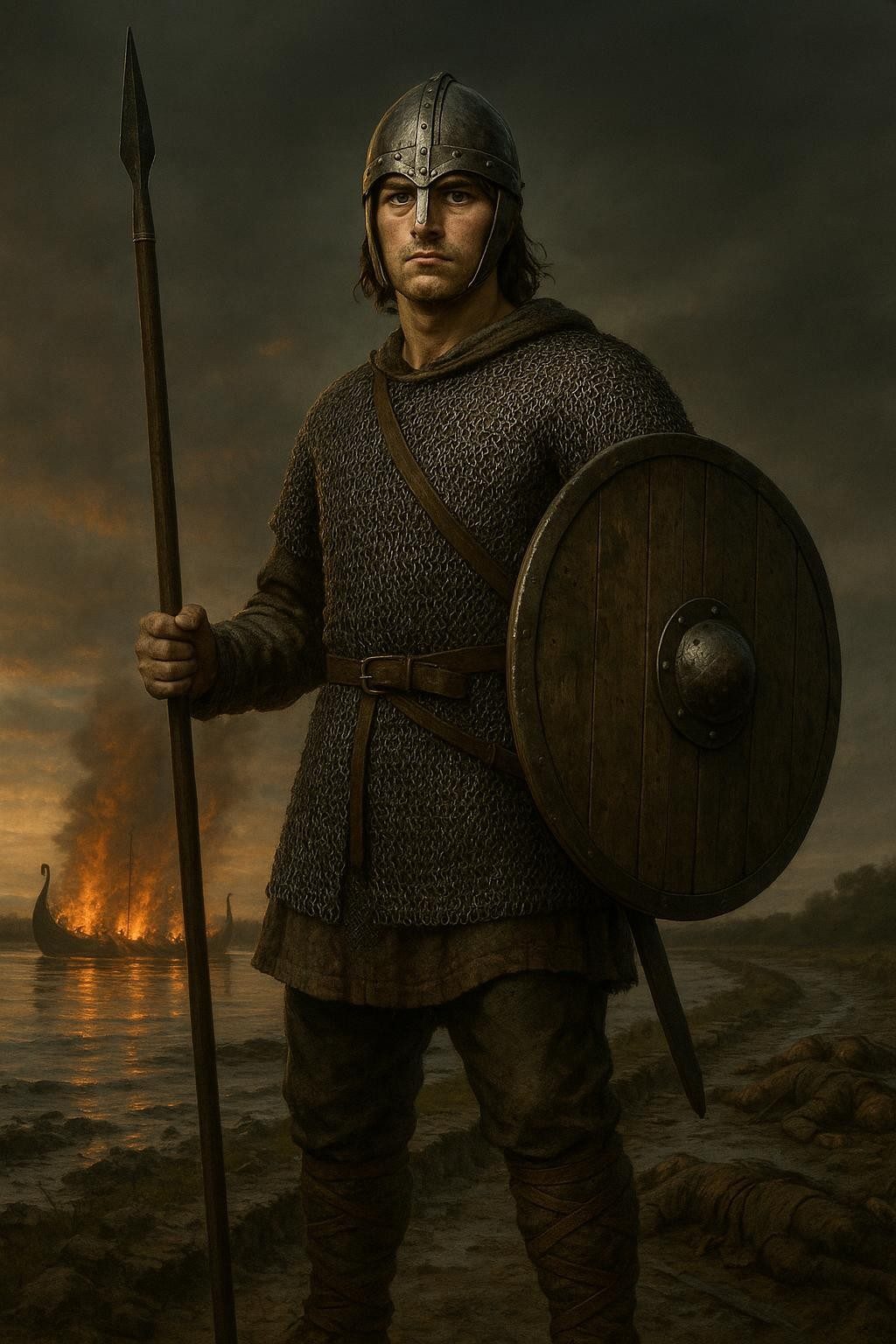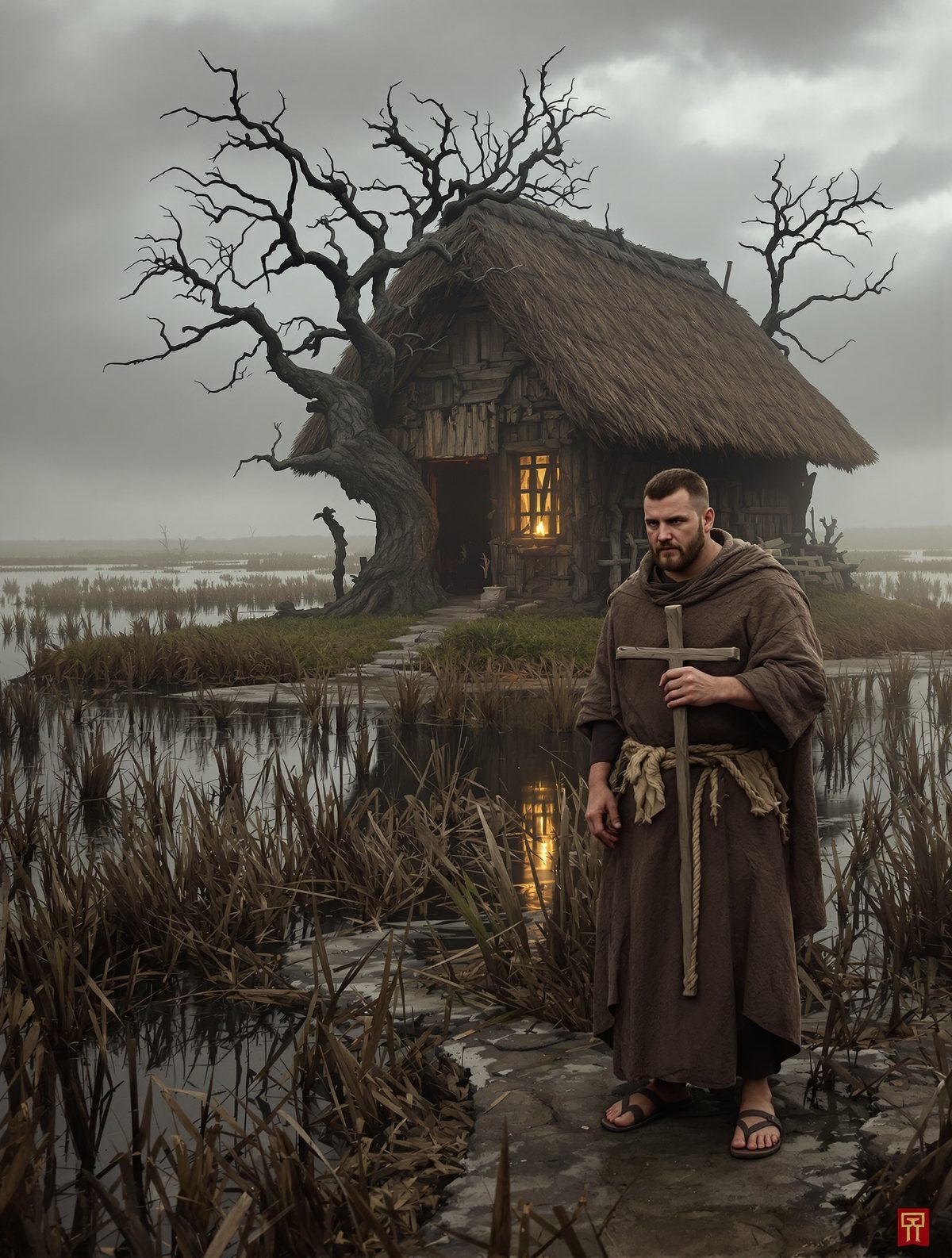
The year was 699, and the mist-shrouded fenlands of Lincolnshire held secrets darker than the peat-black waters that stretched endlessly toward the horizon. As his small boat cut through the reed-choked channels, Guthlac of Mercia knew he was entering a place where angels feared to tread. The locals whispered that demons dwelt here among the shifting islands and treacherous bogs. They called it hel on eorþan – hell on earth. But this battle-hardened warrior turned monk hadn't come to flee from evil. He'd come to face it head-on.
Behind him lay a life of privilege and warfare. Ahead lay only wilderness, solitude, and whatever malevolent forces had claimed this godforsaken marsh as their own. Yet Guthlac smiled as he rowed deeper into the fens. After fifteen years wielding sword and shield, he would now wield prayer and fasting against enemies far more terrifying than any Saxon war-band.
From Warrior to Wanderer: The Making of a Saint
Guthlac's transformation from nobleman-warrior to hermit-saint reads like something from Arthurian legend, yet it was witnessed and recorded by his contemporaries. Born around 674 into Mercian nobility, young Guthlac seemed destined for a life of conquest and glory. By age fifteen, he was leading his own war-band across the Anglo-Saxon kingdoms, following the ancient tradition where young nobles proved themselves through raids and battles.
For nine years, Guthlac carved out his reputation with steel and strategy. Contemporary sources tell us he was particularly successful, accumulating wealth and followers throughout the fractured landscape of 7th-century England. But something extraordinary happened around 688 – at the height of his military success, Guthlac experienced what chroniclers described as a profound spiritual awakening.
Read next: The Day a Saxon King Knelt and Washed a Leper's Feet
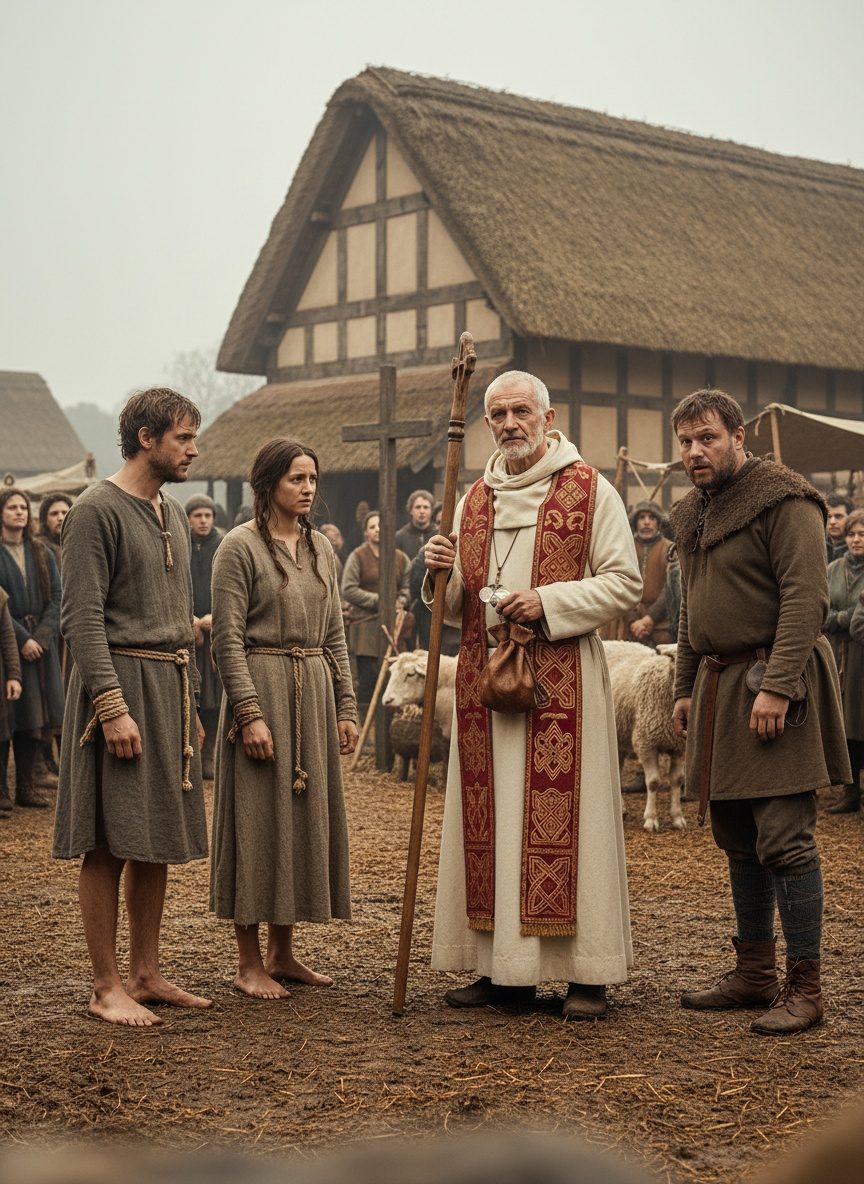
Perhaps it was the weight of lives taken, or the futility of endless warfare in a land where kingdoms rose and fell like waves. Whatever the catalyst, Guthlac abandoned his war-band and sought out the monastery of Repton in Derbyshire. The transition wasn't smooth – imagine trying to convince a monastery to accept a battle-scarred warrior who'd spent nearly a decade raiding his neighbors. Yet Guthlac's sincerity convinced the abbots, and he threw himself into monastic life with the same intensity he'd once reserved for warfare.
But even Repton's austere lifestyle wasn't enough for this spiritual extremist. Within two years, Guthlac was reading about the Desert Fathers of Egypt and Syria – hermits who'd sought ultimate communion with God by isolating themselves in the world's most inhospitable places. If they could find holiness in the scorching deserts, surely England held its own spiritual wilderness.
The Fenlands: England's Forgotten Frontier
The fenlands that Guthlac chose for his hermitage were unlike anywhere else in Anglo-Saxon England. Stretching across what is now Lincolnshire, Cambridgeshire, and Norfolk, these vast wetlands covered nearly 1,500 square miles of treacherous beauty. During winter floods, the entire region became an inland sea punctuated by islands of slightly higher ground. In summer, the waters receded to reveal a maze of channels, pools, and bog islands accessible only to those who knew the secret paths.
This wasn't just difficult terrain – it was actively hostile to human habitation. The fenlands bred diseases unknown in drier regions. Marsh gas created eerie lights that danced across the waters at night, convincing locals that supernatural forces were at work. The very ground seemed alive, shifting and changing with each season's flood cycle. One wrong step could plunge a traveler into bog deep enough to swallow a horse and rider whole.
More unsettling still were the sounds. Contemporary accounts describe how the fens were filled with mysterious noises – the booming calls of bitterns echoing like demonic voices, the splash of unseen creatures, and most disturbing of all, what locals swore were the voices of the damned calling from beneath the black water. Archaeological evidence suggests the area held particular significance for pre-Christian religions, with numerous ritual deposits of weapons and jewelry found in the peat – offerings to gods whose names had been forgotten but whose presence still seemed to linger.
Small wonder, then, that most Anglo-Saxons avoided the fenlands entirely. Even the most desperate outlaws rarely fled here, preferring certain death at a lord's hands to whatever fate awaited in the cursed marshes.
Crowland: Building Heaven from Hell
On a September morning in 699, Guthlac's boat nudged against a small island that locals called Crowland – literally "crow's land" in Old English, named for the black birds that were often the only signs of life in the desolate marsh. The island rose barely eight feet above the surrounding water, covered in ancient alders and connected to the outside world only by channels that shifted with each flood.
Archaeological investigations have revealed why this particular spot held such dark associations. Crowland had been a burial site for centuries, possibly millennia. The higher ground was riddled with ancient barrows – burial mounds from the Bronze Age through the Roman period. Guthlac chose to build his hermitage directly atop one of these mounds, creating his cell from the stones of a ruined Roman building that still stood on the island.
The symbolism was powerful and intentional. Here was a Christian monk literally building his new life on the remains of pagan death. But the practical challenges were immense. Everything Guthlac needed – food, tools, building materials – had to be brought in by boat or carried across the treacherous bog paths. His first shelter was little more than a lean-to built against the ancient barrow, with walls of woven reeds and a roof of whatever timber he could salvage.
Contemporary accounts describe how Guthlac initially survived on little more than barley bread and marsh water. He learned to read the fens like his ancestors had read battlefields – understanding which paths were safe, where to find edible plants, how to predict the weather from the behavior of birds and mist. This wasn't just spiritual discipline; it was a daily battle for survival against one of England's most hostile environments.
Wrestling with Demons: The Night Terrors of Crowland
If Guthlac had expected solitude and peace in the fens, he was dramatically mistaken. According to Felix of Crowland, who wrote the saint's biography within living memory of those who knew him, Guthlac's nights were filled with supernatural terrors that would have driven lesser men to madness or flight.
The attacks began almost immediately. Contemporary accounts describe how demons would assault Guthlac's hermitage each night, filling the air with inhuman shrieks and the clash of invisible weapons. Some nights, the very ground seemed to shake beneath his cell. Other times, the creatures would attempt more subtle torments – appearing as beautiful women to tempt him, or taking the forms of his former war-band companions to remind him of his abandoned worldly life.
Modern historians debate whether these accounts reflect genuine supernatural experiences, psychological stress from extreme isolation, or simply the literary conventions of early medieval hagiography. Yet the specificity and consistency of the reports suggest something remarkable was happening in that fenland hermitage. The demon attacks followed patterns that echo accounts from other hermit saints, but with details unique to the English landscape.
Most unsettling were the times when the demons allegedly carried Guthlac away from his island entirely – lifting him through the air to show him visions of hell itself. These aerial journeys, described in vivid detail by Felix, took the hermit over landscapes of fire and ice, populated by the souls of the damned. The demons would taunt Guthlac with promises that he could avoid such a fate by simply abandoning his hermitage and returning to the comfortable world he'd left behind.
Guthlac's response was characteristically stubborn. Rather than flee or even flinch, he would recite psalms in Latin, Welsh, and Anglo-Saxon, creating a linguistic barrier against the supernatural assault. He developed a routine of prayer, fasting, and manual labor that left no time for fear or doubt. Most remarkably, he began to attract followers despite – or perhaps because of – the terrifying reputation of his chosen home.
The Hermit's Kingdom: Building a Community in Hell
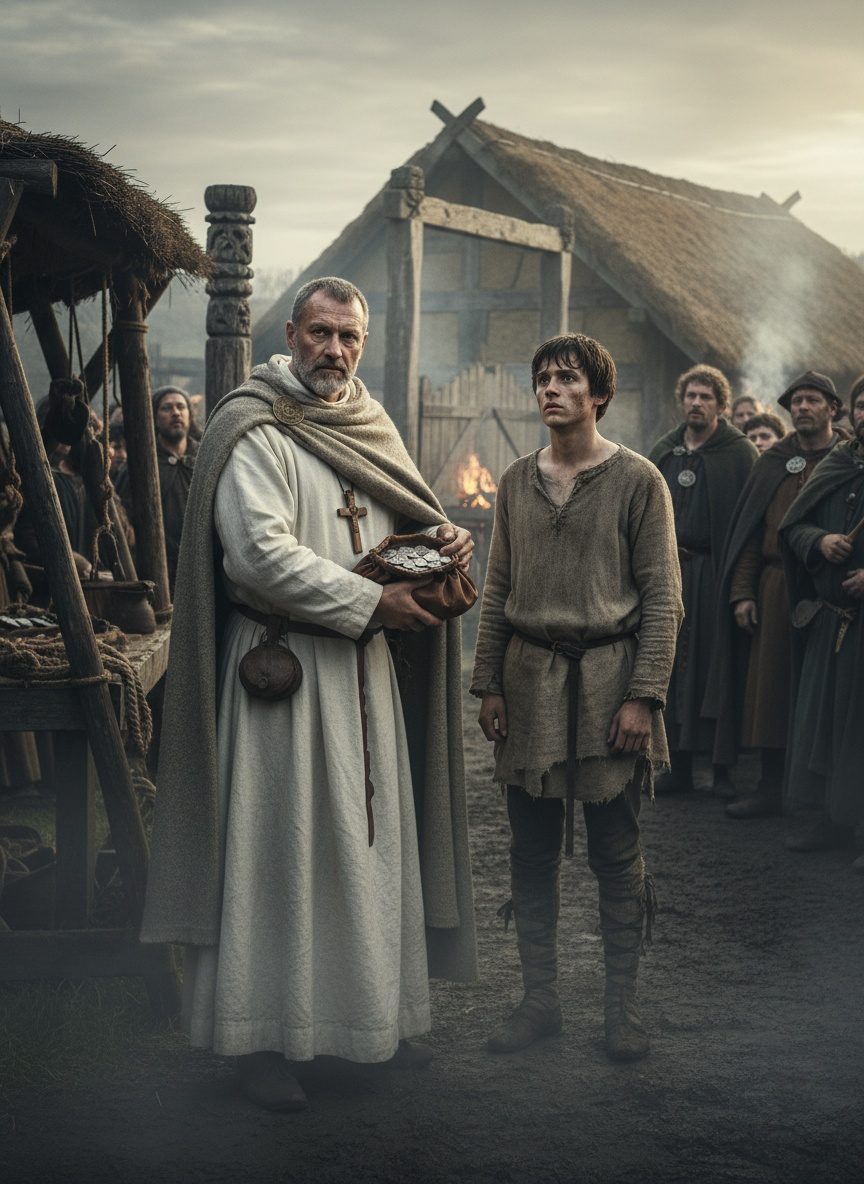
Word of the warrior-monk who'd tamed England's most cursed landscape spread quickly through Anglo-Saxon society. By 705, barely six years after his arrival, Guthlac was receiving visits from nobles, clerics, and common folk seeking spiritual guidance. Some came as pilgrims, others as potential disciples. A few, including King Æthelbald of Mercia, came seeking political advice from someone they viewed as having transcended worldly concerns.
This created an extraordinary situation. Crowland became a kind of spiritual embassy in the heart of the fenlands – a place where the most powerful people in England would venture into the haunted marshes to consult with a hermit who'd voluntarily chosen hell as his home. Guthlac's sister Pega established her own hermitage nearby, creating the beginning of what would eventually become one of England's most important religious communities.
The logistics alone were remarkable. Visitors had to be guided through the fenland paths by locals who knew the safe routes. Provisions had to be stockpiled on higher ground and ferried to the island during suitable weather. A complex network of relationships developed between Guthlac's hermitage and the scattered fen-dwellers who served as his connection to the outside world.
What emerges from contemporary accounts is a picture of remarkable religious innovation. Guthlac wasn't simply copying the Desert Fathers – he was adapting their spiritual techniques to a uniquely English landscape and culture. His hermitage became a laboratory for developing new forms of Christian spirituality that could speak to Anglo-Saxon warriors and nobles in ways that traditional monastery life could not.
Legacy from the Grave: The Saint Who Conquered Hell
Guthlac died on April 11, 714, after fifteen years in his fenland hermitage. Contemporary accounts describe supernatural signs accompanying his death – music from invisible choirs, sweet fragrances that dispelled the marsh's usual odors, and a column of light that rose from Crowland to heaven itself. Within a year of his death, miracles were being reported at his tomb, and pilgrims were arriving from across England and continental Europe.
The hermitage that had begun as one man's spiritual experiment grew into Crowland Abbey, which became one of medieval England's wealthiest and most influential religious houses. The "hell on earth" that had terrified Anglo-Saxon villagers was transformed into a center of learning, art, and political power. Guthlac's victory over the demons of the fens had become literal – the cursed wasteland was now holy ground.
But perhaps the most remarkable aspect of Guthlac's legacy lies in what it reveals about the Anglo-Saxon spiritual imagination. In an age when most people sought salvation through conformity and obedience, Guthlac chose the path of radical spiritual adventure. He didn't flee from the darkness – he sailed straight into it, convinced that even hell itself could be conquered through faith and determination.
Today, as we face our own demons – climate change, political division, technological disruption – there's something inspiring about this long-dead warrior-monk who looked at the most terrifying landscape in his world and decided to call it home. Guthlac reminds us that sometimes the only way forward is straight through the swamp, no matter what monsters we might meet along the way. The fenlands that once echoed with demonic shrieks now ring with church bells, proof that even hell itself can be transformed by someone stubborn enough to stay and fight.