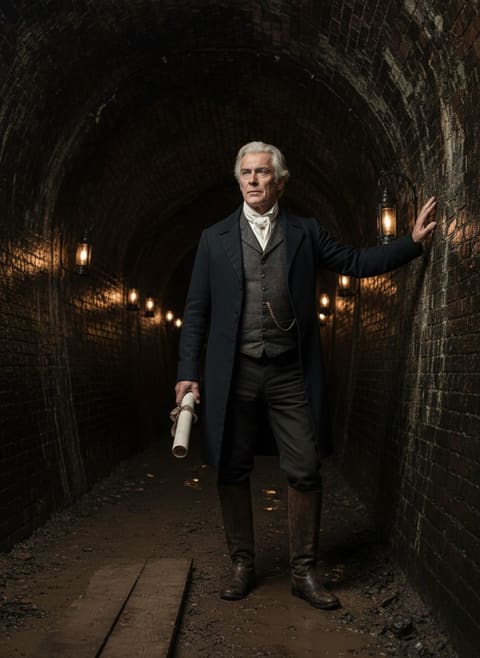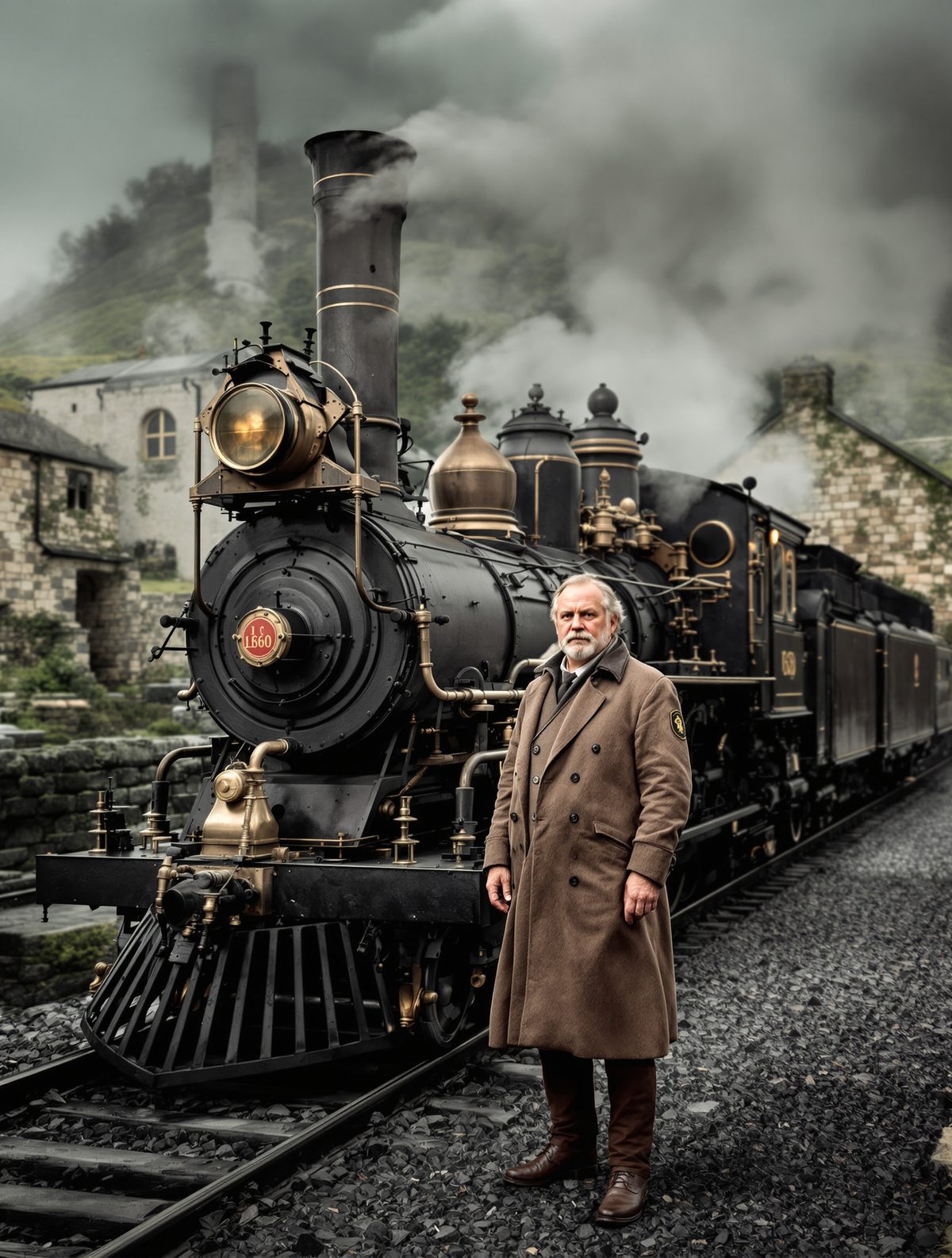
The coal wagons groaned and creaked as they strained against the impossible gradient. It was a crisp Yorkshire morning in 1812, and Matthew Murray stood beside the railway track at Middleton Colliery, watching twenty heavily laden wagons being hauled uphill by his mechanical marvel. For decades, this same slope had broken the backs of countless horses and the spirits of mine owners who watched their profits literally roll backwards down the hill. But today, steam was about to conquer what muscle never could.
The locomotive Salamanca hissed and chugged its way up the incline, its revolutionary rack and pinion system gripping the specially designed track with mechanical determination. Murray's weathered hands clasped behind his back as he witnessed what many had deemed impossible: a steam engine successfully hauling a commercial load up a gradient that would challenge even modern vehicles. This wasn't just an engineering triumph—it was the moment that would save Yorkshire's coal industry and change the course of the Industrial Revolution.
The Problem That Stumped an Empire
By 1812, Britain was drunk on coal. The black gold powered everything from the textile mills of Manchester to the iron foundries of Birmingham, but getting coal out of the ground and to market remained an agonizing bottleneck. Nowhere was this more apparent than at Middleton Colliery, just outside Leeds, where coal seams lay tantalizingly close to the surface but were separated from the main transportation routes by punishing hills.
The colliery's owner, John Blenkinsop, had watched his operation struggle for years with horse-drawn transport. The mathematics were brutal: a single horse could pull perhaps two tons of coal on flat ground, but on Middleton's slopes, the same animal could barely manage half a ton before exhaustion set in. Worse still, the horses themselves consumed enormous quantities of the very coal they were meant to transport, eating through profits with every oat-filled feeding.
Read next: The Day a Weaver's Son Lit Britain's First Public Railway
The human cost was equally devastating. Miners who had spent back-breaking hours extracting coal from the earth watched helplessly as wagon after wagon either got stuck halfway up the incline or, in heart-stopping moments, broke free and thundered backwards down the slope, destroying months of work in seconds. Some mine owners had simply given up, abandoning profitable seams because the cost of transport exceeded the value of the coal itself.
Murray's Mechanical Genius
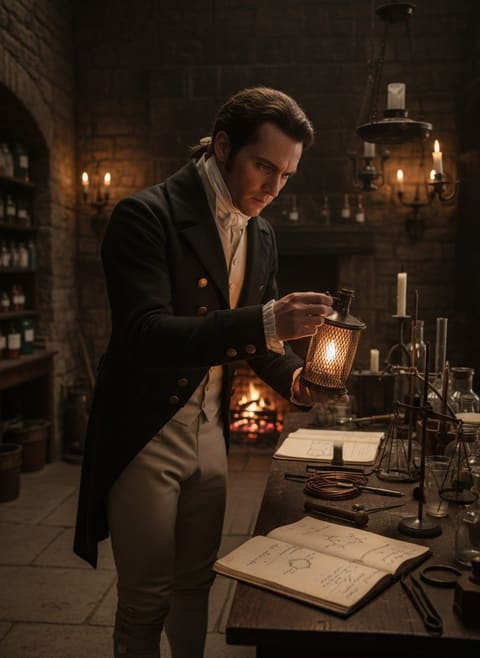
Matthew Murray was not your typical engineer. The Leeds-born inventor had already made his fortune revolutionizing textile machinery, but coal transport presented a puzzle that kept him awake at night. While other engineers focused on building more powerful locomotives, Murray approached the problem from an entirely different angle: what if the solution wasn't about the engine, but about the track itself?
Working in partnership with John Blenkinsop, Murray developed what would become known as the Blenkinsop-Murray system—though history would prove Murray's engineering contributions were far more significant than his business partner's financial backing suggested. The breakthrough came when Murray realized that conventional rails, which relied purely on friction between wheel and track, would always be limited by physics. On steep gradients, wheels would simply spin uselessly, like a car stuck in snow.
Murray's solution was elegantly simple: he added a third rail with gear teeth cut into it, running between the two conventional rails. His locomotives were fitted with a cogwheel that meshed with these teeth, creating a mechanical grip that defied gravity. It was the same principle used in mountain railways today, but in 1812, it was nothing short of revolutionary.
The Birth of Iron Horses
On March 24, 1812, Salamanca made its inaugural journey along the Middleton Railway, becoming the first commercially successful steam locomotive in the world to use rack and pinion technology. Named after the Duke of Wellington's recent victory in Spain, the locomotive was a monster of brass and iron that weighed over four tons and could generate the power of roughly eight horses.
But Salamanca was just the beginning. Murray's workshop quickly produced three more locomotives: Lord Wellington, Marquis Wellington, and Prince Regent. Each represented incremental improvements on Murray's original design, incorporating lessons learned from daily operation in the harsh conditions of industrial Yorkshire.
The specifications were impressive for their time: Murray's locomotives could maintain a steady speed of five miles per hour while hauling loads of up to 94 tons—the equivalent of what would have required 40 horses working at the limits of their endurance. More importantly, they could operate continuously, unlike animals that needed rest, food, and veterinary care.
What truly set Murray's machines apart was their reliability. While other early steam locomotives of the era were temperamental beasts that broke down regularly, Murray's designs incorporated practical solutions born from his textile machinery experience. He understood that industrial equipment needed to work day after day, in all weather, operated by workers who were miners, not engineers.
The Day Everything Changed
The true test came on a foggy morning in late 1812 when a critical shipment of coal needed to reach Leeds despite a combination of circumstances that would have paralyzed horse-drawn transport. Several of the colliery's strongest horses had fallen ill, the gradient was slick with morning dew, and the coal wagons were loaded heavier than usual to meet urgent demand from textile mills whose fires couldn't be allowed to die.
Contemporary accounts describe Murray standing beside the track, pocket watch in hand, as Salamanca approached the steepest section of the route with twenty wagons in tow—a load that would have required a team of horses and taken the better part of a day to transport, assuming they could manage it at all.
The locomotive's fireman, a former miner named Thomas Waters, later recalled the moment when he felt the cogwheel engage with the rack rail and the entire train surge forward up the incline. "It were like the very ground itself were pulling us up the hill," Waters wrote in a letter to his brother. "Mr. Murray's machine just kept churning away, steady as you please, while the coal wagons followed behind like obedient sheep."
The entire journey, which would have taken horses most of the day, was completed in just over two hours. More significantly, the locomotive consumed coal worth approximately two shillings—a fraction of what feeding and maintaining horses would have cost for equivalent work. Word of the success spread through Yorkshire's industrial community like wildfire.
Ripples Across the Industrial Landscape
Murray's success at Middleton didn't just save one colliery—it proved that steam locomotion could work in real industrial conditions. Within months, mine owners across Britain were making pilgrimages to Yorkshire to witness Murray's iron horses in action. The Middleton Railway became an unlikely tourist attraction, drawing engineers, investors, and curious onlookers from across Europe.
Read next: The Day a Mill Owner Walked Into Court and Freed His Rivals' Children
The economic impact was immediate and profound. Middleton Colliery's output increased by over 300% within two years, as the reliable transport system allowed miners to focus on extraction rather than logistics. More importantly, previously uneconomical coal seams suddenly became profitable when transport costs plummeted.
But Murray's influence extended far beyond coal. His success inspired a generation of engineers, including George Stephenson, who would later build upon Murray's pioneering work to create the railway networks that connected Britain's cities. The rack and pinion system itself found new applications in mountain railways across Switzerland and Austria, proving that British innovation could conquer even Alpine gradients.
Perhaps most remarkably, Murray's locomotives continued operating profitably until 1835—a 23-year service life that demonstrated the practical durability of his designs. This longevity convinced skeptical investors that steam locomotion wasn't just a novelty, but a reliable foundation for industrial growth.
The Legacy Written in Rails and Steam
Today, as we debate electric vehicles and renewable energy, Matthew Murray's story offers a powerful reminder that the most transformative innovations often come from solving seemingly mundane problems. Murray didn't set out to change the world—he simply wanted to move coal up a hill more efficiently. Yet his pragmatic approach to engineering challenges laid the groundwork for the transportation revolution that followed.
The Middleton Railway still operates today as a heritage line, making it the world's oldest continuously operating railway. Visitors can ride trains along the same route where Murray's locomotives once hauled their precious cargo, though the modern journey is powered by diesel rather than steam and rack rails.
Murray's true genius lay not in building the most powerful or fastest locomotive, but in creating a system that actually worked in the real world. His rack and pinion innovation solved the fundamental physics problem that had limited all previous attempts at mechanical transport on gradients. In doing so, he proved that thoughtful engineering could overcome natural obstacles that had constrained human progress for millennia.
In our age of technological disruption, Murray's story serves as a blueprint for innovation: identify the real problem, ignore conventional wisdom about what's possible, and focus relentlessly on practical solutions that work every day, not just in ideal conditions. Sometimes the most important revolutions begin not with grand visions, but with a simple question: "What if there's a better way to get these coal wagons up the hill?"