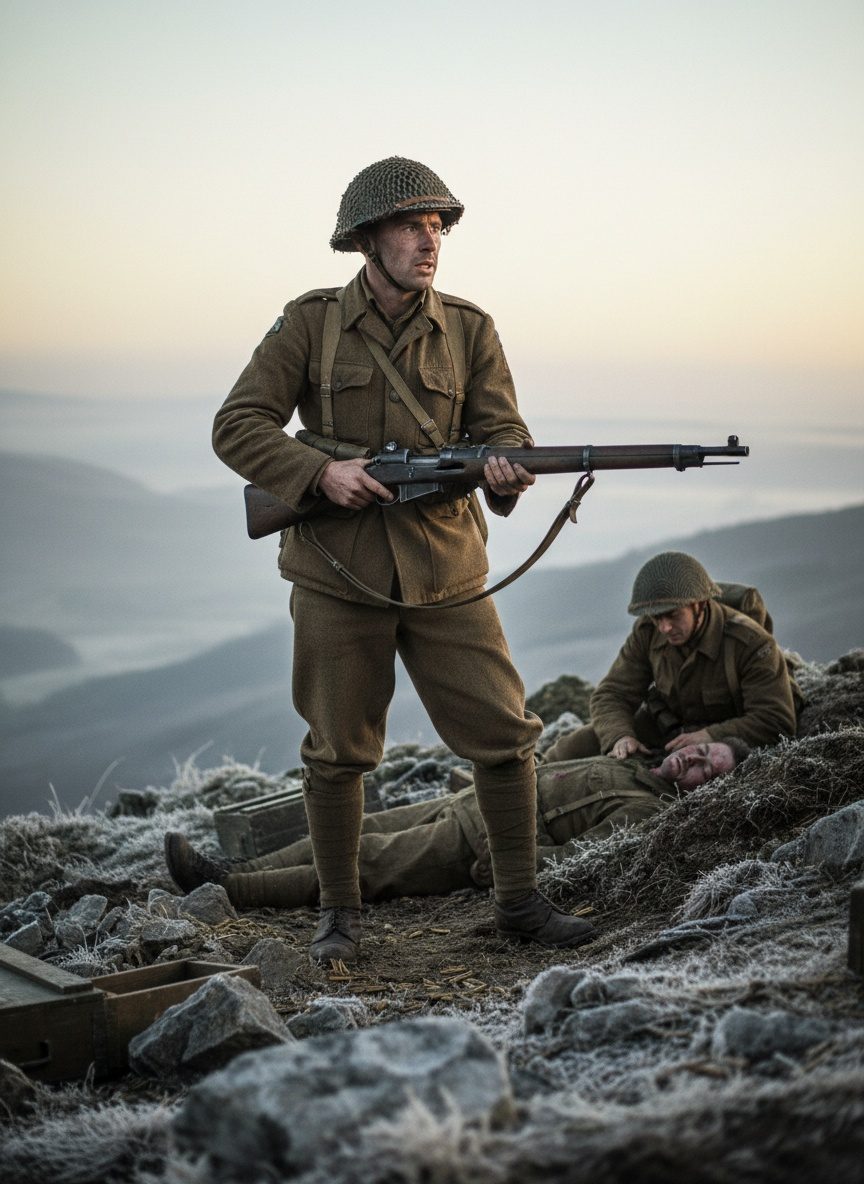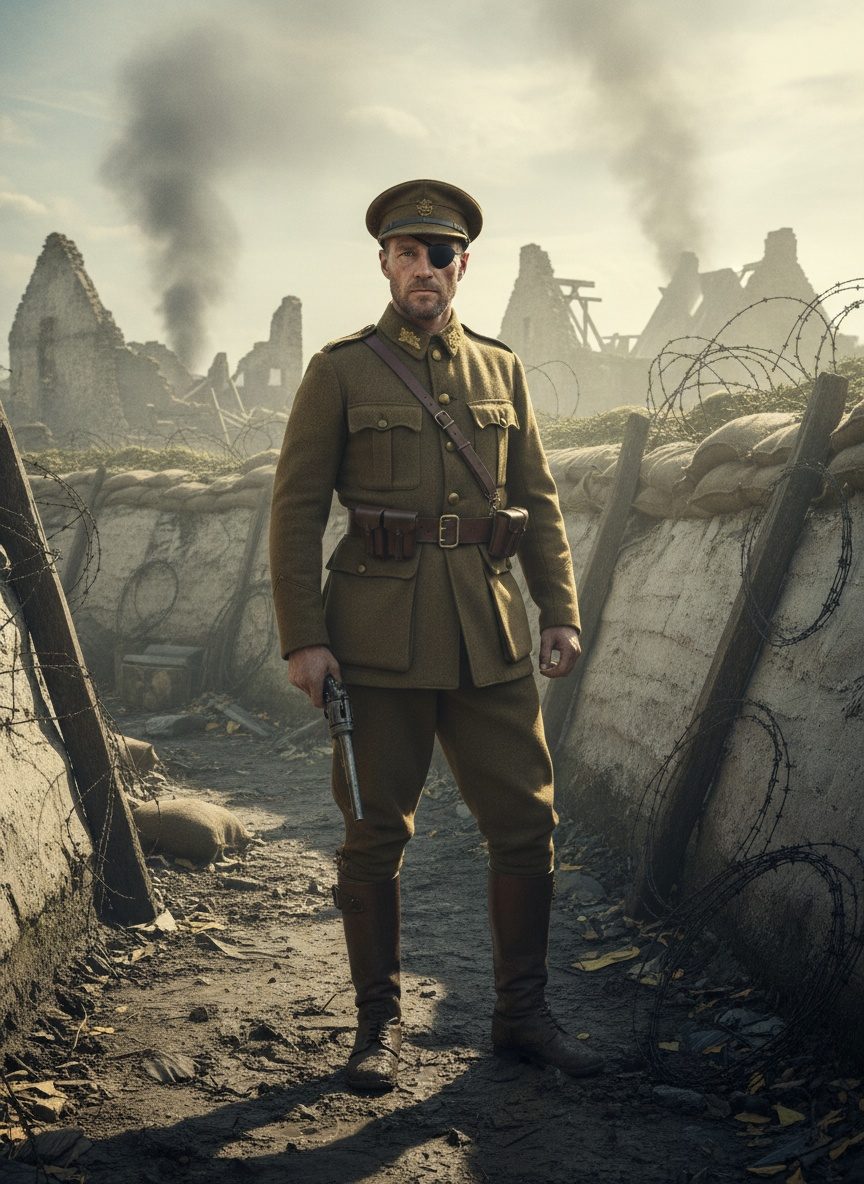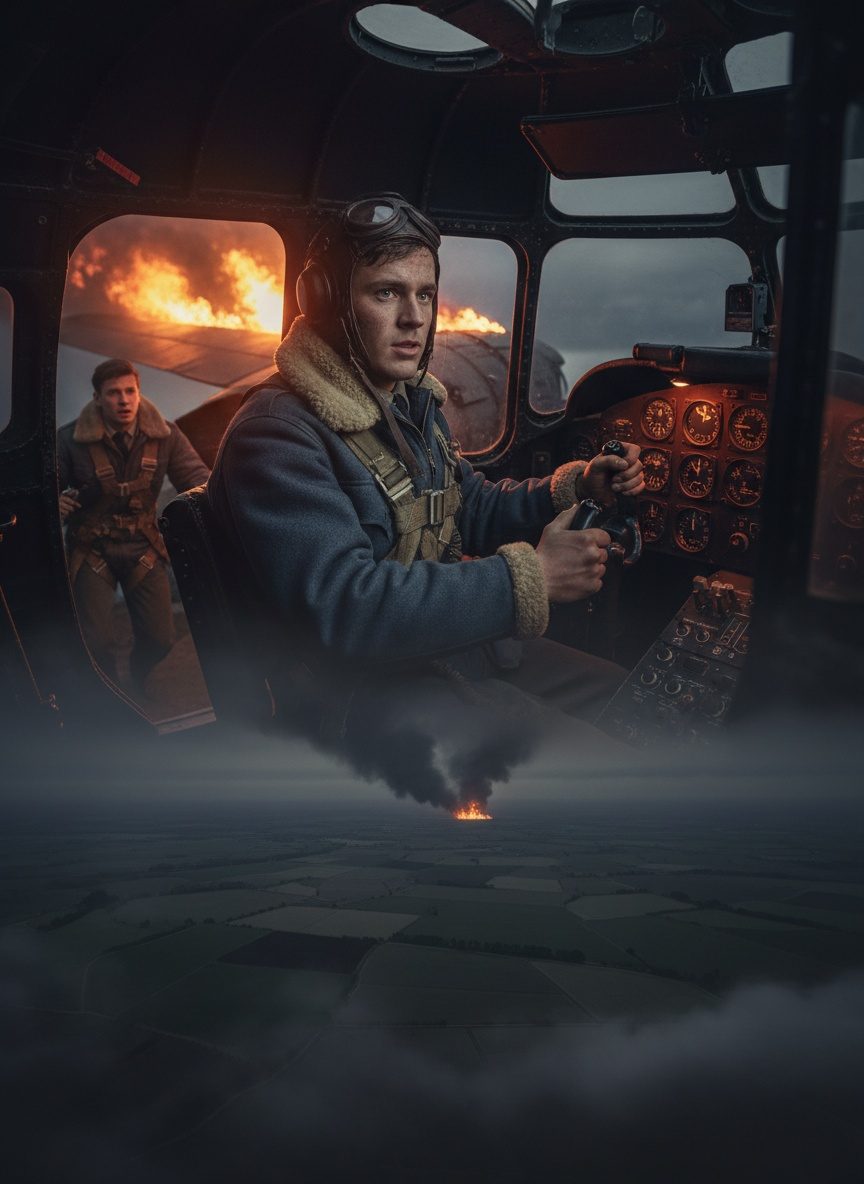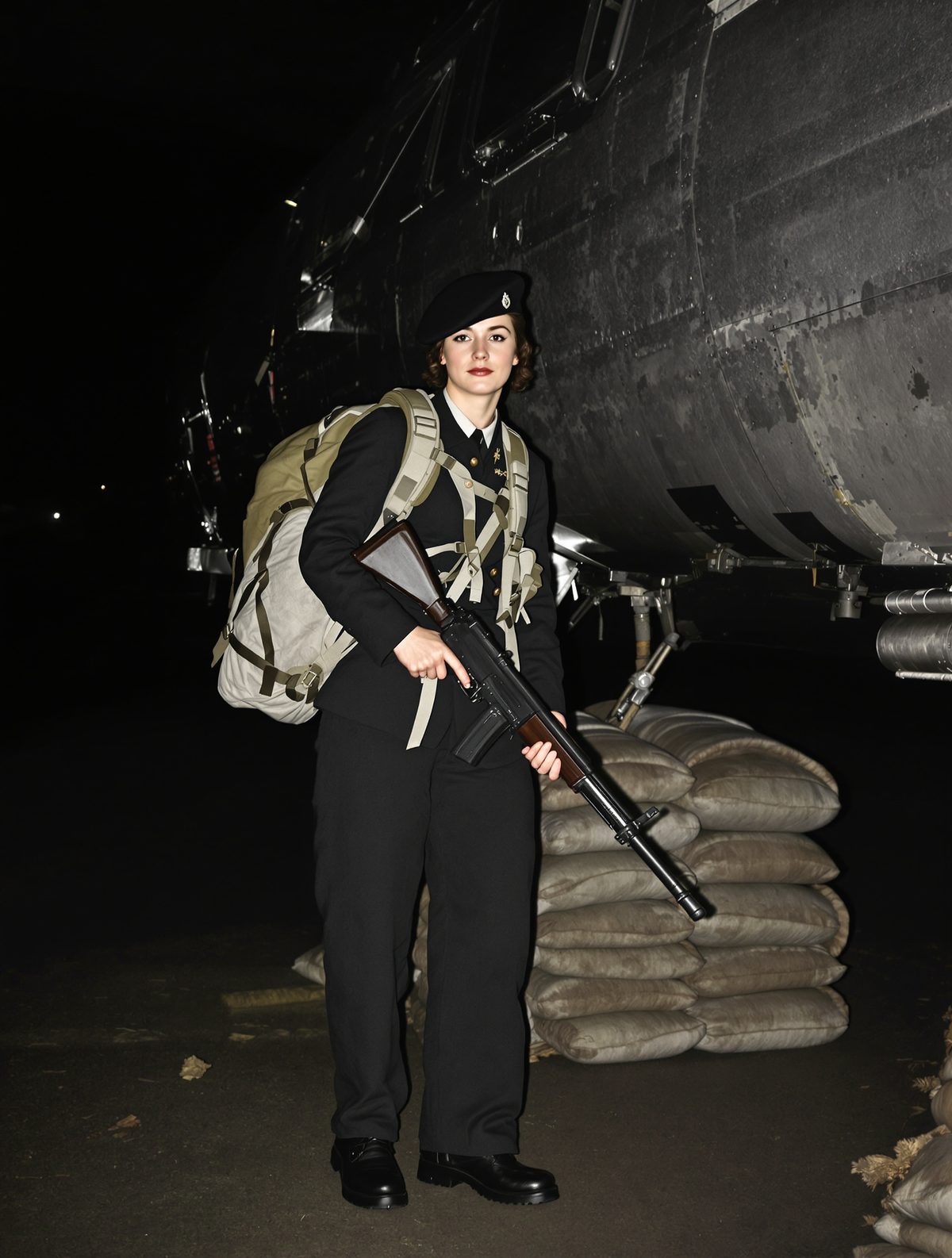
The Handley Page Halifax bomber droned through the darkness above occupied France, its engines the only sound cutting through the tension-filled silence of June 7, 1944. Inside the cramped fuselage, a slight 23-year-old woman checked her equipment one final time. Violet Szabo's hands moved methodically over her Sten gun—nine pounds of British-engineered lethality that would, she hoped, help arm the French Resistance. Below her, Nazi patrols roamed the countryside. Above her, German night fighters prowled the skies. And in just moments, she would step into the void between them.
What Violet couldn't know as she prepared for her second mission into France was that she was about to become one of World War II's most celebrated—and tragic—heroes. Her story would inspire films, books, and countless tributes, but it would come at the ultimate price. This was the night that would change everything.
The Unlikely Spy Who Learned to Kill
Violet Szabo was never supposed to be a secret agent. Born Violet Reine Bushell in Paris to a French mother and English father, she had grown up as a shop girl in Brixton, South London. At nineteen, she met and married Étienne Szabo, a dashing French Foreign Legion officer, in a whirlwind wartime romance that lasted just 42 days before he shipped out to North Africa.
Everything changed when news arrived that Étienne had been killed at the Battle of El Alamein in October 1942. Violet, now a widow with a baby daughter named Tania, channeled her grief into an burning desire for revenge. She enlisted in the Auxiliary Territorial Service, where her fluency in French and fierce determination caught the attention of recruiters for the Special Operations Executive (SOE)—Churchill's "Ministry of Ungentlemanly Warfare."
Read next: The Night a Teenage Gunner Held the Bridge at Arnhem
The SOE training was brutal. At their secret facility in Scotland, Violet learned to kill silently with her bare hands, to sabotage railway lines, and to operate the weapons of clandestine warfare. Her instructors noted her "reckless bravery" and "eager enthusiasm"—qualities that would serve her well in occupied France, but might also prove dangerous. Most remarkably for a Brixton shop girl, she became expert with the Sten gun, the cheap but effective submachine gun that had become the weapon of choice for resistance fighters across Europe.
The Sten Gun: Britain's Deadly Gift to the Resistance
The weapon Violet carried that night was itself a marvel of wartime ingenuity. The Sten gun looked like it had been assembled in a garage—which, in many cases, it had been. Designed when Britain faced potential invasion, the Sten was deliberately simple: just 47 parts that could be manufactured in bicycle shops and car repair garages across the country. It cost less than £3 to produce, compared to £50 for a traditional rifle.
But what made the Sten perfect for resistance work wasn't just its low cost—it was its deadly efficiency. Weighing just nine pounds and measuring only 30 inches long, it could be easily concealed, quickly assembled, and fired 550 rounds per minute. The gun used the same 9mm ammunition as German weapons, meaning resistance fighters could resupply from captured enemy stocks. By 1944, over 100,000 Sten guns had been parachuted into occupied Europe, turning farmers and factory workers into formidable guerrilla fighters.
The Germans had learned to fear the distinctive sound of the Sten's firing mechanism—a sound they knew meant the Resistance was near. For Violet, carrying this weapon into France meant she could arm an entire cell of fighters with just one successful drop.
First Blood: The Salesman from Rouen
Violet's first mission in April 1944 had been a spectacular success. Parachuted near Cherbourg just weeks before D-Day, she had spent six weeks reorganizing resistance networks, conducting sabotage operations, and proving that this young British woman could hold her own in the deadly game of occupied France. Her cover identity was a French secretary named "Corinne Leroy," but the Resistance fighters knew her simply as "Louise."
During that first mission, Violet's Sten gun had tasted blood. Intelligence files, declassified decades later, revealed that she had killed a German informant—a French traveling salesman from Rouen who had been feeding information about resistance activities to the Gestapo. The execution took place in a barn outside the village of Le Mans. Violet shot the traitor three times in the chest at close range, then helped bury him in an unmarked grave that has never been found.
It was cold, brutal work—the kind that broke many agents. But Violet returned to England more determined than ever. She volunteered immediately for a second mission, despite regulations that recommended agents take extended leave between operations. Her superiors, impressed by her success and desperate for experienced operatives, agreed to send her back.
The Jump That Changed Everything
As the Halifax approached the drop zone near Limoges on that June night, Violet made her final preparations. She wore a blue dress under her jumpsuit—civilian clothes that would help her blend in once she landed. Strapped to her leg was her beloved Sten gun, broken down into its component parts for easy concealment. In her pockets were 200,000 French francs, suicide pills, and forged identity papers identifying her as "Corinne Leroy" once again.
The red light flashed, then green. At 1:47 AM on June 8, 1944, Violet Szabo stepped into the French night for the last time.
Her parachute deployed perfectly, and she landed in a field just outside the village of Sussac, about 45 kilometers from Limoges. Within hours, she had made contact with the local Resistance network and begun the work of arming and organizing the fighters who would soon support the Allied advance from Normandy.
For two days, everything went according to plan. Violet coordinated weapons drops, planned sabotage operations against German supply lines, and prepared the Resistance for increased activity. But on June 10, acting on intelligence from an unknown source, a company of SS troops surrounded the farmhouse where Violet was meeting with resistance leaders.
The Final Stand of Agent Louise
What happened next has become the stuff of legend. As German soldiers closed in on the farmhouse, Violet grabbed her reassembled Sten gun and laid down covering fire that allowed her resistance contacts to escape. Witnesses later described her calmly emptying magazine after magazine at the advancing SS troops, her bullets finding their mark with deadly accuracy.
The firefight lasted nearly twenty minutes. When Violet's ammunition finally ran out, she had killed three German soldiers and wounded several others. She was captured alive, but badly wounded in the leg by machine gun fire. The Sten gun that had served her so well lay twisted and broken beside her.
Violet was interrogated, tortured, and eventually transported to Ravensbrück concentration camp in Germany. On January 26, 1945—just three months before the camp's liberation—she was executed by firing squad. She was 23 years old. Her final words, according to a fellow prisoner who survived to tell the tale, were "Vive la France!"
The Legacy of Courage
Today, when we debate the nature of heroism in our comfortable, connected world, Violet Szabo's story offers a stark reminder of what real courage looks like. She was not a professional soldier or a seasoned spy—she was a working-class woman who chose to risk everything for a cause she believed in. Her weapon was a nine-pound submachine gun that looked like scrap metal; her training lasted just months; her support network was a handful of brave French farmers and factory workers.
Yet in her brief career as an SOE agent, Violet helped coordinate resistance operations that disrupted German supply lines, saved Allied lives during the Normandy landings, and demonstrated to occupied Europe that Britain had not forgotten them. Her Sten gun, and others like it, armed a network of resistance fighters who played a crucial role in liberating France.
Perhaps most remarkably, Violet's story reminds us that extraordinary courage often comes from ordinary people facing extraordinary circumstances. In an age when heroism is often measured in social media metrics, her legacy challenges us to consider what we would be willing to sacrifice for the things we believe in. The shop girl from Brixton who stepped into the darkness above occupied France carried more than just a Sten gun—she carried the hopes of a free world. And though she never saw England again, the courage she displayed in those final moments continues to inspire us today.